Ever opened your bedroom closet and had an avalanche of clothes attack you? Or maybe you’re living with one of those tiny reach-in closets that can barely fit a week’s worth of outfits, let alone your entire wardrobe? I spent years playing wardrobe Tetris every morning, trying to find something to wear in a closet that made zero sense. Then I realized: the problem wasn’t how much I owned—it was how my wardrobe was designed (or rather, wasn’t designed at all).
Here’s the truth: a well-designed wardrobe design bedroom isn’t just about storage. It’s about starting your day without the stress of digging through piles, protecting your clothes so they actually last, and creating a space that feels organized and intentional. Whether you’re working with a spacious walk-in or a cramped corner, the right wardrobe design can transform your entire bedroom experience. Let’s explore 11 wardrobe design ideas that’ll make getting dressed actually enjoyable again.
Why Your Wardrobe Design Actually Matters
Before we dive into specific designs, let’s talk about why this even matters. A poorly designed wardrobe creates daily frustration. You can’t find anything, clothes get wrinkled or damaged, and your bedroom looks perpetually messy because stuff doesn’t have a proper home.
A thoughtfully designed wardrobe system, on the other hand, saves you time every single day. You can see what you own, which means you actually wear more of your clothes instead of forgetting about that perfect sweater buried in the back. Plus, proper bedroom storage solutions make your entire bedroom feel more spacious and calm.
Think about it: you interact with your wardrobe at least twice daily. That’s over 700 times a year. Doesn’t it make sense to invest some thought into making those interactions smooth and pleasant?
1. The Floor-to-Ceiling Built-In Wardrobe (Maximizing Every Inch)

Let’s start with the gold standard: built-in wardrobes that go from floor to ceiling. These custom units use every single inch of vertical space, which most standalone wardrobes waste. The top shelves are perfect for seasonal storage or items you don’t need daily.
The beauty of floor-to-ceiling designs is that they feel architectural—like they were always part of the room. They create clean lines and can be customized to your exact needs. Need more hanging space? Done. Want integrated drawers? Easy. Prefer open shelving? No problem.
This approach works especially well in bedrooms with high ceilings where you’d otherwise have wasted space near the ceiling. Add a small step stool for accessing those top shelves, and you’ve suddenly got tons of usable storage that was previously doing nothing.
Pro tip: Paint built-ins the same color as your walls to make them blend seamlessly, or go with a contrasting color to make them a design feature.
2. The Walk-In Closet Dream (When Space Allows)
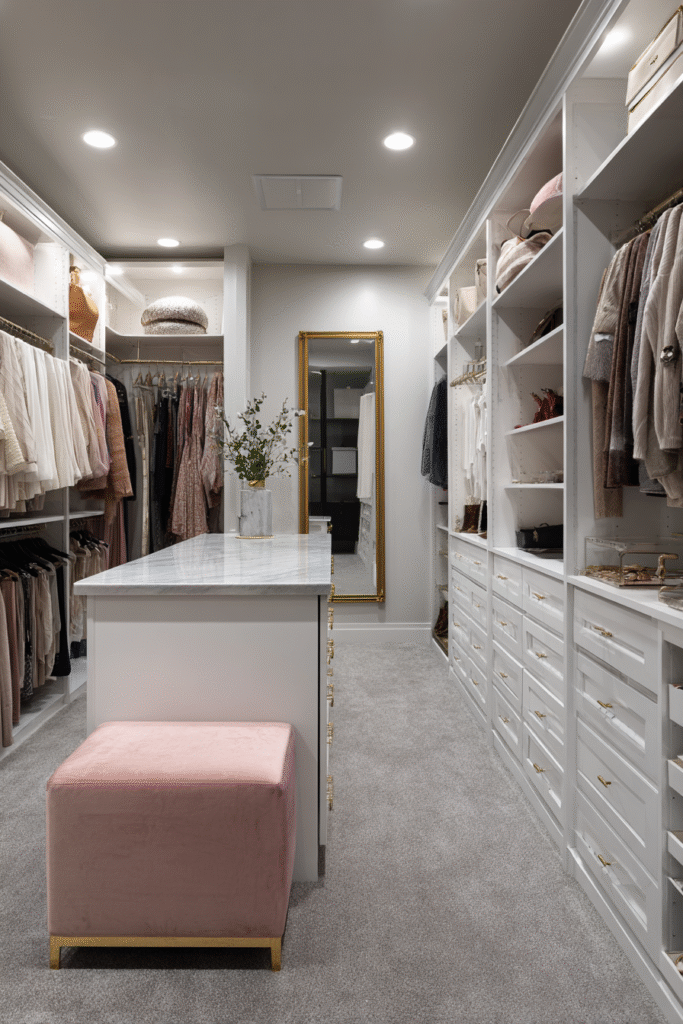
If you’ve got the square footage, a proper walk-in closet design is the ultimate bedroom storage solution. We’re talking about a dedicated dressing space where everything has its place and you can actually see your options.
Here’s what makes walk-in closets work:
- Hanging rods on multiple walls for maximum capacity
- Built-in drawers and shelving customized to your needs
- A center island with drawers for accessories and jewelry
- Good lighting so you can actually see what you’re choosing
- A full-length mirror for outfit checks
- Maybe even a small seating area for putting on shoes
The key to a functional walk-in is proper planning. Measure your longest dresses and coats to determine rod heights. Plan drawer depths based on what you’ll store. Consider adding a window if possible—natural light in a closet is a game-changer.
Even a small walk-in (6×6 feet) can work beautifully if you design it smartly. Check out these wardrobe design ideas for maximizing compact walk-in spaces.
3. Sliding Wardrobe Doors (The Space-Saving Hero)

Don’t have room for doors that swing open? Sliding wardrobe doors are your answer. These doors glide along tracks, taking up zero floor space when opened. This makes them perfect for bedrooms with limited clearance or furniture positioned near the closet.
Sliding doors come in tons of styles:
- Mirrored panels that double as full-length mirrors
- Frosted glass for a modern, light feel
- Wood panels that match your bedroom furniture
- Mixed materials combining glass and wood
The practical benefits are huge. Mirrored sliding doors can make your bedroom feel twice as large by reflecting light and creating depth. They’re also perfect for that last-minute outfit check before you leave. Just make sure you invest in quality tracks—cheap sliding mechanisms get stuck and frustrating fast.
FYI, sliding doors work brilliantly in small bedrooms where every inch of floor space counts. They’re also great for kids’ bedrooms since there’s no door to accidentally slam fingers in.
4. The Open Wardrobe System (Instagram-Worthy Organization)
Hear me out: sometimes the best wardrobe design is no doors at all. Open wardrobe systems put everything on display, which forces you to keep things organized (in the best way). If clutter stresses you out, this might be the motivation you need to stay tidy.
Open systems work when:
- You have a curated wardrobe you’re proud to display
- Your bedroom has low dust levels (no open windows to busy streets)
- You’re disciplined about keeping things organized
- You want easy visual access to all your clothes
Style-wise, open wardrobes create a boutique feel. Use matching hangers for a cohesive look. Organize by color or item type. Add decorative boxes or baskets for less photogenic items. The result feels intentional and stylish rather than like you forgot to install doors.
This approach is particularly stunning in master bedrooms with a modern or industrial aesthetic. Just be honest with yourself about whether you’ll maintain it—an open wardrobe that’s messy looks worse than a closed door hiding chaos.
5. Corner Wardrobes (Using Awkward Spaces)
Got an awkward corner in your bedroom doing absolutely nothing? A corner wardrobe design turns that dead space into functional storage. These L-shaped or triangular units fit perfectly into corners, maximizing space that standard rectangular furniture can’t use effectively.
Corner wardrobes come in different configurations. Some have doors on both sides of the corner. Others feature a diagonal door across the corner for a unique look. The interior layout typically includes hanging space, shelves, and sometimes rotating carousel storage that makes corner items easily accessible.
The key benefit? You’re using space that would otherwise be wasted. Plus, corner units can actually make rooms feel more balanced by filling in empty corners that might otherwise make the space feel awkward. They work especially well in oddly shaped bedrooms or attic rooms with slanted ceilings.
6. Wardrobe with Integrated Vanity (Multi-Functional Design)
Why have a separate wardrobe and vanity when you can combine them? A wardrobe with integrated vanity creates a mini dressing suite even in modest-sized bedrooms. This design typically features wardrobe storage on the sides with a makeup vanity area in the center or at one end.
This setup is incredibly practical. You can do your makeup and hair while having immediate access to your clothes and accessories. Everything you need to get ready is in one designated zone. It’s like having your own boutique fitting room at home.
Design elements to include:
- Good lighting around the vanity mirror (warm LED strips work great)
- Drawers specifically for makeup and skincare
- A comfortable stool or chair at the vanity height
- Electrical outlets for hair tools and devices
- Maybe even a small shelf for your everyday jewelry
This approach works beautifully in bedroom designs where you want a dedicated getting-ready space but don’t have room for separate furniture pieces.
7. Under-Bed Storage Integration (Hiding What You Don’t Need Daily)
Not all bedroom storage solutions need to be vertical. Under-bed storage integrated into your overall wardrobe system creates space for seasonal items, extra bedding, or shoes you don’t wear frequently.
Modern bed frames often come with built-in drawer systems underneath. If yours doesn’t, rolling storage boxes or vacuum-sealed bags work well. The key is treating this space as part of your overall wardrobe strategy, not just a junk dumping ground.
Store seasonal clothes under your bed and rotate them out as weather changes. Keep your winter coats there during summer. Stash extra handbags or luggage that you only use occasionally. This frees up your main wardrobe for daily-use items, making everything more accessible.
Just remember: if it’s under your bed, you want it organized. Label boxes clearly. Use dividers for shoes. Make it easy to pull things out and put them back without creating chaos.
8. Modular Wardrobe Systems (Flexibility for Life Changes)
Life changes, and so do your storage needs. Modular wardrobe systems adapt with you. These are essentially customizable units where you can add, remove, or rearrange components as your needs evolve.
Modular systems typically include:
- Hanging rods that adjust height
- Removable shelves you can reposition
- Drawer units that can be moved
- Additional modules you can purchase later
This flexibility is perfect for renters who might move, people whose wardrobes change seasonally, or anyone who doesn’t want to commit to a permanent built-in. You can start with basic components and add more sophisticated elements as your budget allows.
IMO, modular systems are also great for kids’ wardrobes. A toddler needs different storage than a teenager. Being able to adjust the system as they grow saves money and reduces waste.
9. Mirrored Wardrobe Doors (Making Rooms Feel Bigger)
Mirrored wardrobe doors are the secret weapon for making small bedrooms feel substantially larger. They reflect light, create depth, and eliminate the need for a separate floor or wall-mounted mirror.
Full-length mirrors on closet doors serve multiple practical purposes. They’re essential for checking outfits. They make your morning routine more efficient. They bounce natural light around the room, reducing the need for artificial lighting during the day.
From a design perspective, mirrored doors create visual continuity. The room appears more spacious because the mirror reflects the rest of the space. This works especially well in narrow bedrooms or rooms with limited natural light.
Choose between fully mirrored doors for maximum impact or partial mirror panels for a more subtle effect. Just be strategic about placement—you don’t want the mirror reflecting something unattractive or positioned where it’ll startle you at night. 😅
10. Wardrobe Behind the Bed (Headboard Storage Solution)
Here’s a creative bedroom closet idea: position your wardrobe behind your bed as an extended headboard. This works brilliantly in studio apartments or bedrooms where wall space is limited.
The wardrobe essentially frames your bed, with storage units on either side and sometimes overhead. This creates a cozy alcove effect while providing substantial storage. The key is ensuring the wardrobe doesn’t feel like it’s looming over you—keep adequate space between the bed and wardrobe backs.
Design considerations:
- Ensure proper ventilation behind the wardrobe
- Use low-profile hardware that won’t press against the bed
- Consider sound-dampening if the wardrobe is against a shared wall
- Make sure you can still easily make the bed
This layout works particularly well in small bedrooms or studio apartments where you’re maximizing every wall. It creates distinct zones in an open-plan space while serving a functional purpose.
11. Smart Technology Integration (The Future of Wardrobes)
Let’s talk about bringing your wardrobe into the 21st century. Smart wardrobe technology isn’t just for luxury homes anymore—it’s becoming increasingly accessible and genuinely useful.
Modern smart wardrobe features include:
- LED lighting that automatically illuminates when you open doors
- Motorized clothing rods that lower from high positions
- Climate control systems that protect delicate fabrics
- Inventory apps that catalog your wardrobe digitally
- Charging stations for devices and accessories
Even simple additions like motion-sensor LED strips make a huge difference. Being able to see your clothes clearly without fumbling for light switches changes your morning routine. USB charging ports built into drawer units keep your devices organized and accessible.
The smart tech doesn’t need to be complicated or expensive. Start with one or two features that address your specific pain points. Over time, you can add more elements as the technology becomes more affordable and useful.
Choosing the Right Wardrobe Design for Your Space
With so many options, how do you choose? Start by honestly assessing your space and needs. Measure your available area carefully—height, width, and depth matter. Consider your actual wardrobe contents. Do you have more hanging items or folded ones? Lots of shoes? Extensive accessories?
For small bedrooms: Prioritize vertical storage with floor-to-ceiling designs, sliding doors to save floor space, and mirrored surfaces to create the illusion of more room.
For spacious bedrooms: You can go bigger with walk-in closets, open wardrobe systems, or integrated vanity combinations.
For rental properties: Modular systems or freestanding wardrobes that you can take with you make more sense than built-ins.
For growing families: Flexible modular systems that adapt as needs change offer the best long-term value.
Installation and Budget Considerations
Let’s talk about the practical stuff. Built-in wardrobes and walk-in closets require professional installation and represent a significant investment—think $3,000-$15,000 depending on size and materials. However, they add value to your home and last for decades.
Modular systems and freestanding wardrobes offer more budget-friendly options, ranging from $500-$3,000. These can be DIY installed with basic tools and patience. They’re also portable if you move.
For custom work, get multiple quotes and ask to see examples of completed projects. Check reviews. Understand what’s included—does the price cover design, materials, and installation, or are those separate?
If budget is tight, consider phasing your project. Start with the essential components and add elements over time. A basic hanging rod and shelf system can be upgraded with drawers, lighting, and accessories gradually.
Maintaining Your Wardrobe System
Once you’ve invested in a great wardrobe design, maintain it properly. Dust regularly, especially in open systems. Check hardware occasionally—tighten loose screws, clean sliding tracks, replace worn drawer glides before they fail completely.
Organize seasonally. When you swap summer and winter clothes, take the opportunity to declutter. Donate items you haven’t worn in a year. This keeps your wardrobe manageable and your storage system functioning efficiently.
Use proper hangers that protect your clothes. Wooden or velvet hangers prevent clothes from slipping and maintain garment shapes better than wire hangers. Invest in shelf dividers to keep folded stacks neat. Use drawer organizers for small items.
The Bottom Line on Wardrobe Design
Your wardrobe design bedroom setup can genuinely change your daily life. When everything has a place and you can easily see and access your clothes, getting dressed becomes faster and less stressful. You’ll actually wear more of what you own because you can see your options.
Whether you go for a luxurious walk-in closet, practical sliding doors, or a clever corner solution, the best wardrobe design is one that works for your actual life. Don’t copy someone else’s setup just because it looks good on Instagram—think about your routines, your wardrobe contents, and your space constraints.
Start planning your perfect wardrobe system today. Measure your space, assess your needs, and choose a design that’ll make your mornings smoother and your bedroom more organized. Your future self—the one who’s not digging through piles at 7 AM trying to find matching socks—will thank you. Trust me on this one! 👔