Your living room walls are blank canvases waiting for personality. Whether you’re drawn to oversized abstracts, curated gallery walls, or sculptural statements, the right wall art anchors your space and tells your story. Here are 16 designer-approved wall art living room ideas that blend style, scale, and soul.
1. Oversized Abstract Canvas for Modern Drama
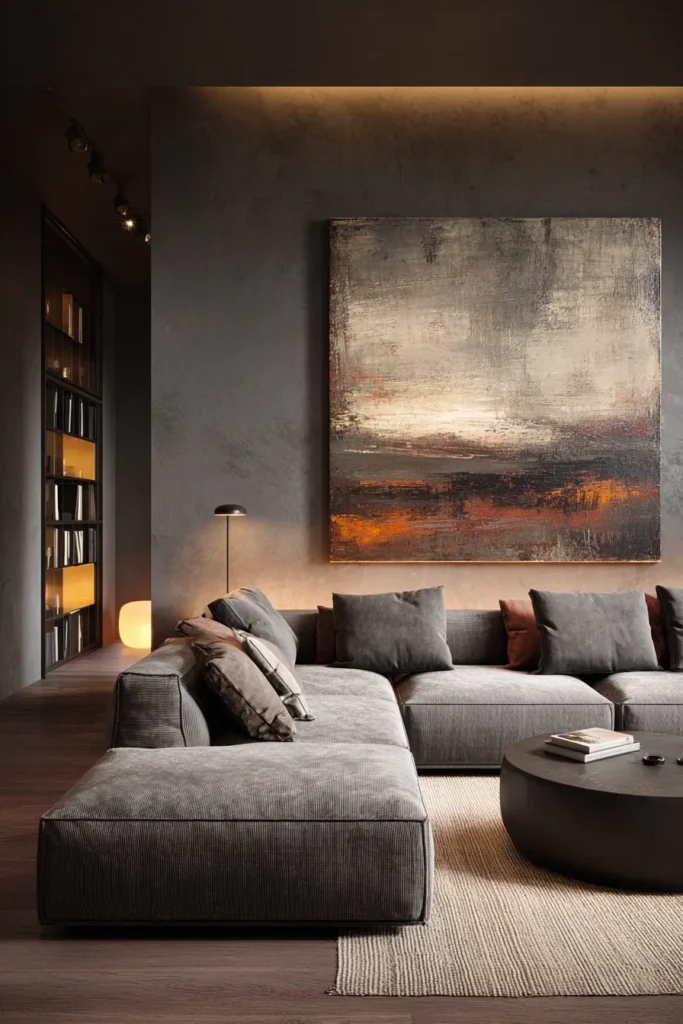
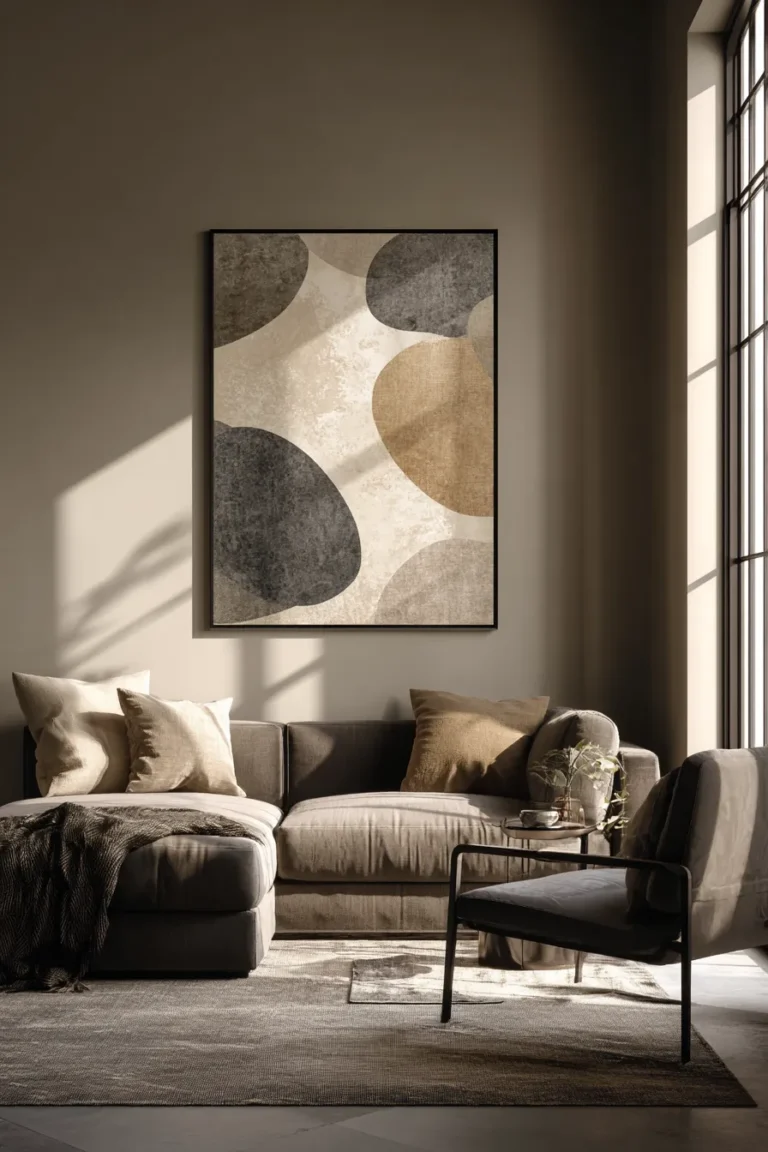
A single large-scale abstract canvas commands attention without competing for it. Think bold brushstrokes in moody charcoals, warm terracottas, or jewel-toned blues that stretch across 60 inches or more. The expansive format creates a gallery-like atmosphere, turning your living room into a curated space where art becomes architecture. This approach works beautifully above low-profile sofas or floating media consoles, where the artwork can breathe and establish itself as the room’s visual anchor.
Oversized abstracts are investment pieces that offer maximum impact with minimal effort. Unlike cluttered gallery walls, a single statement canvas simplifies styling decisions while elevating the entire room’s sophistication. The key is choosing artwork with movement and depth—layered paint textures, gestural marks, or color gradients that shift as natural light changes throughout the day. In 2026, designers are gravitating toward abstracts that feel organic rather than geometric, with imperfect edges and hand-painted authenticity.
Design Breakdown:
- Choose a canvas that spans at least two-thirds of your sofa’s width for proper scale
- Mount 6-8 inches above the sofa back to create visual connection without crowding
- Select colors that echo existing accents—pillows, rugs, or curtains—for cohesion
- Consider neutral backgrounds with bold accent colors for versatility
- Opt for gallery-wrapped edges (no frame needed) for a contemporary, seamless look
- Add picture lights above or flanking sconces to enhance texture and create evening drama
- Balance the boldness with minimal surrounding décor—let the art dominate
- Lean toward matte or satin finishes rather than high-gloss for sophisticated depth
Best For: Modern living rooms, minimalist spaces, or anyone wanting one powerful focal point instead of multiple smaller pieces.
2. Layered Gallery Wall with Mixed Frames
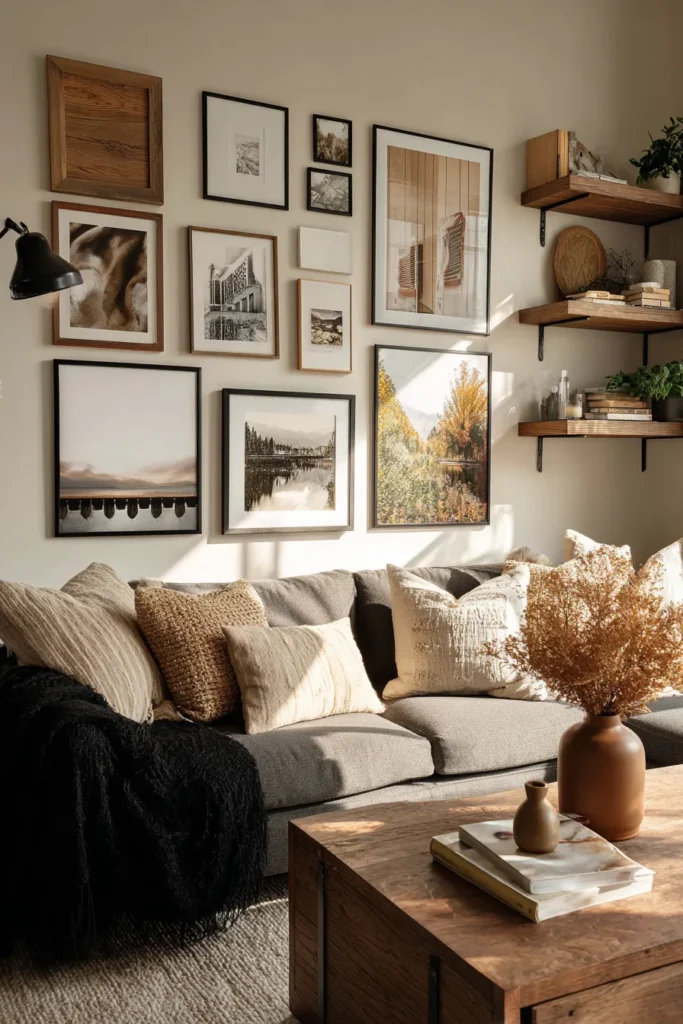
A gallery wall living room arrangement tells a collected-over-time story, blending personal photography, vintage finds, small paintings, and textured prints into one cohesive visual narrative. The magic lies in the controlled chaos—mixing black, natural wood, and brass frames in varying widths, while maintaining consistent spacing between pieces. This approach transforms an empty wall into a dynamic focal point that invites closer inspection, revealing layers of personality with each glance.
The beauty of a mixed-frame gallery wall is its forgiving nature and adaptability. Unlike perfectly matched sets, this style embraces imperfection and allows you to add pieces over time without disrupting the overall composition. In 2026, the trend leans toward asymmetric arrangements with varying frame depths, creating subtle shadows that add dimensional interest. Start with a central anchor piece—something meaningful or visually striking—then build outward organically, treating negative space as part of the design rather than something to fill.
Design Breakdown:
- Begin by laying out your arrangement on the floor to test composition before hanging
- Mix frame sizes from 5×7 inches up to 16×20 inches for visual rhythm
- Maintain 2-3 inches of consistent spacing between all frames for unity
- Include varied content—art prints, black-and-white photos, botanical illustrations, abstract pieces
- Use a mix of orientations (portrait and landscape) to prevent predictability
- Incorporate one or two non-framed elements like small mirrors, woven pieces, or pressed flowers
- Keep frame finishes to three maximum—black, natural wood, and one metallic tone
- Center the overall arrangement at eye level (around 57 inches from floor to the middle of the grouping)
- Add ledge shelves below for layered depth and easy rotation of smaller pieces
Best For: Eclectic homes, collectors, families wanting to showcase memories, or anyone who loves curated, personal spaces.
3. Triptych Display Above the Sofa
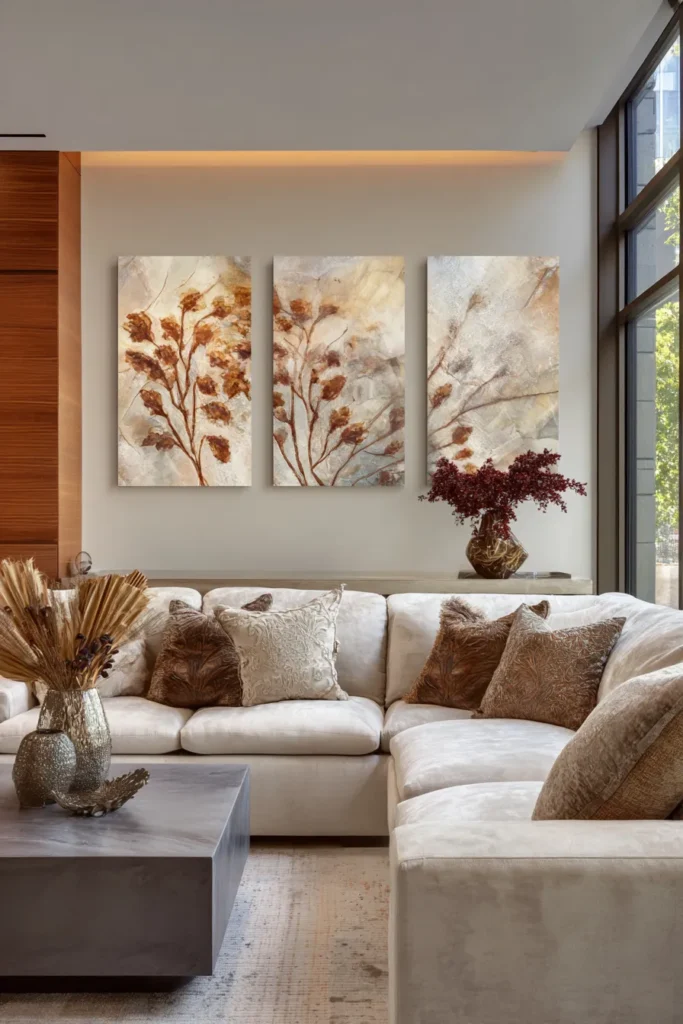
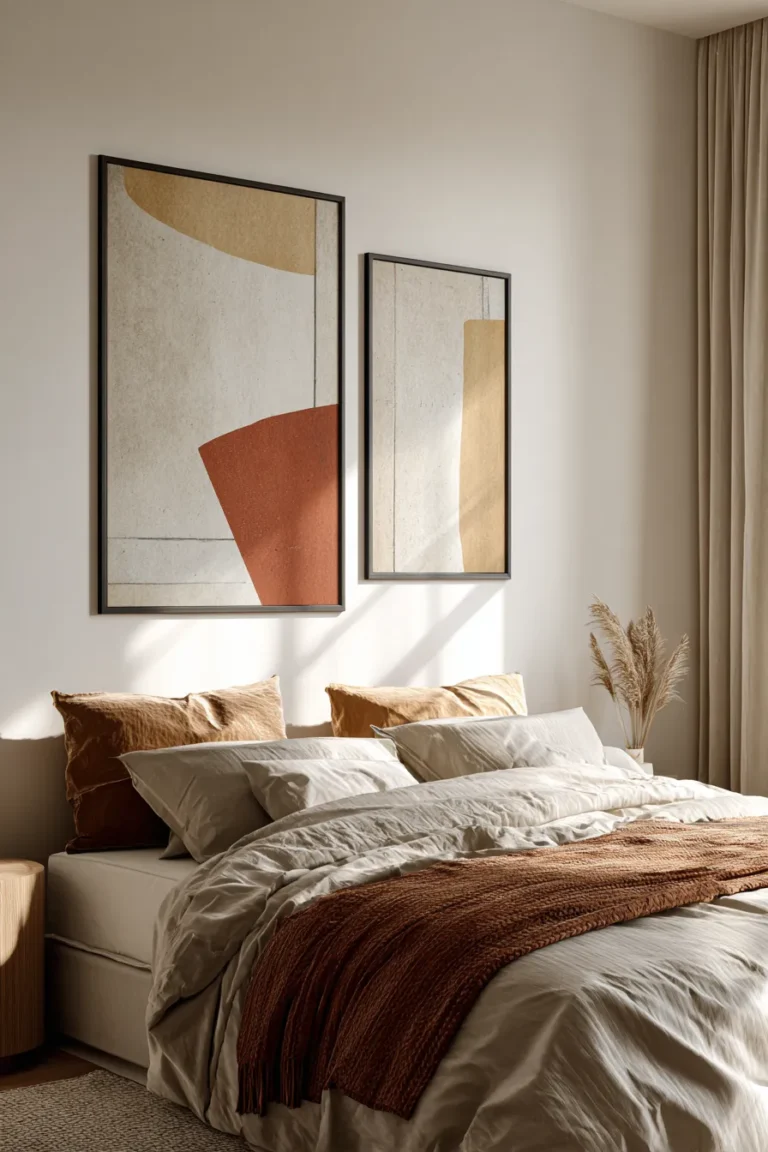
Three coordinated panels create horizontal movement and sophisticated balance, ideal for grounding wide sofas or sectionals. A triptych offers the visual weight of a large-scale piece while maintaining breathing room between panels—perfect for creating flow in open-concept layouts. Whether you choose a continuous landscape that spans all three canvases or three complementary abstract compositions, the segmented format adds architectural rhythm to your walls. The narrow gaps between panels create subtle vertical lines that draw the eye across the entire arrangement.
Triptychs work particularly well in contemporary and transitional living rooms where clean lines and intentional spacing define the aesthetic. The format feels more dynamic than a single canvas because it creates natural pause points, allowing the eye to rest while still maintaining visual continuity. In 2026, designers are favoring triptychs with nature-inspired themes—coastal horizons, mountain ranges, or organic abstracts in earthy tones that bring outdoor serenity inside. The three-panel format also allows you to play with tonal variations, moving from light to dark across the sequence.
Design Breakdown:
- Space panels 2-4 inches apart for definition without fragmentation
- Ensure the combined width covers 60-75% of the sofa length for proper proportion
- Choose panels in matching frames and matting for cohesive presentation
- Consider gradient compositions—color or tone shifting across the three pieces
- Mount all panels at the same height with tops aligned for clean horizontal flow
- Select artwork with a unifying element—similar color palette, subject matter, or artistic style
- Incorporate nature scenes for calming atmospheres or abstracts for modern energy
- Leave adequate space on either side—at least 6 inches from sofa edges to panel edges
Best For: Symmetry lovers, modern living rooms, large sectionals, or spaces needing structured visual balance.
4. Black and White Photography Collection
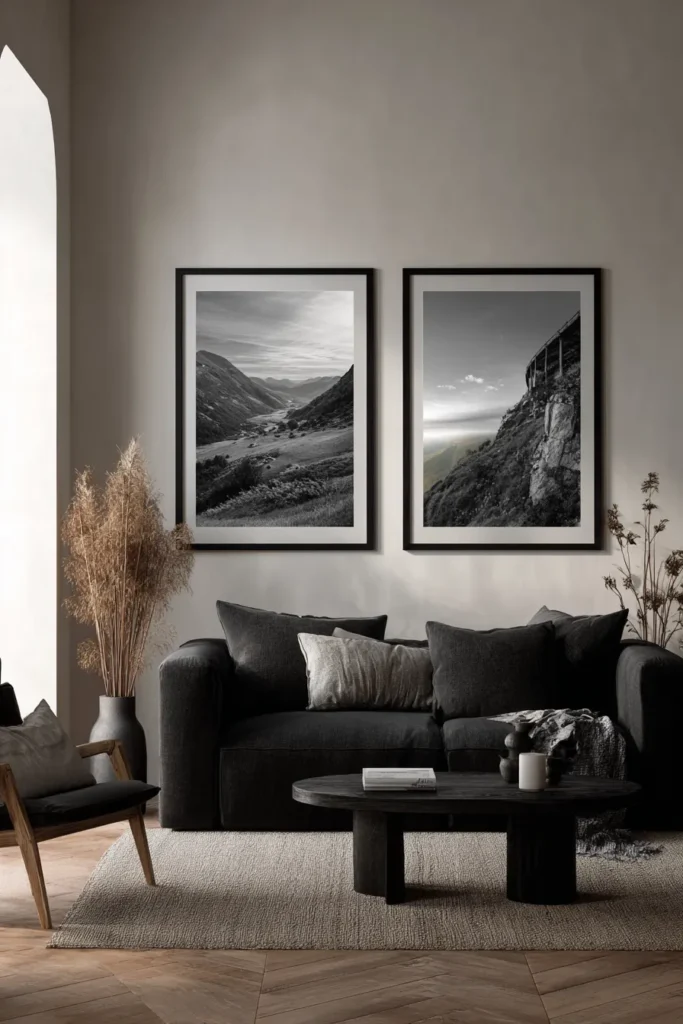
Monochromatic photography brings timeless elegance and emotional depth to living room walls. Whether you choose architectural studies, landscape photography, or intimate portraits, black and white images create sophisticated focal points without competing with your color palette. The absence of color allows viewers to focus on composition, light, shadow, and texture—elements that give photography its power. A collection of black and white prints unified by consistent framing creates a gallery-like atmosphere that feels both personal and professionally curated.
This approach works beautifully in spaces where you want the walls to complement rather than dominate. Black and white photography pairs effortlessly with any décor style—from industrial lofts with exposed brick to coastal homes with whitewashed shiplap. In 2026, designers are gravitating toward larger-format photography (24×36 inches or bigger) in slim black frames with generous white matting, creating clean negative space that amplifies each image’s impact. The key is choosing photographs with strong contrast and clear subjects that read well from across the room.
Design Breakdown:
- Select 3-5 large-scale photographs rather than many small prints for modern impact
- Use consistent black frames with white or cream matting for gallery cohesion
- Hang in a grid formation for formal balance or linear row for casual flow
- Mix subjects thoughtfully—combine landscapes with architectural details or portraits with nature
- Position at eye level, with center points around 57-60 inches from the floor
- Choose photography with varying tones—some high contrast, some soft and moody—for visual interest
- Consider museum-quality printing on matte paper for professional presentation
- Add slim picture lights above each frame to enhance contrast and create evening ambiance
Best For: Minimalist interiors, monochromatic color schemes, modern farmhouse, Scandinavian design, or photography enthusiasts.
5. Textured Woven Wall Tapestry
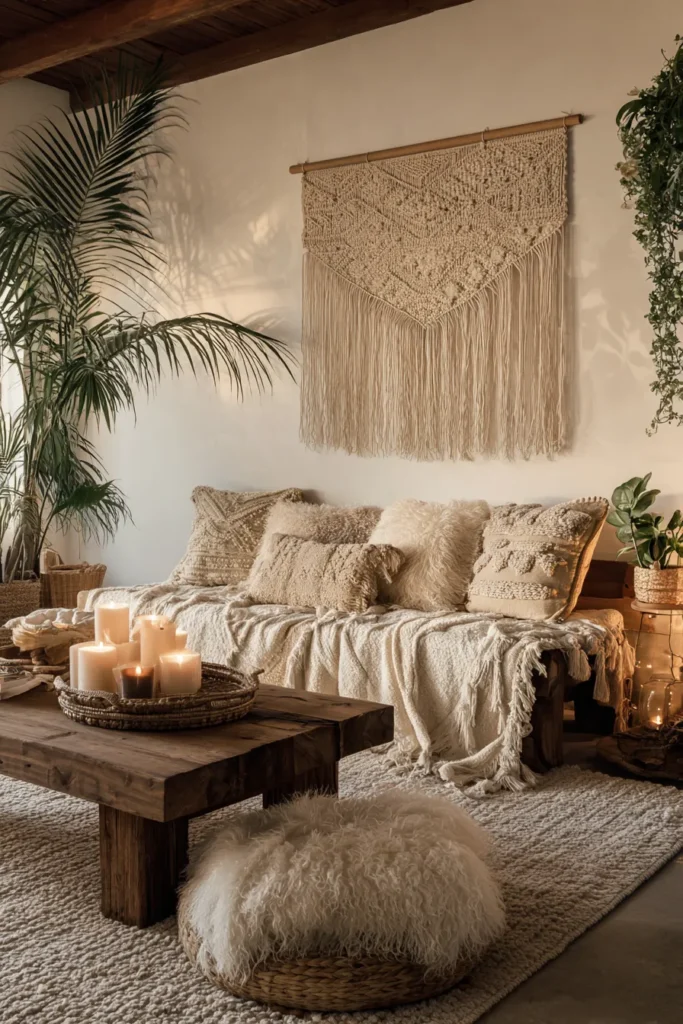
Woven wall tapestries bring warmth, softness, and organic texture that painted canvases simply cannot achieve. Whether you choose macramé, jute, cotton weaving, or wool fiber art, these tactile pieces add dimensional interest while softening hard surfaces and absorbing sound. The natural movement of fibers—tassels swaying gently, woven patterns catching light differently throughout the day—creates living artwork that feels grounded and calming. In 2026, the boho minimalist trend favors oversized tapestries in neutral palettes with subtle geometric patterns or organic abstract designs.
Textured wall art works particularly well in living rooms where you want to introduce coziness without adding more furniture or fabric-heavy elements. Unlike framed art, woven pieces feel approachable and casual, perfect for creating relaxed, inviting atmospheres. The key is choosing tapestries with enough visual presence to stand alone—pieces measuring at least 36 inches wide that can command wall space with texture and scale. Pair with natural wood accents, live plants, and warm lighting to complete the organic aesthetic.
Design Breakdown:
- Choose oversized tapestries (40+ inches wide) to create statement impact on empty walls
- Mount on decorative rods or wooden dowels for gallery-style presentation
- Select neutral palettes—cream, beige, taupe, soft gray—for versatility
- Layer with smaller woven pieces or macramé plant hangers for dimensional interest
- Incorporate metallic threads or natural fiber variations for subtle shimmer and depth
- Position behind seating areas to soften hard furniture edges and create cozy backdrops
- Combine with warm ambient lighting—wall sconces or string lights—to enhance texture
- Leave breathing room around the tapestry—avoid crowding with other wall décor
- Consider handmade or artisan pieces for authenticity and unique character
Best For: Boho interiors, natural material enthusiasts, cozy living rooms, or anyone wanting to soften modern minimalism.
6. Sculptural Metal Wall Art
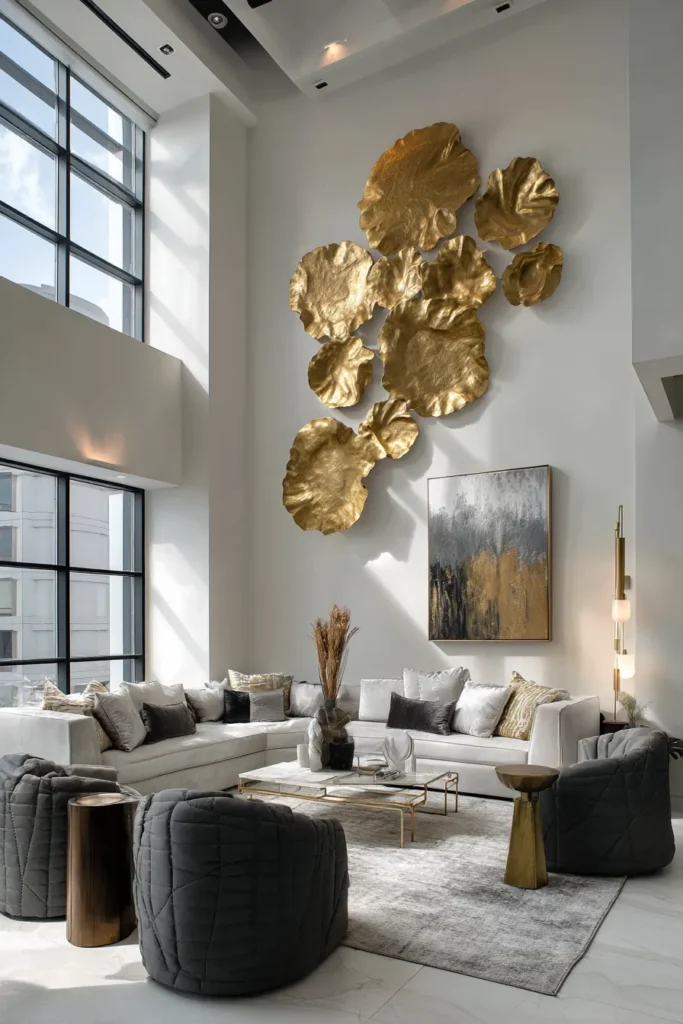
Three-dimensional metal wall art introduces architectural interest and plays with light in ways flat artwork cannot. Whether you choose geometric abstracts in blackened steel, organic leaf patterns in brushed brass, or contemporary wire sculptures, metal pieces create shadow play that shifts throughout the day as natural light moves across your walls. The sculptural quality adds masculine sophistication and works beautifully in both modern industrial spaces and refined transitional homes. In 2026, designers favor oversized single pieces over clustered arrangements—think wall-mounted sunbursts, abstract metal ribbons, or nature-inspired branches in aged bronze.
Metal wall art offers durability and timeless appeal, making it an excellent investment for high-traffic living rooms. Unlike paper or canvas that may fade over time, metal maintains its integrity and finish, developing character through subtle patina in some cases. The key is choosing pieces with enough depth (2-4 inches off the wall) to cast interesting shadows while remaining proportional to your wall size. Modern metal art leans toward organic forms rather than rigid geometry—flowing curves, irregular edges, and nature-inspired motifs that soften industrial materials.
Design Breakdown:
- Select statement pieces measuring 36-48 inches in diameter or length for proper scale
- Choose finishes that complement existing metals in your room—brass, copper, black iron, or brushed nickel
- Mount on light-colored walls where shadows can create additional visual interest
- Position near natural light sources—windows or skylights—to maximize dimensional effects
- Consider pieces with multiple layers or openwork designs for complex shadow patterns
- Pair with warm lighting in the evening to create dramatic backlighting effects
- Leave substantial negative space around metal art—it needs room to breathe
- Mix metals thoughtfully if combining multiple pieces—vary sizes and depths for balance
- Incorporate organic shapes—circles, spirals, botanical forms—for softness in modern spaces
Best For: Industrial lofts, modern living rooms, masculine interiors, or anyone wanting durable, low-maintenance statement art.
7. Floating Shelves with Rotating Art Pieces
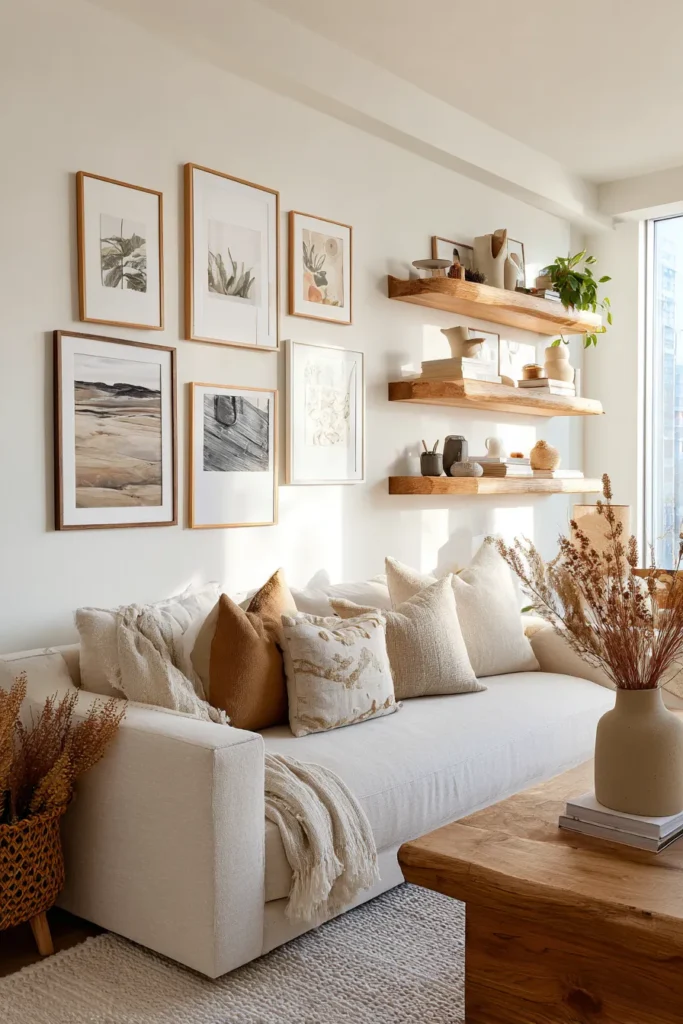
Floating shelves transform walls into flexible gallery spaces where art can be easily rotated, layered, and rearranged without drilling new holes. This approach offers the visual impact of wall art with the practical benefit of adaptability—swap seasonal prints, lean framed photographs against the wall, or layer smaller canvases in front of larger ones for dimensional interest. Slim wooden or metal shelves in lengths of 24-48 inches create horizontal lines that ground your composition while providing landing spots for sculptural objects, small plants, or art books that complement your displayed pieces.
The genius of this system lies in its forgiveness and flexibility. Unlike permanently hung gallery walls, shelf-based displays allow you to refresh your living room’s look seasonally or whenever inspiration strikes, without measuring, leveling, and hammering. In 2026, designers favor minimal shelf profiles—barely-there metal brackets or ultra-slim wood ledges—that support the art without competing for attention. The key is treating each shelf as its own composed vignette, balancing framed art with three-dimensional objects in varying heights and textures.
Design Breakdown:
- Install 2-3 shelves at staggered heights rather than perfectly aligned rows for dynamic interest
- Choose shelf depths of 4-6 inches to accommodate standard frame widths without tipping
- Space shelves 18-24 inches apart vertically to allow proper visibility for each level
- Lean larger frames (11×14 or 16×20 inches) directly against the wall as anchor pieces
- Layer smaller framed prints in front at slight angles for dimensional depth
- Incorporate sculptural objects—ceramic vases, brass candlesticks, small plants—between frames
- Rotate artwork monthly or seasonally to keep the space feeling fresh and curated
- Maintain color cohesion across all displayed pieces for visual harmony
- Add small LED strip lighting beneath shelves for gallery-style uplighting in evenings
Best For: Renters, indecisive decorators, art collectors, or anyone who loves changing their décor regularly without commitment.
8. Oversized Botanical Prints in Natural Tones
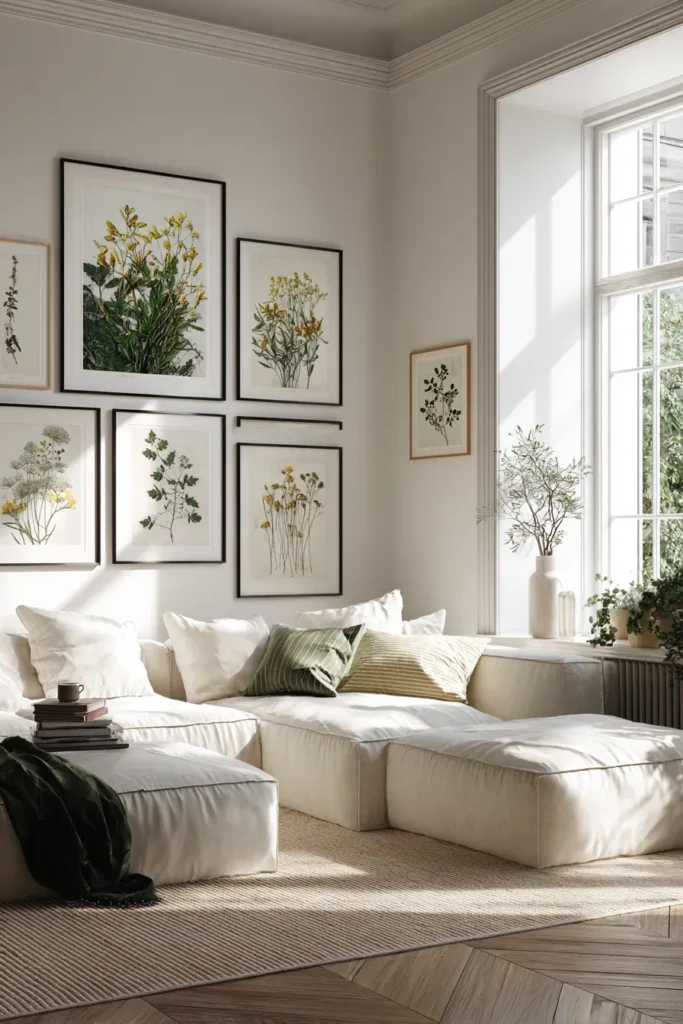
Large-scale botanical prints bring the outdoors inside with graphic simplicity and organic elegance. Think museum-quality reproductions of vintage herbarium specimens, oversized palm fronds, or minimalist line drawings of leaves and flowers—all rendered in neutral tones that complement rather than compete. These prints work beautifully in living rooms where you want to introduce nature without the maintenance of actual plants. The clean, scientific presentation of botanical art offers sophistication and timelessness, avoiding the trendy feel of more literal nature photography.
Botanical wall art living room arrangements create calming, grounded atmospheres that work across multiple design styles—from modern farmhouse to coastal minimalist to Scandinavian hygge. The key is scale: oversized prints (24×36 inches or larger) make confident statements without feeling overly decorative. In 2026, the trend favors simple presentations—slim black or natural wood frames with generous white matting that creates breathing room around each specimen. Grouping three botanical prints vertically or horizontally creates rhythm while maintaining the serene, organized feel that makes this style so appealing.
Design Breakdown:
- Choose large-format prints (24×36 inches minimum) for modern impact and readability
- Select botanicals with clean, simple compositions—single leaves, stems, or flowers on neutral backgrounds
- Frame in matching slim profiles—black, natural oak, or walnut—with 2-3 inch white matting
- Arrange in odd numbers (three or five) for visual balance and natural flow
- Hang in vertical rows for tall walls or horizontal lines for wide expanses above sofas
- Maintain consistent spacing—4-6 inches between frames—for gallery cohesion
- Choose monochromatic or muted color palettes—sepia tones, soft greens, charcoal on cream
- Position at standard eye level unless creating a vertical climb up a tall wall
- Pair with live plants in the room to strengthen the nature connection
Best For: Nature lovers, minimalist spaces, modern farmhouse, Scandinavian design, or anyone wanting sophisticated organic elements.
9. Mirror and Art Combination Wall
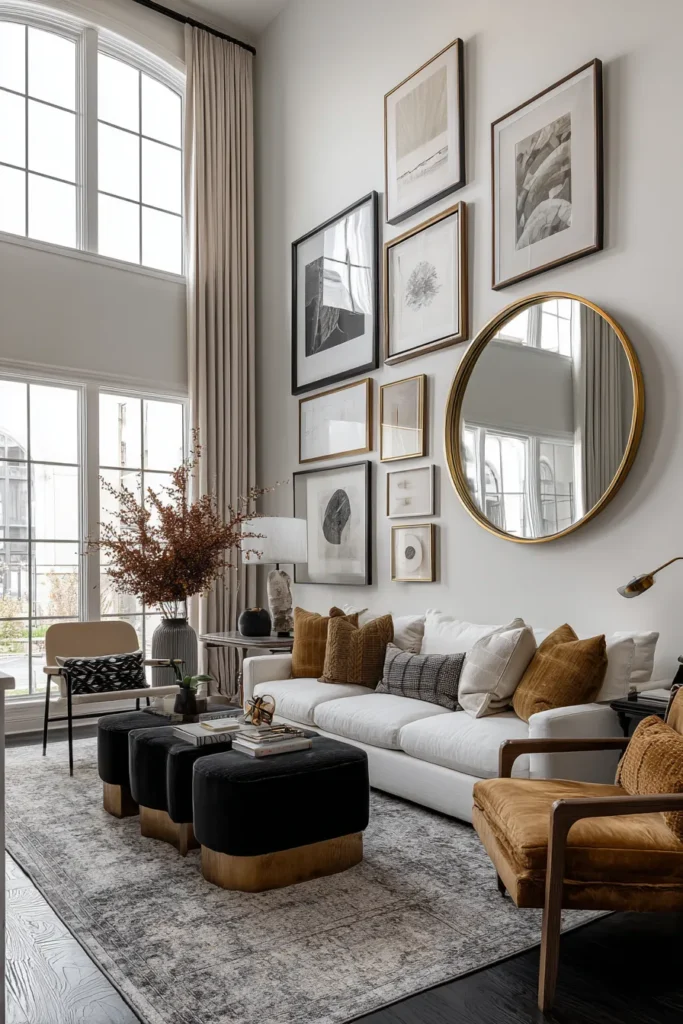
Blending mirrors with artwork creates unexpected dimension and light-reflecting functionality that pure art walls cannot achieve. This approach layers visual interest while solving practical problems—mirrors bounce natural light into darker corners, create illusions of expanded space, and add glamorous sparkle that balances matte artwork. The key is treating mirrors as art pieces themselves, choosing antique brass frames, geometric shapes, or sunburst designs that complement rather than clash with surrounding paintings or prints. In 2026, designers favor asymmetric arrangements where mirrors and art interact in unexpected ways.
The mirror-art combination works brilliantly in living rooms lacking natural light or architectural interest. Strategic mirror placement near windows doubles incoming brightness, while the mixed textures of reflective glass and flat artwork create depth perception that makes walls feel less two-dimensional. The trick is balancing proportions—one large mirror (24-36 inches) paired with several smaller art pieces, or multiple small mirrors scattered among a gallery wall. Avoid creating funhouse effects by limiting mirror quantity to 20-30% of your total wall arrangement.
Design Breakdown:
- Choose one statement mirror (round, arched, or geometric) as your anchor piece
- Surround with complementary framed art in coordinating frame finishes
- Position mirrors to reflect windows, greenery, or beautiful room features—not blank walls
- Mix mirror shapes—combine round with rectangular art for dynamic contrast
- Select antique or decorative frames for mirrors to elevate them beyond functional fixtures
- Arrange asymmetrically for modern appeal, avoiding rigid grid patterns
- Incorporate varying depths—some pieces flush, mirrors slightly protruding—for dimension
- Use mirrors on perpendicular walls to create surprising reflection conversations
- Limit reflective surfaces to avoid overwhelming sparkle—balance with matte artwork
Best For: Small living rooms, dark spaces, glamorous interiors, or anyone wanting to expand visual space while maintaining artistic interest.
10. Vertical Gallery Wall for High Ceilings
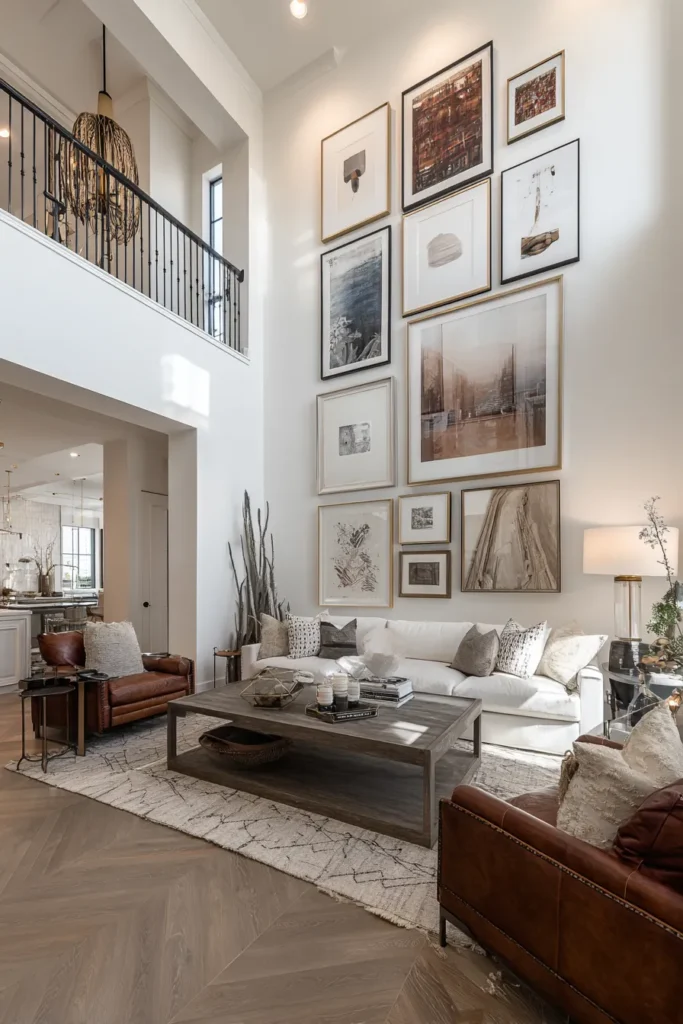
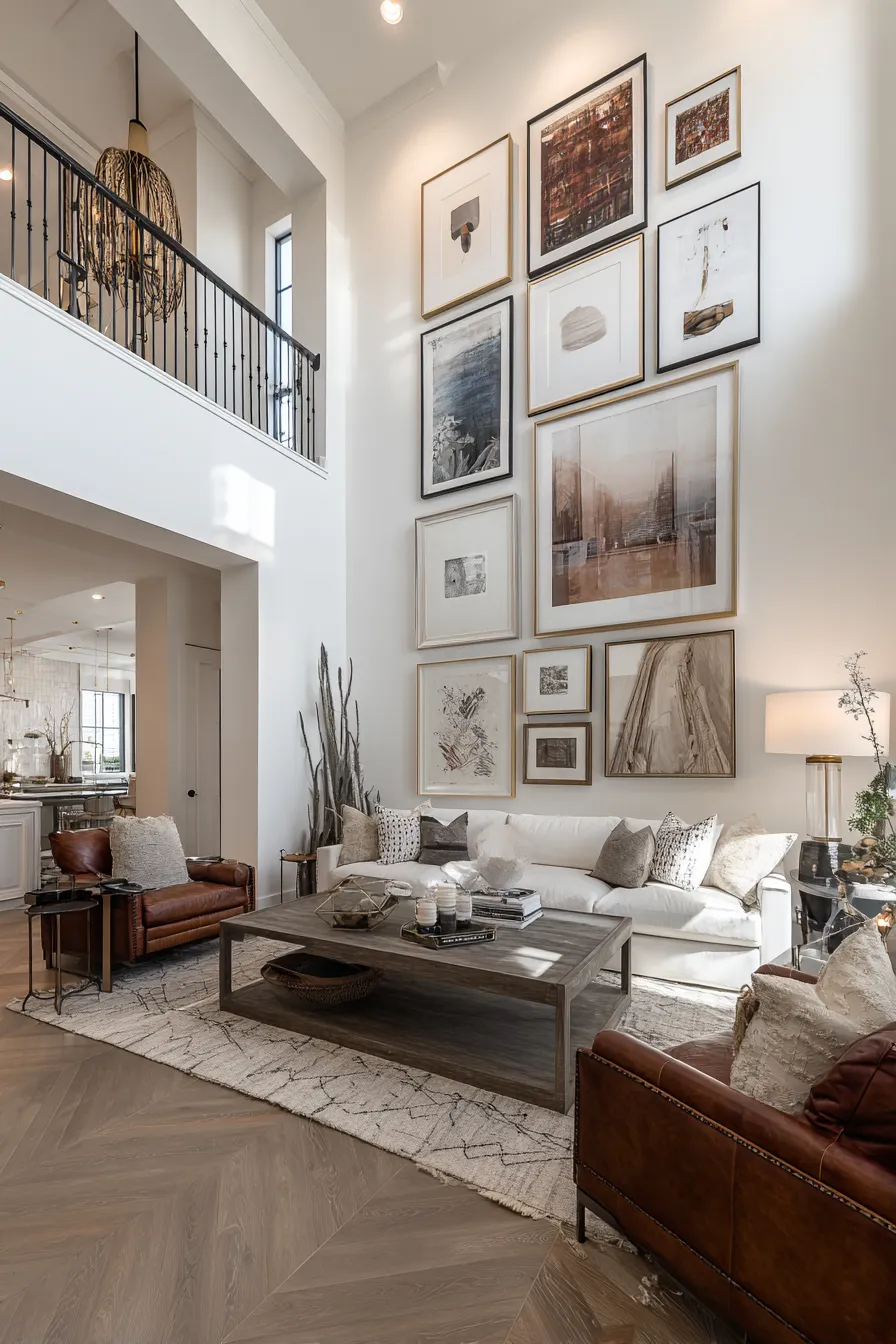
Rooms with soaring ceilings demand vertical thinking—gallery walls that climb upward rather than spreading horizontally. This approach draws the eye toward architectural height while preventing the top two-thirds of your walls from feeling abandoned. Vertical gallery arrangements work beautifully flanking windows, beside staircases, or on narrow wall sections where horizontal spreads won’t fit. The ascending composition creates energy and movement, making viewers naturally look up and appreciate your home’s architectural drama. In 2026, designers favor graduated sizing—starting with larger frames at eye level and progressively smaller pieces as you climb.
Vertical galleries require confident composition to avoid looking haphazard. The secret is maintaining a consistent visual spine—an imaginary vertical line that anchors your arrangement—while allowing pieces to step slightly left or right for organic flow. This style works particularly well with a mix of frame sizes and orientations, creating negative space pockets that give each piece breathing room. Unlike horizontal galleries that feel collected and casual, vertical arrangements bring formal sophistication and intentional design thinking.
Design Breakdown:
- Establish a center vertical line and arrange pieces to step slightly left and right of it
- Start with your largest frame near eye level (around 60 inches from floor) as the foundation
- Gradually decrease frame sizes as you move upward for natural weight distribution
- Maintain 2-3 inches of consistent spacing between all pieces for unity
- Extend the arrangement up to 8-10 feet high in rooms with 10+ foot ceilings
- Mix orientations—portrait and landscape—to create visual variety within the vertical flow
- Include one or two unexpected elements—small mirrors, dimensional objects, or plates
- Use a level and measuring tape to ensure the vertical spine remains straight
- Consider professional installation for pieces hung above 8 feet for safety and precision
Best For: High-ceilinged living rooms, narrow wall sections, homes with dramatic architecture, or anyone wanting to emphasize vertical space.
11. Minimalist Line Art in Slim Frames
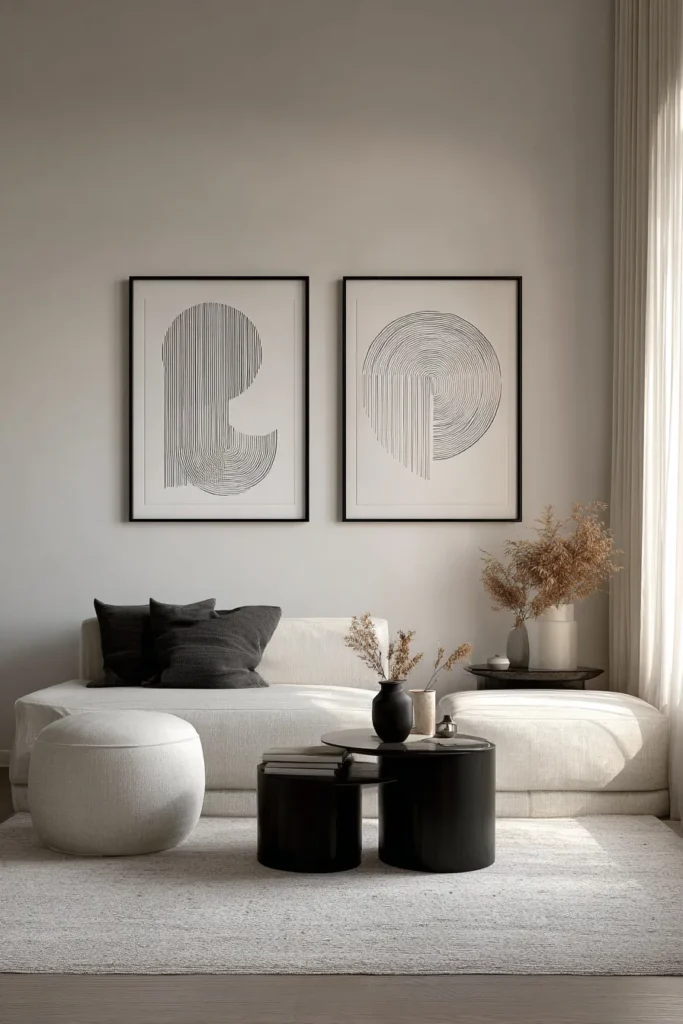
Single-line drawings capture form with elegant simplicity—faces, bodies, botanicals, or abstract shapes rendered in continuous black ink lines on white or cream backgrounds. This ultra-minimalist approach brings sophistication without visual weight, perfect for living rooms where you want art that whispers rather than shouts. The beauty lies in the restraint—what’s left out matters as much as what’s included. Line art creates clean, modern focal points that complement neutral color schemes while adding just enough personality to prevent sterility. In 2026, the trend favors oversized line drawings (24×36 inches) in ultra-slim black frames.
Minimalist line art works brilliantly in Scandinavian, modern, and contemporary spaces where excess decoration feels antithetical to the design philosophy. The graphic quality reads well from across rooms while rewarding closer inspection with delicate detail and artistic confidence. The key is choosing line art with breathing room—generous white space around each drawing that allows the simplicity to shine. Group three or five pieces with consistent line weights and frame styles for cohesive impact, or let a single large-scale drawing anchor an entire wall alone.
Design Breakdown:
- Select large-format line drawings (18×24 inches minimum) for sufficient presence on living room walls
- Frame in ultra-slim black or natural wood profiles—no more than half-inch width
- Choose simple white or off-white matting for clean presentation
- Hang in horizontal rows of three or vertical stacks for rhythm
- Maintain generous spacing—6-8 inches between frames—to honor the minimalist aesthetic
- Select line art with similar stroke weights for visual consistency
- Position against neutral walls—white, light gray, or soft beige—for maximum contrast
- Keep surrounding décor equally minimal to avoid competing visual noise
- Consider abstract line art over representational for modern sophistication
Best For: Minimalist living rooms, Scandinavian design, modern apartments, or anyone appreciating restrained elegance.
12. Bold Colorful Abstract for Neutral Rooms
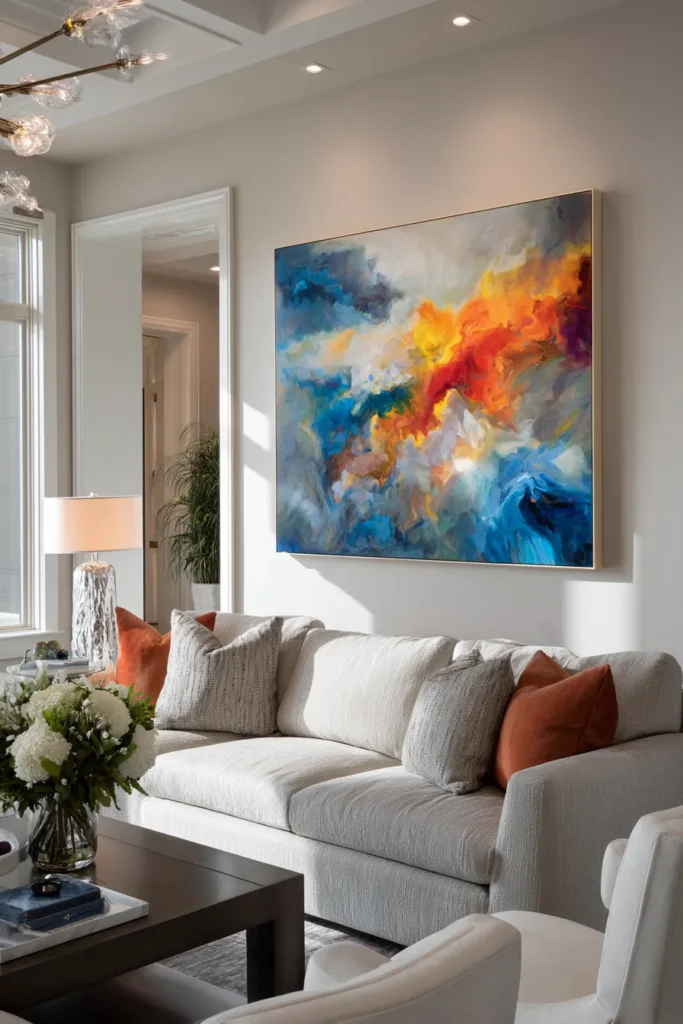
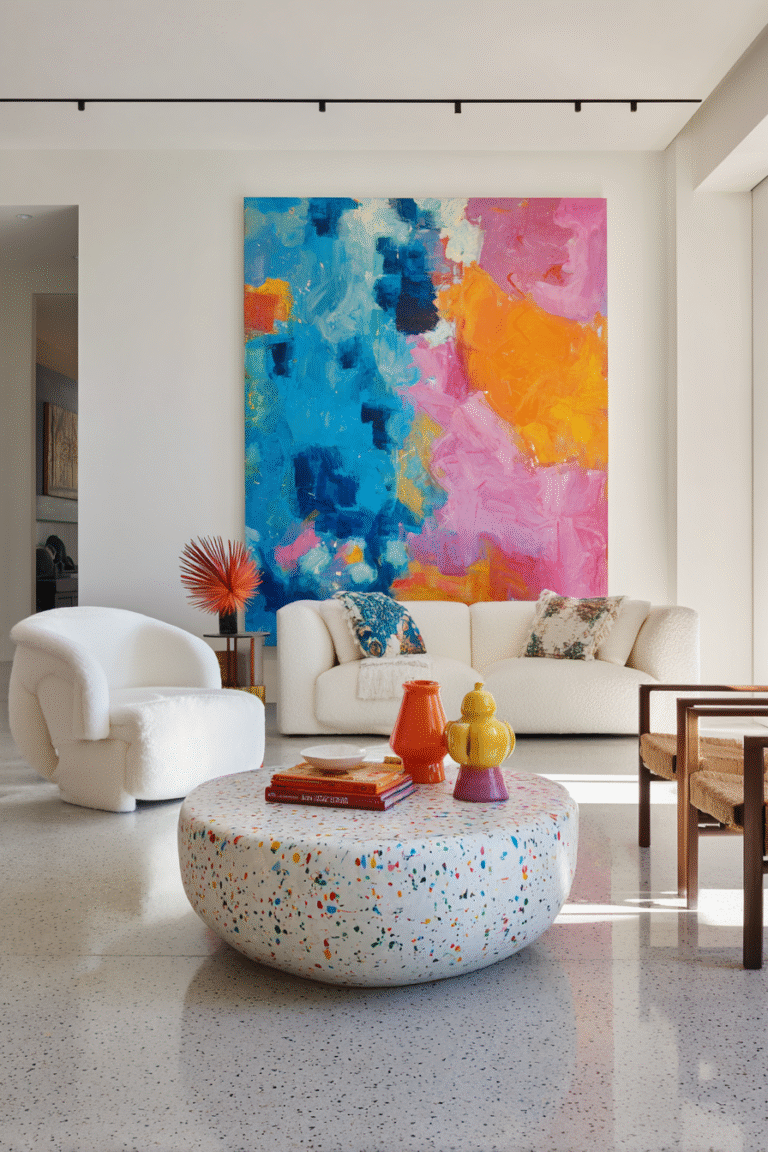
Injecting one vibrant abstract painting into an otherwise neutral living room creates instant energy and serves as the room’s personality anchor. This approach lets you maintain calming neutrality while giving the space a pulse—think saturated cobalt blues, fiery oranges, or electric fuchsias splashed across large canvases that become conversation starters. The bold artwork acts as your color palette generator, informing pillow choices, throw blanket hues, and accent décor throughout the room. In 2026, designers favor painterly abstracts with visible brushstrokes and dimensional texture over flat digital prints.
The power of this strategy lies in its simplicity and drama. Rather than scattering color throughout the room, concentrating it in one substantial artwork creates focused impact that doesn’t overwhelm. The surrounding neutrality—white walls, gray sofas, natural wood floors—provides visual rest, making the colorful canvas feel even more striking by contrast. The key is scale and placement: position your bold piece where it’s the first thing viewers see upon entering, typically above the sofa or on the wall facing the main entrance.
Design Breakdown:
- Choose canvases measuring at least 40×60 inches for proper impact in living rooms
- Select artwork with 2-4 bold colors maximum to maintain coherence despite vibrancy
- Position centrally on the main focal wall—typically behind or across from seating
- Echo the artwork’s colors subtly in 2-3 accessories—pillows, vases, or throws
- Frame in simple black or natural wood if needed, or opt for gallery-wrapped edges
- Surround with neutral furnishings to let the art dominate without competition
- Add directional spotlighting or picture lights to enhance color saturation in evenings
- Choose abstracts with movement and gestural energy for dynamic presence
- Avoid placing near windows where direct sunlight might cause fading
Best For: Neutral living rooms needing personality, modern spaces, color lovers, or anyone wanting one dramatic focal point.
13. Vintage Map or Travel Print Collection
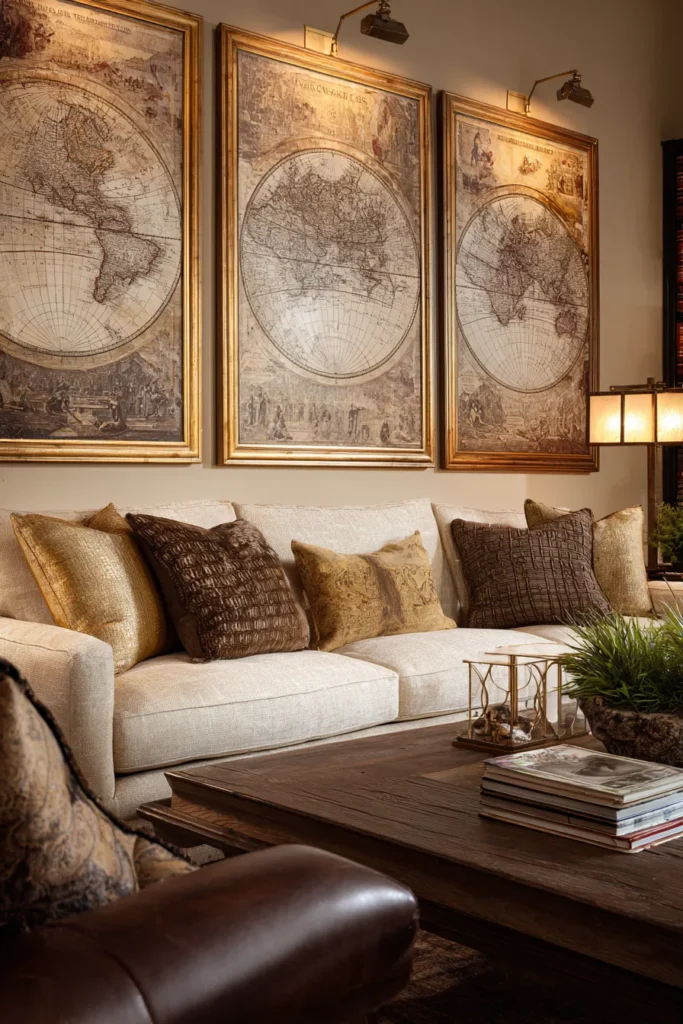
Antique maps and vintage travel prints bring worldly sophistication and storytelling to living room walls. Whether you choose cartographic reproductions from the 1800s, retro airline posters from mid-century, or hand-colored navigation charts, these pieces evoke adventure and intellectual curiosity. The aged paper tones—sepia, tea-stained cream, faded blues—create instant warmth while adding historical gravitas that mass-produced modern art cannot achieve. In 2026, designers favor large-scale single maps (30×40 inches) over cluttered collections, treating cartography as fine art.
Map and travel art works beautifully in living rooms with traditional, transitional, or eclectic styles—spaces that embrace collected character over minimalist perfection. The geographical details invite close inspection and serve as conversation starters, making these pieces particularly well-suited above sofas or in reading nooks. The key is authentic presentation: seek out museum-quality reproductions or genuine vintage finds, and frame them simply in natural wood or black with generous matting that honors their archival quality. Mixing different map types—world maps, city plans, celestial charts—creates visual variety while maintaining thematic cohesion.
Design Breakdown:
- Choose large-format maps (24×36 inches minimum) for readability and presence
- Frame in simple wood tones—walnut, oak, or black—with wide cream or tan matting
- Hang singly as statement pieces or group 3-5 maps with consistent framing
- Select maps with personal significance—places you’ve lived, traveled, or dream of visiting
- Mix map types for interest—topographic, nautical, city grids, constellation charts
- Position at eye level where details can be appreciated up close
- Add small brass gallery lights above for vintage study-room atmosphere
- Consider floating frames (glass on both sides) for double-sided antique maps
- Pair with globe displays, vintage suitcases, or leather-bound books for thematic depth
Best For: Travel enthusiasts, traditional living rooms, library-style spaces, or anyone wanting intellectual, worldly décor.
14. Three-Dimensional Ceramic Wall Pieces
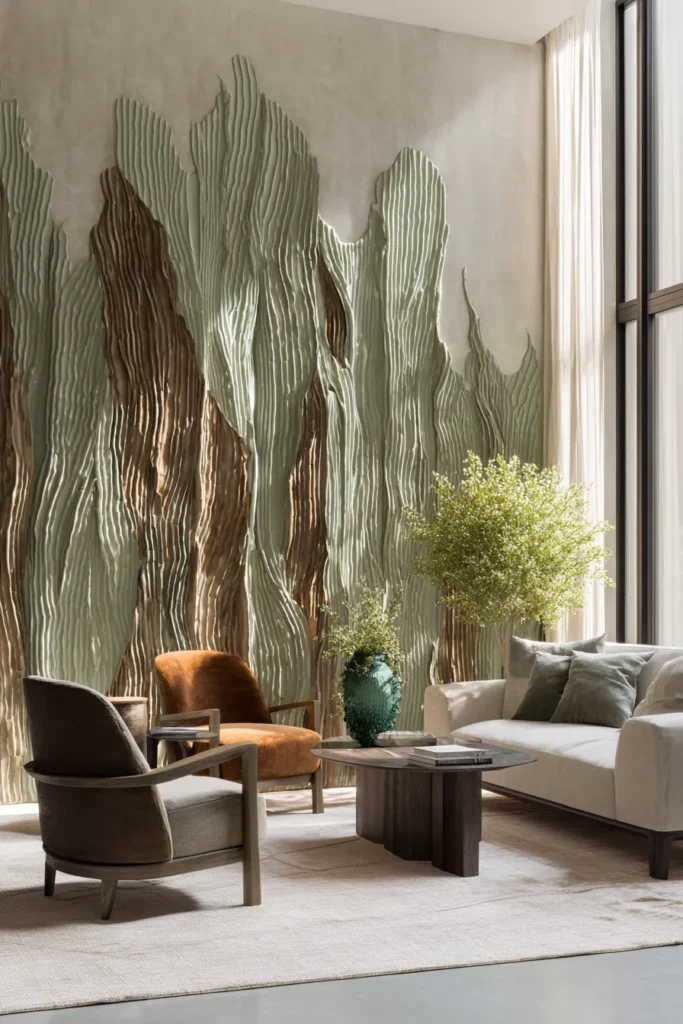
Sculptural ceramic wall art brings handcrafted texture and organic irregularity to living room walls, offering a sophisticated alternative to flat paintings or prints. Think dimensional tile installations, relief-carved clay panels, or abstract ceramic sculptures mounted directly to walls like bas-reliefs. The beauty lies in how these pieces interact with light—glazed surfaces catching afternoon sun, shadows deepening in recessed areas, natural clay tones warming as daylight shifts. In 2026, artisan ceramics in earthy tones—terracotta, sage green, matte white—are replacing mass-produced wall décor in design-conscious homes.
Ceramic wall art carries the weight of craft and authenticity, perfect for living rooms where you want to showcase art that feels genuinely collected rather than catalog-ordered. The three-dimensional quality creates visual interest from multiple angles, revealing new details as you move through the space. The key is treating these pieces as precious installations—mounting them securely with proper hardware and giving them substantial negative space to command attention. Unlike wallpaper or paint, dimensional ceramics create architectural focal points that feel permanent and considered.
Design Breakdown:
- Choose substantial pieces (18-30 inches across) with enough scale to read as art, not accessories
- Mount using professional-grade wall anchors rated for ceramic weight—consult installation specs
- Select pieces with interesting surface treatments—reactive glazes, hand-carved patterns, or organic textures
- Position where natural light can graze surfaces throughout the day for dynamic shadow play
- Limit to one major ceramic installation per wall to avoid overwhelming the space
- Pair with simple surroundings—let the ceramic be the star against neutral walls
- Consider artisan pieces from pottery studios or galleries for authentic character
- Mix matte and glossy finishes for subtle surface variety within a single piece
- Incorporate nature-inspired forms—waves, leaves, geological formations—for organic appeal
Best For: Craft appreciators, organic modern spaces, bohemian interiors, or anyone wanting unique, handmade statement pieces.
15. Asymmetric Art Arrangement for Eclectic Spaces
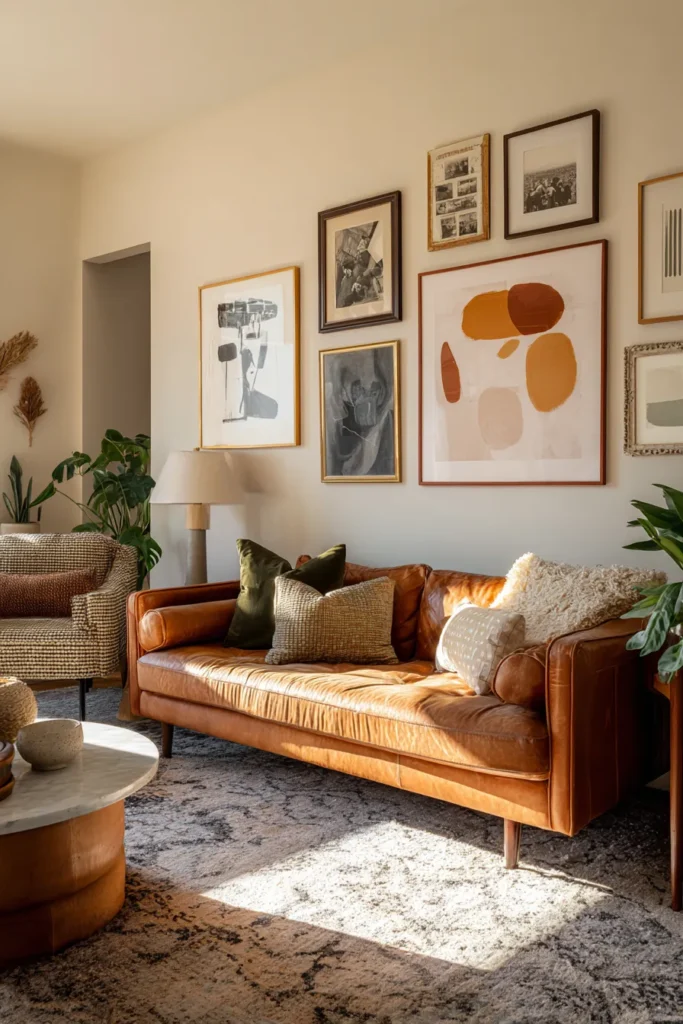
Forget rigid grids and measured spacing—asymmetric gallery walls embrace beautiful chaos where pieces of varying sizes, shapes, and styles coexist in composed disarray. This approach works when you have diverse artwork you love but that doesn’t necessarily match—abstract paintings beside vintage photography, modern prints next to heirloom frames, small mirrors interspersed with oversized canvases. The trick is creating visual balance through color, not size—distributing similar tones throughout the arrangement so no single area feels too heavy or too light. In 2026, designers are treating asymmetric walls as evolving compositions that grow organically.
Asymmetric arrangements suit adventurous decorators who trust their instincts and aren’t afraid of imperfection. This style celebrates collected-over-time personality rather than designer showroom precision, making it perfect for families, artists, and anyone whose walls tell stories. The key is maintaining some organizing principle—perhaps all frames share similar tones, or a consistent mat color unifies diverse artwork. Start with your largest piece positioned slightly off-center, then build around it intuitively, stepping back frequently to assess balance. Leave space for future additions; asymmetric galleries should feel unfinished in the best way.
Design Breakdown:
- Begin with your largest or most important piece positioned off-center as the anchor
- Mix frame sizes dramatically—from 4×6 inches up to 24×36 inches
- Vary frame colors and materials but limit yourself to 3-4 finishes for cohesion
- Include unexpected elements—plates, small shelves, hanging plants, or dimensional objects
- Maintain consistent spacing (2-3 inches) despite irregular arrangement for intentional look
- Distribute colors evenly across the wall so no quadrant feels visually heavier
- Step back frequently during installation to assess overall balance from viewing distance
- Leave deliberate gaps—negative space is part of the asymmetric aesthetic
- Add pieces over time rather than completing all at once for authentic collected feel
- Consider varying frame depths—some flush, others protruding—for dimensional interest
Best For: Eclectic homes, collectors, maximalist spaces, or anyone who loves layered, personality-rich walls.
16. Large-Scale Nature Photography Statement
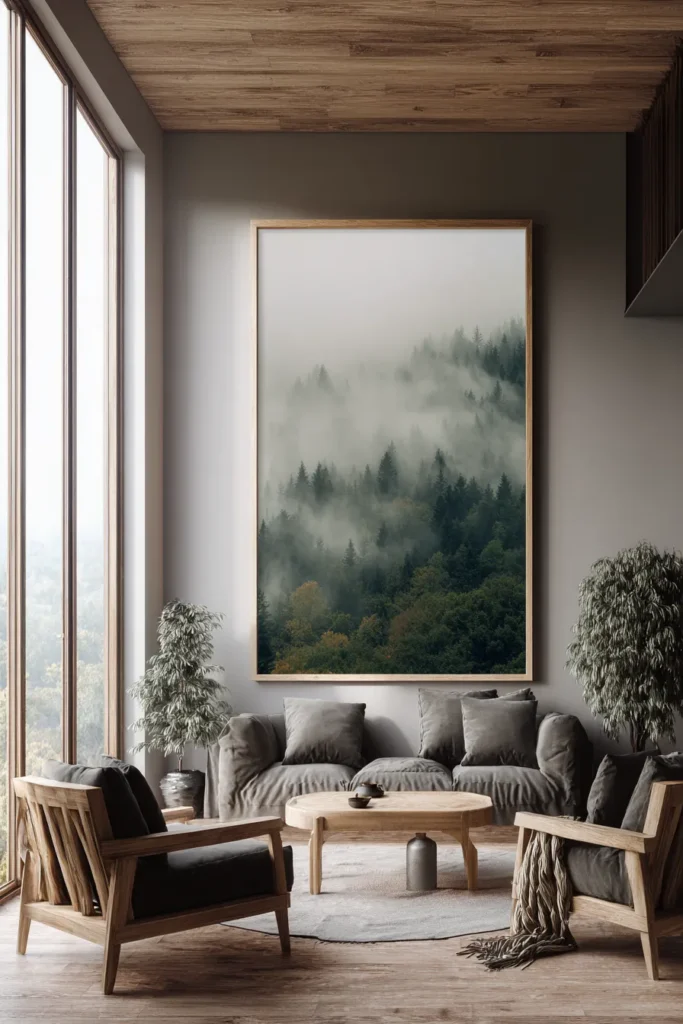
A single stunning nature photograph—crashing waves, misty forests, desert landscapes, mountain vistas—brings meditative calm and expansive beauty to living room walls. Large-format photography (40×60 inches or bigger) transforms walls into windows onto other worlds, offering psychological escape and serene focal points that ground busy lives. The photographic realism creates depth perception that paintings cannot achieve, making small rooms feel more spacious and closed-in walls seem to open outward. In 2026, designers favor nature photography with movement—flowing water, wind-swept grasses, or shifting clouds—over static landscapes.
Nature photography wall art living room installations work across nearly every design style because natural beauty is universally appealing. The key is scale and simplicity—one magnificent image printed large enough to be immersive, framed minimally so the scene takes precedence. Coastal living rooms benefit from ocean photography, mountain homes from alpine vistas, urban apartments from forest scenes that provide visual relief from concrete surroundings. The power lies in the photograph’s ability to transport viewers, offering momentary meditation in the middle of daily routines.
Design Breakdown:
- Select photographs measuring at least 40×60 inches for immersive, window-like presence
- Choose scenes with depth—foreground, middle ground, background—for dimensional illusion
- Frame in slim profiles—black, white, or natural wood—that disappear into the wall
- Print on matte or luster paper rather than glossy for sophisticated, glare-free presentation
- Position centrally on main focal walls where it’s the first thing viewers see
- Select photographs with movement—blurred water, swaying trees—for dynamic energy
- Coordinate colors with your existing palette—blues for coastal rooms, greens for earthy spaces
- Add museum-quality UV-protective glass if hanging near windows
- Consider acrylic face-mounting for contemporary frameless presentation with dimensional depth
- Hang slightly lower than standard art (center around 54 inches) to create horizon-line effect
Best For: Nature lovers, meditation spaces, minimalist living rooms, coastal homes, or anyone seeking calming, expansive wall art.
Conclusion
Wall art living room designs in 2026 embrace both boldness and restraint—knowing when to make dramatic statements with oversized abstracts or sculptural pieces, and when to let curated simplicity speak through minimalist line art or botanical prints. Whether you’re drawn to the adaptability of floating shelf galleries, the worldly sophistication of vintage maps, or the tactile warmth of woven tapestries, the right wall art transforms empty space into personal expression.
The most successful living rooms balance scale, texture, and meaning—choosing pieces that fit your walls physically while resonating emotionally. Mix permanent installations with flexible displays, invest in statement pieces that anchor your space, and don’t be afraid to evolve your walls as your tastes grow. Your living room walls are opportunities for daily inspiration—fill them with art that makes you pause, breathe, and feel at home.
Frequently Asked Questions
What size wall art is best for a living room?
Wall art size depends on your wall dimensions and furniture scale. For above sofas, choose artwork spanning 60-75% of the sofa’s width—typically 50-70 inches for standard sofas. Single statement pieces should be at least 40×30 inches to make proper impact, while gallery wall arrangements can include varied sizes from 5×7 inches up to 24×36 inches. The key is proportion: larger walls and rooms demand bigger art to avoid looking undersized. In 2026, designers favor fewer, larger pieces over cluttered small collections.
How high should wall art be hung above a sofa?
Hang wall art 6-8 inches above your sofa back, centering the artwork horizontally over the furniture. This creates visual connection without crowding. If hanging a single piece, position it so the center sits at 60-66 inches from the floor (slightly higher than standard 57-inch eye level to account for seated viewing). For gallery walls or multiple pieces, maintain that 6-8 inch gap from the sofa while ensuring the overall arrangement’s center falls within the 60-66 inch range.
Can you mix different art styles in one living room?
Absolutely—mixing art styles creates dynamic, collected-over-time character. The key is finding unifying elements that create cohesion despite variety. Use consistent framing (all black, all wood, or all brass), maintain a shared color palette across pieces, or limit yourself to one type of subject matter explored in different mediums. In 2026, eclectic mixing is encouraged, but maintain some organizing principle—whether matching frames, complementary colors, or similar tones—to prevent the space from feeling chaotic.
What type of wall art makes a small living room look bigger?
Mirrors, light-colored artwork, and large single pieces create spaciousness in small living rooms. Oversized mirrors reflect light and views, visually doubling space. Large-scale photography or paintings with depth perspective—landscapes, ocean scenes, or abstract pieces with receding colors—create illusions of expanded walls. Avoid cluttered gallery walls with too many small pieces; instead, choose one substantial artwork or a simple three-piece arrangement. Vertical artwork draws eyes upward, making ceilings feel higher in compact rooms.
How do you arrange a gallery wall without drilling multiple holes?
Use picture ledge shelves, adhesive strips rated for your artwork weight, or lean-on-shelf systems that eliminate wall damage. Floating shelves (24-48 inches long) allow you to lean framed art against walls without drilling individual hooks—perfect for renters or indecisive decorators. Heavy-duty adhesive strips (follow weight limits precisely) work for lightweight frames under 8 pounds. Another approach: install a picture rail molding near the ceiling and hang artwork using adjustable wires, allowing repositioning without new holes. These methods offer gallery wall flexibility with minimal commitment.