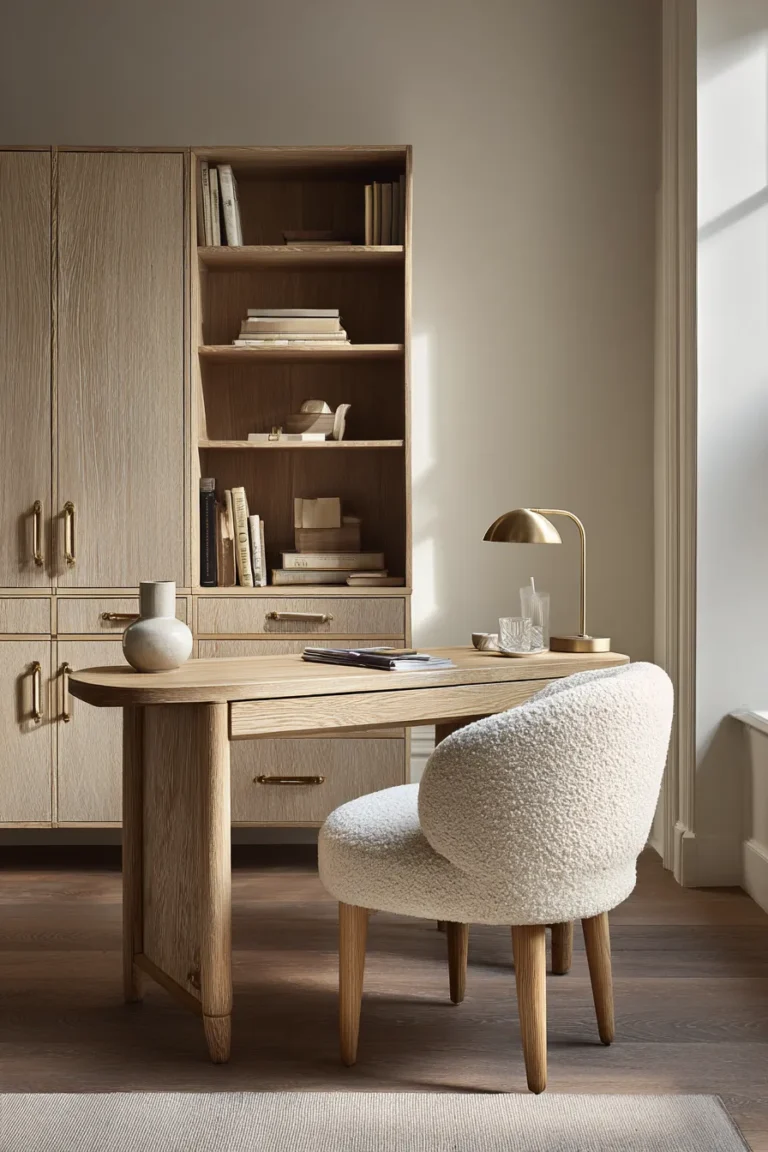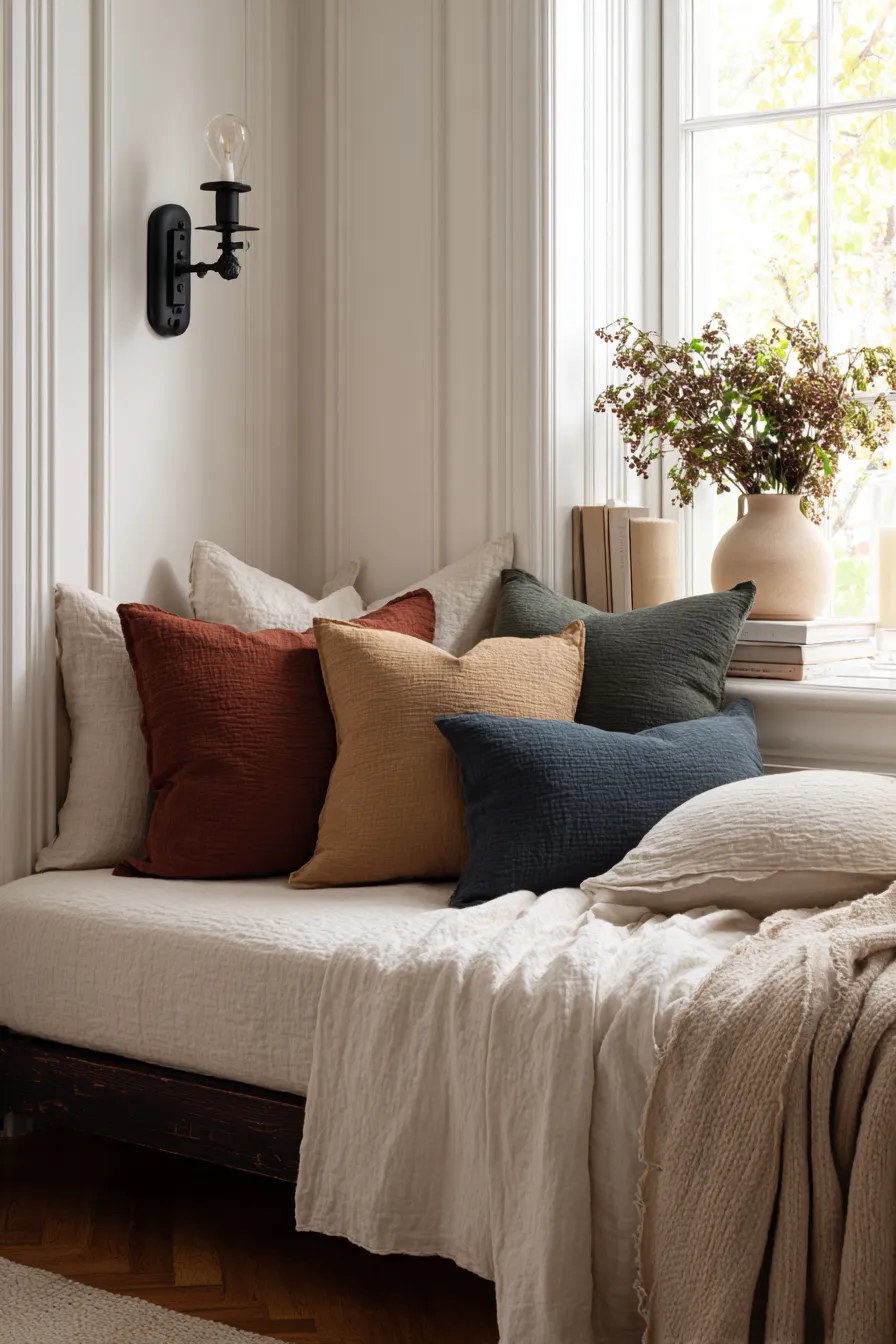
Small apartments don’t mean sacrificing the luxury of a dedicated reading retreat. With thoughtful styling and a designer’s eye, even the tightest corners can become your favorite escape—a place where natural light filters through, textures invite you to settle in, and every detail whispers relaxation. The secret lies not in square footage but in how you layer comfort, optimize vertical space, and curate an atmosphere that makes you want to linger with a good book for hours.
1. Layered Window Ledge Sanctuary
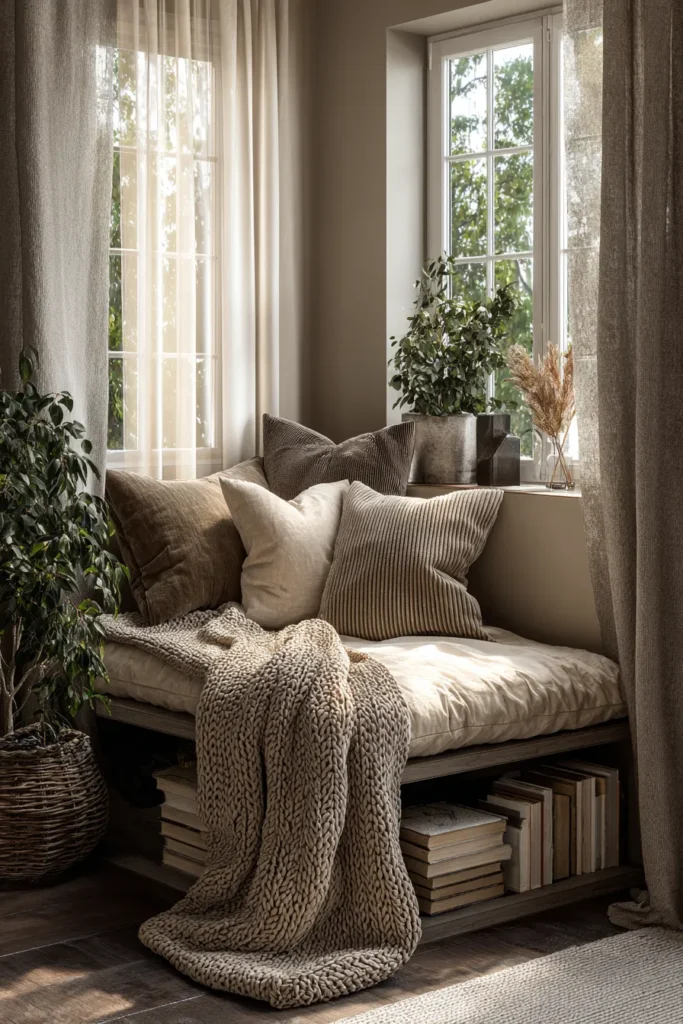
There’s something inherently peaceful about reading by a window—the way daylight shifts throughout the afternoon, the gentle hum of the outside world muted by glass. A window ledge reading nook transforms this architectural feature into a plush perch where cushions stack like clouds and throws drape casually over the edge. The key is building upward with texture: linen pillows against velvet backs, a chunky knit blanket folding into soft folds, all framed by sheer curtains that filter harsh light into a warm glow. This design works because it requires no additional furniture—just intelligent layering that turns a functional ledge into an irresistible lounging spot. It’s ideal for apartments with deep-set windows or bay window alcoves, where the architecture already carves out intimate space. The layered approach also means you can adjust comfort levels seasonally, swapping heavy wool for breathable cotton as weather shifts.
Design Breakdown:
- Start with a firm base cushion cut to fit the exact ledge dimensions for a custom look
- Layer two to three smaller throw pillows in varying textures—linen, velvet, faux fur
- Add a lumbar pillow against the window frame for back support during long reading sessions
- Drape a lightweight throw blanket over one corner for visual softness and practical warmth
- Install sheer or semi-sheer curtains to diffuse direct sunlight without blocking natural light
- Place a small side table or floating shelf within arm’s reach for tea cups and current reads
- Incorporate potted plants on the windowsill to frame the nook with living greenery
- Choose a neutral color palette with one accent color repeated in pillows and textiles
- Add a small floor lamp or clip-on reading light for evening ambiance
- Consider a low-profile storage basket beneath the window for extra blankets or magazines
Best For: Studio apartments with architectural window features, minimalists who prefer furniture-free solutions, or anyone seeking a daytime reading spot with natural light.
2. Velvet Alcove With Ambient Glow
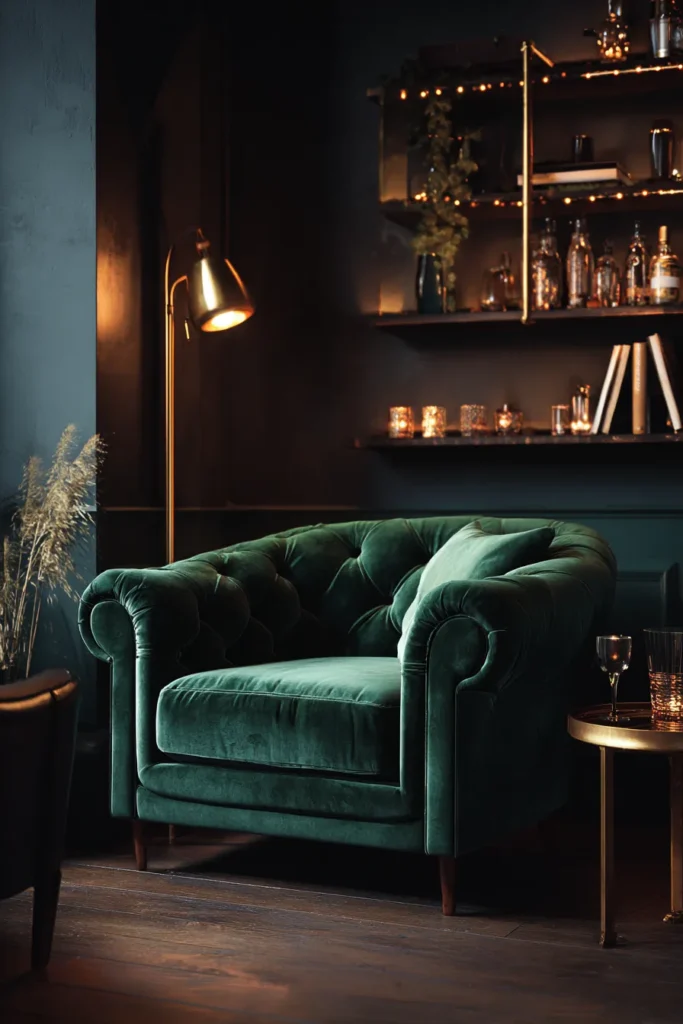
Velvet has this unmistakable ability to transform ordinary spaces into something that feels luxurious and cocooning—like stepping into a jewel box. A velvet alcove reading nook plays with this richness, wrapping a small corner in plush upholstery that catches light differently throughout the day. Deep emerald, sapphire, or burnt amber velvet on a compact armchair or floor cushion set becomes the anchor, while layered lighting—a brass floor lamp, string lights tucked behind shelving, perhaps a salt lamp on a nearby surface—creates that amber-hour glow even at midnight. This approach works particularly well in apartments with awkward corners or narrow spaces between furniture, where traditional seating arrangements fail. The velvet’s texture adds visual weight without physical bulk, making the corner feel intentional rather than leftover. Ambient lighting completes the transformation, ensuring the nook remains inviting long after sunset.
Design Breakdown:
- Select a velvet armchair in a jewel tone or rich neutral that complements your existing palette
- Position the chair in a corner or against a wall to define the nook’s boundaries
- Layer lighting with a tall floor lamp featuring a warm-toned bulb for reading clarity
- Add string lights or LED strips behind floating shelves for soft background illumination
- Place a small round side table in brass or wood finish to echo the warm lighting tones
- Incorporate a textured throw blanket—chenille or bouclé—to contrast velvet’s smoothness
- Hang a small mirror opposite the light sources to reflect and multiply the ambient glow
- Add one or two metallic accent pieces—a gold picture frame, copper plant pot
- Consider a plush area rug beneath the chair to further define and soften the space
- Include a scented candle or diffuser to engage multiple senses and deepen the cozy atmosphere
Best For: Evening readers, maximalists who love rich textures, or anyone creating a moody, intimate retreat within a larger room.
3. Floating Shelf Library Wall
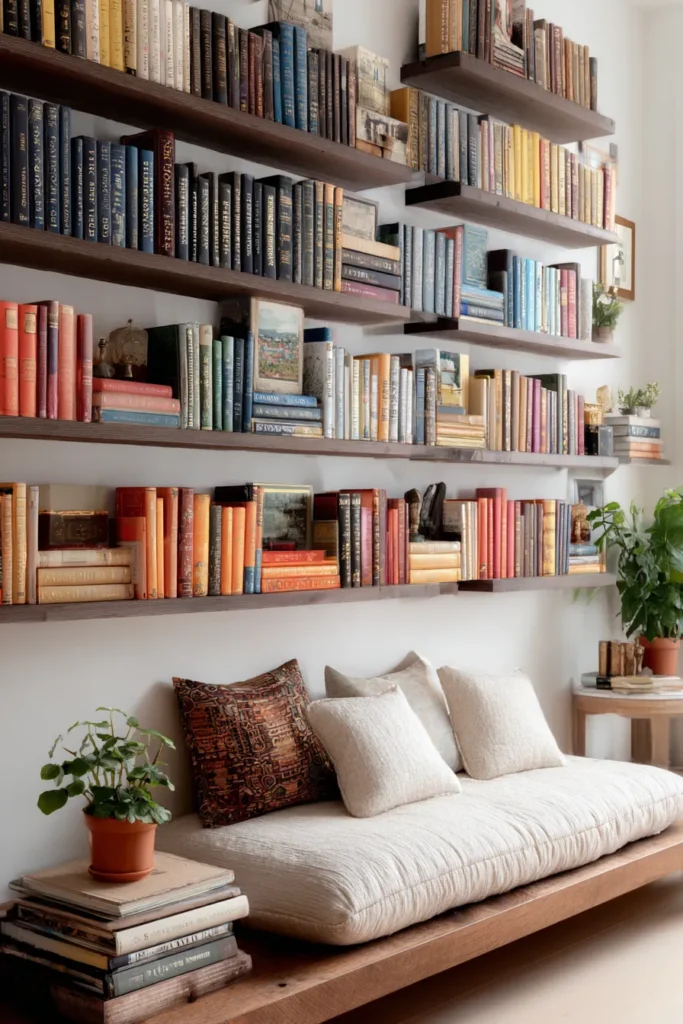
When floor space is non-negotiable, vertical real estate becomes your canvas. A floating shelf library wall transforms blank walls into a cascading display of books, plants, and personal treasures—all while keeping your reading material within arm’s reach. The magic happens in the arrangement: books stacked horizontally and vertically, spines facing out in color-coordinated sections, with negative space left intentionally to prevent visual overwhelm. Below this curated display, a simple floor cushion, pouf, or low-profile chair completes the nook. This design celebrates your collection as decor rather than hiding it away, creating a backdrop that feels both intellectual and artistic. The vertical emphasis draws the eye upward, making small spaces feel taller and more expansive. It’s a solution that works in any room—bedroom corner, living room alcove, even a wide hallway—because the shelving defines the nook without requiring structural changes.
Design Breakdown:
- Install three to five floating shelves at staggered heights for visual interest and accessibility
- Mix shelf depths—narrower for paperbacks, deeper for coffee table books and decorative objects
- Arrange books by color gradient or genre, leaving breathing room between groupings
- Integrate small potted plants or trailing vines to break up solid blocks of books
- Add picture ledges below the main shelves for rotating displays of current reads
- Place a large floor cushion or meditation pillow directly below as your seating base
- Include a standing lamp or wall-mounted sconce at reading height
- Use decorative bookends in brass, marble, or sculptural forms as functional art
- Incorporate one or two framed art prints among the books for personality
- Keep the lowest shelf at seated eye level for books you reach for most frequently
Best For: Book collectors, visual learners who love seeing their full library, or compact apartments where traditional bookcases overpower the space.
4. Minimalist Floor Cushion Corner
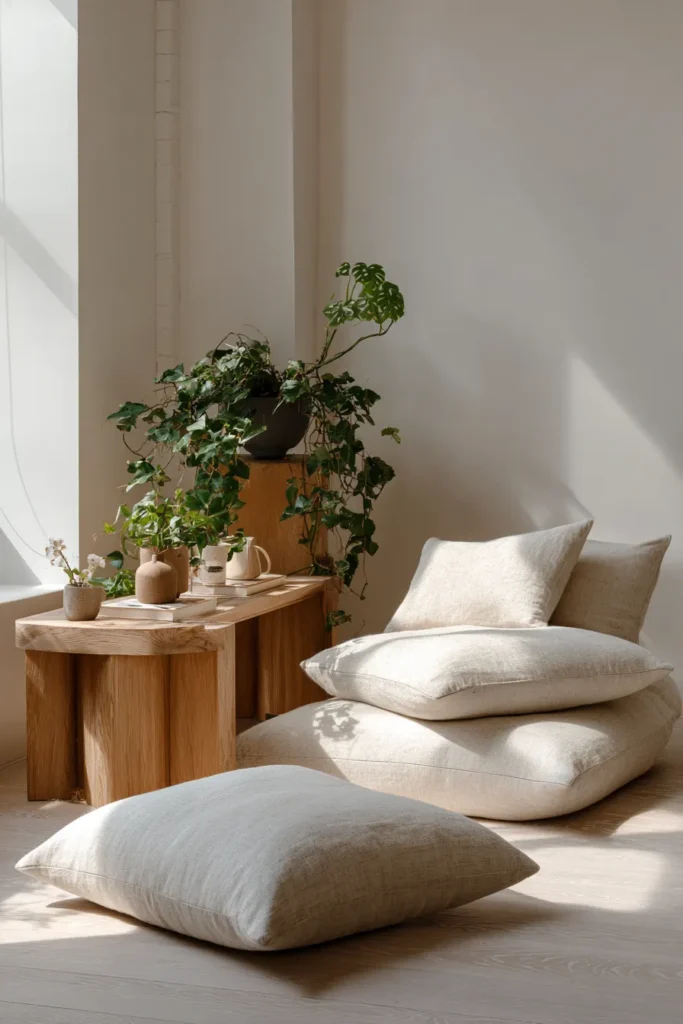
There’s an understated elegance to lowering your reading experience to floor level—it shifts perspective, creates intimacy, and requires almost no commitment of space or budget. A minimalist floor cushion corner strips the reading nook to its essence: a few oversized cushions in neutral tones, a small side table that doubles as a book stack, and perhaps a single trailing plant casting shadows on the wall. The beauty lies in its impermanence; you can create and dissolve this nook as needed, perfect for studio dwellers or anyone who values flexibility. The low profile keeps sightlines open, making small rooms feel less cluttered, while the cushions themselves become sculptural elements when not in use. This approach draws from Japanese and Scandinavian design principles—finding luxury in simplicity and quality over quantity.
Design Breakdown:
- Choose two to three oversized floor cushions (24″ or larger) in linen, canvas, or washed cotton
- Layer a base cushion with a smaller lumbar pillow for back support against the wall
- Select a neutral color palette—oatmeal, charcoal, warm white—with one textural variation
- Add a low wooden tray or small side table (12-18″ height) for beverages and books
- Place the cushions in a room corner to create natural boundaries
- Include one large format art print or tapestry on the wall above as a focal point
- Position a simple floor lamp with an adjustable arm for directed reading light
- Add a small potted plant—snake plant or pothos—in a ceramic vessel
- Use a natural fiber rug (jute or sisal) to define the nook’s footprint
- Keep the space free of clutter; store books in a nearby basket when not actively reading
Best For: Minimalists, those who prefer flexible furniture arrangements, or readers who find floor-level seating naturally comfortable and grounding.
5. Cantilevered Reading Perch
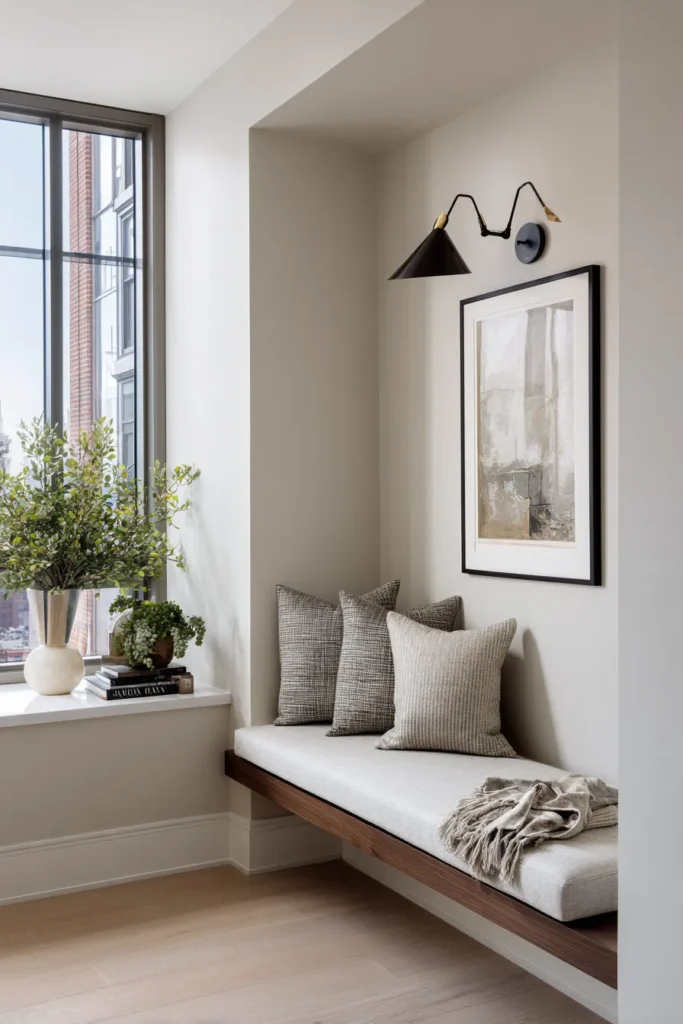
Imagine a reading spot that appears to float—a wall-mounted bench or fold-down seat that maximizes space by eliminating bulky legs and frames. A cantilevered reading perch uses clever mounting to create a sturdy platform that juts from the wall, often with hidden storage beneath or a hinged design that folds away when not in use. Top this architectural element with a thin cushion in weather-resistant fabric (practical for near-window installations), pile on smaller pillows, and you have a reading nook that feels modern and space-conscious. The suspended quality adds visual lightness to small rooms, and the wall attachment means you can install it at the perfect height for your body—no more too-high or too-low compromises with standard furniture. This design shines in narrow spaces like hallways or bedroom alcoves where traditional chairs simply won’t fit.
Design Breakdown:
- Install a wall-mounted floating bench or fold-down platform with secure bracket support
- Choose a bench depth of 16-20 inches for comfortable seated reading
- Add a custom-cut foam cushion covered in durable, easy-clean fabric
- Layer with smaller throw pillows in complementary colors for lumbar support
- Mount a swing-arm wall sconce directly above for adjustable task lighting
- Install a narrow floating shelf on the adjacent wall for book and drink storage
- Consider a fold-down design if the nook blocks a pathway when not in use
- Add a small plant on a wall-mounted planter to soften the architectural lines
- Use the space below for a shallow storage basket or magazine rack
- Paint the wall behind in an accent color to define the nook visually
Best For: Ultra-compact apartments, modern design lovers, or awkward spaces like hallways and room transitions where floor space is precious.
6. Textile-Layered Closet Retreat
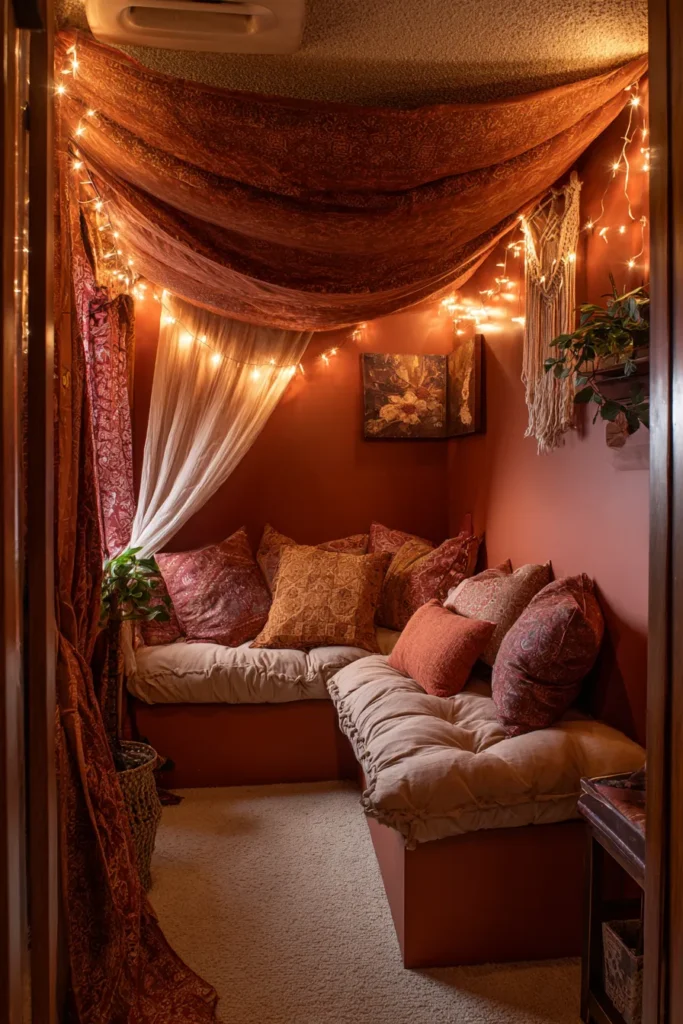
Closets often hold more potential than clothes—especially shallow coat closets or unused storage spaces that can be gutted and reimagined. A textile-layered closet retreat takes this forgotten square footage and transforms it into a fabric-wrapped cocoon where every surface invites touch. Remove the door (or replace it with a curtain for privacy), paint the interior a warm, enveloping color, and install a low bench or pile of floor cushions. Then comes the layering: hanging textiles like small tapestries or fabric panels on the walls, draping string lights from the ceiling, adding a sheepskin or faux fur throw for tactile luxury. The enclosed nature makes it feel like a secret hideaway—your own fort where the outside world fades completely. This design requires minimal construction but maximum styling, using textiles to soften hard edges and create acoustic dampening that makes the space feel quieter and more intimate.
Design Breakdown:
- Clear the closet completely and paint walls in a warm, saturated color—terracotta, sage, or deep blue
- Install a low platform or bench (8-12 inches high) that fits wall to wall for seating
- Layer the bench with a thick foam cushion and washable cover
- Hang fabric panels, macramé, or small woven wall hangings on the back wall
- String battery-operated fairy lights or LED strips along the upper perimeter
- Add removable adhesive hooks for hanging a reading light or small storage pouches
- Place several throw pillows in varying sizes against the back wall
- Include a plush throw blanket—faux fur, chenille, or thick knit
- Set a small woven basket or wooden crate on the floor for book storage
- Install a tension rod with a lightweight curtain if you want door-free privacy
Best For: Renters seeking non-permanent solutions, introverts who crave enclosed spaces, or anyone with an underutilized closet near a living area.
7. Scandinavian Corner With Natural Textures
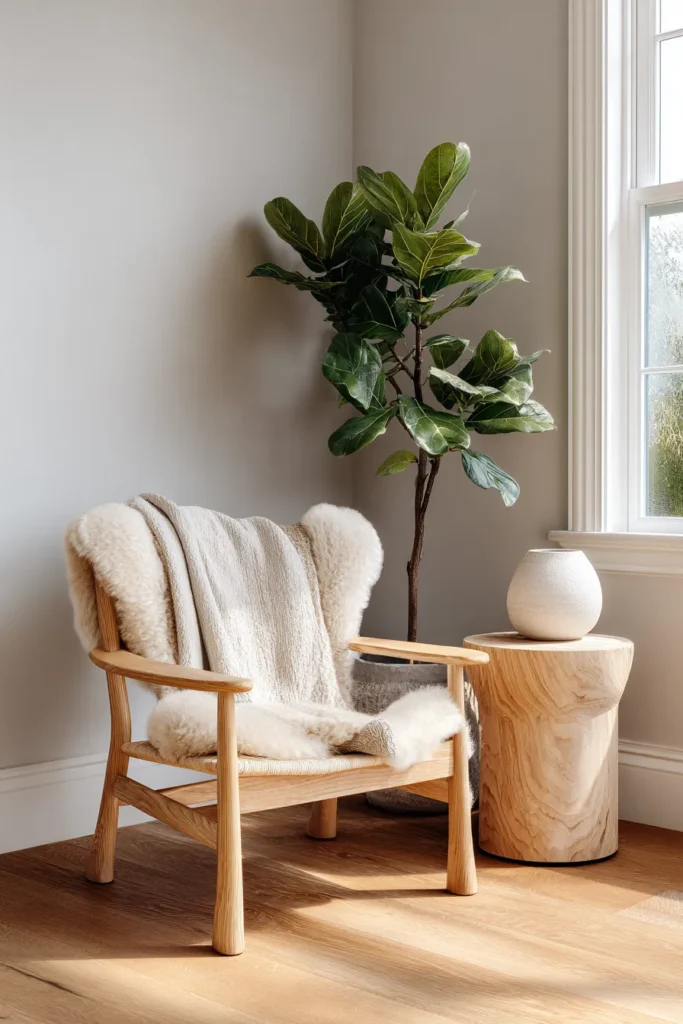
Scandinavian design has perfected the art of warm minimalism—spaces that feel uncluttered yet deeply inviting, where natural materials and neutral tones create calm without coldness. A Scandinavian corner reading nook brings this philosophy to life through light wood furniture, linen textiles, and organic shapes. Picture a simple oak or birch chair with clean lines, a sheepskin draped over the seat, a ceramic side table holding a single stem in a glass vase. The walls might be white or soft gray, but warmth comes from the wood tones and the way natural light interacts with matte surfaces. This aesthetic works beautifully in small spaces because it avoids visual clutter while still feeling lived-in and human. Every element serves a purpose, and the restraint in decoration allows each piece to shine—including you and your book.
Design Breakdown:
- Select a wooden chair in light oak, ash, or birch with minimal ornamentation
- Add a natural sheepskin or faux fur throw directly on the seat for softness
- Choose a small side table in the same wood tone or ceramic in matte white
- Position the nook near a window to maximize natural light exposure
- Add one large floor plant in a simple terracotta or ceramic pot—fiddle leaf fig or rubber plant
- Hang a simple print or line drawing in a light wood frame on the adjacent wall
- Include a woven basket in natural fibers (seagrass, jute) for storing throws or books
- Use a lightweight linen throw blanket in cream, gray, or soft beige
- Install a simple pendant light with exposed bulb for evening reading
- Keep surfaces mostly clear, displaying only one or two meaningful objects
Best For: Those who find peace in simplicity, lovers of natural materials, or apartments with abundant natural light that deserves to be showcased.
8. Wall-Hugging Bench Nook
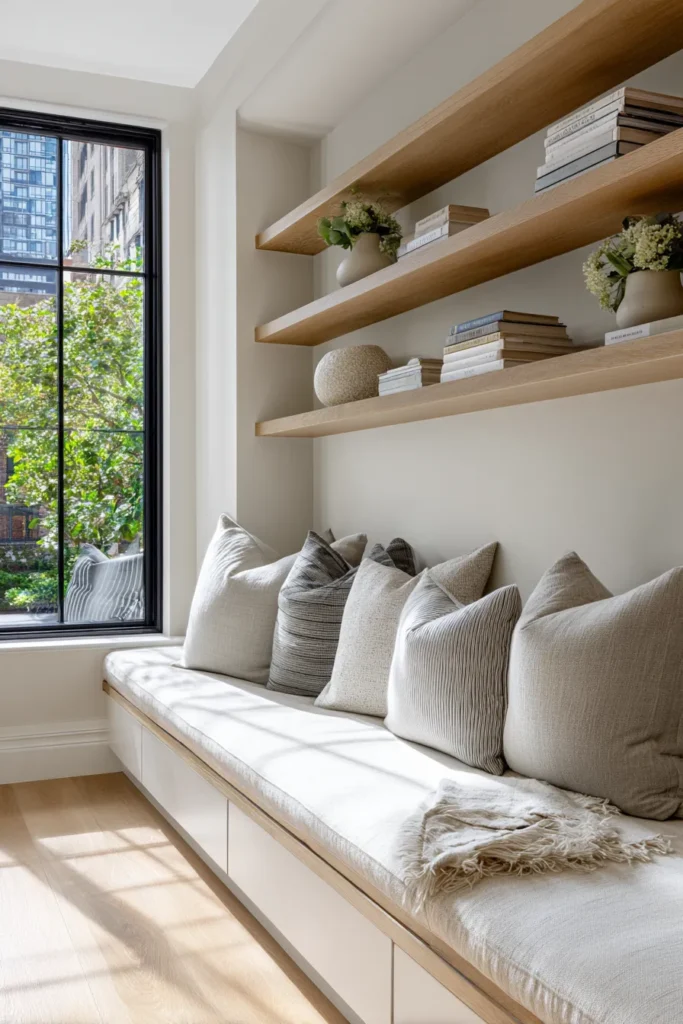
Sometimes the best reading nooks aren’t carved from corners but created along empty walls that beg for purpose. A wall-hugging bench nook runs parallel to a wall, often beneath windows or between room features, creating a linear seating area that maximizes length rather than depth. This long, low profile keeps floor space feeling open while providing generous seating—perfect for stretching out with a book or curling up in different positions throughout a reading session. The bench itself might be built-in or a slim console pushed against the wall, topped with a continuous cushion that feels like a daybed. Storage drawers below are common, turning wasted space into functional organization. The linear design also allows for multiple pillows arranged in a row, creating options for where to nest depending on light conditions or mood.
Design Breakdown:
- Install or position a long, low bench (16-18 inches deep) along an underutilized wall
- Add a continuous bench cushion in durable upholstery fabric cut to exact bench dimensions
- Arrange four to six throw pillows in graduated sizes along the length for variety
- Mount floating shelves above at different intervals for books and decorative objects
- Include under-bench storage with baskets or built-in drawers if space allows
- Position the bench beneath a window to take advantage of natural light
- Add a floor lamp at one end or wall-mounted sconces at intervals for evening use
- Layer a textured throw blanket across the middle third of the bench
- Use a long, narrow rug in front to define the nook and add warmth underfoot
- Keep the wall above simple—one large piece of art or a series of small prints
Best For: Narrow rooms, studio apartments with long walls, or families where multiple people might want to use the reading space at different times.
9. Vintage Armchair Vignette
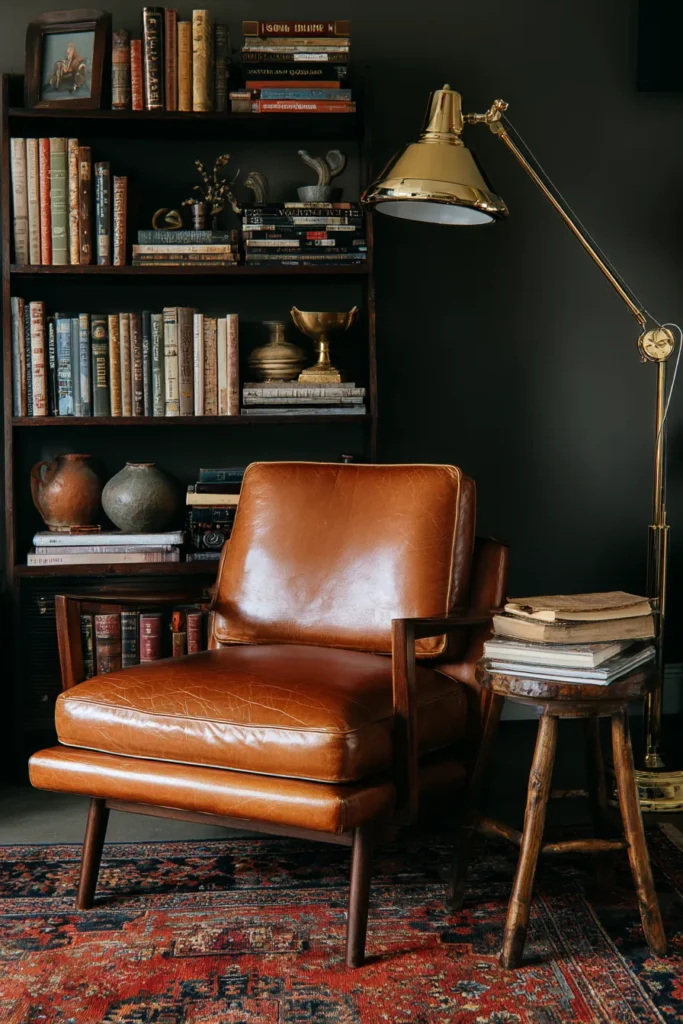
There’s timeless appeal in a well-worn leather chair or a velvet wingback that’s seen decades of readers—vintage pieces carry stories that new furniture simply can’t replicate. A vintage armchair vignette builds a reading nook around one statement piece: a chair with character, patina, and presence. Perhaps it’s a mid-century lounge chair in caramel leather, or a Victorian-style reading chair reupholstered in faded florals. The surrounding elements play supporting roles—a brass floor lamp with articulated arm, a stack of vintage books on a wooden stool serving as a side table, a Persian or Turkish rug anchoring the composition. This approach works in small spaces because one beautiful piece commands attention, eliminating the need for multiple furniture items. The vintage element also adds depth and personality that makes a small apartment feel curated rather than temporary.
Design Breakdown:
- Source a vintage armchair with good bones—leather, velvet, or quality upholstery
- Position the chair at an angle to the wall rather than flush against it for dimension
- Add a vintage or antique side table, wooden stool, or small chest as a surface
- Include a brass or aged metal floor lamp with an adjustable arm for task lighting
- Layer a small area rug (4×6 or 5×7) beneath the chair in traditional or Persian patterns
- Stack several vintage hardcover books on the side table for decorative height
- Add one or two throw pillows in complementary vintage fabrics or modern contrast
- Hang vintage art, botanical prints, or antique mirrors on the adjacent wall
- Include a small plant in a vintage brass or ceramic pot
- Keep modern elements minimal to let the vintage pieces anchor the aesthetic
Best For: Lovers of history and character, eclectic decorators, or anyone building a collected-over-time interior rather than a matching furniture set approach.
10. Multi-Level Platform Reading Space

Think beyond single-surface seating and imagine a reading nook with varied elevations—a low platform base topped with cushions, a raised back section for lumbar support, perhaps even a step-down area for tucking your feet. Multi-level platform reading spaces use dimensional changes to create ergonomic comfort and visual interest, often incorporating built-in storage within the platform levels themselves. This Japanese-inspired approach works beautifully in small apartments because it defines the reading zone architecturally without walls or dividers. The platform edges become natural boundaries, and the varied heights invite different lounging positions—sitting upright, reclining, or sprawling sideways with pillows. The construction can be simple: stacked wooden boxes, a DIY frame with plywood levels, or repurposed furniture pieces arranged strategically. Top everything with thick cushions and you have a reading nook that feels like custom built-ins without the permanent commitment.
Design Breakdown:
- Create a base platform 8-12 inches high using wood frames, pallets, or storage cubes
- Add a second elevated section at the back (16-20 inches high) for back support
- Top all platform surfaces with thick foam cushions cut to fit precisely
- Use removable, washable covers in durable canvas or performance fabric
- Incorporate storage within platform levels—drawers, open cubes, or hinged lids
- Arrange multiple throw pillows at varying heights for adjustable comfort
- Position the platform in a corner or against a wall for structural support
- Add a low-hanging pendant light or floor lamp nearby for task lighting
- Include a small side table or tray that bridges platform levels
- Define the perimeter with a textured area rug that extends slightly beyond the platform edges
Best For: DIY enthusiasts, those who change reading positions frequently, or apartments where built-in furniture would add value and function.
11. Curved Nook With Pendant Drama

Architecture loves straight lines, but reading nooks thrive in curves—rounded corners, arched alcoves, or circular chairs that wrap around you like a hug. A curved nook with pendant drama takes advantage of architectural curves (or creates them with rounded furniture) and pairs this soft geometry with a dramatic overhead light fixture. Imagine a barrel chair in a room corner, its curved back creating natural embrace, with a sculptural pendant light dropping from above like a design exclamation point. Or an actual curved alcove painted in a bold color, with a rounded bench fitted precisely to the space. The curved lines feel inherently more relaxing than sharp angles—our bodies respond to them differently, sensing safety and enclosure. The pendant light adds verticality and draws attention upward, making small nooks feel more significant than their square footage suggests.
Design Breakdown:
- Select a curved armchair—barrel chair, papasan, or rounded lounge—as the seating anchor
- Position in a corner or alcove to maximize the enveloping feeling
- Install a statement pendant light directly above with dimmer control for mood adjustment
- Choose a pendant with visual interest—woven rattan, sculptural metal, or colored glass
- Add a curved side table or round ottoman that echoes the circular theme
- Layer a round area rug beneath to reinforce the curved geometry
- Include curved or circular art on the adjacent wall—round mirrors, circular prints
- Use throw pillows in curved shapes or with circular patterns
- Paint the wall behind in a bold accent color to define the nook’s boundaries
- Add one trailing plant in a hanging planter to soften the overhead space
Best For: Apartments with architectural curves to highlight, design lovers who want statement moments, or anyone seeking a more enveloping, womb-like reading environment.
12. Monochromatic Minimalist Haven

Color can energize or overwhelm—sometimes the most peaceful reading nooks are those that eliminate chromatic noise entirely. A monochromatic minimalist haven uses a single color family in varying shades and textures to create depth without distraction. All-white with cream and ivory variations. Shades of gray from charcoal to pale dove. Warm beiges from sand to caramel. The magic happens through textural contrast: a linen chair against a plaster wall, a wool throw on smooth leather, matte ceramic beside glossy lacquer. This approach feels sophisticated and expansive, making small spaces appear larger because there’s nothing competing for visual attention. Your books become the color, and you become the focal point. The monochrome palette also photographs beautifully and adapts easily as your style evolves—simply swap one texture for another while maintaining the color harmony.
Design Breakdown:
- Choose one color family and commit fully—every element should fall within that spectrum
- Select a primary seating piece in your base color with textural interest
- Layer at least three different fabric textures—linen, velvet, wool, cotton
- Add matte and glossy surfaces for subtle contrast—ceramic pots, lacquered trays
- Include natural materials that align with your color choice—light wood, stone, concrete
- Use varying tones from light to dark within your chosen color family for depth
- Install lighting with warm or cool tones that complement your palette choice
- Add one or two plants with foliage that doesn’t break the color story—succulents for gray, palms for beige
- Keep book spines organized by color or use uniform dust jackets for cohesion
- Let architectural details or a single art piece provide the only pattern or visual break
Best For: Minimalists, those seeking visual calm, or anyone wanting a sophisticated backdrop that makes their book collection or personal style the star.
13. Jewel-Toned Velvet Enclave
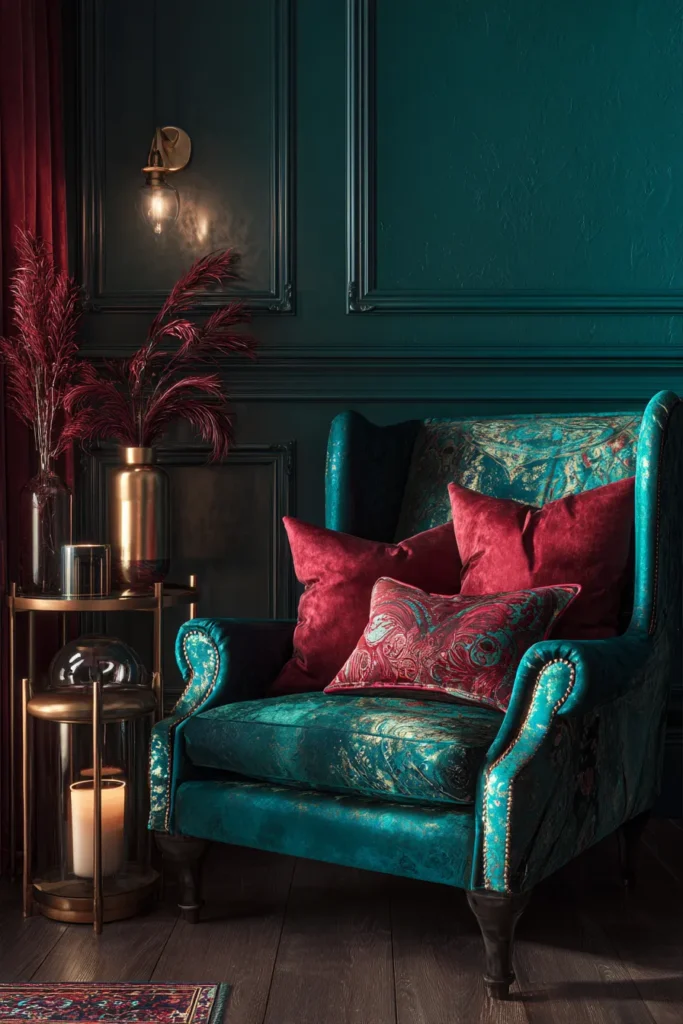
While minimalism has its place, sometimes small spaces crave saturation—bold color that wraps around you and transforms a corner into something that feels like stepping inside a gemstone. A jewel-toned velvet enclave goes all-in on richness: deep emerald walls or curtains, a sapphire velvet chair, ruby-red cushions catching light. Velvet in saturated colors has this quality of absorbing and reflecting light simultaneously, creating depth that flat paint never achieves. The jewel tones make the space feel more intimate rather than smaller—like a cozy cave rather than a cramped corner. This approach works because it’s unapologetically bold; the confidence in color choice makes the design intentional rather than apologetic about limited space. Pair with brass or gold accents that echo the luxury of the jewel tones, and add layered lighting to bring out the color’s full dimensionality.
Design Breakdown:
- Select one dominant jewel tone—emerald, sapphire, ruby, amethyst—as your color anchor
- Choose a velvet armchair or floor cushion set in your primary color
- Paint one accent wall or hang heavy velvet curtains in a complementary jewel shade
- Add throw pillows in a second jewel tone for layered color depth
- Include metallic accents—brass lamp, gold picture frames, copper plant pots
- Layer a richly patterned rug that pulls together multiple jewel tones
- Install warm-toned lighting to enhance the colors’ richness rather than wash them out
- Add natural wood tones to ground the saturated colors and prevent overwhelming
- Include one or two plants with deep green foliage to reinforce the jewel-like quality
- Use books with colorful spines displayed prominently as additional color play
Best For: Maximalists, those who find energy in saturated color, or anyone wanting their reading nook to feel like a luxurious escape rather than an afterthought corner.
14. Industrial Pipe Shelf Corner

Industrial design brings honest materials and functional aesthetics to small spaces—no hiding the construction, no pretending things are more delicate than they are. An industrial pipe shelf corner uses black iron pipes and reclaimed wood to create sturdy, customizable shelving that doubles as room architecture. The pipes run vertically and horizontally, creating a framework for wood plank shelves at varying heights—some for books, some for plants, one at the perfect height for a reading light. Below, a simple chair or floor cushion completes the nook. The raw materials feel authentic and unprecious, perfect for apartments where you want character without fragility. The open shelving keeps sightlines clear, and the black pipes add graphic interest against light walls. This aesthetic pairs beautifully with vintage furniture and brings an urban loft feeling to any apartment, regardless of actual architecture.
Design Breakdown:
- Install black iron pipe shelving using floor-to-ceiling supports or wall-mounted brackets
- Use reclaimed wood, pine, or butcher block planks cut to desired shelf lengths
- Stagger shelf heights for visual interest and functional variety—8 to 16 inches apart
- Position one shelf at seated eye level specifically for current reads and a task lamp
- Add an industrial-style chair—metal frame, leather seat—or keep seating simple with cushions
- Include Edison bulb lighting on a black cord or industrial cage pendant
- Display books with mix of vertical and horizontal stacking for casual feel
- Add metal or glass containers for pens, bookmarks, and small objects
- Include one or two plants in simple terracotta or metal pots
- Leave some shelves partially empty to avoid cluttered appearance
Best For: Urban apartments, lovers of raw materials and honest construction, or anyone building an eclectic, collected-over-time interior with character.
15. Daybed Reading Lounge

Why settle for a reading chair when you can have a reading bed? A daybed reading lounge transforms the nook into a place where you might start with a book and end with a nap—and that’s perfectly acceptable design. Daybeds offer the horizontal space to truly sprawl, switching positions every chapter, piling pillows behind your back, or lying flat while holding your book overhead. In small apartments, a daybed pulls double duty: reading nook by day, guest bed by night, or even primary sleeping spot in studio layouts. The key is styling it to look intentional rather than like unmade bedding—a fitted cover in beautiful fabric, an array of pillows arranged precisely, a throw blanket folded at the foot. Position it near a window for natural light or against a wall for a cozy corner feeling. Add a wall-mounted reading light and a side table within reach, and you have a reading lounge that might actually be the most comfortable spot in your entire apartment.
Design Breakdown:
- Select a daybed frame in wood, metal, or upholstered style that fits your aesthetic
- Use a fitted daybed cover in durable, washable fabric—linen, cotton, or performance blend
- Arrange multiple pillows against the wall in graduated sizes—large euros in back, smaller squares forward
- Add a long lumbar pillow across the back for full-length support
- Include a cozy throw blanket folded or draped over one end
- Position near a window for natural light or in a corner for an alcove feeling
- Mount a swing-arm or adjustable wall sconce for reading light that doesn’t require floor space
- Add a small side table or C-table that tucks beside the daybed
- Include a basket underneath or nearby for storing extra pillows and throws
- Define the space with an area rug if the daybed sits in the middle of a larger room
Best For: Studio apartments, multipurpose rooms, or anyone who reads for hours and values the ability to shift positions frequently without leaving the nook.
16. Rattan and Linen Tropical Escape

Natural fibers and breezy fabrics can transport your reading nook to warmer climates—even if you’re in a basement apartment in winter. A rattan and linen tropical escape uses woven furniture and lightweight textiles to create an airy, vacation-like atmosphere where stress dissolves and imagination wanders. Picture a rounded rattan chair with its organic texture and gentle creak, cushioned with natural linen in sand or white, surrounded by potted palms and trailing vines. The color palette stays neutral and sun-bleached—whites, creams, soft tans—while the textures provide all the interest. This aesthetic works beautifully in small spaces because the lightweight materials and pale colors don’t visually crowd, and the natural elements bring life without clutter. It’s the design equivalent of a deep breath, making even the smallest nook feel expansive and relaxed.
Design Breakdown:
- Choose a rattan or wicker chair—peacock chair, papasan, or rounded egg chair style
- Add thick cushions in natural linen or cotton in cream, white, or sand tones
- Include multiple tropical plants—palms, monstera, bird of paradise—in woven baskets
- Layer a jute or sisal area rug beneath for natural fiber continuation
- Add sheer white or linen curtains if near a window for filtered light
- Include rattan storage baskets for books and throws
- Hang macramé plant hangers or wall hangings for additional texture
- Use natural wood or bamboo side tables for organic material consistency
- Add warm white string lights or a woven pendant light for soft evening ambiance
- Keep metal finishes to a minimum—choose brass or copper if needed for warmth
Best For: Those who dream of coastal living, apartments that need brightening, or anyone seeking a light, airy aesthetic that makes small spaces feel open.
17. Built-In Ledge With Hidden Storage

Sometimes the best design solutions hide in plain sight—literally. A built-in ledge with hidden storage uses wall-mounted platforms or window seat constructions that appear to be solid benches but actually conceal storage compartments underneath. Hinged lids or pull-out drawers hide extra blankets, out-of-season books, or any small apartment overflow that needs a home. The built-in nature makes it feel like original architecture rather than added furniture, seamlessly integrating into the room. Top the ledge with a continuous cushion and pillows, and suddenly your storage solution is also your reading sanctuary. This approach maximizes every cubic inch—using vertical wall space for seating and horizontal internal space for organization. It’s particularly valuable in entryways, bedroom corners, or any transition space where furniture typically blocks flow.
Design Breakdown:
- Install a wall-mounted platform or build a box frame with hinged top for seating and storage access
- Ensure the ledge depth is 16-20 inches for comfortable seated reading
- Add hidden storage with hinged lid, pull-out drawers, or open cubbies at the base
- Top with a custom-cut foam cushion in washable, durable upholstery
- Include several throw pillows against the wall for back support
- Mount floating shelves above for books and decorative items
- Install a wall sconce or small pendant light directly overhead
- Paint the ledge base the same color as walls for seamless integration
- Add a storage basket or two visible on lower shelves for texture and accessibility
- Define the nook with a small area rug in front of the ledge
Best For: Small apartments desperate for storage, renters who want a semi-permanent solution, or awkward spaces like wide hallways and under-stair areas.
18. Artistic Gallery Wall Reading Spot
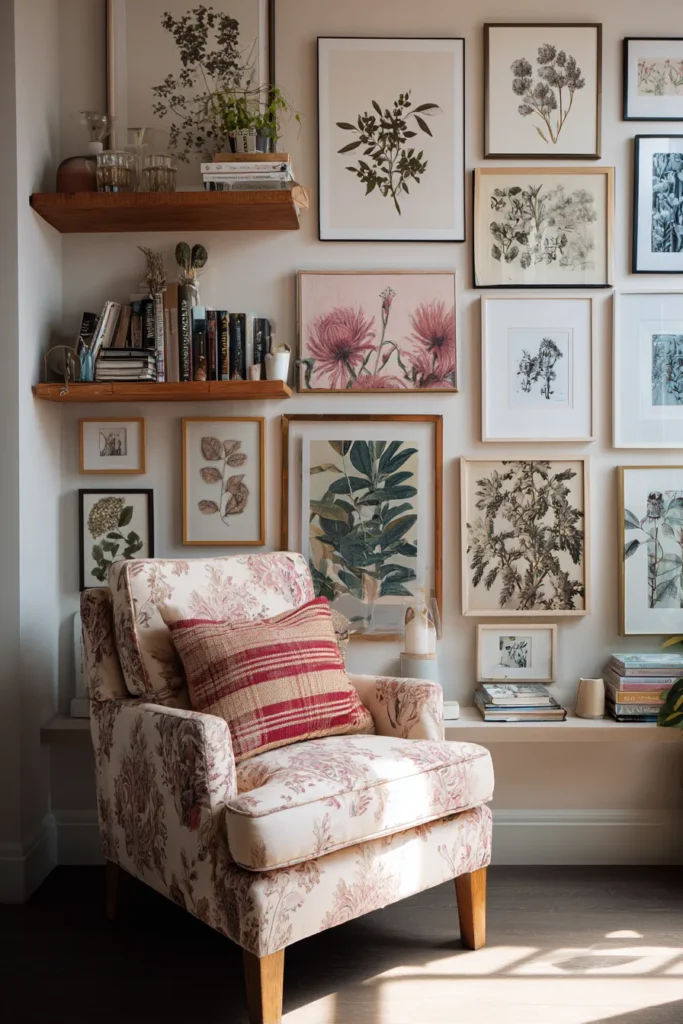
Let your reading nook be surrounded by inspiration—literally. An artistic gallery wall reading spot positions your seating beneath or beside a curated collection of artwork, photographs, prints, and objects that tell your story. The wall becomes an ever-evolving display of what you love: vintage botanical prints, family photos in mismatched frames, abstract paintings, concert posters, embroidery hoops, small shelves holding tiny sculptures. The dense visual interest makes the nook feel deeply personal and collected rather than decorated, like sitting in a cozy corner of a museum where all the art reflects your specific taste. This approach works wonderfully in small apartments because it uses vertical wall space for visual impact without consuming floor area, and the gallery arrangement draws the eye around the nook, making the space feel more expansive and layered.
Design Breakdown:
- Select a simple chair or seating that won’t compete with the wall display
- Collect frames in varying sizes (4×6 to 16×20) with some cohesive element—all wood, all black, all vintage
- Create a gallery arrangement on the floor first before committing to wall placement
- Mix frame orientations—portrait and landscape—for visual rhythm
- Include different types of art—prints, photographs, textiles, three-dimensional objects
- Leave some breathing room between pieces; the wall doesn’t need to be completely covered
- Add small floating shelves within the gallery for rotating displays and small plants
- Install picture lights or a track light above to highlight the collection
- Place your chair slightly angled to allow viewing the gallery while seated
- Rotate pieces seasonally to keep the nook feeling fresh and personally relevant
Best For: Art lovers, collectors, photographers, or anyone who wants their reading nook to feel like the most personal corner of their home.
Conclusion
Creating a cozy reading nook in a small apartment isn’t about finding extra space—it’s about recognizing the potential that already exists in overlooked corners, awkward alcoves, and underutilized walls. Whether you’re drawn to the minimalist calm of a monochromatic haven, the dramatic richness of jewel-toned velvet, or the breezy escape of rattan and linen, there’s a reading nook style that matches your personality and your square footage. The secret lies in thoughtful layering: comfortable seating, proper lighting, personal touches, and the courage to designate space specifically for relaxation in a world that rarely encourages it.
Small apartments demand creativity, but they also invite intimacy—your reading nook doesn’t need to be grand to be transformative. A window ledge stacked with pillows, a closet reimagined as a textile cocoon, or a single vintage chair with a brass lamp can become your favorite spot in the entire home. These 18 ideas prove that luxury isn’t measured in square feet but in the care you put into curating spaces that nourish you.
So whether you’re curling up with a paperback thriller, diving into a design magazine, or simply sitting with your morning coffee while the apartment wakes up around you, your reading nook can be the retreat you deserve—cozy, personal, and entirely yours.
FAQs
How do I create a reading nook in a studio apartment?
Focus on flexible, space-saving solutions like floor cushions with hidden storage, wall-mounted shelves, or a foldable chair that can be tucked away. Use room dividers or tall plants to create visual separation without permanent walls. Position your nook near natural light sources and keep the color palette cohesive with the rest of your studio to maintain visual flow.
What lighting works best for small reading corners?
Layer your lighting for versatility: a primary task light (floor lamp, wall sconce, or clip-on light) with adjustable positioning for reading clarity, plus ambient lighting (string lights, table lamp, or candles) for atmosphere. Choose warm-toned bulbs (2700-3000K) to create cozy ambiance, and install dimmer switches when possible for mood control throughout the day.
Can I make a reading nook without a window?
Absolutely. Compensate for lack of natural light with generous layered lighting and lighter color palettes that reflect available light. Use mirrors strategically to bounce light around the space. Consider battery-operated or plug-in light therapy lamps that mimic natural light. Focus on creating warmth through textiles, plants, and warm-toned lighting rather than relying on windows for coziness.
What colors make reading nooks feel larger?
Light, neutral tones—whites, creams, soft grays, pale blues—reflect more light and create visual expansion. Monochromatic schemes in any color family also make spaces feel more cohesive and spacious. However, don’t fear darker colors; rich jewel tones on a single accent wall can actually make a small nook feel more intentional and cozy rather than cramped.
How do I style a reading nook on a budget?
Start with what you have: repurpose pillows and throws from other rooms, use stacked books as a side table, or create seating from floor cushions. Shop secondhand for vintage chairs and unique lighting. Make your own art or frame fabric swatches. Focus budget on one quality piece—a comfortable chair or good reading lamp—and build around it with affordable textiles and DIY solutions. Nature provides free décor through collected branches, stones, or foraged greenery.