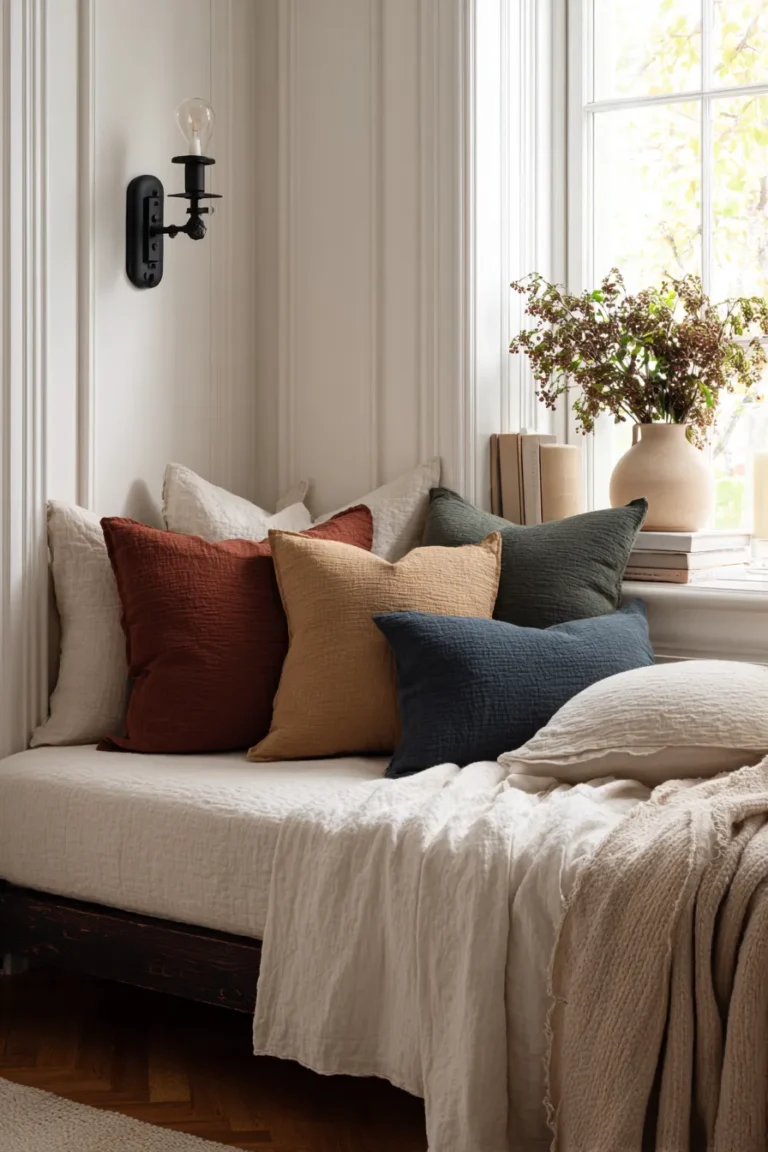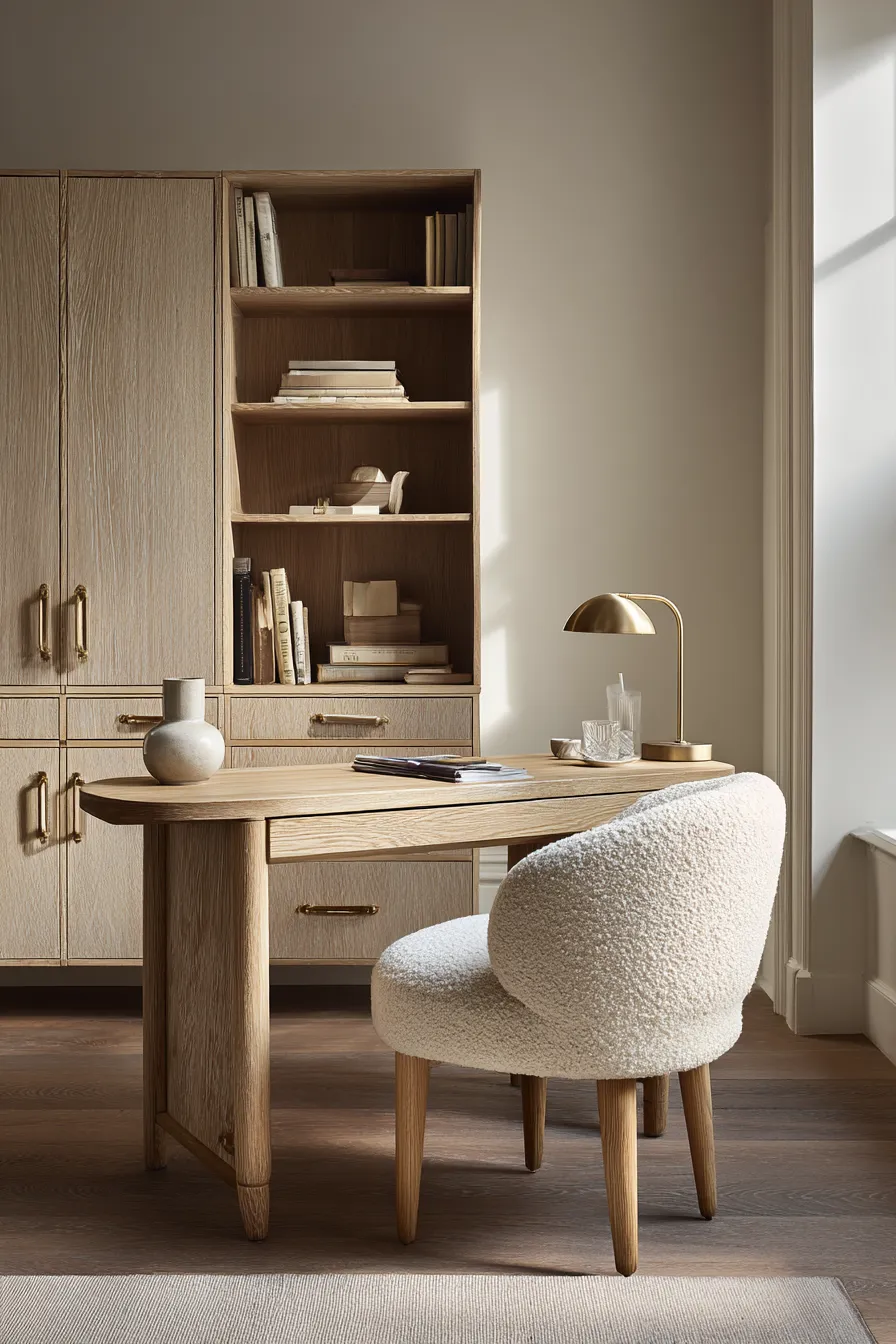
In 2026, reading table design abandons the flat minimalist desk for curved wooden silhouettes with tactile weight—pairing 180gsm linen-wrapped surfaces with unlacquered brass hardware and 2700K task lighting to create spaces that signal permanence over productivity.
The shift is deliberate. Where past decades prioritized lean efficiency and hard-edged geometry, this year’s interiors favor desks that read as architectural fixtures rather than temporary workstations. Think sculptural curves that soften acoustic signatures, materials that develop patina instead of resisting wear, and chromatic atmospheres built from layered earth tones rather than stark neutrals. These reading tables aren’t designed to maximize output—they’re designed to make lingering feel intentional.
What follows are 18 expert-vetted approaches to creating reading surfaces that balance visual weight with sensory depth. Each incorporates the technical specificity that separates designer-grade work from DIY approximations: grain prominence, light reflectance values, and the precise interplay between hard and soft materials.
1. Wall-Facing Floating Walnut Console
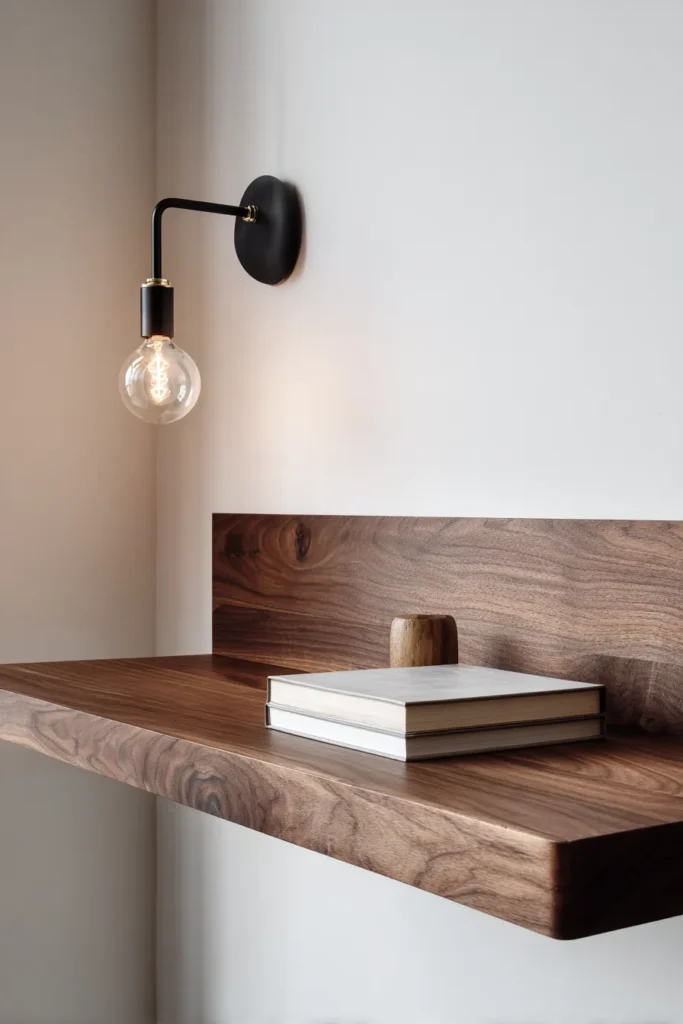
The floating console mounted directly against a wall eliminates visual floor clutter while anchoring the reading zone with American black walnut grain prominence. By cantilevering the surface 14–18 inches from the wall via concealed steel brackets, you create shadow depth (ambient occlusion) that makes the desk appear to levitate. Pair with a sightline-preserving profile—keep the desk depth at 24 inches maximum to prevent visual heaviness.
Designer’s Secret: Position the console 29 inches from finished floor height, not the standard 30-inch desk height. This one-inch drop accommodates thicker seat cushions on vintage reading chairs without forcing awkward arm angles, and it visually lowers the room’s center of gravity for a calmer spatial read.
Design Breakdown:
- Surface: 1.5-inch thick American black walnut with book-matched veneer, satin polyurethane finish (40-sheen level)
- Mounting: Concealed steel cantilever brackets rated for 200+ lbs
- Cable Management: Rear-routed channel with magnetic access panel in matching walnut
- Lighting Pairing: Single articulating wall sconce in matte black with 2700K Edison bulb positioned 18 inches above surface
Best For: Minimalists who need clean sightlines and professionals working in bedrooms or narrow hallways where floor-standing desks create bottlenecks.
2. Curved Racetrack Desk with Burgundy Marble Inlay
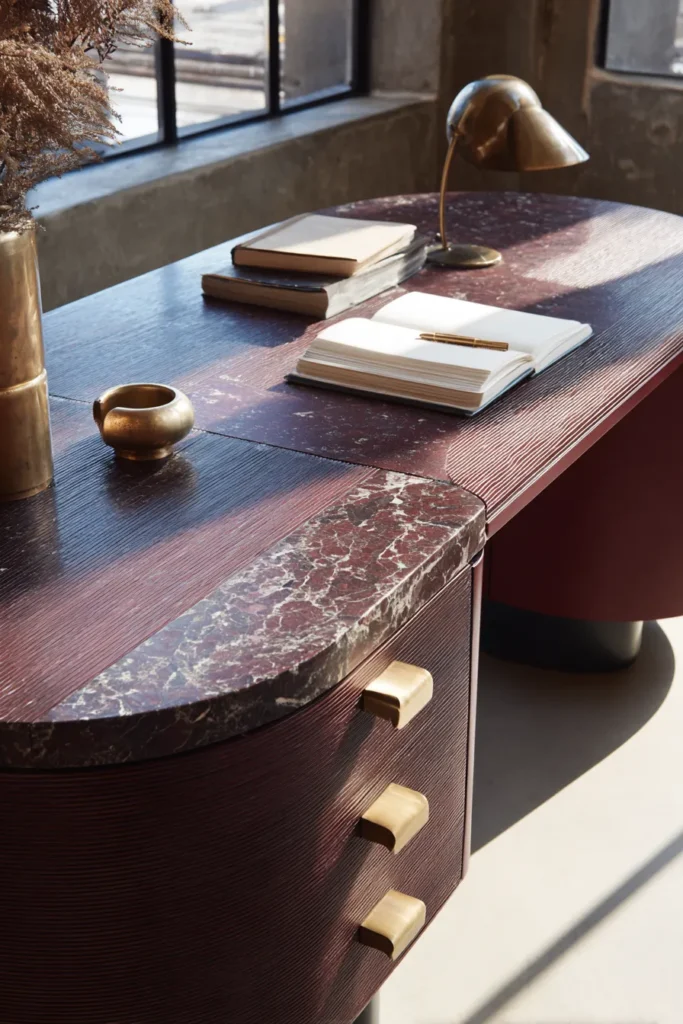
A racetrack profile desk—one with rounded ends and a broad elliptical shape—creates 360-degree visual interest that hard-cornered rectangles can’t match. The 2026 iteration embeds a 6-inch-wide burgundy marble inlay down the center axis, running the full length to create a material spine. This inlay serves dual purposes: it anchors heavy books without surface scratching, and its high light reflectance value (LRV around 25-30 for deep burgundy) creates subtle chromatic warmth without overwhelming the space.
Designer’s Secret: Specify honed marble, not polished. The matte finish prevents glare when desk lamps hit the surface, and fingerprints vanish into the texture. More critically, honed surfaces age with grace—minor etching from acidic coffee rings reads as lived-in character rather than damage.
Design Breakdown:
- Primary Surface: Cerused oak or fumed eucalyptus with wire-brushed texture (highlights grain valleys)
- Inlay Material: Rosso Levanto or Rouge Griotte marble, honed to 180-grit finish
- Hardware: Unlacquered brass drawer pulls (will patina to antique bronze within 6 months)
- Base: Tapered wooden legs in matching finish, or powder-coated steel in warm charcoal (RAL 7021)
Best For: Maximalist collectors who style desks as display surfaces and need a statement piece that holds visual weight in large, high-ceiling rooms.
3. Irregular Organic Edge Live-Edge Reading Table
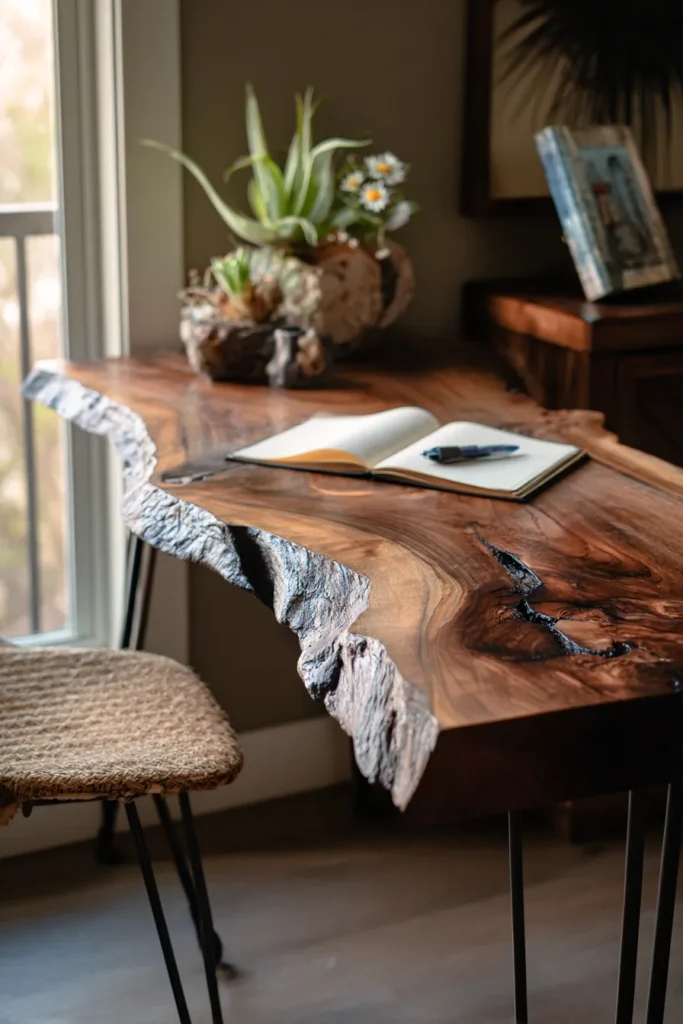
Live-edge tables showcase the tree’s natural contour along one or both long edges, preserving bark inclusions and irregular growth patterns. The 2026 approach pairs these raw edges with precision elsewhere—machined steel hairpin legs or waterfall-edge opposing sides—to prevent the “rustic cabin” read. Select slabs with figure variations (spalting, burl pockets, or dramatic grain shifts) to create focal points that pull the eye across the length.
Designer’s Secret: Treat only the live edge with tung oil, leaving the rest of the surface with a harder conversion varnish. This creates tactile contrast—your fingers sense the waxy, soft edge while the writing surface remains glass-smooth. It’s a sensory cue that reads as intentional craft, not oversight.
Design Breakdown:
- Wood Species: Black walnut, English oak, or figured maple with 2–3 inches of retained sapwood
- Edge Treatment: Hand-sanded to 320-grit, tung oil finish reapplied quarterly
- Top Finish: Water-based conversion varnish (satin, 35-sheen) on writing surface only
- Base Options: Powder-coated steel U-legs in matte black or solid wood trestle in contrasting species
Best For: Biophilic designers and artisan-focused homeowners who want a one-off piece with traceable origins and accept minor seasonal wood movement.
4. Unlacquered Brass & Linen-Wrapped Study Surface
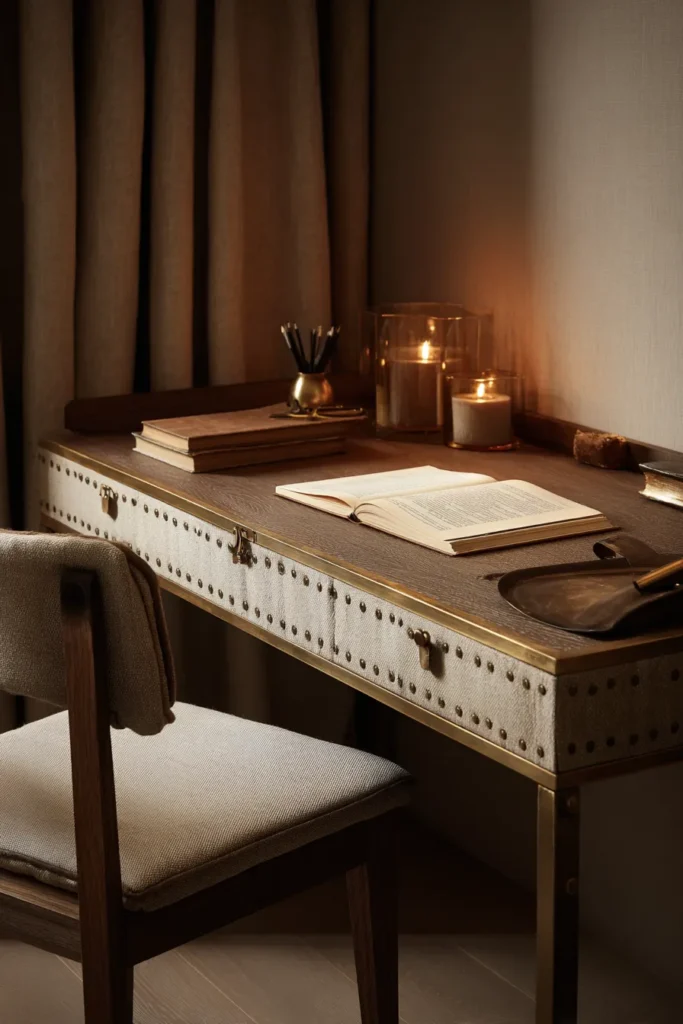
This hybrid approach wraps the desk’s vertical front panel (the apron) in 180gsm stonewashed linen while reserving unlacquered brass for all hardware, edge banding, and optional drawer fronts. The brass develops a living patina—shifting from bright gold to mottled bronze to verdigris green depending on hand oils and humidity. Pair this with a walnut or ebonized oak top to create three-material harmony: warm wood, soft textile, reactive metal.
Designer’s Secret: Install the linen with exposed staples along the underside of the apron, not hidden inside. When viewed from a seated position, these industrial fasteners create an “unfinished luxury” tension—deliberate imperfection that signals craft over mass production. Use stainless steel staples for durability.
Design Breakdown:
- Desktop: 1.25-inch thick walnut or ebonized white oak, matte lacquer (20-sheen)
- Apron Wrap: Heavyweight European linen in natural oatmeal or warm grey, pre-washed
- Hardware: Unlacquered 70/30 brass (70% copper, 30% zinc) for accelerated patina
- Drawer Interiors: Felt-lined in charcoal grey or burgundy for tool/pen protection
Best For: Slow-living advocates and those who view furniture as evolving collaborators rather than static objects; requires comfort with surface changes over time.
5. Modular Wall-Mounted Millwork Desk System
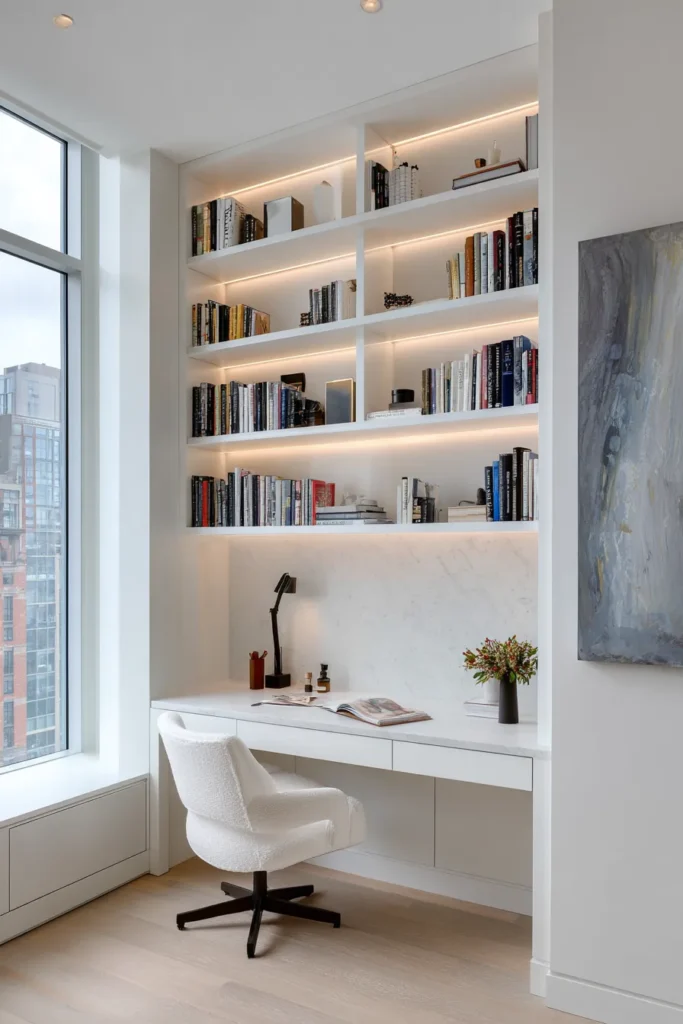
A floor-free desk system integrates directly into wall millwork, creating the illusion of built-in architecture rather than added furniture. The desk surface floats 29 inches high, bracketed between floor-to-ceiling vertical panels that house adjustable shelving, cable raceways, and optional LED strip lighting in recessed channels. Specify the same paint color (Benjamin Moore “White Dove” or Farrow & Ball “Pavilion Gray”) across panels, walls, and ceiling to dissolve boundaries.
Designer’s Secret: Build the desk surface 2 inches shallower than the vertical panels flanking it. This creates a reveal shadow on three sides (top, left, right) that prevents the monochromatic system from reading as a flat wall. The shadow depth adds dimensionality without requiring contrasting colors.
Design Breakdown:
- Desktop Surface: 1-inch thick painted MDF or solid poplar with satin enamel finish
- Vertical Panels: Floor-to-ceiling MDF with integrated cable management channels
- Lighting: Recessed 2700K LED strips with dimmer control, hidden behind 1-inch crown molding lip
- Finish: Three coats premium enamel paint, sanded between coats to furniture-grade smoothness
Best For: Renters seeking permanent-looking built-ins and those prioritizing cable organization in media-heavy workspaces; ideal for narrow rooms.
6. Oversized Curved Wooden Reading Table (Gallery-Scale)
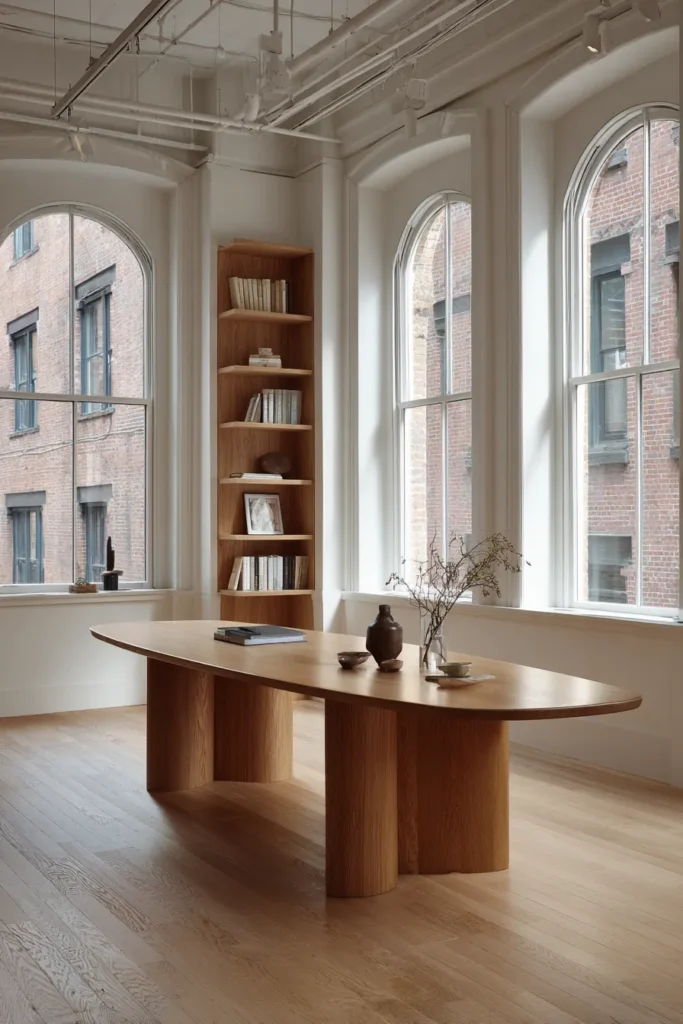
Scale matters. A reading table measuring 96+ inches long and featuring a continuous curved front edge creates volumetric presence that anchors entire rooms. The curve should follow a gentle arc—think 8-foot radius minimum—to avoid cartoonish exaggeration. Pair with a secondary curve along the back edge for full racetrack geometry, or keep the back straight and push it against a wall to reduce visual mass.
Designer’s Secret: Raise the table height to 31 inches instead of the standard 29-30 inches. Counter-intuitively, this makes oversized pieces feel lighter because they align with standing elbow height, creating a “leaning surface” option. The dual-height functionality prevents the massive footprint from reading as single-use furniture.
Design Breakdown:
- Dimensions: 96–120 inches long × 36–42 inches deep × 31 inches high
- Material: Solid rift-sawn white oak or quarter-sawn walnut (vertical grain for stability)
- Edge Profile: 2-inch radius bullnose with hand-sanded transitions
- Base: Solid wood trestle or twin pedestal bases positioned 24 inches from each end
Best For: Gallery-like lofts, double-height living rooms, and collectors who need a singular anchor piece that organizes entire floor plans around its presence.
7. Terracotta & Warm Oak Chromatic Desk
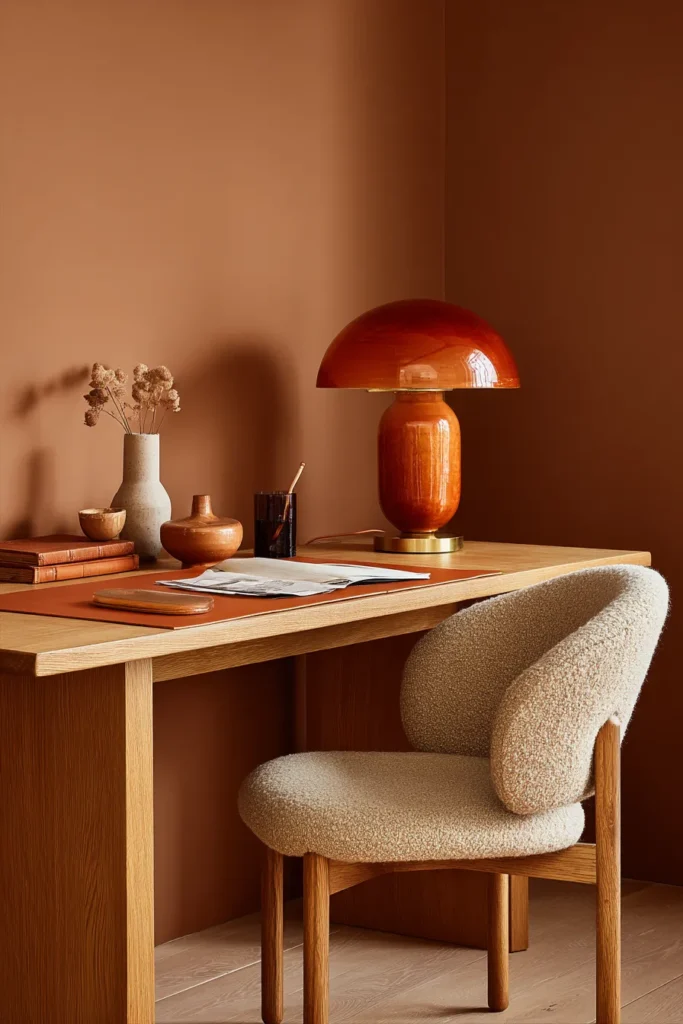
Chromatic atmosphere design layers related hues across multiple surfaces to create emotional resonance. Here, a pale terracotta leather desk pad (vegetable-tanned, aniline-dyed) sits atop a warm white oak surface, with accessories in burnt orange, rust, and clay tones. The limited palette—all within 15 degrees on the color wheel—creates cohesion without monotony.
Designer’s Secret: Match the undertone temperature, not the surface colors. Use a full-spectrum 95+ CRI bulb at 2700K to check whether your terracotta reads too pink (cool undertone) or too orange (warm undertone) against the oak. If there’s temperature clash, shift one element warmer or cooler rather than changing the entire palette.
Design Breakdown:
- Desktop: White oak with natural oil finish (highlights honey tones, not grain texture)
- Leather Pad: 3mm thick vegetable-tanned terracotta leather, 24 × 36 inches
- Accent Objects: Ceramic pen holder in burnt sienna, brass lamp with amber glass shade
- Seating: Upholstered chair in rust-colored wool bouclé (280gsm weight)
Best For: Color-sensitive designers and those seeking warm, enveloping study environments; works in rooms with southern or western light exposure.
8. Glass-Top Desk with Faceted Shadow-Relief Base
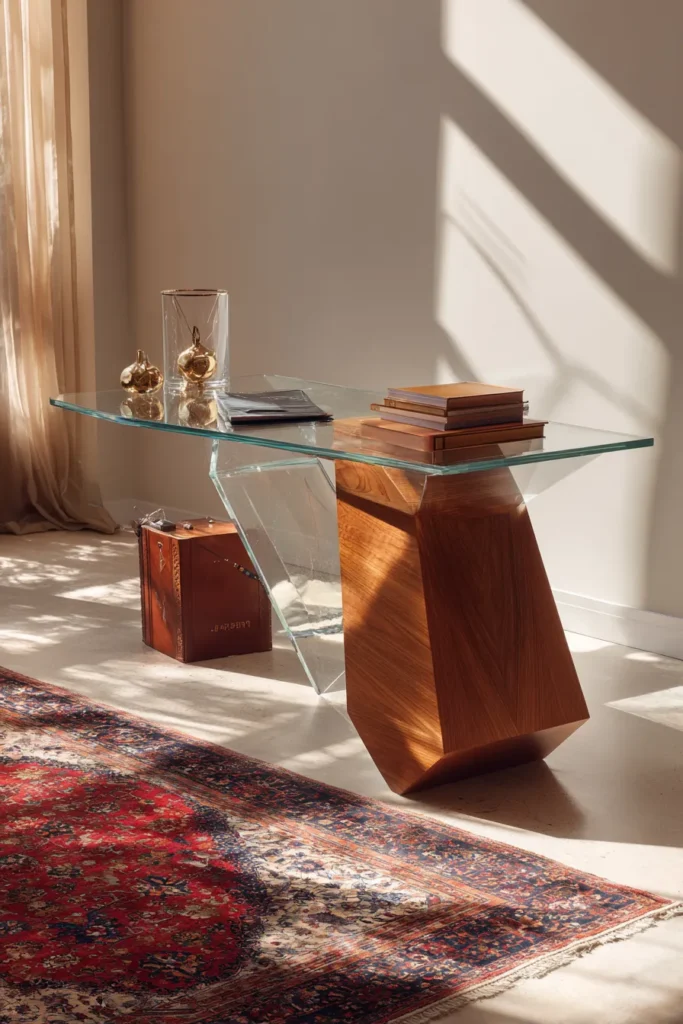
A 12mm thick glass top hovers above a sculptural base carved with geometric facets—think angular, crystalline forms that catch and refract light. The base material determines the mood: cast concrete reads brutalist, lacquered wood reads mid-century, and polished metal reads contemporary. The glass transparency preserves floor visibility, critical in small spaces where solid desks create visual blockage.
Designer’s Secret: Bevel the glass edges at 1-inch width and polish them to clarity. Flat-cut glass edges appear cheap and industrial; beveled edges refract surrounding light into spectral bands, adding jewelry-like detail to an otherwise utilitarian material. This single upgrade shifts perception from “office furniture” to “design object.”
Design Breakdown:
- Top: 12mm low-iron glass (ultra-clear, not standard green-tinted glass) with 1-inch bevel
- Base: Hand-carved walnut with faceted geometry, or cast concrete with white cement
- Hardware: Recessed rubber bumpers between glass and base (prevents sliding, invisible from above)
- Lighting Pairing: Pendant light positioned to cast base shadows onto floor
Best For: Minimalists in small apartments who need visual lightness and owners of statement rugs that shouldn’t be hidden beneath solid desks.
9. Velvet-Lined Drawer Reading Table (Jewel Tones)
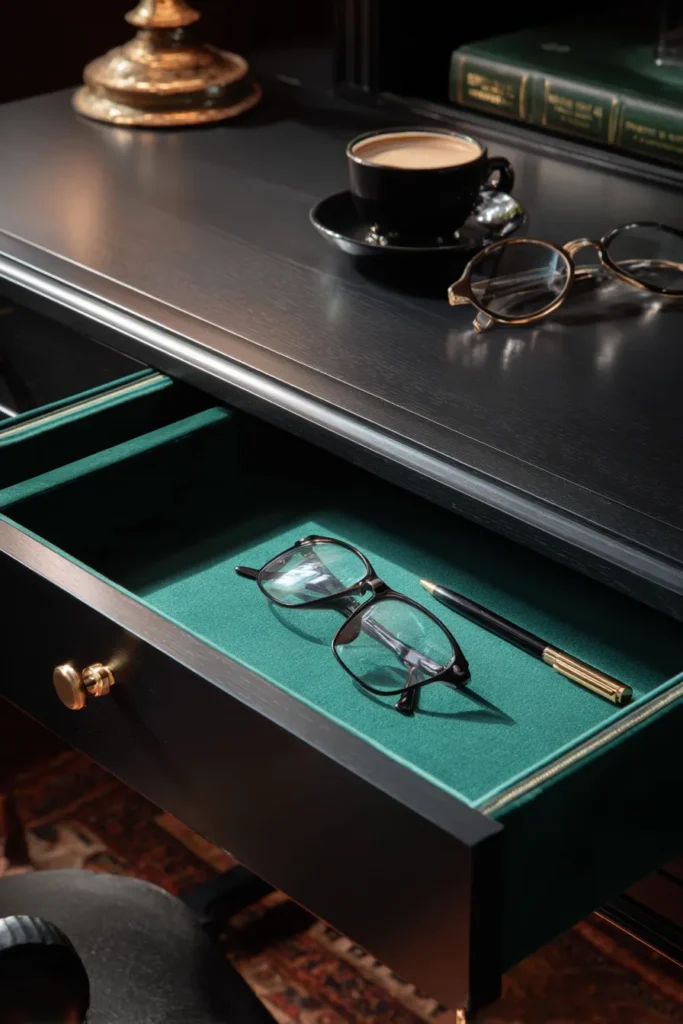
The exterior reads restrained—matte black or charcoal lacquer—but slide open a drawer to reveal deep emerald, sapphire, or burgundy velvet interiors. This “secret luxury” approach creates sensory reward for daily use. The velvet (250–300gsm cotton or silk blend) protects fountain pens, prevents eyeglasses scratching, and adds an unexpected tactile moment to mundane storage.
Designer’s Secret: Line only the drawer bottoms and sides, leaving the top rim unlined. When you open the drawer, the transition from hard lacquer to soft velvet is abrupt and intentional—it reads as precision detailing rather than an afterthought. Also, use contrasting thread (brass or silver metallic) for visible topstitching along velvet edges.
Design Breakdown:
- Exterior: Black or charcoal lacquer finish (semi-gloss, 50-sheen level)
- Drawer Interiors: Emerald green velvet (280gsm cotton) with brass topstitching
- Hardware: Recessed pulls in unlacquered brass or blackened steel
- Joinery: Dovetail drawer construction for heirloom-quality durability
Best For: Maximalists who appreciate hidden details, fountain pen collectors, and those who want restrained exteriors with theatrical interiors.
10. Floating Desk with Integrated 2700K Task Light Strip
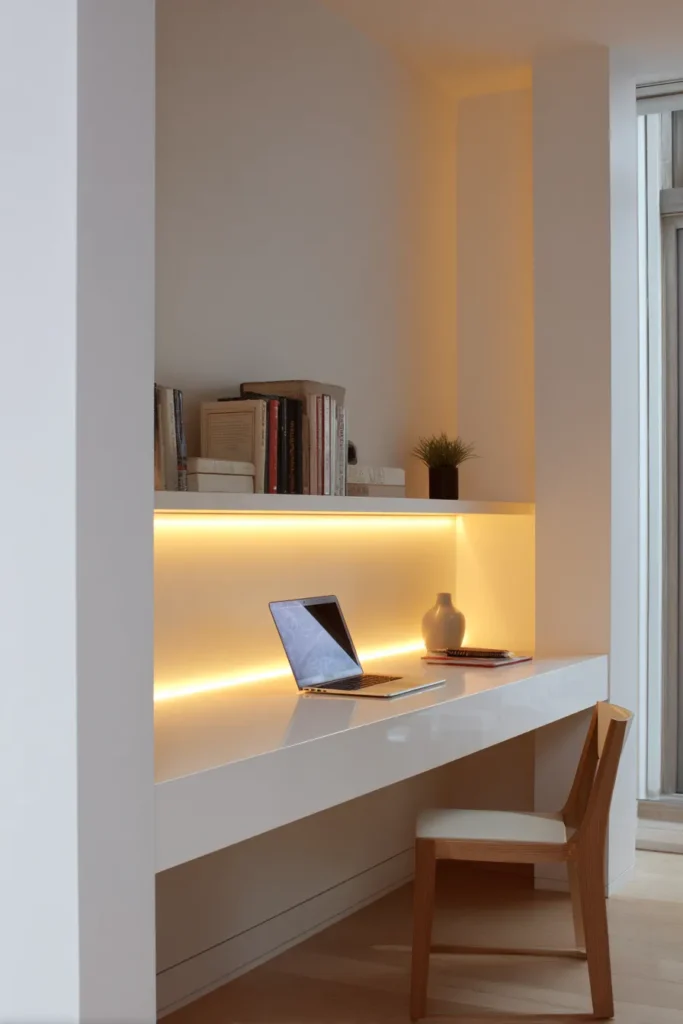
A minimalist floating desk embeds a continuous LED strip along its rear edge, recessed into a routed channel and diffused through frosted acrylic. The 2700K color temperature casts warm amber light upward onto the wall, creating ambient glow without visible bulbs or cords. Pair with a dimmer for adjustable intensity—bright for detailed work, low for atmospheric evening reading.
Designer’s Secret: Position the LED channel 2 inches from the wall, not flush against it. This gap allows light to wash the wall surface evenly before spilling forward onto the desk, preventing the harsh “stripe” effect of wall-mounted strips. The indirect wash also reduces screen glare on monitors.
Design Breakdown:
- Desktop: 1.5-inch thick maple or birch plywood with white lacquer finish
- Lighting: 2700K LED strip, 24V system with inline dimmer, 90+ CRI rating
- Diffuser: Frosted acrylic channel cover (prevents visible LED dots)
- Power: Hardwired through wall cavity or surface-mounted raceway in matching finish
Best For: Tech-forward minimalists and home office workers who need adjustable ambient lighting without adding floor or desk lamps; ideal for small spaces.
11. Rattan & Teak Midcentury Revival Desk
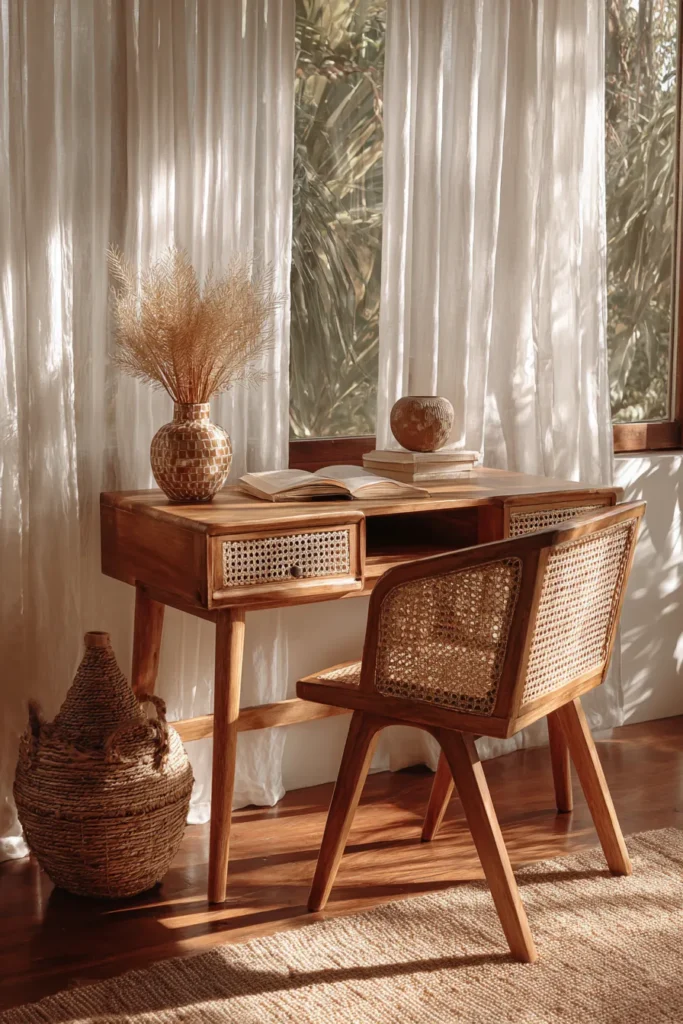
The ’70s are back, but filtered through a 2026 lens that emphasizes natural variation over factory uniformity. Here, hand-woven rattan cane panels form the desk’s drawer fronts and side aprons, while solid teak provides structural frame and desktop. The rattan’s open weave creates visual texture and subtle transparency—you glimpse stored items through the caning, creating depth without full visibility.
Designer’s Secret: Mismatch your rattan weave patterns intentionally. Use hexagonal caning on drawer fronts and traditional square mesh on side panels. This asymmetry signals handcraft and prevents the vintage-reproduction look from reading as too literal or costume-like.
Design Breakdown:
- Frame: Solid teak with tung oil finish (reapply every 6 months)
- Cane Panels: Natural rattan in hexagonal and square weave patterns, 1/4-inch strand diameter
- Desktop: Teak veneer over plywood substrate, satin varnish
- Hardware: Brass pulls with woven rattan inlay caps
Best For: Retro enthusiasts and those layering natural textures (jute rugs, linen curtains, wool upholstery) who want furniture that ages visibly and gracefully.
12. Asymmetrical Pedestal Reading Table (Sculptural Base)
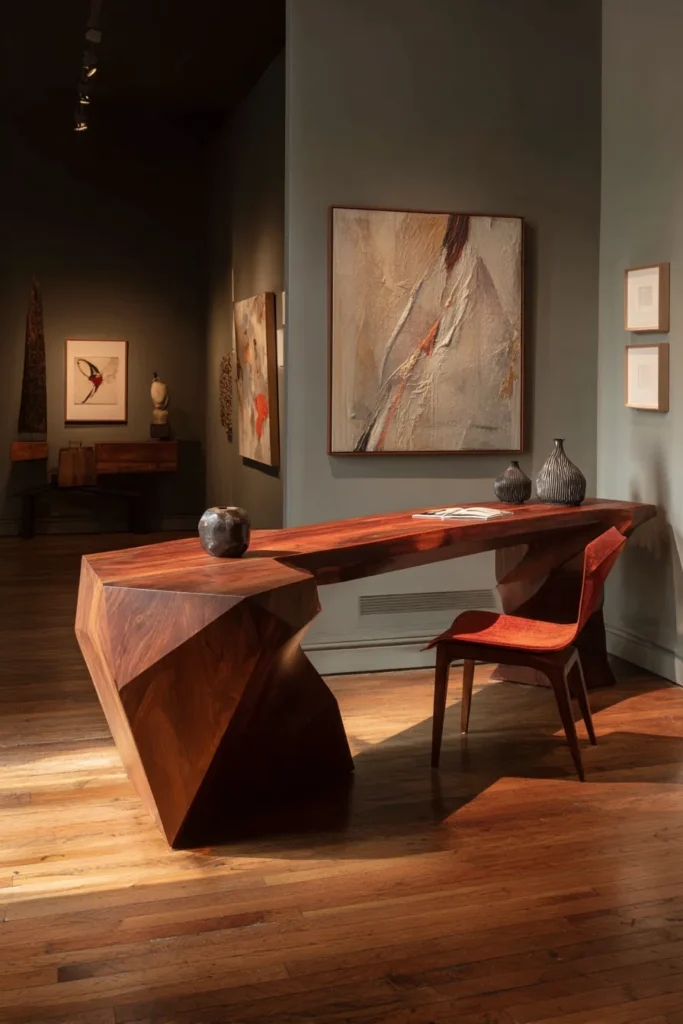
Replace four-leg symmetry with a single off-center pedestal base positioned toward one end of the desktop. This creates visual tension—the cantilevered overhang appears to defy gravity, especially when the pedestal features sculptural carving or faceted geometry. The asymmetry also frees one side of the desk for legroom while the pedestal side accommodates storage drawers or shelving.
Designer’s Secret: Position the pedestal exactly one-third of the way along the desk’s length, not at the center. This follows the rule of thirds from visual composition and creates more dynamic proportions than a centered base. The longer overhang becomes a natural staging area for books or objects.
Design Breakdown:
- Desktop: 1.75-inch thick walnut or oak, 72 inches long × 30 inches deep
- Pedestal: Carved solid wood or cast concrete, positioned 24 inches from one end
- Overhang: 48-inch cantilever on one side, 24 inches on the opposite
- Finish: Matte lacquer on desktop, contrasting texture (wire-brushed or sandblasted) on pedestal
Best For: Sculptural furniture collectors and those who view desks as art objects rather than purely functional surfaces; requires structural engineering for proper weight distribution.
13. Skirted Desk with Fabric Apron Detail
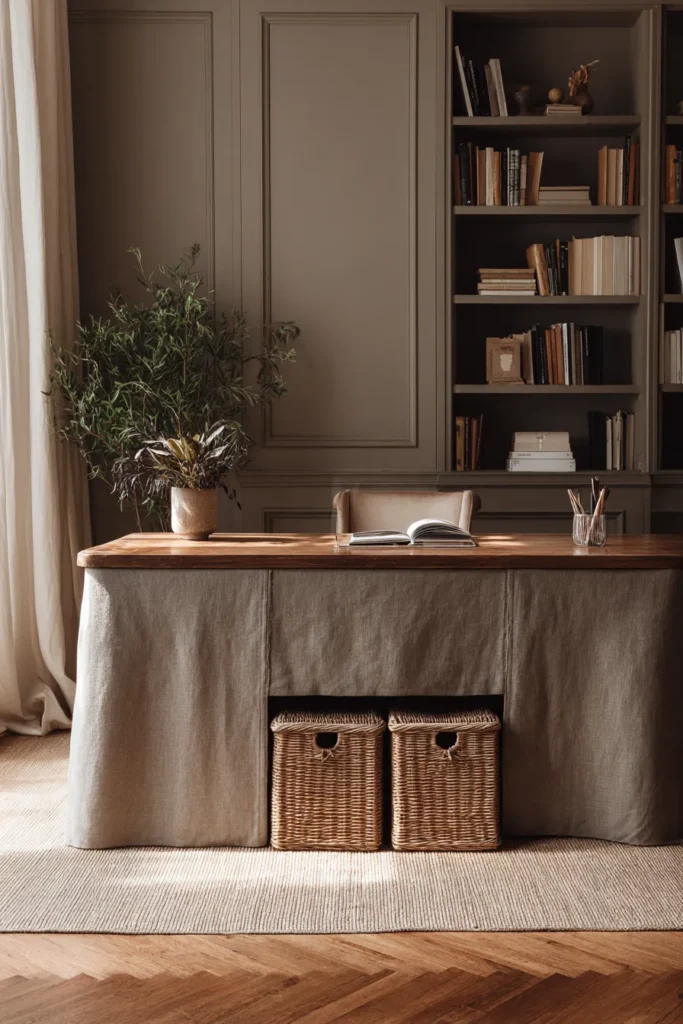
A textile skirt—gathered or pleated fabric that conceals the desk’s legs and understructure—introduces softness to typically hard-edged furniture. The 2026 version uses heavyweight linen (240gsm minimum) in neutral tones (oatmeal, warm grey, soft sage) with a subtle pleat pattern that prevents the “tablecloth” association. The skirt hides cable clutter and creates concealed storage for floor-level bins or baskets.
Designer’s Secret: Hem the skirt 1/2 inch above finished floor level, not touching the ground. A skimming hemline that “floats” prevents dust accumulation and wear from floor contact, plus it creates a shadow gap that makes the entire desk appear lighter despite the visual mass of gathered fabric.
Design Breakdown:
- Desktop: Painted wood or lacquered MDF in coordinating neutral tone
- Skirt Fabric: 240gsm linen in natural or dyed earth tones, box-pleated every 6 inches
- Attachment: Velcro strips along desk underside for removable laundering
- Hardware: Concealed drawer pulls integrated into desktop edge (skirt hides front apron entirely)
Best For: Feminine-coded interiors, textile enthusiasts, and those seeking softness in home offices; ideal for hiding unsightly cable management or storage bins.
14. Dual-Height Modular Reading & Standing Desk
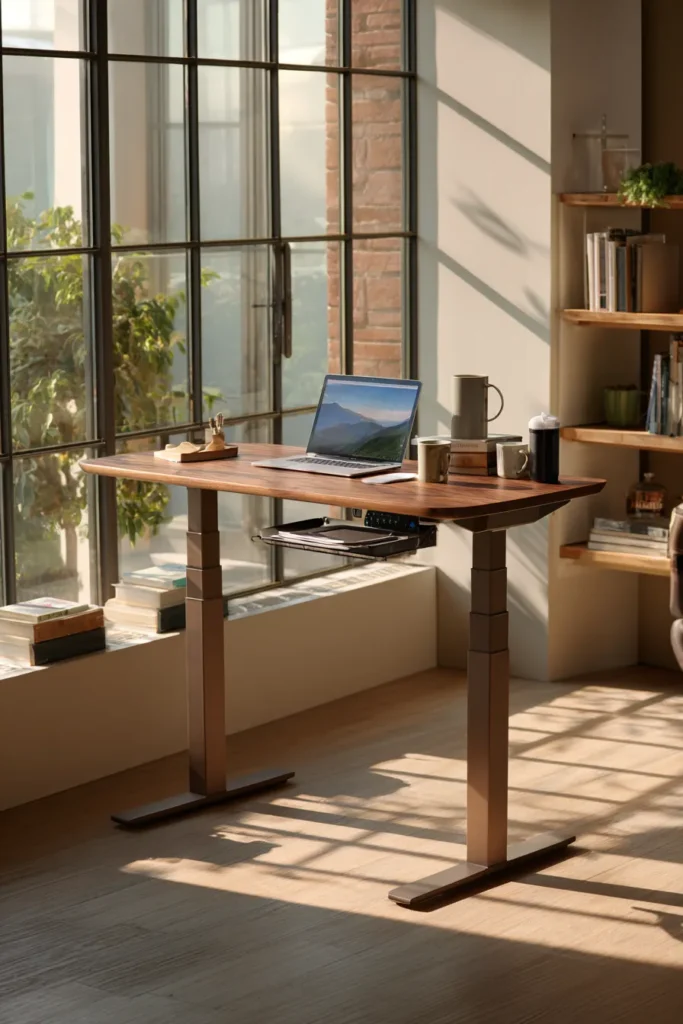
An electrically adjustable desk surface transitions from 29-inch seated height to 42-inch standing height via quiet motors hidden in the legs. The 2026 refinement pairs industrial mechanics with warm materials: walnut tops, powder-coated steel frames in warm bronze (RAL 8025), and integrated cable management trays that rise and fall with the surface.
Designer’s Secret: Program three preset heights: 29 inches for seated work, 36 inches for leaning/perching on a stool, and 42 inches for full standing. The middle height is the secret weapon—it encourages posture variation throughout the day without committing to full standing sessions, reducing fatigue while maintaining movement.
Design Breakdown:
- Desktop: 1.5-inch walnut or oak veneer over MDF core
- Frame: Dual-motor electric base, powder-coated in warm bronze or matte black
- Controls: Touch-panel with three programmable presets, mounted on underside edge
- Load Capacity: 220+ lbs fully extended (accommodates monitors, books, lamps)
Best For: Ergonomics-focused professionals, those with chronic back issues, and multitaskers who switch between computer work and analog reading throughout the day.
15. Bouclé Upholstered Desk Chair with Curved Console Pairing
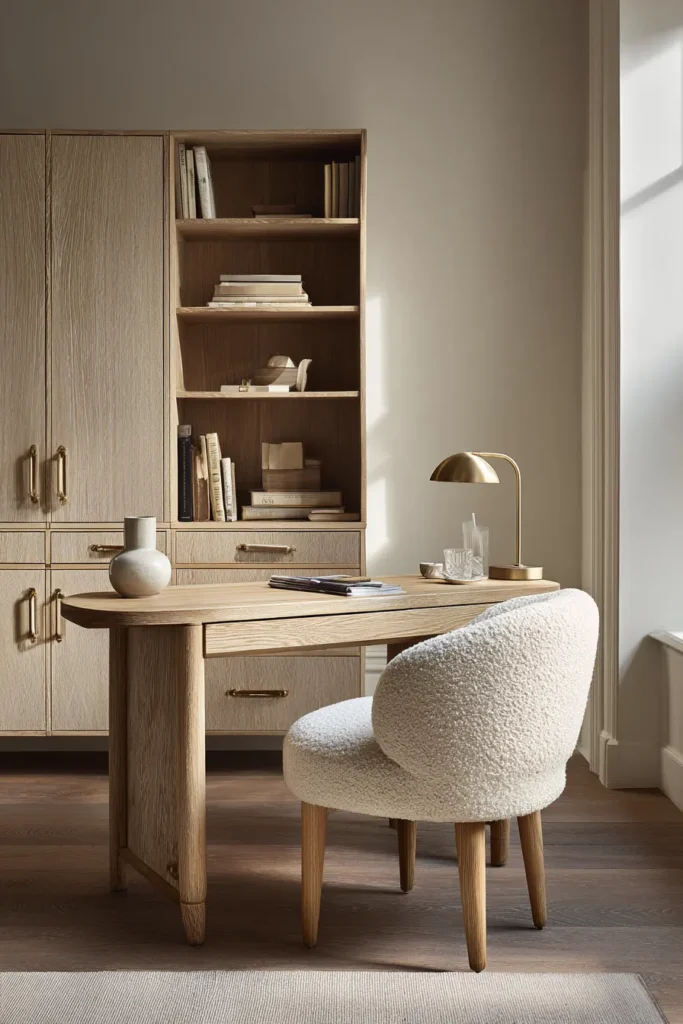
Rather than treating the desk and chair as separate purchases, design them as a matched set where the chair’s textile—280gsm wool bouclé in cream, camel, or charcoal—dictates the desk’s material palette. Pair the bouclé chair with a desk featuring similar curves: rounded corners, soft edges, and a gentle arc to the front apron. The visual conversation between furniture pieces creates cohesion.
Designer’s Secret: Match the desk’s wood tone to the bouclé’s undertone temperature, not its surface color. Cream bouclé with warm undertones pairs with honey-toned oak; charcoal bouclé with cool undertones pairs with ebonized or grey-washed wood. This creates harmony that feels intuitive rather than overly coordinated.
Design Breakdown:
- Desk Surface: White oak or walnut with curves echoing chair silhouette
- Chair Upholstery: 280gsm wool bouclé with spring suspension seat
- Coordination: Desk edge radius matches chair arm curve (typically 2–3 inch radius)
- Hardware: Brass or bronze accents on both pieces for material continuity
Best For: Design-conscious professionals who view furniture as an ecosystem and those willing to invest in matched sets for long-term aesthetic coherence.
16. Stone Plinth Reading Table (Heavily Veined Marble)
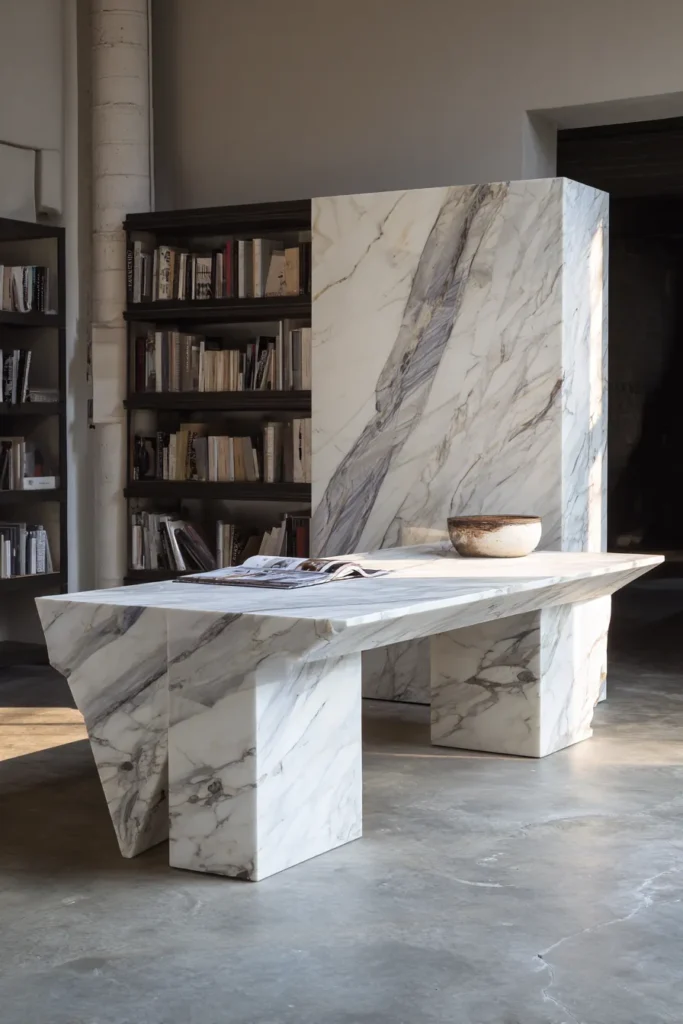
A monolithic stone slab—Calacatta marble, Verde Guatemala, or black Marquina—serves as both base and desktop in one continuous form. The stone is cut into a thick plinth (8–12 inches tall) with a cantilevered top that extends 36–48 inches wide. Heavy veining becomes the focal point; each piece is unique due to natural geological variation.
Designer’s Secret: Request book-matched slabs where the quarry cuts adjacent pieces and mirrors them to create symmetrical veining patterns. This doubles the visual impact and signals intentional material curation rather than random stone selection. Also, specify a honed finish (not polished) to reduce glare and hide minor etching.
Design Breakdown:
- Material: 3–4 inch thick marble or granite slab with dramatic veining
- Dimensions: 48–60 inches long × 24 inches deep × 30 inches high (monolithic form)
- Finish: Honed to 180-grit for matte surface, sealed with penetrating sealer
- Weight: 400–800 lbs depending on stone density (requires structural floor assessment)
Best For: Gallery-like interiors, collectors of singular statement pieces, and those with structural floors capable of supporting extreme weight; not suitable for upper-floor apartments.
17. Layered Crown Molding Desk Nook with Wainscoting
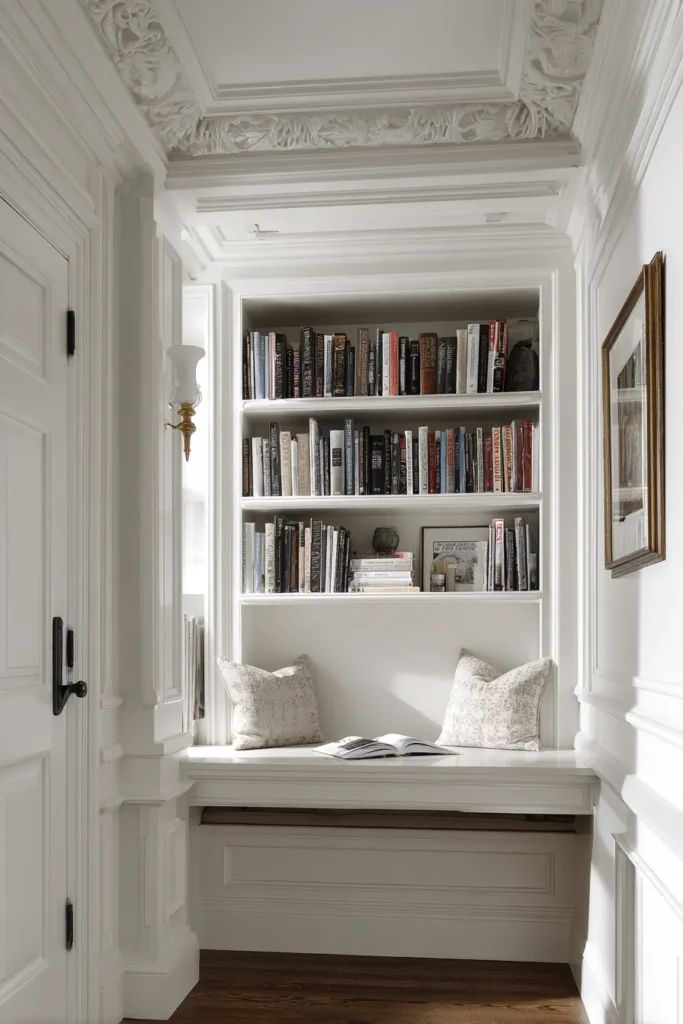
Architectural millwork transforms a simple desk into a built-in focal point. Install wainscoting (36–42 inches high) along the wall behind the desk, topped with crown molding that continues across the ceiling. Paint everything—walls, molding, desk surface—in a single cohesive color (Farrow & Ball “Cornforth White” or Benjamin Moore “Revere Pewter”) to create depth through shadow rather than color contrast.
Designer’s Secret: Run the crown molding 2 inches lower than standard ceiling height (typically 2 inches below ceiling rather than flush against it). This creates a shadow reveal between molding and ceiling that adds dimensionality and prevents the monochromatic treatment from reading as flat or monotonous.
Design Breakdown:
- Wainscoting: Raised panel or board-and-batten in matching desk color, 42 inches high
- Crown Molding: 4–6 inch profile in traditional or modern detailing
- Desk Integration: Floating shelf at wainscoting cap height (serves as desktop)
- Paint: Single color across all surfaces, satin finish (40-sheen) for subtle light reflection
Best For: Traditional or transitional interiors, period home owners, and those who want architectural permanence rather than movable furniture; ideal for dedicated libraries or studies.
18. Bio-Integrated Desk with Air Quality Monitoring
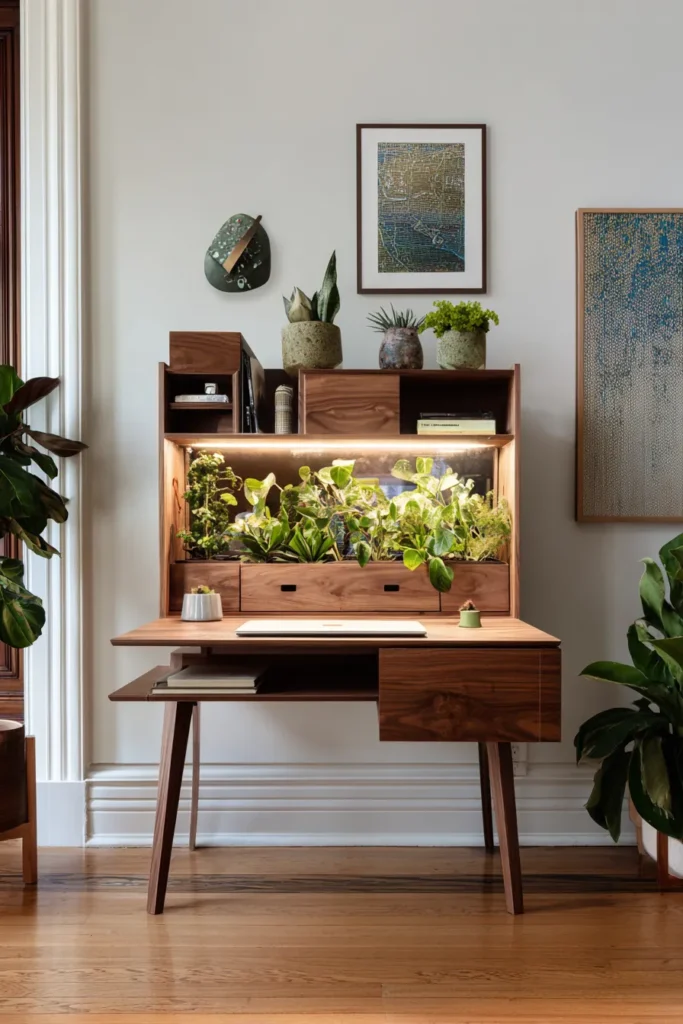
The 2026 wellness desk embeds environmental sensors into its structure: particulate matter monitors, humidity sensors, and CO2 trackers that sync with phone apps. Pair with integrated planters (pothos, snake plants) that improve air quality while the desk’s walnut or cork surface releases minimal VOCs. The technology remains invisible—sensors hide within drawer interiors or under the desktop lip.
Designer’s Secret: Position the air quality sensor at breathing height (24 inches above the desktop surface) rather than on the desktop itself. This provides accurate readings of the air you’re actually inhaling while working, and mounting it on a subtle wall-mounted arm keeps the desk surface clear of visible tech.
Design Breakdown:
- Desktop: Solid cork or FSC-certified walnut with zero-VOC finish
- Integrated Planters: Recessed wells (6 inches deep) with drainage systems
- Sensors: Hidden CO2, PM2.5, and humidity monitors with app connectivity
- Lighting: Full-spectrum 95+ CRI LEDs at 2700K to support plant photosynthesis
Best For: Wellness-focused individuals, those with respiratory sensitivities, and biophilic designers who want technology that supports health rather than detracts from natural materials.
Common Mistake: Over-Accessorizing the Desktop Surface
A cluttered reading table defeats the 2026 aesthetic of curated calm. The temptation runs strong—vintage bookends here, a ceramic dish there, stacked journals, three different pen holders. Resist. Limit desktop objects to 3–5 essential items: one task light, one material accent (a stone tray or brass pen holder), and one organic element (single-stem vase or small planter). Store everything else in integrated drawers or wall-mounted millwork.
The goal is visual breathing room. Each object on the surface should earn its placement through either functional necessity or singular aesthetic impact. If you can’t articulate why an item deserves surface real estate in ten words or less, relocate it. This discipline creates the “negative space” that allows your desk’s material qualities—grain patterns, marble veining, brass patina—to register clearly rather than compete with surface clutter.
Reading tables in 2026 resist the productivity-maximization logic that dominated the previous decade. These designs aren’t about fitting more monitors or optimizing square footage—they’re about creating surfaces worth lingering at. Curves replace corners. Patina replaces polish. Chromatic warmth replaces stark efficiency. The result is furniture that transforms reading from a task into an architecturally supported ritual, where the desk itself becomes a reason to sit down and stay awhile.