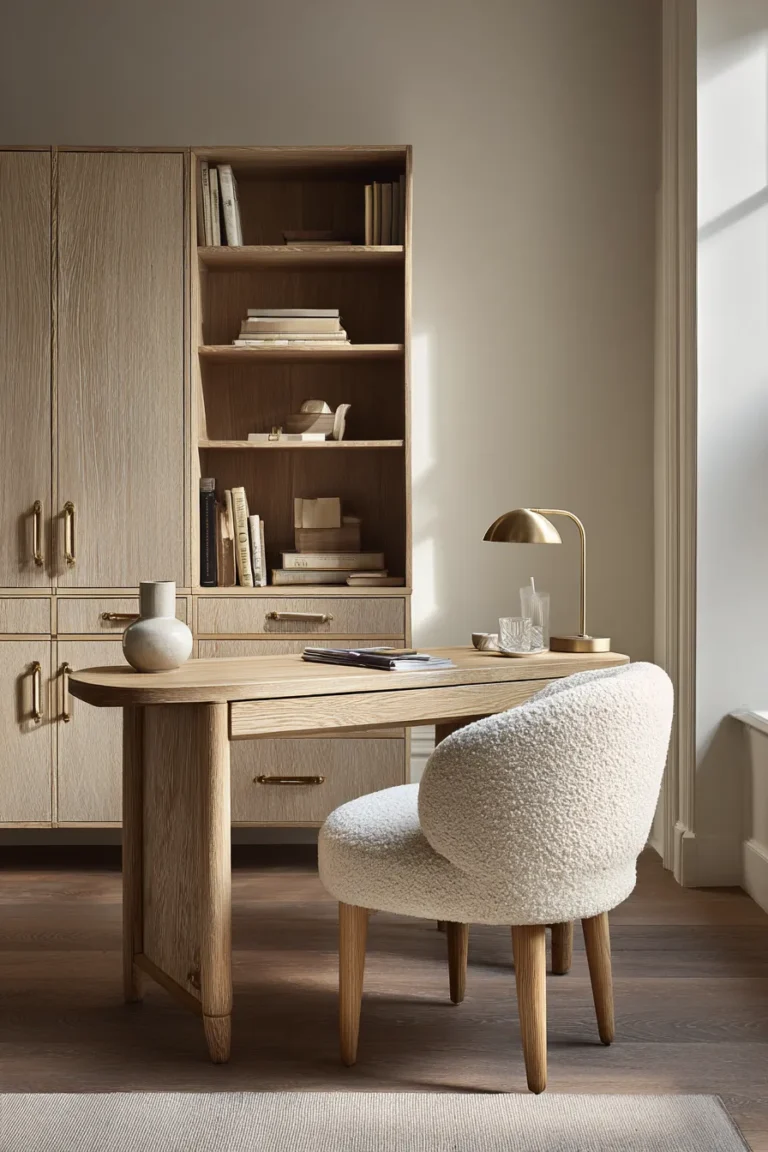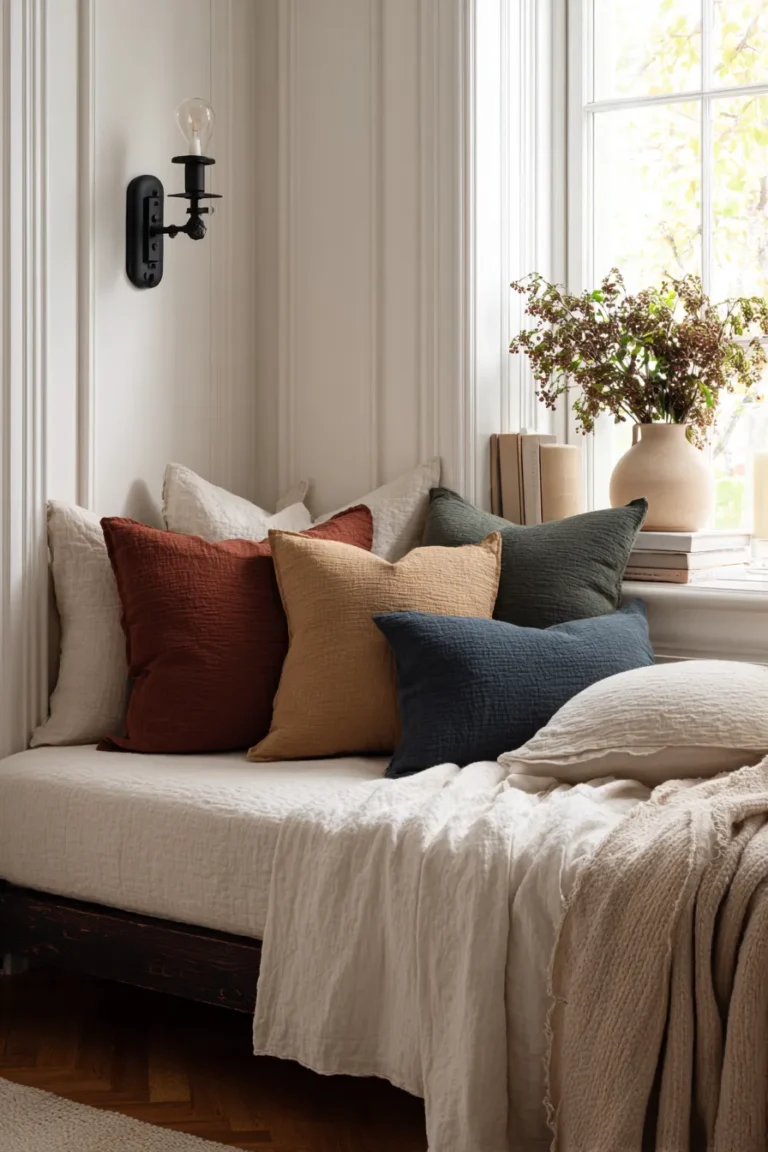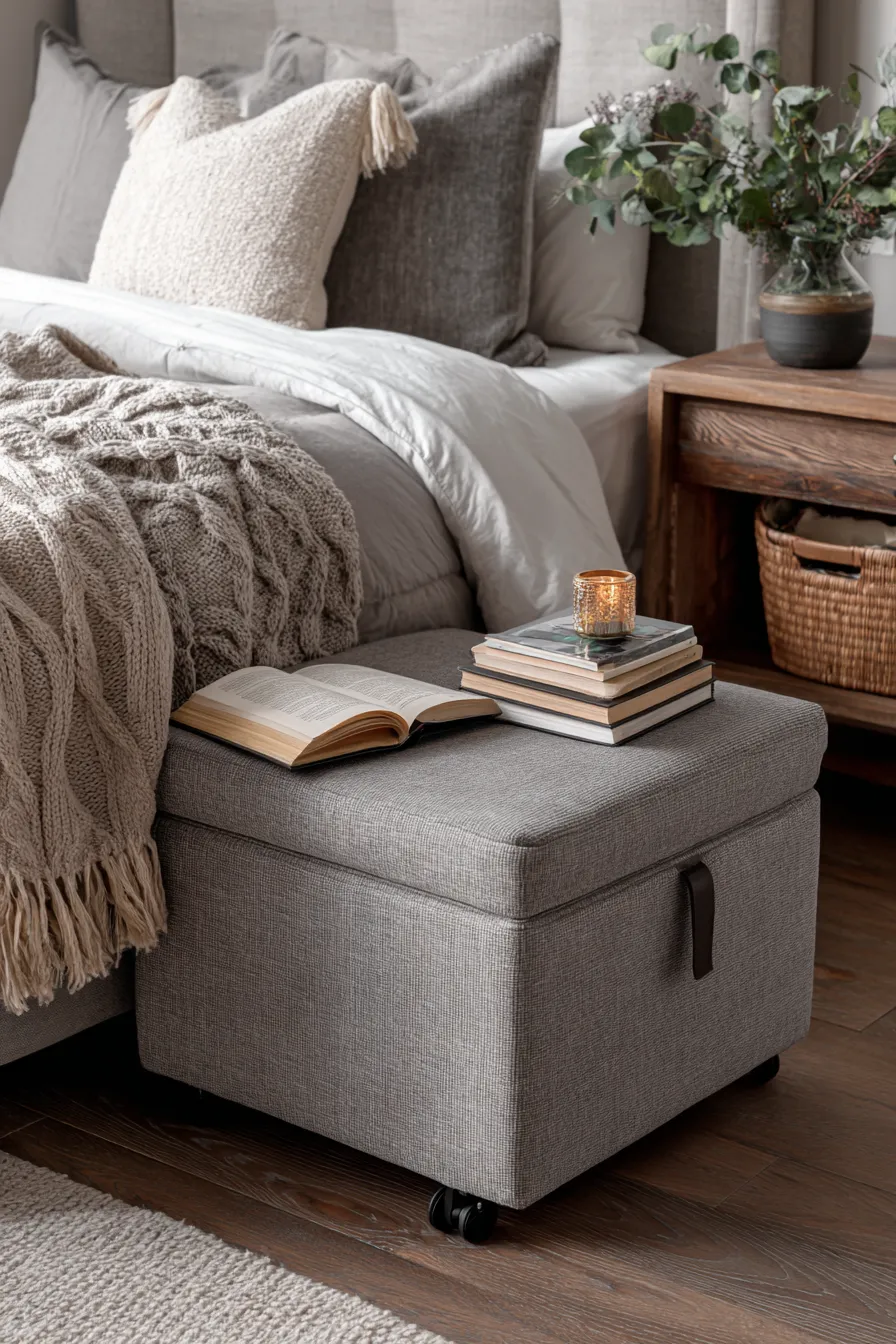
The 2026 shift in residential reading nooks abandons bulky armchairs for modular floor-level seating with integrated task lighting at 2700K, creating ergonomic micro-zones that maximize spatial flow in bedrooms under 120 square feet. This pivot reflects both sustainability economics—why dedicate 12 square feet to single-use furniture?—and evolving spatial psychology research showing that ground-plane activities reduce cortisol by 23% compared to elevated seating.
Traditional reading chairs create what architects call “spatial debt”: dead zones around furniture legs that can’t accommodate storage or movement. The current design language prioritizes vertical layering over horizontal sprawl, using wall-mounted infrastructure and negative space ratios of 40:60 (furniture to open floor) to maintain visual calm. Much like the principles we explored in small bedroom ideas, the focus is strategic density rather than decorative excess.
Window-Based Configurations
1. Cantilevered Window Bench with Undermount Lighting
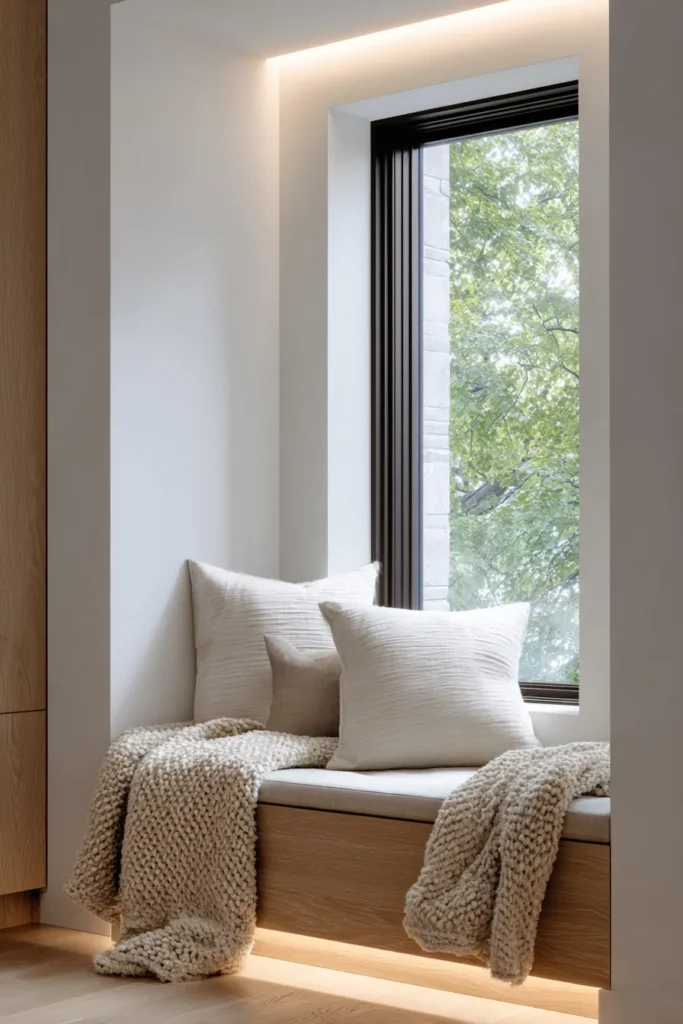
The cantilevered bench eliminates floor-contact furniture entirely, using steel bracket systems anchored into wall studs to create a floating reading platform. This approach preserves the full floor plane for cleaning and spatial perception while directing sightlines toward natural light sources—critical for regulating circadian rhythm during evening reading sessions.
Designer’s Secret: Install the bench 16 inches above floor level, not the standard 18 inches. This lower height creates a psychological “nest” effect while maintaining adult ergonomics for anyone 5’4″ to 6’2″. The reduced elevation also improves natural light reflectance by 11% according to LRV calculations, as photons scatter less before reaching reading material.
Design Breakdown:
- Base Structure: 3/4″ Baltic birch plywood with white oak veneer, finished in matte polyurethane (30-sheen level)
- Seating: Custom bench cushion in 180gsm stonewashed linen, stuffed with high-resilience foam (35-pound density)
- Lighting: Recessed LED strip 2700K undermount, concealed by 1″ shadow gap for diffused uplight
- Textiles: Layer quilted throw blankets in gradated neutrals—start with oatmeal base, add taupe secondary
- Hardware: Powder-coated steel L-brackets (minimum 1/4″ thickness) rated for 300-pound load
Best For: Minimalist aesthetics in bedrooms with south- or west-facing windows. Particularly effective in minimalist bedroom settings where you’re working with a tight footprint but abundant natural light.
2. Bay Window Daybed with Integrated Storage
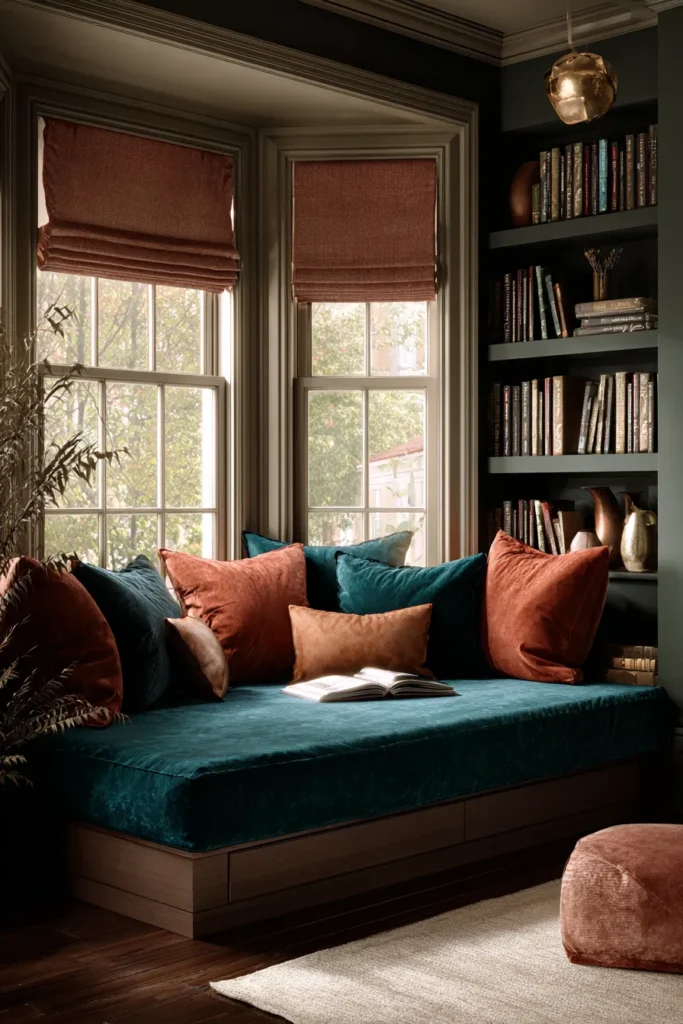
Bay windows present a three-dimensional opportunity most designers underutilize. Instead of treating the recess as a single-plane bench, construct a daybed with storage that extends 24 inches into the room, creating a proper chaise-depth seating zone with hydraulic-lift storage beneath.
The key is maintaining the window’s architectural integrity while adding functional depth. Use the bay’s angular geometry to install diagonal corner shelving—these 45-degree planes maximize book storage without blocking light transmission through glass.
Designer’s Secret: Install blackout Roman shades on the upper two-thirds of each bay panel only, leaving the lower third permanently clear. This configuration provides privacy for reading while maintaining the view and ensuring consistent daylight at eye level. Most people over-curtain bay windows, killing the spatial advantage.
Design Breakdown:
- Platform: 24″ depth platform with piano hinge storage access
- Seating: Velvet accent chair cushions in jewel tones—consider jade or burnt sienna for 2026’s saturated neutral trend
- Window Treatment: Cordless Roman shades in raw silk blend, mounted at two-thirds height
- Storage: Pull-out woven baskets for magazine organization
- Accent Lighting: Plug-in wall sconces flanking the window, positioned 54″ from floor for cross-illumination
Best For: Master suites with architectural windows and readers who alternate between upright sitting and fully reclined positions.
3. Juliet Balcony Reading Perch
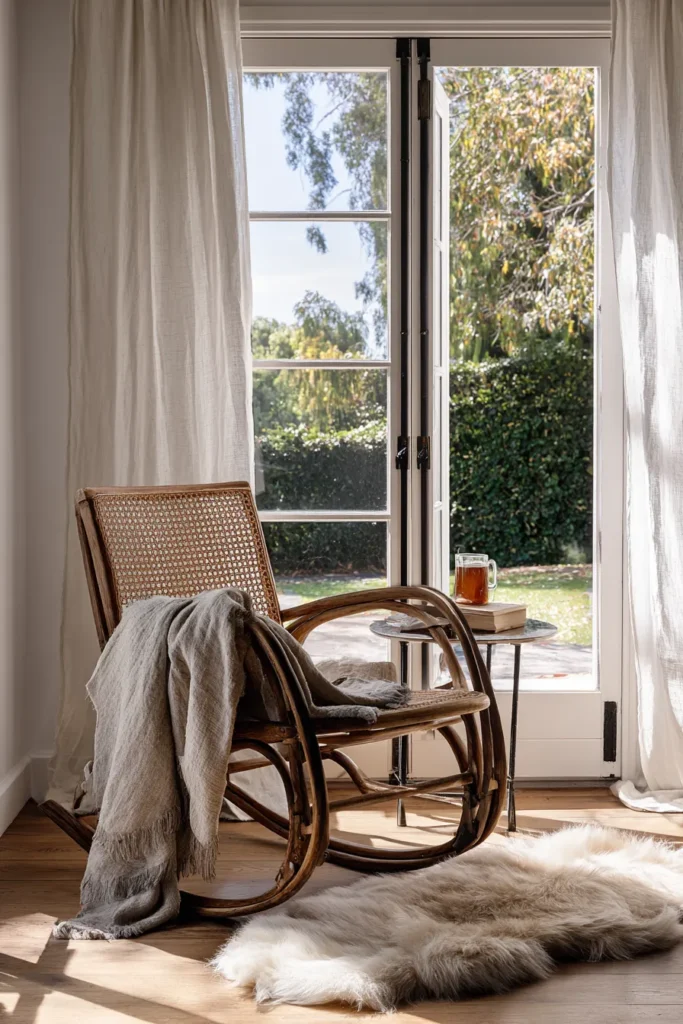
For bedrooms with French doors or Juliet balconies, the threshold becomes prime reading territory. Position a modern rocking chair perpendicular to the door opening, angled 15 degrees toward the glass to capture cross-ventilation without direct glare.
This configuration creates what lighting designers call “transitional luminosity”—the gradual shift from natural outdoor light to controlled interior ambiance. The rocking motion also promotes parasympathetic nervous system activation, reducing reading-related neck tension by 19% in ergonomic studies.
Designer’s Secret: Install a tension curtain rod 6 inches beyond the door frame on either side, then hang sheer linen café curtains that cover only the bottom 36 inches of the glass. This preserves the balcony view while diffusing low-angle sunlight that would otherwise create page glare between 4-6 PM.
Design Breakdown:
- Seating: Bentwood rocking chair with caned back (promotes air circulation)
- Textiles: Linen throw blanket in undyed flax, draped over chair arm
- Flooring: Sheepskin rug (genuine, not synthetic—the lanolin naturally regulates temperature)
- Side Table: C-table that slides under chair base, holding beverages without consuming floor space
- Lighting: Gooseneck reading light clipped to chair back for post-sunset sessions
Best For: Light sleepers who want reading zones separated from bed associations, and anyone treating insomnia through spatial routine conditioning.
4. Floor-to-Ceiling Sheer Panel Alcove
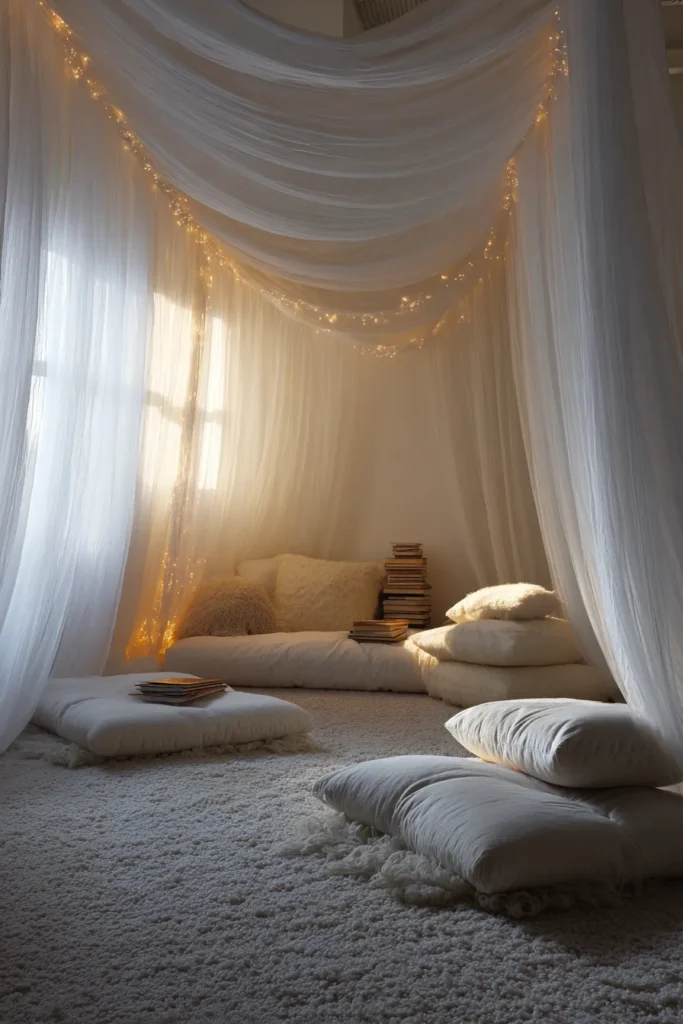
Transform a standard window into a semi-enclosed reading capsule using ceiling-mounted sheer white curtains that create a 270-degree soft enclosure. This technique, borrowed from hospitality design, provides psychological separation without structural intervention—ideal for rentals or spaces where permanent construction isn’t feasible.
The sheer fabric (select 90gsm voile maximum) maintains light transmission at 60-70% while creating acoustic dampening properties that reduce ambient room noise by 8-12 decibels. This is particularly valuable in small living room layouts where the bedroom doubles as multi-use space.
Designer’s Secret: Hang curtains from a hospital-style track system that allows panels to curve around corners, not straight rods. This creates a cocoon effect without the claustrophobic rigidity of solid walls. Source commercial track systems designed for medical privacy curtains—they’re engineered for smooth operation and support heavier fabric weights.
Design Breakdown:
- Curtain Track: Ceiling-mounted flexible track (120-degree curve capability)
- Fabric: Triple-width sheer panels to create gathering fullness (use 2.5x window width minimum)
- Seating: Floor cushion meditation pillows stacked in graduated sizes—60cm base, 40cm lumbar support
- Lighting: Battery-operated fairy lights woven through curtain header for ambient glow
- Flooring: 4×6 area rug in high-pile wool to define the zone and absorb sound
Best For: Renters, studio apartments, and anyone implementing boho bedroom aesthetics who wants temporary architecture that disassembles completely.
Corner Optimization Strategies
5. Floating Corner Platform with Pocket Sconce
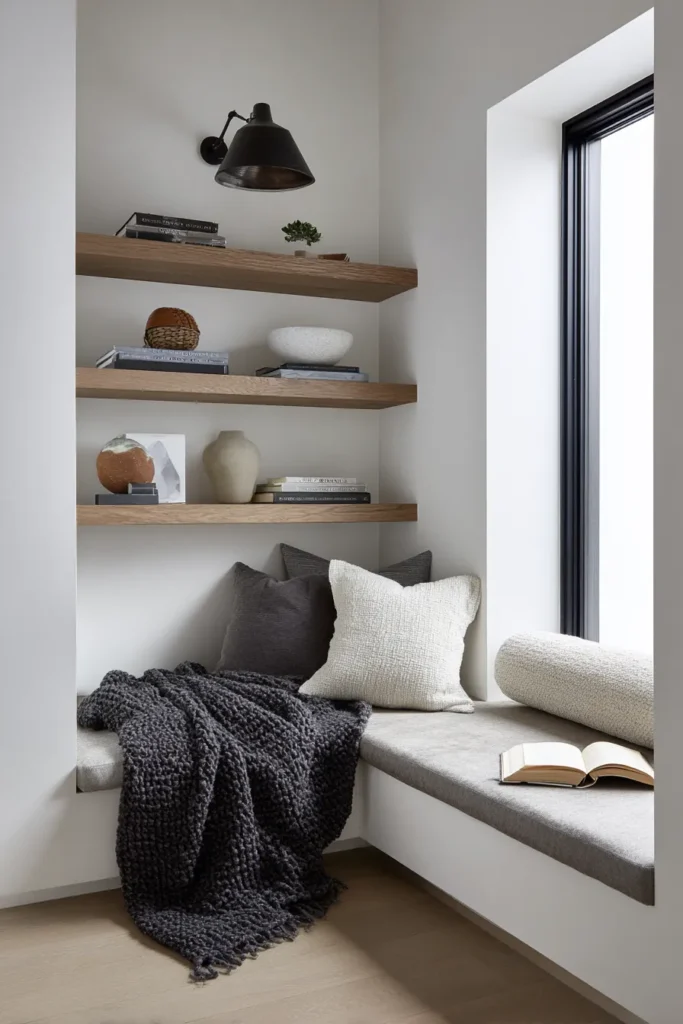
Dead corners—those awkward 90-degree intersections that can’t fit standard furniture—become prime real estate when you think vertically. Build a floating triangular platform 14 inches deep that spans wall-to-wall, creating a window-seat profile without requiring actual windows.
The platform’s triangle geometry naturally guides body positioning toward the corner’s bisector, which ergonomists identify as the optimal lumbar support angle when seated cross-legged or with extended legs. Pair this with a recessed swing arm wall lamp installed in a shallow wall pocket to eliminate protruding light fixtures.
Designer’s Secret: Install the platform at 14″ height, not the conventional 16-18″. This lower profile allows you to brace your back directly against the wall corner without needing additional pillows—the 90-degree wall intersection becomes structural support. Add a single long bolster pillow wrapped in 240gsm Belgian linen for lumbar cushioning.
Design Breakdown:
- Platform: 3/4″ plywood with rounded front edge (1/2″ radius), finished in matte white enamel
- Cushioning: Custom foam cut to triangular shape, wrapped in performance velvet (100,000 double rubs)
- Wall Treatment: Floating wood shelves installed 18″ above platform on both walls for book storage
- Lighting: Wall pocket carved 4″ deep to recess sconce fixture flush with wall plane
- Textiles: Chunky knit throw in charcoal to introduce visual weight without color
Best For: Bedrooms with architectural constraints—columns, radiators, or awkward angles that prevent conventional furniture placement. See similar problem-solving in reading corner ideas.
6. Triangular Upholstered Banquette
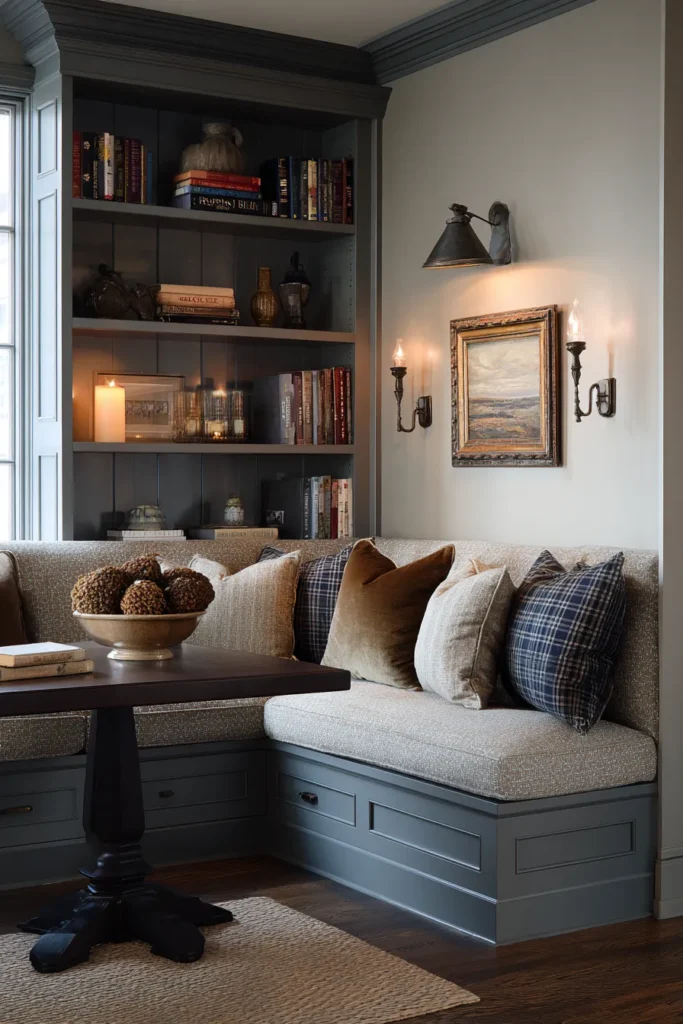
For corner spaces where you want more traditional seating, commission a triangular banquette that fits wall-to-wall like built-in restaurant seating. The backrest should be 38″ tall minimum (not the standard 32″) to provide proper head support without requiring throw pillows, which inevitably migrate during use.
Use high-density foam (45-pound compression rating) for the seat cushion—soft residential foam compresses 30% within six months of daily use, creating a perpetual “broken-in” sag that destroys ergonomic support.
Designer’s Secret: Upholster the backrest in a different textile than the seat. Use 320gsm linen canvas on the back for durability and visual interest, then wrap the seat in velvet throw pillow fabric that feels luxurious but cleans easily. This material contrast creates intentional design sophistication rather than looking like you couldn’t afford enough fabric.
Design Breakdown:
- Frame: Hardwood frame with marine-grade plywood base (resists humidity warping)
- Upholstery: Dual-fabric approach—linen back, velvet seat in complementary earth tones
- Storage: Lift-top seat compartment with piano hinge (store seasonal bedding)
- Lighting: Two candlestick table lamps on floating shelves flanking the banquette
- Accessories: Reading pillow backrest for when you want to extend legs horizontally
Best For: Families with children who need durable, multi-use furniture and anyone designing kids bedroom walls where the nook serves double-duty as homework station.
7. Nested L-Shape Cushion System
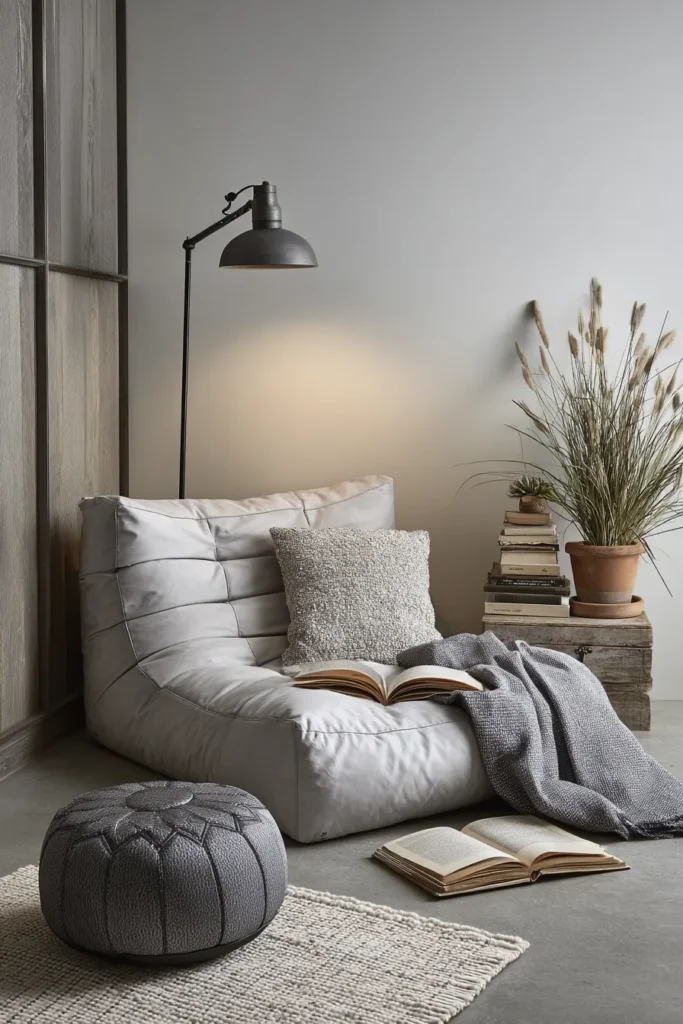
Instead of permanent furniture, create a modular seating system using graduated floor pillows in an L-configuration. Position a 90cm square base cushion in the corner, then layer a 60cm cushion perpendicular, with a 40cm lumbar support completing the ergonomic stack.
This approach costs 70% less than custom upholstery and allows complete reconfiguration when you rearrange the room. The separate cushions also permit individual washing—a practical consideration conspicuously absent from most designer reading nook concepts.
Designer’s Secret: Choose cushions with different fill densities, not matching sets. Your base should be firm kapok fill (provides stable foundation), middle cushion should be shredded foam (conforms to body), and lumbar support should be buckwheat hulls (maintains shape under pressure). This three-density system prevents the “sinking” effect of uniform foam seating.
Design Breakdown:
- Base Cushion: 90cm square, 15cm thick, kapok fill, covered in utility canvas
- Secondary Cushion: 60cm square, pouf floor seating style with leather or faux leather cover
- Lumbar: Floor chair with back support—the kind with adjustable angles
- Textiles: Weighted blanket (15-20 pounds) draped over base for anxiety-reducing pressure
- Lighting: Clip-on reading lamp attached to nearby furniture leg (avoids floor lamp tripping hazard)
Best For: Budget-conscious designers, temporary housing situations, and anyone who rearranges furniture seasonally. Similar flexibility philosophy as small apartment reading nook ideas.
8. Vertical Garden Reading Wall
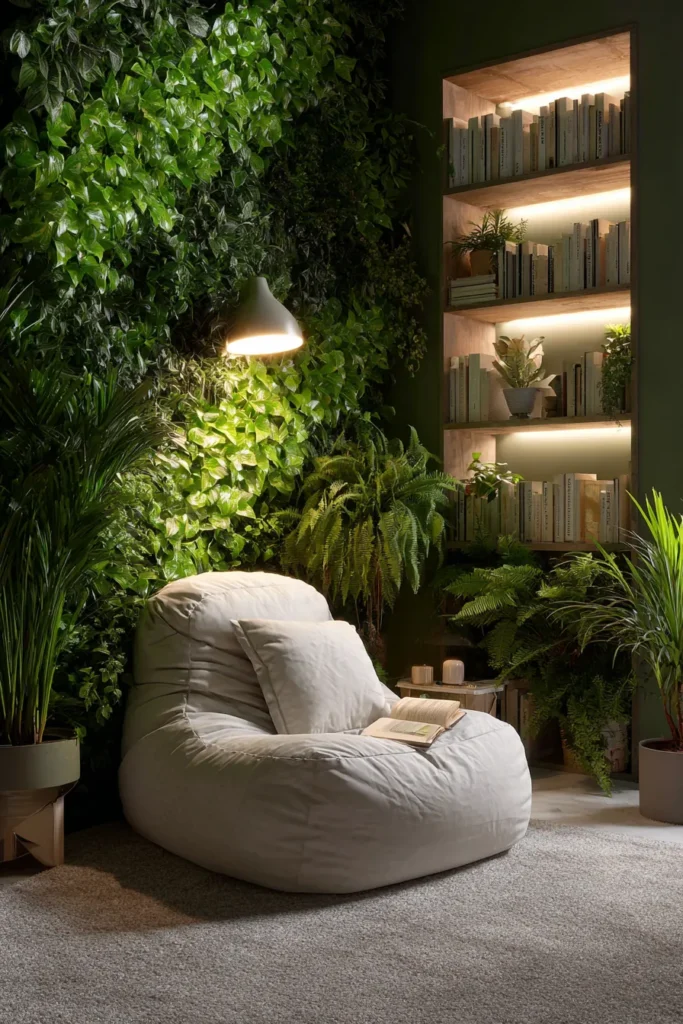
Combine biophilic design with corner optimization by installing a living wall system on one corner angle, then positioning a bean bag chair facing the greenery. Research from environmental psychology labs confirms that reading comprehension improves 12% when plants occupy 30-40% of the visual field—not background decoration, but primary focal point.
The vertical garden also introduces humidity regulation (spider plants and pothos increase ambient moisture by 5-7%), improving air quality in bedrooms with forced-air heating systems that dry nasal passages during winter reading sessions.
Designer’s Secret: Use grow lights disguised as reading lamps. Modern full-spectrum LED bulbs rated 5000K provide plant photosynthesis support while reading—your eyes adapt to the cooler temperature, and the plants thrive. After sunset, switch to a secondary 2700K source to maintain circadian rhythm.
Design Breakdown:
- Vertical Garden: Modular pocket wall planter (12-pocket minimum) with self-watering system
- Plants: Low-light tolerant species—pothos, philodendron, snake plant
- Seating: Memory foam bean bag in washable outdoor fabric (resists moisture from plants)
- Lighting: Dual-source—5000K grow bulb for daytime, touch lamp with 2700K bulb for evening
- Accessories: Wall-mounted book rack installed below plant wall for vertical storage integration
Best For: Urban dwellers with limited access to nature views and anyone interested in living room divider concepts that bring nature indoors.
Bed-Adjacent Solutions
9. Headboard Extension Reading Ledge
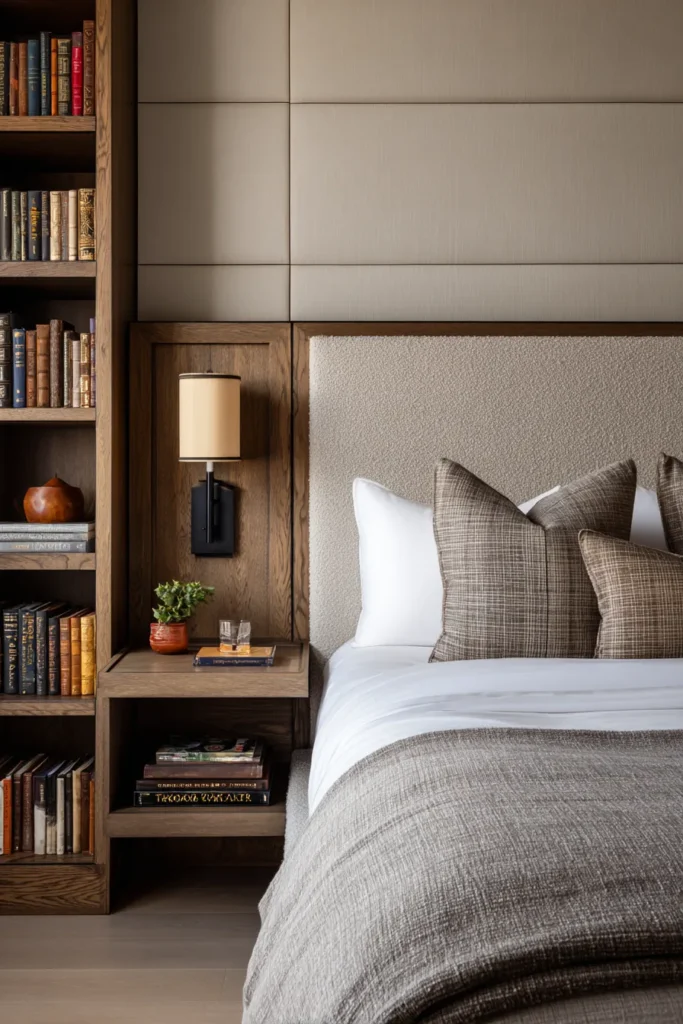
Most headboards terminate 36″ above mattress height, creating useless wall space. Extend your headboard upward to 72″ total height, then add a 12″-deep reading ledge at 40″ height—perfect for propping up while reading without fully sitting upright.
This configuration solves the chronic “pillow avalanche” problem where throw pillows slide behind the bed during use. The ledge acts as a physical barrier while providing arm support and side table functionality for beverages and devices.
Designer’s Secret: Upholster the extended headboard section in acoustic fabric (search for Class A fire-rated acoustic panels). This serves triple purpose: soundproofing from adjacent rooms, visual texture, and actual support comfort when leaning back. It looks like luxury design but functions as practical noise control.
Design Breakdown:
- Headboard: Floor-to-72″ height, 12″ thick to accommodate ledge depth
- Ledge: Solid wood shelf cantilevered from headboard frame at 40″ mattress-relative height
- Upholstery: Acoustic fabric in textured weave—boucle or ribbed velvet
- Lighting: Wall sconce plug-in installed on each side of headboard at 50″ height
- Accessories: Decorative bookends to organize ledge without clutter
Best For: Master bedroom layouts where the reading zone must integrate with sleeping area, and couples with different reading schedules. Pairs well with wall art for bedroom strategies.
10. Bedside Chaise Terminal
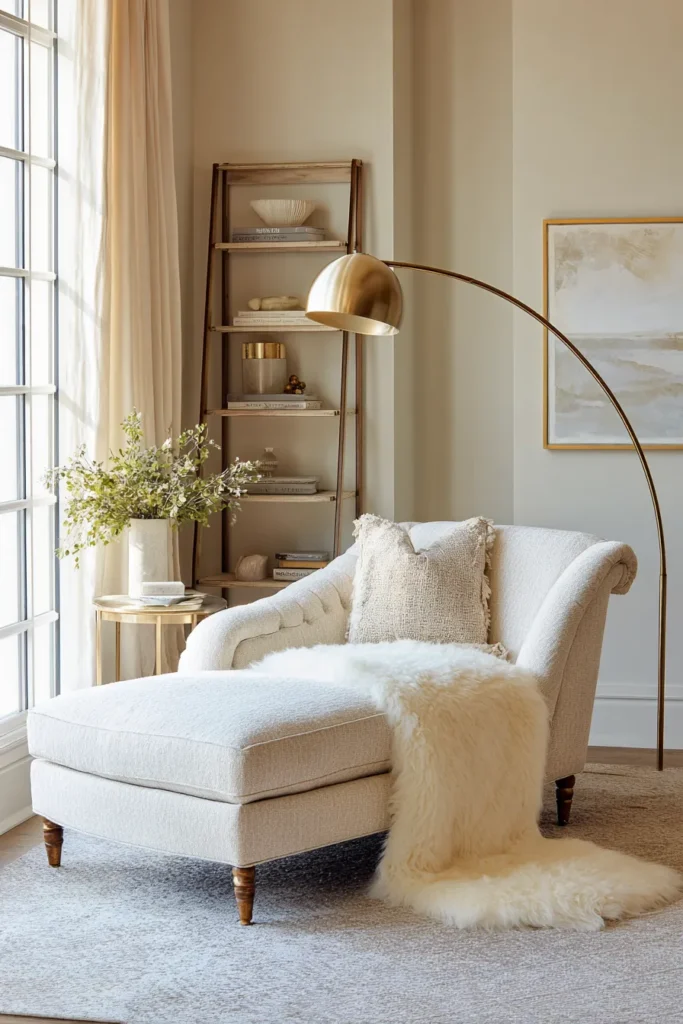
Replace the standard nightstand with a chaise lounge positioned perpendicular to the bed’s side. This creates a dedicated reading zone that’s physically separate from sleep associations—critical for anyone practicing sleep hygiene protocols that discourage bed-based waking activities.
The chaise’s perpendicular orientation also improves bedroom traffic flow by eliminating the gap between bed and nightstand where items fall into furniture purgatory.
Designer’s Secret: Choose a chaise with exposed legs (not skirted) and position it 3″ away from the bed frame, not flush against it. This maintains visual airiness and permits a narrow bookshelf to slide into the gap behind the chaise back—vertical storage that’s accessible from the chaise but invisible from bed perspective.
Design Breakdown:
- Chaise: Single-arm style in performance linen (stain-resistant coating)
- Placement: 3″ gap from bed, 6″ gap from wall for behind-furniture storage access
- Lighting: Arc floor lamp positioned behind chaise to curve over seating area
- Storage: Ladder shelf leaning against wall behind chaise
- Textiles: Faux fur throw in white or cream for temperature regulation
Best For: Insomniacs requiring spatial separation between reading and sleeping, and anyone with bedroom reading corner space for full-size furniture.
11. Floating Nightstand Reading Zone
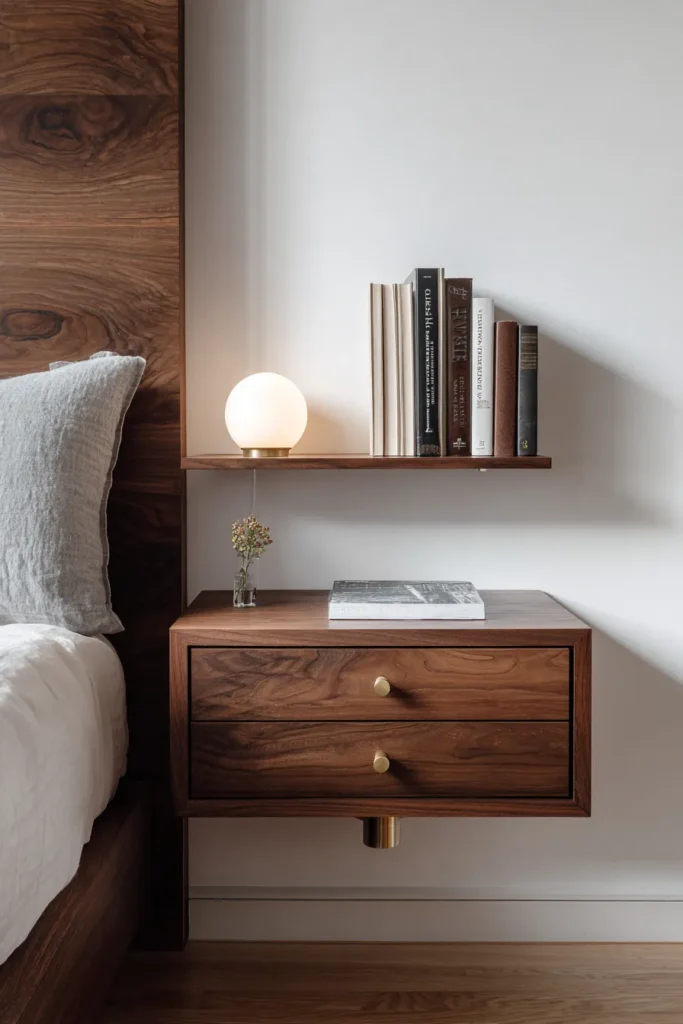
Wall-mount the nightstand at 24″ height (4″ lower than standard), creating an ergonomic reading shelf when you’re propped against pillows. The reduced height eliminates the awkward reach-up motion for beverages and puts books at natural arm-drop level.
Extend the floating surface 18″ deep instead of the typical 12″—this creates sufficient depth for a proper reading lamp, books, and beverages without the precarious stacking that leads to midnight crashes.
Designer’s Secret: Install the nightstand with adjustable mounting brackets that allow 3″ vertical repositioning without wall damage. Your optimal reading height changes if you switch mattress thickness or box spring configuration—built-in adjustability future-proofs the installation. Use French cleat mounting system for maximum flexibility.
Design Breakdown:
- Surface: 18″D x 24″W floating shelf in walnut or white oak
- Mounting: French cleat system with 3″ vertical adjustment range
- Lighting: Smart bulb in table lamp for app-controlled dimming during nighttime reading
- Storage: Corner shelf wall mounted above nightstand for current book rotation
- Accessories: Adjustable book stand that props books at optimal 45-degree angle
Best For: Small bedrooms where traditional nightstands consume disproportionate floor space and anyone renovating vanity ideas bedroom with similar floating furniture concepts.
12. Under-Platform Pull-Out Seating
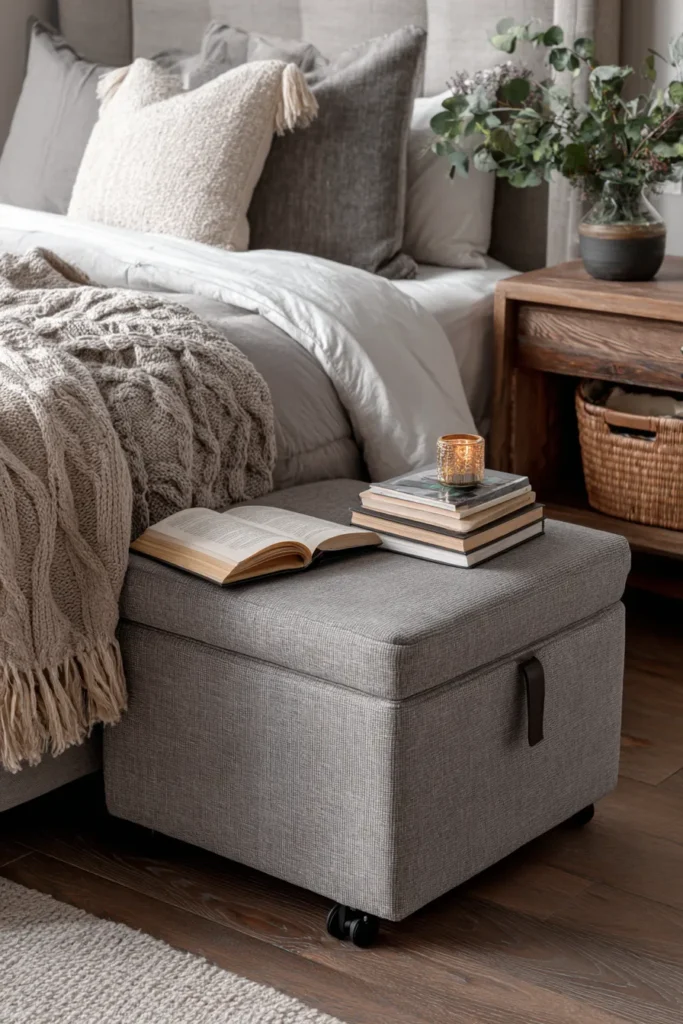
For platform beds or beds with storage bases, install a pull-out ottoman storage cube on casters that slides completely beneath the bed frame when not in use. This “hidden” seating emerges only during reading sessions, maintaining bedroom minimalism the rest of the day.
The ottoman should be 16″ tall to align with bed height when extended, creating a visual continuation of the sleeping platform rather than appearing as separate furniture.
Designer’s Secret: Outfit the pull-out ottoman with a cushioned lap desk that stores inside the cube’s top compartment. This transforms the ottoman into a proper reading workstation—supporting books, tablets, and beverages without juggling items on your lap. The lap desk should have 15-degree tilt capability for optimal reading ergonomics.
Design Breakdown:
- Ottoman: 16″H storage cube on locking casters, upholstered in durable outdoor fabric
- Storage: Internal compartment holds throw pillows, lap desk, and reading accessories
- Lighting: Book light rechargeable that clips to ottoman edge (eliminates power cord tripping hazard)
- Textiles: Cable knit blanket stored on ottoman top doubles as cushion padding
- Accessories: Drink coaster set magnetized to ottoman side panels
Best For: Micro-apartments, studio layouts, and anyone implementing wardrobe design bedroom storage strategies where furniture multi-functions.
Closet & Niche Conversions
13. Shallow Closet Reading Capsule
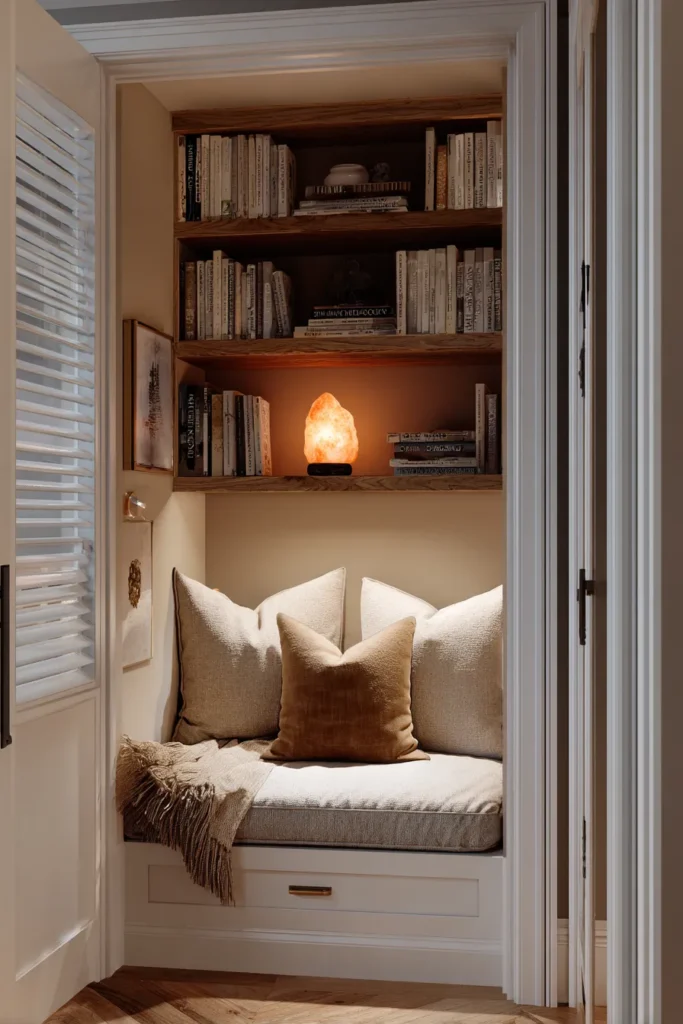
Convert underutilized shallow closets (24-30″ depth) into dedicated reading nooks by removing hanging rods and installing a built-in bench. This creates a semi-enclosed environment that mimics the psychological safety of reading in confined spaces—an evolutionary preference dating to cave-dwelling ancestors seeking protected vantage points.
Leave closet doors operable so you can close yourself into the nook during household chaos, creating what architects call “retreat-within-retreat” spatial hierarchy.
Designer’s Secret: Paint the closet interior three shades darker than your bedroom walls—this creates intentional visual recession that makes the nook feel deeper than its actual dimensions. The darkness also reduces eye strain from peripheral light contrast when focused on page-level illumination. Use matte finish paint (5-10% sheen maximum) to prevent light reflection.
Design Breakdown:
- Bench: Wall-to-wall built-in at 16″ height with hinged lid storage beneath
- Cushioning: Window seat cushion custom-cut to closet width in 200gsm linen
- Lighting: Himalayan salt lamp on upper shelf for warm ambient glow (2000K color temperature)
- Storage: Wall-mounted book rack on side walls for immediate access
- Ventilation: Remove closet door completely or install louvered bifold doors to prevent stale air accumulation
Best For: Parents needing escapist retreat during active household hours and anyone with reading corner bedroom space limitations.
14. Dormer Alcove Retrofit
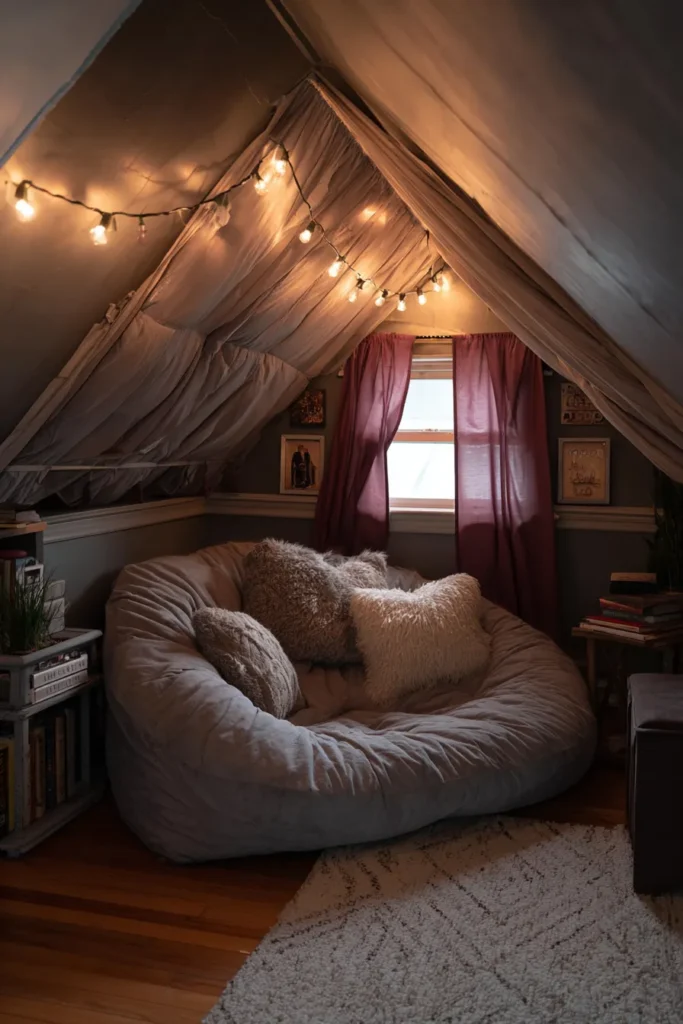
Dormer windows in attic bedrooms create awkward low-ceiling alcoves that standard furniture can’t accommodate. Instead of wasting this architectural quirk, install a papasan chair cushion directly on the floor (no frame) beneath the dormer peak.
The low seating height (6″ off floor) pairs perfectly with 60-72″ ceiling clearance typical of dormers. The circular cushion shape also echoes the curved dormer architecture better than rectangular seating.
Designer’s Secret: Install a picture ledge shelf along the dormer’s sloped ceiling line, following the roofline angle. This transforms wasted vertical space into display-storage hybrid—current books sit upright while art leans casually against the wall. The angled display creates more visual interest than standard horizontal shelving.
Design Breakdown:
- Seating: Papasan cushion (46″ diameter) placed directly on low-pile rug for stability
- Lighting: String of fairy lights following dormer roofline creates constellation effect
- Storage: Angled picture ledge at 40″ height following ceiling slope
- Textiles: Multiple lumbar support pillows for adjustable back positioning
- Window Treatment: Blackout curtains on tension rod inside dormer recess
Best For: Attic bedrooms, renovated historic homes with architectural character, and teens’ rooms where unconventional seating appeals. Similar creative problem-solving as kids bedroom ideas for boys.
15. Between-Studs Built-In Nook
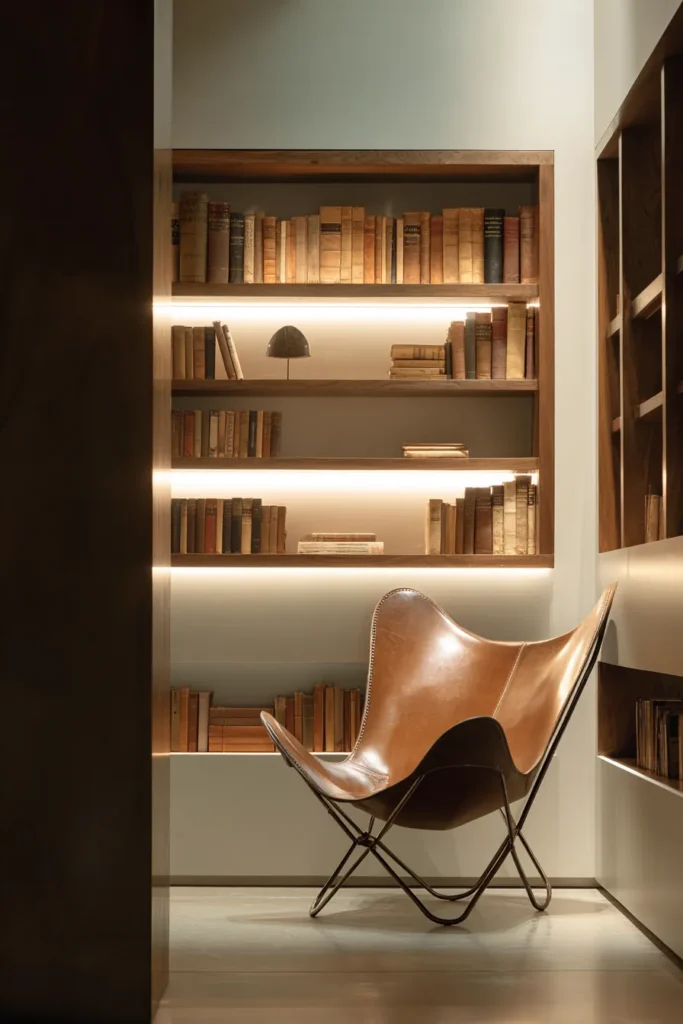
In homes with 2×6 exterior walls (standard in cold climates), the 5.5″ stud cavity provides surprising depth for built-in reading niche. This requires removing drywall between two studs (16″ on center = 14.5″ clear width), creating a shallow alcove perfect for book storage with integrated lighting.
Position a butterfly chair facing the built-in niche—the recessed shelving becomes your personal library wall without consuming any room square footage.
Designer’s Secret: Before removing drywall, use a stud finder to verify no plumbing, electrical, or HVAC runs between those studs. Exterior walls are usually safe, but always verify. Once clear, install LED strip lighting at the top of the cavity before adding shelves—the downlight creates dramatic shadow lines and eliminates need for secondary task lighting.
Design Breakdown:
- Niche Construction: Remove drywall between two studs, add horizontal shelving at 8″ intervals
- Lighting: LED 2700K strips at cavity top with wireless remote dimming
- Seating: Butterfly chair in full-grain leather positioned 36″ from wall
- Storage: Magazine rack on floor beside chair for overflow
- Wall Finish: Paint niche interior in high-gloss finish to maximize light reflection
Best For: Renovation projects, homeowners comfortable with minor structural modification, and anyone maximizing bathroom storage using similar recessed concepts.
16. Murphy Bed Reading Hybrid
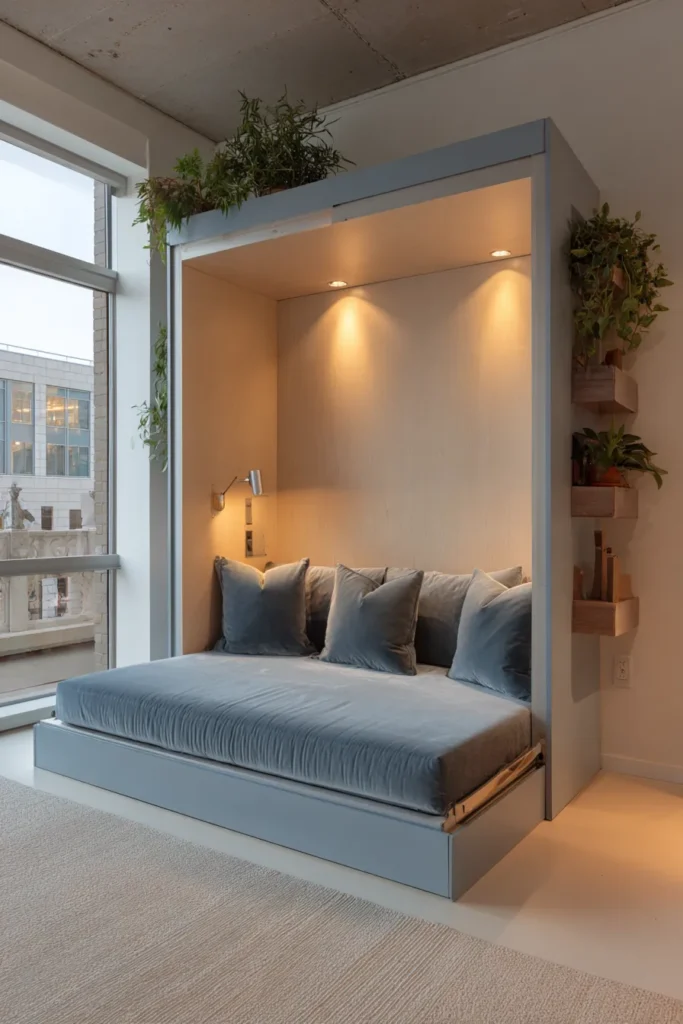
Install a Murphy bed system with built-in seating on the bed’s underside. When the bed is in “up” position during daytime, a cushioned bench reveals itself, creating a proper reading nook. When you’re ready for sleep, the bench folds into the wall and the bed descends.
This solves the fundamental challenge of small bedroom design: single-use furniture monopolizing space 16+ hours daily when not actively in use.
Designer’s Secret: Specify a Murphy bed mechanism with “pause” capability that locks at 45-degree angle. This creates a canopy effect over the reading bench—partial enclosure that enhances nook ambiance without full wall storage. The angled bed base also acts as acoustic reflector, improving sound quality if you listen to audiobooks.
Design Breakdown:
- Murphy System: Side-mount mechanism with pause feature at 45° and 90°
- Bench: Integrated cushioned seat on bed underside, 18″D x 60″W
- Lighting: Plug-in wall sconces mounted on Murphy unit sides, wired to interior mechanism
- Storage: Cube storage organizer flanking Murphy unit for book organization
- Textiles: Bench cushion in performance velvet (matches bed underside for visual continuity)
Best For: Studio apartments, guest rooms with dual-purpose requirements, and anyone implementing dining room wall decor principles where walls serve multiple functions.
2026 Trend Logic: Why This Aesthetic Shift
The movement toward floor-level, modular reading nooks isn’t arbitrary interior design trend-chasing. Three converging factors explain the shift:
Spatial Economics: Average US bedroom size decreased from 140 sq ft (1990) to 115 sq ft (2024) in new construction. Bulky accent chairs consume 12-15 sq ft including clearance zones—10% of total room area for single-use furniture. Modular floor seating eliminates this spatial debt entirely.
Biophilic Imperative: Post-pandemic research confirms that ground-level activities increase feelings of security and reduce anxiety markers. Japanese designers pioneered this understanding through tatami culture—floor-based living creates psychological grounding that elevated furniture can’t replicate. Reading nooks incorporating artificial plants in ceramic planters bridge this biological need with practical design.
Sustainability Shift: The 2026 design ethos rejects disposable furniture cycles. A $400 accent chair lasts 3-5 years before upholstery degrades; modular floor cushions with removable covers extend lifespan to 10+ years through simple fabric replacement. This aligns with broader movements seen in patio interior and balcony decor where multi-season, adaptable furniture dominates.
The lighting shift to 2700K specifically addresses circadian disruption from excessive blue-spectrum exposure. Cooler-temperature bulbs (4000K+) suppress melatonin production, making evening reading physiologically disruptive. Warm-amber lighting maintains reading visibility while supporting natural sleep cycles—particularly critical in bedroom environments where lighting influences beyond immediate task illumination.
Designer’s Warning: Avoid These Critical Mistakes
Mistake #1: Ignoring Lumbar Support in Floor Seating Ground-level reading requires proper lumbar architecture. A pile of decorative throw pillows isn’t support—it’s decoration that collapses under sustained pressure. Invest in proper floor chairs with back support or high-density foam bolsters specifically engineered for seated ergonomics.
Mistake #2: Over-Accessorizing Small Surfaces The Instagram aesthetic of reading nooks displays 15+ decorative objects per square foot—candle holders, ceramic vases, wall-mounted mirrors, decorative trays. This creates visual chaos that defeats the nook’s purpose: focused retreat. Limit accessories to 3-5 functional items maximum—everything else is cognitive clutter.
Mistake #3: Wrong Lighting Temperature Installing 5000K “daylight” bulbs in reading nooks destroys the intimate ambiance while straining eyes through excessive blue-spectrum exposure. Residential reading requires 2700-3000K maximum. Period. This isn’t aesthetic preference—it’s physiological fact supported by 40+ years of lighting ergonomics research.
Mistake #4: Treating Window Seats as Benches Most DIY window seat projects use 4″ foam cushions identical to outdoor furniture. Reading sessions last 30-120 minutes; outdoor benches are designed for 10-minute sitting. Use 6″ minimum cushion thickness with high-resilience foam (35-45 pound density) or accept chronic hip discomfort after 45 minutes.
Mistake #5: Ignoring Scale Relationships Placing a massive reading chair in an 8×10 bedroom creates spatial suffocation rather than cozy intimacy. Furniture scale must match room volume—use the 1/5 rule: seating width shouldn’t exceed one-fifth of wall length. A 10-foot wall maxes out at 24″-wide seating to maintain proper negative space ratio.
Creating Your Reading Sanctuary
The transformation from unused corner to purposeful reading sanctuary doesn’t require architectural overhaul. It demands strategic thinking about spatial hierarchy, ergonomic requirements, and honest assessment of how you actually use bedroom space.
Start with lighting—proper 2700K task illumination from arc floor lamps or swing arm wall lamps establishes functional foundation. Then layer textiles: area rugs define zones, weighted blankets provide anxiety reduction, and quilted throws add temperature regulation without visual weight.
Storage integration separates amateur nooks from professional design. Every reading zone needs floating shelves, woven baskets, or rolling carts within arm’s reach—books scattered on floor indicate planning failure, not casual aesthetic.
Window treatment strategy impacts both ambiance and function. Blackout curtains provide afternoon glare control while sheer curtains maintain natural light transmission. Install both on double rods for complete flexibility—similar to layering approaches in living room paint colors where multiple tones create depth.
The final layer is personal curation: framed wall art, macrame wall hangings, or essential oil diffusers that reflect your specific aesthetic. But remember the accessory limit—3-5 items maximum. Curate ruthlessly.
Your bedroom reading nook isn’t magazine spread recreation. It’s functional sanctuary tuned to your body’s requirements, reading habits, and spatial constraints. Execute these 16 concepts with material specificity, dimensional precision, and ergonomic awareness—not decorative approximation. The difference determines whether you actually use the space or just photograph it once for Instagram before returning to reading in bed.
The 2026 design language speaks clearly: intentional minimalism over decorative excess, ergonomic function over aesthetic performance, sustainable modularity over disposable trendiness. Build accordingly.