Every bedroom deserves a corner where the world fades away and stories come alive. A thoughtfully designed reading nook transforms unused space into your personal sanctuary—a place where soft lighting meets plush comfort and every detail invites you to linger just one more chapter.
1. Window-Side Retreat with Natural Light
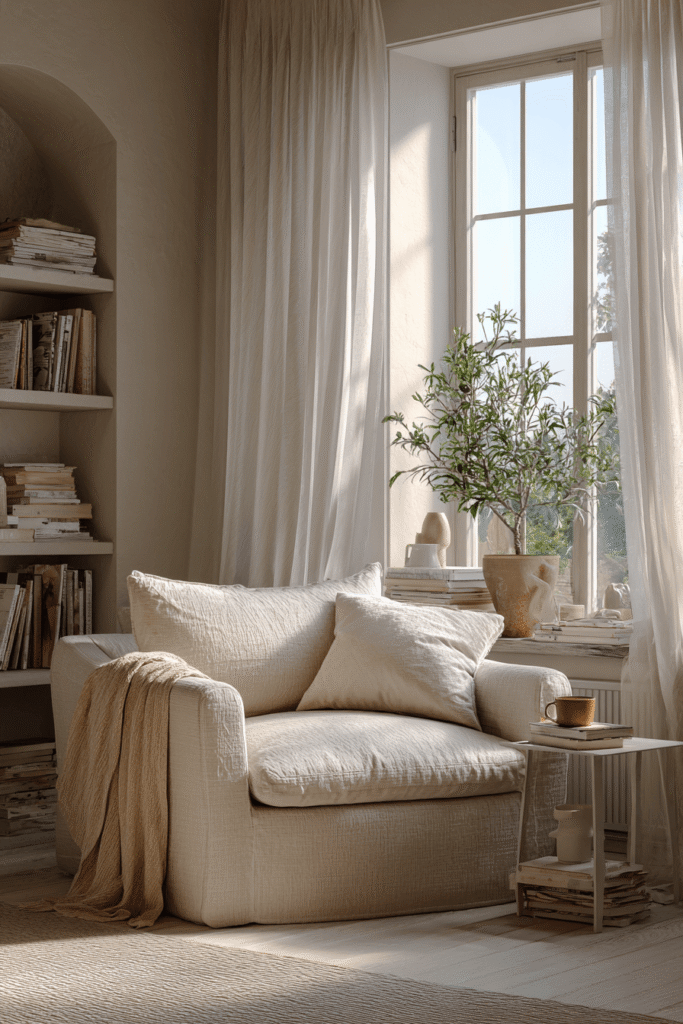
Sunlight streaming through bedroom windows creates the most coveted reading environment—one where morning coffee meets fresh chapters and afternoon shadows dance across pages. This classic placement turns natural light into your primary design element, wrapping your reading corner in warmth that shifts beautifully throughout the day. The connection to the outdoors adds a meditative quality, making even the smallest corner feel expansive and peaceful.
Positioning seating directly beside or beneath a window isn’t just practical—it’s transformative. Natural light reduces eye strain during daytime reading while the view provides gentle visual breaks between chapters. Interior designers consistently recommend this placement for its mood-enhancing properties and energy efficiency. The key is balancing direct sunlight with comfort, ensuring your nook remains inviting even during peak afternoon hours.
Design Breakdown:
- Place a comfortable armchair or cushioned bench perpendicular to the window for optimal light without glare
- Layer sheer curtains with blackout panels to control brightness and create reading flexibility
- Add a small side table within arm’s reach for books, beverages, and reading glasses
- Incorporate a lightweight throw blanket draped over the chair back for texture and warmth
- Position a potted plant on the windowsill to soften the transition between indoor and outdoor spaces
- Use a low-profile floor lamp for evening reading when natural light fades
- Choose upholstery in light-reflecting fabrics—linen, cotton, or pale leather
- Frame the window with minimal hardware to maximize light penetration
- Add a small footstool or ottoman for extended reading sessions
- Keep the color palette neutral and airy to amplify the natural brightness
Best For: Bedrooms with corner or bay windows, morning readers, and anyone seeking a connection to outdoor views while enjoying their bedroom decor.
2. Velvet Accent Chair with Sculptural Floor Lamp

Rich jewel-toned velvet paired with architectural lighting creates instant sophistication—a reading corner that feels more gallery than bedroom. The tactile luxury of velvet upholstery catches light beautifully, shifting from deep shadow to luminous sheen depending on the angle. This approach transforms a simple seating arrangement into a statement piece that anchors the entire bedroom aesthetic with elegance and intentionality.
The sculptural floor lamp becomes functional art, eliminating the need for overhead lighting while creating dramatic visual interest. This combination works exceptionally well in contemporary and transitional bedrooms where design merit equals comfort. The high-contrast pairing—soft fabric against metal or brass—adds depth without overcrowding. It’s a designer’s favorite for creating boutique hotel ambiance in residential spaces.
Design Breakdown:
- Select a velvet accent chair in emerald, sapphire, burgundy, or charcoal for maximum impact
- Choose a floor lamp with an arched or tripod base that extends light directly over the reading spot
- Position the lamp slightly behind and to the side of the chair to eliminate shadows on pages
- Add a round side table in contrasting materials—marble, wood, or brass
- Layer a textured area rug beneath the chair to define the reading zone
- Incorporate metallic accents through lamp finish, picture frames, or decorative objects
- Keep surrounding walls relatively neutral to let the velvet color dominate
- Add one or two decorative pillows in complementary tones for lumbar support
- Style the side table with a small sculptural object or fresh flowers
- Ensure the lamp has adjustable brightness or a warm-toned bulb for eye comfort
Best For: Modern master bedrooms, design-forward spaces, and readers who appreciate furniture as art.
3. Low-Profile Floor Cushion Corner

Abandoning traditional seating entirely, the floor cushion approach embraces relaxed, informal comfort that feels effortlessly bohemian. Oversized cushions stacked against walls or layered on plush rugs create a nest-like environment where you can shift positions freely without furniture constraints. This style appeals to minimalists and free spirits alike, offering a design solution that’s both budget-friendly and visually distinctive.
The beauty lies in the layering—mixing patterns, textures, and sizes to create depth without requiring significant floor space. Floor-level reading also has surprising ergonomic benefits, allowing you to stretch, recline, or curl up in ways rigid furniture doesn’t permit. Designers love this approach for small bedrooms or multi-functional spaces where permanent furniture feels too imposing. It’s reading reimagined as a grounded, meditative practice.
Design Breakdown:
- Start with two to three oversized floor cushions (24-inch square or larger) as the base layer
- Position cushions against a wall or in a corner for back support
- Layer a thick, plush area rug underneath for cushioning and warmth
- Add smaller accent pillows in varying textures—velvet, linen, knit, or embroidered
- Incorporate a low wooden stool or tray table for books and beverages
- Hang wall-mounted shelving at low height for easy book access without standing
- Use warm, adjustable lighting like string lights or a floor lamp with dimmer function
- Drape a chunky knit throw blanket nearby for temperature control
- Mix patterns thoughtfully—pair geometric with organic, bold with neutral
- Keep the color palette cohesive with three to four complementary tones
Best For: Boho bedroom interiors, small bedrooms, flexible spaces, and readers who prefer informal seating.
4. Built-In Window Seat with Hidden Storage

Custom window seats marry form and function in a way few reading corners can match—they transform architectural dead space into purposeful beauty. The built-in element creates a finished, intentional look that elevates the entire bedroom, while hidden storage beneath the seating solves clutter challenges inherent in book-loving households. Cushioned and pillowed appropriately, these seats become the most coveted spot in the home.
What makes this design particularly special is its permanence—it becomes part of the room’s architecture rather than movable furniture. This investment pays dividends in both property value and daily use. Interior designers often specify window seats during renovations specifically for reading purposes, incorporating electrical outlets for lighting and charging. The result is a tailored corner that looks professionally designed because it is.
Design Breakdown:
- Design the seat at comfortable height (18-20 inches) with a depth of at least 20 inches
- Install lift-up storage compartments or pull-out drawers beneath the seating platform
- Add a custom-fitted cushion in durable upholstery fabric with foam padding
- Layer throw pillows against the window for back support and visual softness
- Paint or stain the built-in to match existing trim for cohesive architectural flow
- Install wall-mounted reading lights on either side for targeted illumination
- Incorporate open shelving on adjacent walls for book display
- Add window treatments that don’t obstruct seating—Roman shades or café curtains work well
- Style with a textured throw blanket draped casually over one edge
- Consider adding electrical outlets within the built-in for device charging
Best For: Permanent installations, bedrooms with underutilized window alcoves, and homes undergoing renovation—perfect for those exploring reading corner ideas.
5. Rattan Chair with Botanical Accents

Natural materials bring organic warmth that synthetic furniture simply cannot replicate—rattan’s woven texture and honey tones create instant visual interest while remaining remarkably neutral. Paired with lush greenery, this combination transforms a bedroom corner into a biophilic retreat that soothes both visually and psychologically. The natural aesthetic works seamlessly across design styles from coastal to Scandinavian to modern eclectic.
The tactile quality of rattan adds dimension without weight, making it ideal for smaller bedrooms where heavy furniture would overwhelm. Plants amplify this effect, introducing movement, color variation, and air-purifying benefits. Designers appreciate how this pairing creates a complete look with minimal styling effort—the materials themselves provide the visual interest. It’s an approach that feels collected rather than purchased, effortlessly curated rather than overly designed.
Design Breakdown:
- Select a rattan or wicker accent chair with comfortable proportions and supportive back
- Position two to three plants at varying heights around the reading corner—floor, table, and hanging
- Choose low-maintenance varieties like pothos, snake plants, or monstera for easy care
- Add a linen or cotton cushion to the chair seat for comfort and color introduction
- Place a natural fiber rug (jute or sisal) beneath the chair to reinforce the organic theme
- Incorporate a wooden side table or plant stand for functional surface area
- Use ceramic or terracotta planters to complement the natural material palette
- Hang a woven wall basket or macramé planter nearby for vertical interest
- Keep the color scheme earthy—terracotta, cream, sage, and warm browns
- Add a textured throw blanket in neutral tones draped over the chair arm
Best For: Natural material lovers, plant enthusiasts, and earthy bedroom designs with warm, organic color schemes.
6. Canopy Curtain Reading Cocoon
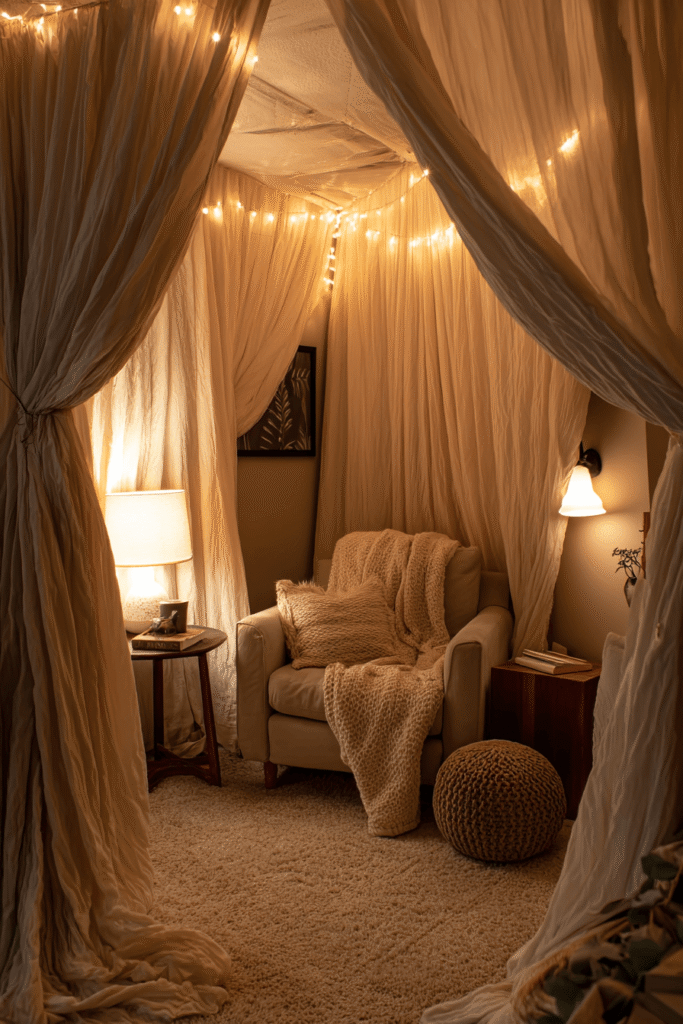
Fabric draped from ceiling to floor creates an enclosed sanctuary within your bedroom—a room within a room that signals complete retreat. This theatrical approach transforms an ordinary corner into something extraordinary, using soft textiles to define space rather than solid walls. The psychological impact is immediate: stepping behind the curtain means stepping away from daily demands into pure escapism.
The beauty of this design lies in its flexibility and relatively low cost compared to structural changes. Curtain rods, tension cables, or ceiling-mounted tracks create the framework, while fabric choice determines the mood—sheer for ethereal lightness, velvet for dramatic luxury, or linen for casual sophistication. Interior designers use this technique to add architectural interest to bland bedroom corners, creating focal points that photographs beautifully and functions even better.
Design Breakdown:
- Install a ceiling-mounted curtain track or tension rod in an L-shape around your reading corner
- Select floor-length curtains in fabric weight appropriate to desired privacy and light control
- Position comfortable seating—chair, floor cushions, or small loveseat—within the canopy space
- Add string lights or a small pendant lamp inside for warm, enclosed lighting
- Layer a plush rug to define the floor space and add comfort underfoot
- Include a small bookshelf or floating shelf within the curtained area for book storage
- Use curtain tie-backs when you want the space open and flowing with the bedroom
- Choose coordinating but not matching fabrics for visual interest—mix textures and tones
- Add personal touches like photographs, small artwork, or meaningful objects on interior walls
- Ensure adequate ventilation with a small fan if the space feels too enclosed
Best For: Dramatic interiors, shared bedrooms needing privacy zones, and anyone seeking the ultimate reading retreat in their bedroom space.
7. Leather Club Chair with Vintage Wall Shelving
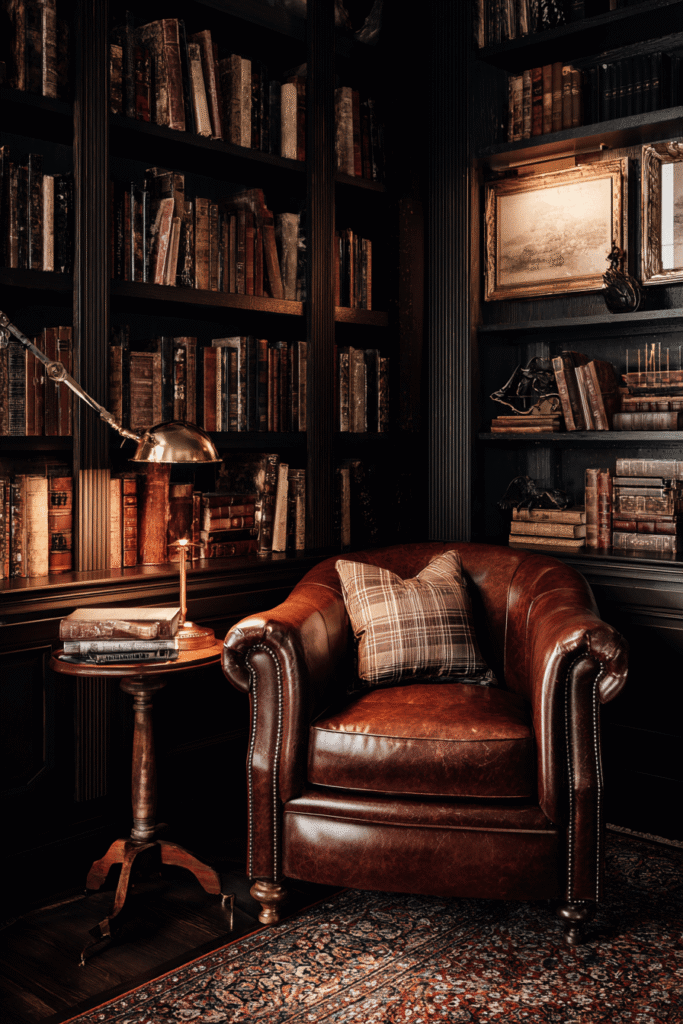
Rich leather upholstery paired with dark wood shelving evokes the timeless appeal of private libraries and gentlemen’s studies—a sophisticated aesthetic that never goes out of style. The worn patina of quality leather develops character over time, making this investment piece more beautiful with age. Surrounding the chair with visible book spines creates an intellectual atmosphere that serious readers crave, turning function into powerful visual statement.
This classic combination works particularly well in traditional and transitional bedrooms where permanence and quality matter more than trend. The color palette typically leans masculine—cognac leather, espresso wood, forest green accents—but can be lightened with cream walls and natural light. Designers appreciate how this setup communicates sophistication without trying too hard; it’s understated elegance rooted in genuine utility.
Design Breakdown:
- Choose a leather club chair or wingback in cognac, chocolate, or aged black leather
- Install wall-mounted shelving or a tall bookcase directly behind or beside the chair
- Arrange books with spines facing out, mixing vertical and horizontal stacking for visual rhythm
- Add a small side table in coordinating wood tone for practical surface space
- Incorporate brass or bronze elements through lamp bases, shelf brackets, or picture frames
- Position an adjustable reading lamp with vintage-inspired design on the side table
- Layer a Persian or oriental rug beneath the chair for traditional pattern and warmth
- Include one or two leather-bound volumes or decorative objects on shelves for styling
- Hang framed artwork or vintage maps on adjacent walls to complete the library aesthetic
- Consider adding a small rolling ladder if ceiling height and shelving allow for dramatic effect
Best For: Traditional bedrooms, book collectors, and readers who appreciate classic, library-inspired design with timeless appeal.
8. Floating Corner Bench with Gallery Wall

Minimalist nooks where art and seating merge seamlessly create visually light reading corners that don’t overwhelm compact bedrooms. A wall-mounted bench eliminates visual clutter at floor level while providing comfortable seating that appears to float. Paired with a curated gallery wall above, this approach turns the reading corner into a focal point that celebrates both literature and visual art.
The floating element is key—it creates continuity across the floor plane, making the room feel more spacious while offering hidden storage opportunities underneath. The gallery wall adds personality without requiring floor space, telling your story through carefully chosen prints, photographs, or meaningful artwork. This combination appeals to modern aesthetics where less is more, but personality still shines through.
Design Breakdown:
- Install a wall-mounted bench with hidden brackets for a clean, floating appearance
- Choose a bench depth of 16-18 inches for comfortable seating without protruding too far
- Add a thin cushion in washable fabric for comfort—keep it low-profile to maintain sleek lines
- Arrange a gallery wall above the bench with 5-9 frames in varying sizes
- Mix frame finishes—black, white, natural wood, or brass—for eclectic sophistication
- Include artwork that inspires you—book cover prints, literary quotes, travel photography
- Position a minimalist wall sconce on one side for adjustable reading light
- Keep the color palette neutral with one or two accent colors throughout the gallery
- Add one or two throw pillows in coordinating tones for lumbar support
- Consider under-bench storage baskets for books, blankets, or reading accessories
Best For: Minimalist bedrooms, modern aesthetics, art lovers, and those maximizing limited square footage in small bedroom spaces.
9. Oversized Bean Bag with Adjustable Sconce
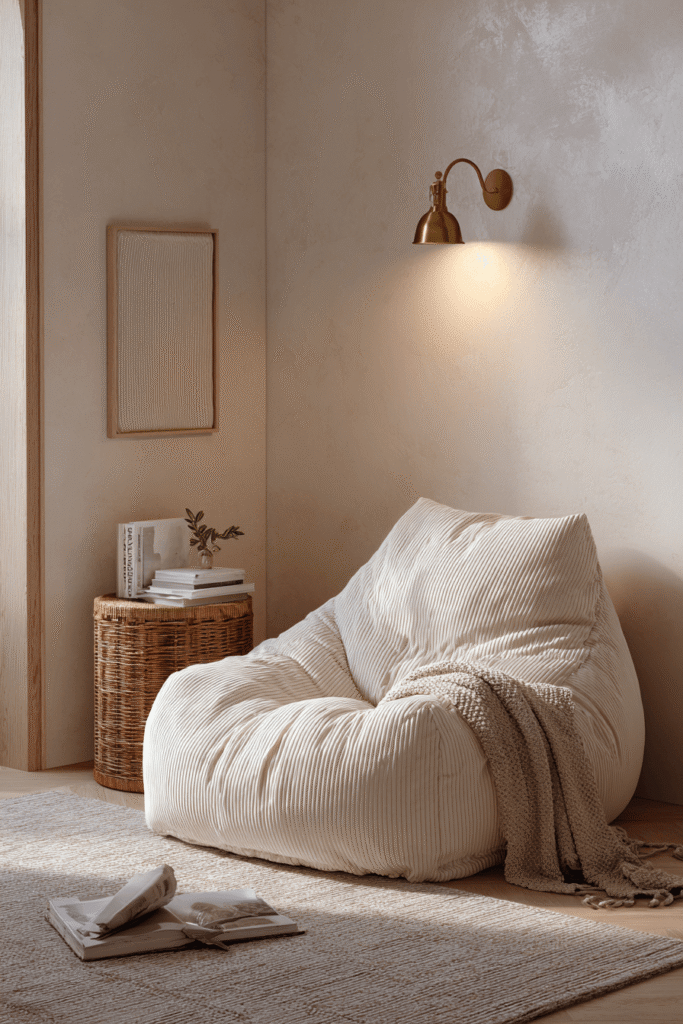
Sink-in comfort reaches its peak with oversized bean bags that mold perfectly to your body—eliminating pressure points and allowing hours of uninterrupted reading. This casual, contemporary approach appeals to those who prioritize comfort above all else, creating a reading spot that feels more like a embrace than furniture. Paired with adjustable wall-mounted lighting, this setup offers flexibility for any reading mood or time of day.
The beauty of bean bag seating lies in its adaptability—it conforms to however you want to sit, recline, or curl up. Unlike rigid furniture, it moves with you, supporting different reading positions throughout long sessions. Modern bean bags have evolved far beyond dorm room aesthetics, with premium fabrics and structured fills that provide support while maintaining that signature sink-in feel.
Design Breakdown:
- Select a premium, oversized bean bag in durable fabric like microsuede, velvet, or performance linen
- Choose neutral colors that coordinate with your bedroom palette—charcoal, cream, or warm gray
- Position the bean bag in a corner with wall support on two sides for stability
- Install an adjustable wall sconce with a swing arm for flexible light direction
- Add a small side table or floor-level basket for books and beverages within reach
- Layer a textured area rug underneath to define the reading zone
- Include a cozy throw blanket draped over the bean bag for temperature control
- Keep a small bookshelf or magazine rack nearby for easy access to reading materials
- Consider a bean bag with removable, washable covers for easy maintenance
- Use warm LED bulbs in the sconce to reduce eye strain during extended reading
Best For: Casual, contemporary bedroom designs, young adults, and anyone who values ultimate comfort over formal aesthetics.
10. Chaise Lounge with Layered Throw Blankets
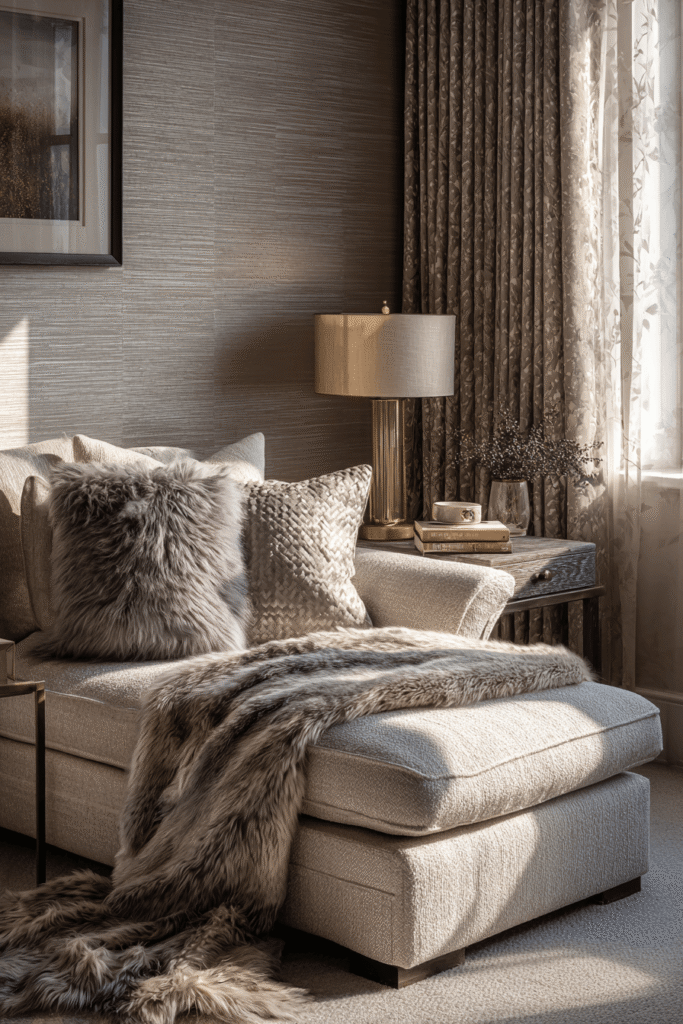
Luxurious reclining perfection arrives with a chaise lounge—furniture specifically designed for leisurely activities like reading, napping, and daydreaming. The elongated silhouette provides full-body support, allowing you to stretch out completely or prop yourself at the perfect angle for page-turning comfort. Layered with sumptuous throw blankets, this setup creates a reading corner that feels indulgent, inviting extended afternoon escapes.
The chaise lounge brings old-world elegance into contemporary spaces, bridging traditional and modern design effortlessly. Its architectural presence makes it a statement piece that elevates the entire bedroom aesthetic. Interior designers favor chaises for their versatility—they function equally well for reading, relaxing, or even as overflow seating when guests visit.
Design Breakdown:
- Choose a chaise lounge with comfortable cushioning and supportive back angle—test before buying
- Select upholstery in rich fabrics like velvet, linen, or leather depending on your bedroom style
- Position near a window for natural light or in a corner with good lamp placement
- Layer two to three throw blankets in complementary textures—chunky knit, faux fur, and linen
- Add decorative pillows for lumbar and neck support—vary sizes for visual interest
- Place a side table at arm’s reach for books, reading glasses, and beverages
- Include a floor or table lamp with adjustable brightness for reading flexibility
- Position a small bookshelf or stack of books nearby for easy access
- Add a textured area rug beneath the chaise to anchor the reading zone
- Style with one elegant decorative object—a sculptural vase or art book on the side table
Best For: Luxury bedrooms, readers who prefer reclining positions, and spaces where furniture makes a design statement.
11. Scandinavian Corner with Sheepskin Rug

Hygge philosophy comes alive in Scandinavian reading corners where clean lines meet cozy natural textures. The minimalist aesthetic—characterized by light woods, neutral palettes, and functional design—creates calming spaces that feel both sophisticated and inviting. A draped sheepskin rug adds instant warmth and tactile luxury, transforming simple seating into a cocoon of comfort that embodies the Danish concept of coziness.
This design approach proves that minimalism doesn’t mean cold or sparse—it means intentional. Every element serves both function and beauty, creating harmony without excess. The neutral color scheme with warm undertones promotes relaxation, making it ideal for reading corners where calm concentration matters. Scandinavian design’s emphasis on natural light and organic materials creates spaces that feel connected to nature even indoors.
Design Breakdown:
- Select a simple wooden accent chair or bench in light oak, ash, or birch
- Drape a genuine sheepskin rug over the seat for soft, luxurious texture
- Keep the color palette neutral—whites, creams, soft grays, and natural wood tones
- Add a minimalist floor lamp with clean lines and warm light temperature
- Position a small side table in light wood or white-painted finish
- Include one or two potted plants—snake plants or fiddle leaf figs work beautifully
- Layer a chunky knit throw blanket in cream or oatmeal tones
- Hang simple floating shelves in light wood for book storage
- Keep decorative elements minimal—perhaps one ceramic vase or candle
- Ensure abundant natural light with sheer white curtains or minimal window treatments
Best For: Minimalist aesthetics, fans of Scandinavian design, and readers who find calm in simplicity and natural materials.
12. Converted Closet Reading Hideaway
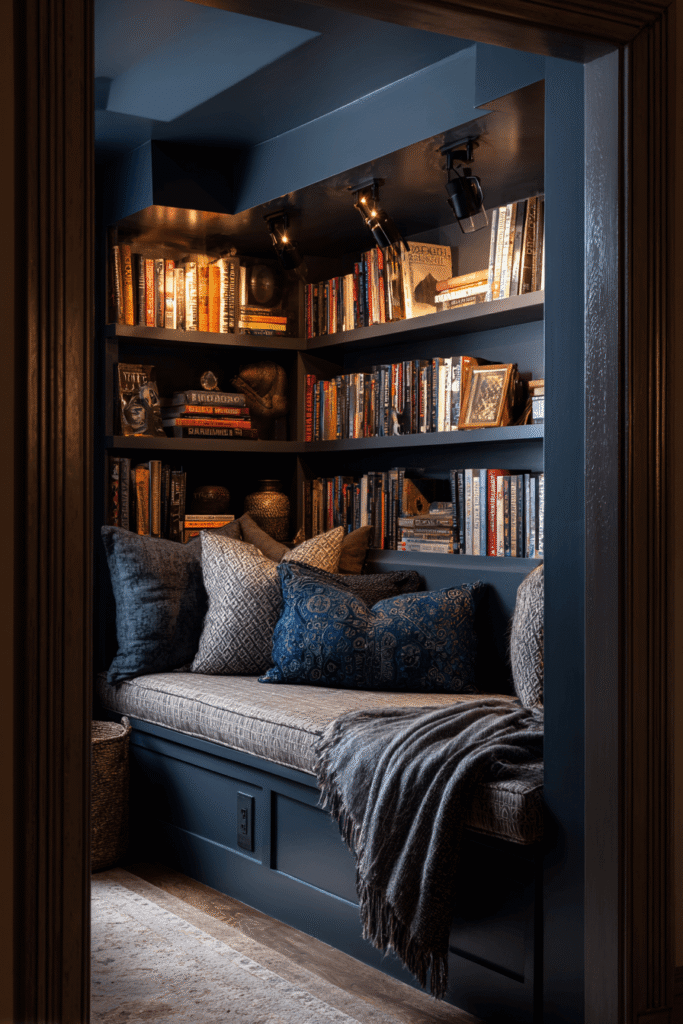
Ultimate privacy and enclosure transform unused closets into intimate reading retreats—secret hideaways where you can shut out the world completely. This creative space conversion takes underutilized storage and reimagines it as purposeful sanctuary. The enclosed walls create a cocoon effect that eliminates distractions, making it extraordinarily easy to lose yourself in stories for hours without interruption.
The compact nature of closet conversions forces intentional design—every element must be carefully considered and precisely placed. This constraint often results in some of the coziest, most personalized reading spaces imaginable. Lighting becomes crucial in these enclosed areas, and the opportunity to customize wall colors, cushioning, and shelving makes each closet nook truly one-of-a-kind.
Design Breakdown:
- Remove closet doors completely or replace with curtains for flexible privacy
- Paint interior walls in a cozy, enveloping color—deep navy, forest green, or warm terracotta
- Build or install a custom bench seat at comfortable height with thick cushioning
- Add built-in shelving on side walls for book storage and personal objects
- Install LED strip lighting or a small pendant lamp for adequate illumination
- Include a dimmer switch to control light levels for different reading moods
- Layer multiple cushions and pillows for maximum comfort in the compact space
- Add a small basket or cubby for reading essentials—bookmarks, glasses, notepads
- Consider adding a small fan or ensuring adequate ventilation for comfort
- Personalize with meaningful artwork, photographs, or quotes on interior walls
Best For: Creative space solutions, homes with unused closets, and readers craving ultimate privacy—especially perfect for kids’ bedrooms or shared spaces.
13. Mid-Century Modern Corner with Tripod Table

Retro sophistication meets functional design in mid-century modern reading corners where iconic furniture shapes create instant visual appeal. The clean-lined aesthetic of the 1950s and 60s—characterized by tapered legs, organic curves, and minimal ornamentation—brings timeless style that never feels dated. A tripod side table adds sculptural interest while providing essential surface area, embodying the mid-century principle that good design is both beautiful and useful.
This style works exceptionally well in contemporary homes because its simplicity allows it to blend seamlessly with modern elements while adding character and warmth. The emphasis on craftsmanship and quality materials means mid-century pieces often become cherished investments that improve with age. Wood tones, geometric patterns, and pops of mustard or teal create the authentic period feel.
Design Breakdown:
- Choose an accent chair with tapered wooden legs and clean-lined upholstery
- Select fabric in period-appropriate colors—mustard yellow, teal, burnt orange, or olive green
- Position a tripod side table with splayed wooden legs and small circular top
- Add a task lamp with adjustable arm and cone-shaped shade in brass or black
- Layer a geometric patterned rug beneath the chair—think atomic or abstract motifs
- Incorporate wooden elements through shelving or decorative accessories
- Keep walls neutral to let the furniture’s color and form shine
- Add one or two throw pillows with mid-century patterns—stripes, dots, or abstract prints
- Include a small potted plant in a ceramic planter for organic contrast
- Display a few carefully chosen books with covers facing out for added visual interest
Best For: Mid-century enthusiasts, retro-loving readers, and bedrooms that blend vintage charm with modern functionality.
14. Daybed Reading Nook with Bolster Pillows
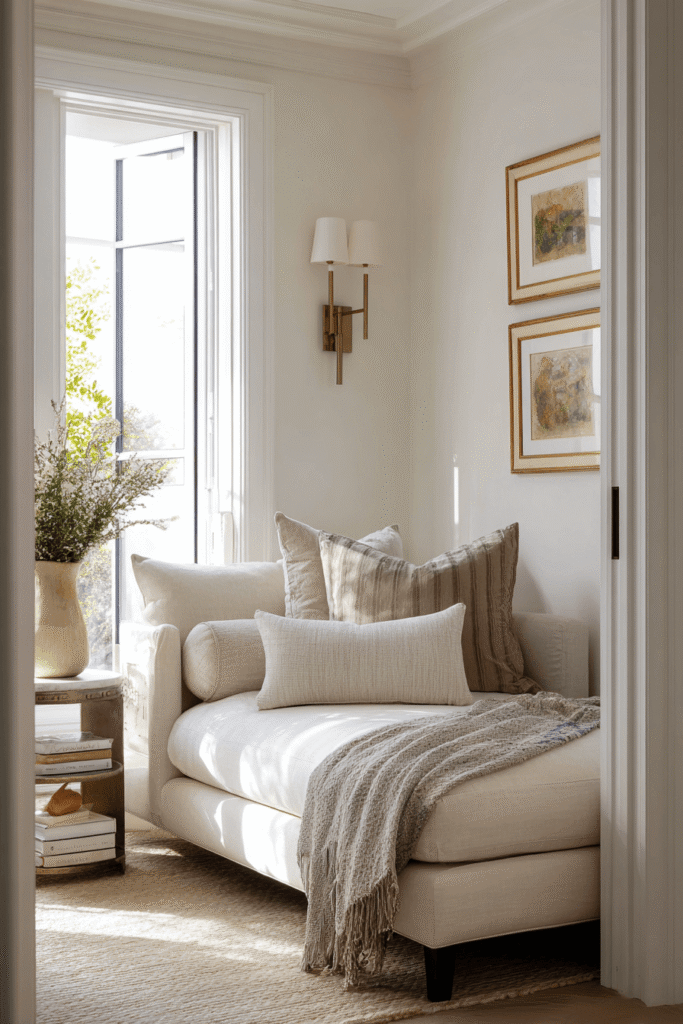
Multi-functional luxury transforms corners into dual-purpose spaces where reading and lounging coexist beautifully. A daybed provides the seating depth and cushioning of a bed with the backrest functionality of a sofa—perfect for extended reading sessions that might drift into afternoon naps. Styled with bolster pillows along the back, this setup creates comfortable support for upright reading while maintaining an elegant, tailored appearance.
The daybed solution works brilliantly in guest bedrooms or multi-purpose spaces where furniture must serve multiple functions without sacrificing style. It effectively doubles as extra sleeping space when needed while functioning as a sophisticated reading spot daily. This versatility makes it an investment piece that earns its place through constant use rather than sitting empty.
Design Breakdown:
- Select a daybed with clean lines and comfortable mattress—opt for quality since you’ll use it often
- Add two to three long bolster pillows along the back wall for lumbar support
- Layer standard throw pillows in front of bolsters for additional comfort options
- Choose coordinating bedding in durable fabrics that withstand daily use—linen or cotton blends
- Position near a window or in a corner with good natural light access
- Install wall-mounted sconces on either side for symmetrical reading light
- Place a side table at one end for books and beverages
- Add a lightweight throw blanket at the foot for temperature flexibility
- Include a nearby bookshelf or wall-mounted shelves for reading material storage
- Style with one or two decorative elements that reflect your personal aesthetic
Best For: Guest bedrooms, studio apartments, multi-purpose rooms, and anyone who wants furniture that works harder—especially useful in versatile bedroom layouts.
Conclusion
Creating your perfect reading corner bedroom isn’t about following rigid rules—it’s about understanding what makes you comfortable, inspired, and eager to pick up that next book. Whether you’re drawn to the sun-drenched simplicity of a window seat, the enclosed intimacy of a converted closet, or the luxurious sprawl of a chaise lounge, the right design exists for your space and style.
The most successful reading corners share common elements: comfortable seating that supports extended use, lighting that adapts to different times of day, and personal touches that make the space distinctly yours. But beyond these practicalities, the best reading nooks possess something intangible—a quality that makes you want to linger, that turns casual page-flipping into immersive experience.
Start with one corner, one chair, one lamp. Layer in comfort through textiles and cushions. Add your books where you can reach them easily. Then sit down and actually read. Adjust what doesn’t work. Add what’s missing. Your reading corner will evolve as you use it, becoming more perfectly suited to your habits with each adjustment. The goal isn’t Instagram perfection—it’s creating a space where stories come alive and reading becomes ritual rather than occasional activity.
FAQs
Q1: How do I create a reading corner in a small bedroom?
Even the smallest bedrooms can accommodate cozy reading corners with smart design choices. Focus on vertical storage with wall-mounted shelves to keep books accessible without consuming floor space. Consider low-profile furniture like floor cushions or a floating bench that doesn’t visually crowd the room. Position your reading spot near a window to maximize natural light, eliminating the need for multiple lamps. Multi-functional furniture—like storage ottomans or daybeds—allows your reading corner to serve additional purposes. For more space-saving strategies, explore these comprehensive small bedroom ideas that maximize every inch.
Q2: What type of lighting is best for a bedroom reading nook?
The ideal reading corner incorporates layered lighting that adapts throughout the day. Natural light provides the healthiest option for daytime reading, so position seating near windows when possible. For artificial lighting, choose adjustable sources like swing-arm sconces, arc floor lamps, or task lamps with dimmers that let you control intensity. Aim for warm-toned bulbs (2700-3000K) that reduce eye strain, and position lights to illuminate pages without creating glare or harsh shadows. Avoid relying solely on overhead lighting, which often casts shadows exactly where you need brightness most.
Q3: How can I make my reading corner more comfortable?
Comfort in reading corners comes from layering multiple elements that support extended sessions. Start with seating that provides proper back and lumbar support—test furniture before purchasing when possible. Add cushions and pillows in varying firmnesses to accommodate different reading positions. Include temperature control options like lightweight throws for warmth and ensure adequate ventilation. Keep essentials within arm’s reach: a side table for beverages, good lighting you can adjust without standing, and current books stored nearby. Don’t forget footrests or ottomans for leg elevation during longer reading marathons.
Q4: What furniture works best for a bedroom reading corner?
The best reading furniture depends on your personal comfort preferences and available space. Accent chairs with good back support and armrests work well in most bedrooms, offering comfort without overwhelming smaller spaces. Window seats or built-in benches maximize architectural features while providing hidden storage. Chaise lounges suit readers who prefer reclining positions, while oversized bean bags appeal to those seeking sink-in, moldable comfort. For multi-functional needs, consider daybeds that serve as both reading spots and guest sleeping areas. Test furniture whenever possible—comfort is highly individual, and what works for others might not suit your body.
Q5: How do I style a reading corner without it looking cluttered?
Maintaining visual calm in reading corners requires intentional curation and smart organization. Limit decorative items to meaningful pieces that enhance rather than distract—perhaps one plant, a favorite art print, or a sculptural lamp. Use closed storage for books you’re not currently reading, displaying only active selections on open shelves. Keep surfaces mostly clear, with just essentials like a current book and water glass. Choose a cohesive color palette with two to three main colors to create harmony. Regular decluttering prevents gradual accumulation—if you haven’t touched something in weeks, store it elsewhere. Remember: the goal is creating space that invites focus, not displays everything you own.