The 2026 luxury bedroom paradigm abandons the over-styled maximalism of previous years in favor of materiality-driven minimalism—where a single 240gsm Belgian linen duvet or unlacquered brass sconce creates more visual impact than ten decorative accessories ever could.
This shift reflects a broader cultural recalibration: American homeowners are exhausted by visual noise. After years of algorithm-fed inspiration that prioritized “Instagrammable” over livable, the pendulum swings toward spaces that reward tactile engagement and sensory restraint. Modern luxury now measures success in material authenticity, lighting precision, and spatial breathing room rather than decorative density.
The 2026 Design Shift: Material Truth Over Surface Decoration
Three converging forces define this year’s luxury bedroom aesthetic. First, post-pandemic sleep science research has validated what designers intuited—material quality directly impacts circadian rhythms and sleep architecture. A stonewashed Belgian linen duvet in 180-240 GSM weight regulates body temperature more effectively than synthetic alternatives, reducing night wakings by measurable percentages.
Second, the sustainable luxury movement has matured beyond greenwashing. Consumers now distinguish between “eco-marketed” products and genuinely durable goods with transparent supply chains. This explains the surge in demand for unlacquered brass hardware that develops natural patina rather than plated finishes that chip within seasons.
Third, color psychology research has refined our understanding of Light Reflectance Values (LRV). The ideal bedroom range—LRV 50-65—produces enough light reflection to prevent cave-like oppression while maintaining the visual softness necessary for melatonin production. This technical precision replaces the vague “warm neutrals” guidance of previous decades.
Unlacquered Brass Hardware in Controlled Oxidation
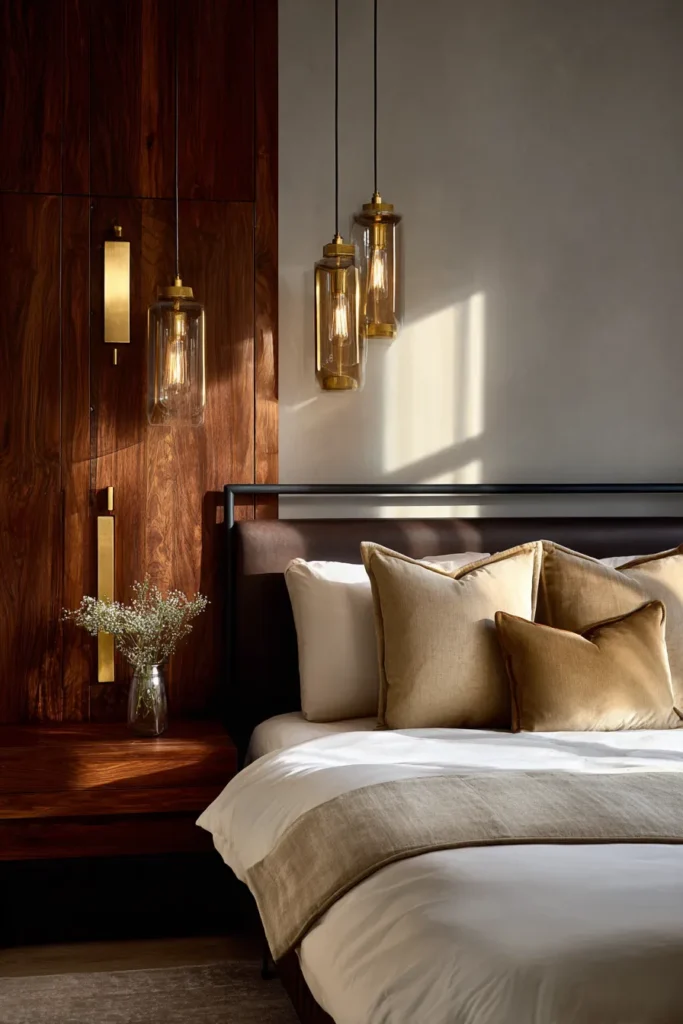
Solid brass cabinet pulls, light fixtures, and bed frame details gain character through natural patination rather than fighting against time with protective coatings. The living finish develops amber undertones within weeks, then deepens to chocolate browns in high-touch areas over months. This material honesty communicates permanence—the antithesis of disposable design culture.
Designer’s Secret: Purchase all brass elements from a single foundry to ensure consistent alloy composition. Mixed copper percentages oxidize at different rates, creating mismatched patinas that read as careless rather than curated. Request 85% copper / 15% zinc ratios for warm golden aging, or 80/20 for faster, richer brown development.
Design Breakdown:
- Hardware: Unlacquered brass cabinet pulls in cylindrical profiles (avoid ornate detailing that traps cleaning products)
- Lighting: Select fixtures with solid brass construction, not brass-plated steel that will eventually chip
- Maintenance: Weekly dusting only; allow oxidation to develop naturally without chemical cleaners
- Complementary finishes: Pair with matte black steel or dark walnut wood for material contrast
Best For: Design purists and sustainability-focused homeowners who appreciate objects that improve with age rather than fighting obsolescence.
Limewashed Wall Finish with Micro-Aggregate Texture
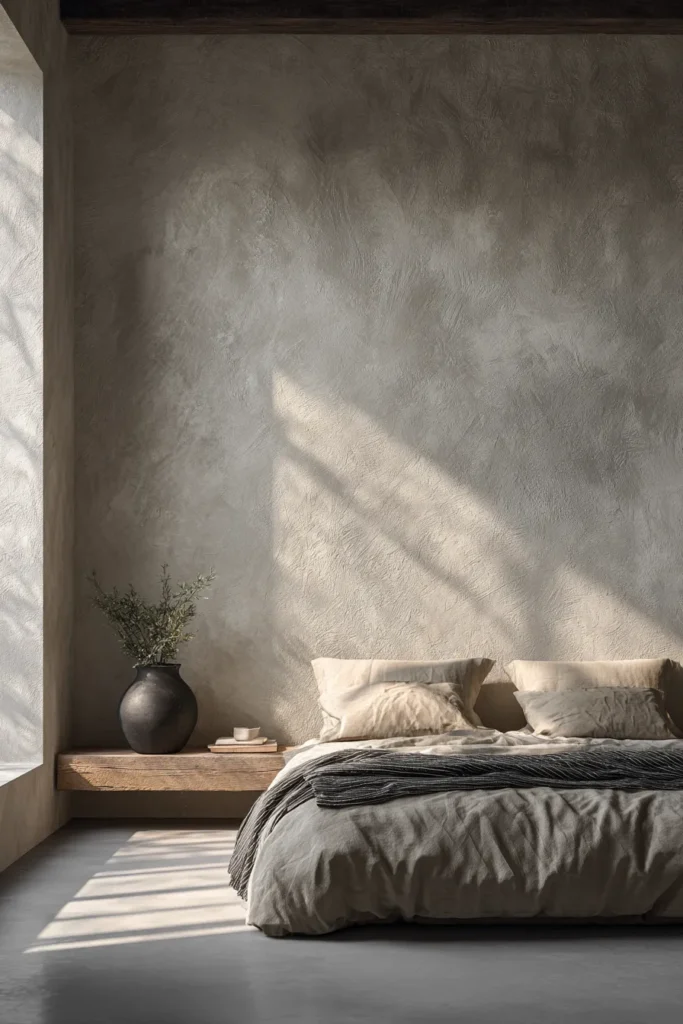
Authentic limewash—calcium hydroxide suspended in water—creates a chalky matte surface with subtle color variation that shifts throughout the day as light angles change. Unlike flat latex paint that absorbs light uniformly, limewash’s crystalline structure reflects illumination inconsistently, producing the soft luminosity characteristic of centuries-old European plaster walls.
Designer’s Secret: Apply limewash in random X-pattern strokes rather than conventional roller technique. This creates micro-shadows within the texture that prevent the “flat wall” appearance common in DIY applications. Professional applicators charge $8-12 per square foot, but the depth achieved justifies the investment for primary bedroom spaces.
Design Breakdown:
- Base coat: Choose LRV 55-60 range (test “Shaded White” or “String” in natural light before committing)
- Application: Three coats minimum; each layer must dry 24 hours for proper carbonation
- Texture: Request slight aggregate addition (fine marble dust) for enhanced light reflection
- Durability: Naturally antimicrobial and breathable; resists mildew in humid climates
Best For: Homeowners with architectural confidence who want permanent wall treatments that age gracefully without repainting cycles. Works beautifully in minimalist bedroom schemes.
Oversized Bouclé Upholstered Headboard (240cm Width Minimum)
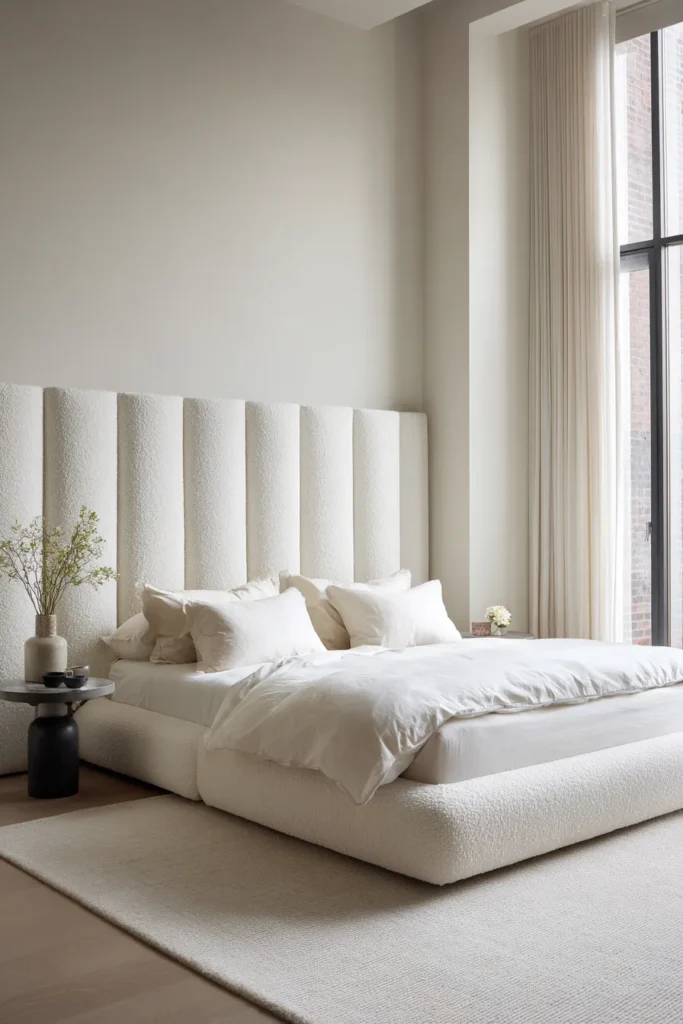
Scale intimidates amateur designers, but undersized headboards create the visual impression of temporary furnishing regardless of quality. A headboard spanning 240cm (roughly 94 inches) for a standard king bed establishes architectural presence that anchors the entire room. Bouclé fabric—with its characteristic looped texture—adds tactile interest without pattern competition.
Designer’s Secret: Specify 8cm depth minimum for upholstered headboards. Shallow padding (the 3-5cm standard on mass-market pieces) looks apologetic against the wall. Deep cushioning creates shadow lines at the edges that read as substantial architecture rather than applied decoration.
Design Breakdown:
- Fabric: Bouclé decorative pillows in ivory or charcoal tones (100% polyester bouclé resists pilling better than wool blends)
- Dimensions: Extend 30cm beyond mattress width on each side; height 130-150cm from floor
- Mounting: Wall-mounted cleats distribute weight; avoid bed-frame attachment that wobbles
- Complementary elements: Keep bedding simple—texture in headboard means texture in linens creates visual chaos
Best For: Couples seeking master bedroom ideas that balance comfort with architectural drama. The scale works in rooms 14 square meters minimum.
Architectural Crown Moulding in Contemporary Profiles
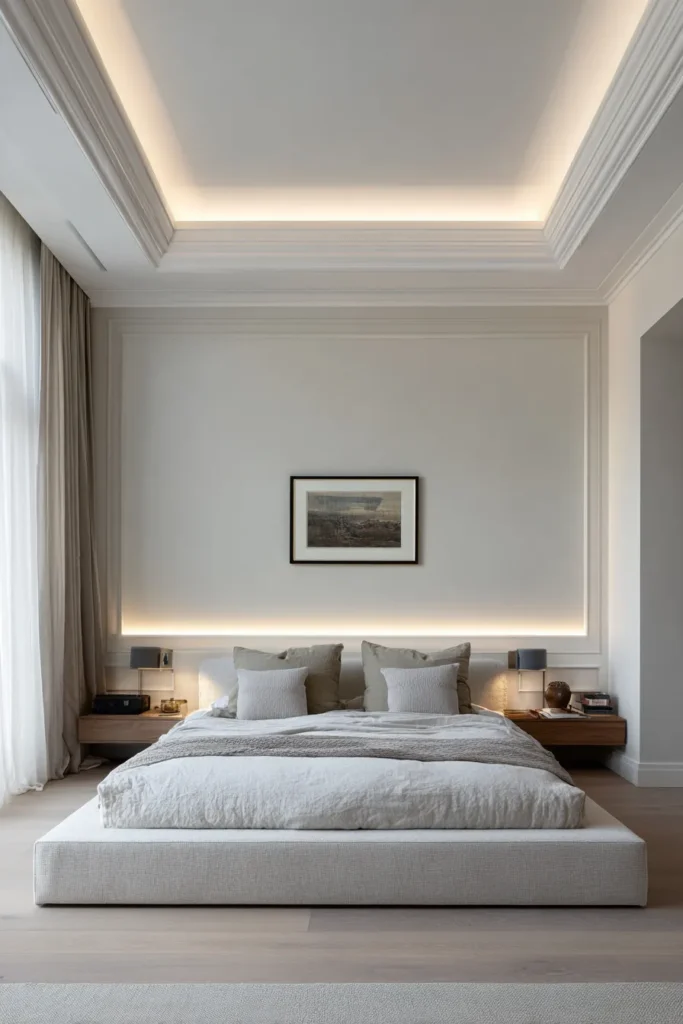
Traditional crown moulding reads dated in modern interiors, but reimagined profiles—stepped geometric designs or single-plane shadow gaps—add architectural sophistication without period style commitment. The key lies in proportion: contemporary moulding uses 8-12cm projection rather than the ornate 15-20cm depths of classical design.
Designer’s Secret: Paint crown moulding the same color as walls, not white. This reverses conventional wisdom but creates seamless vertical extension that makes 2.4m ceilings read as 2.7m or higher. The shadow line provides definition without color-blocking that visually lowers ceiling height.
Design Breakdown:
- Profile: Contemporary crown moulding kit in simple stepped design or modern shadow gap
- Installation: LED tape in shadow gap creates indirect uplighting that amplifies height illusion
- Paint: Match wall color exactly; use same sheen (typically eggshell or matte)
- Alternative: Picture-frame moulding on ceiling creates coffered effect without reducing ceiling height
Best For: Newer construction homes (2000-2025) with standard 2.4m ceilings that lack architectural character. Also excellent for small bedroom ideas where vertical emphasis expands perceived space.
Japanese-Inspired Low Platform Bed (20cm Floor Clearance)
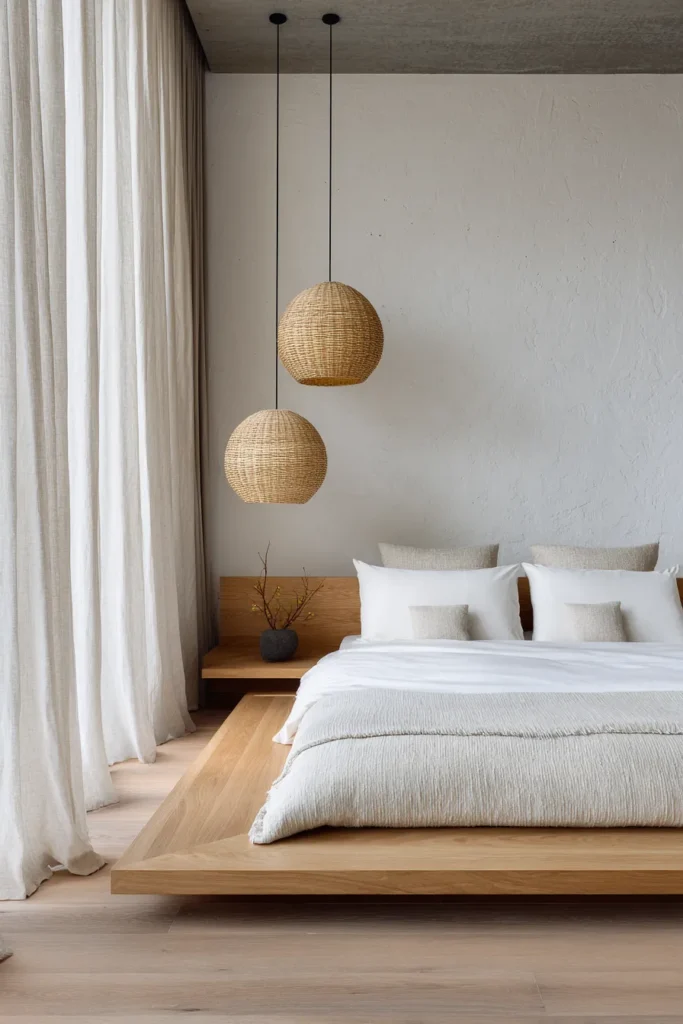
Platform beds sitting 20cm above floor level rather than standard 45-60cm heights fundamentally alter room proportions. Lower sight lines make ceilings appear higher while creating generous negative space above the bed frame. This design principle—ma in Japanese aesthetics—prioritizes emptiness as actively valuable rather than space requiring filling.
Designer’s Secret: Low beds require offsetting vertical elements to avoid visual imbalance. Install tall pendant light fixtures (minimum 40cm shade diameter, hung 200cm from floor) or floor-to-ceiling heavyweight linen curtains to anchor upper spatial zones. Without these, rooms feel bottom-heavy despite increased perceived height.
Design Breakdown:
- Frame: Low platform bed frame in solid white oak or walnut (avoid veneer—edge grain visibility matters at low sight lines)
- Height: 18-22cm from floor to mattress top; too low (under 15cm) creates accessibility issues
- Mattress: Standard depth; avoid pillow-tops that negate low-profile aesthetic
- Storage: Opt for woven storage baskets under the bed rather than built-in drawers that complicate minimal lines
Best For: Younger homeowners without mobility constraints who prioritize spatial serenity over conventional comfort signifiers. Particularly effective in loft-style apartments with 3m+ ceilings. If you’re exploring eastern-inspired design, consider also reviewing reading corner bedroom layouts for complementary meditation zones.
Layered Linen Bedding System (180-240 GSM Gradient)
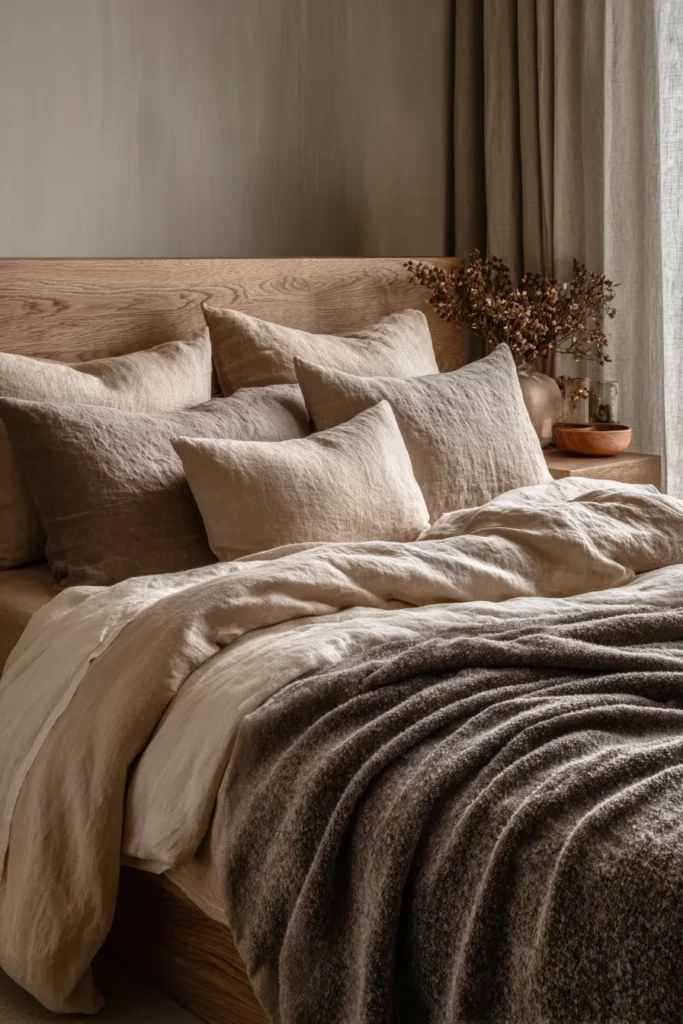
Professional bedding layering follows specific weight progression: start with lightweight 180gsm sheets, add mid-weight 210gsm coverlet, finish with 240gsm duvet. This gradient provides temperature regulation—light layers wick moisture while heavier top layers insulate—while creating visual depth through subtle tonal shifts in the same fabric family.
Designer’s Secret: Purchase each layer in incrementally darker shades of the same color rather than identical tones. The weight variation already creates texture; slight color progression (cream to sand to taupe) enhances shadow definition that photographs as expensive styling rather than simple layering.
Design Breakdown:
- Base: Organic cotton percale sheet set in 300 thread count (higher counts feel slippery, lower counts pill)
- Mid-layer: Lightweight linen blanket or cotton matelassé coverlet
- Top layer: Belgian linen duvet cover in stonewashed 240gsm for lived-in softness
- Accent: Velvet throw blanket at footboard adds material contrast without clashing textures
- Pillows: Linen euro shams (26″ x 26″) layered in front of standard sleeping pillows
Best For: Temperature-sensitive sleepers and homeowners who change bedding seasonally. The layered system allows removal of mid-weight elements in summer while maintaining visual interest.
Statement Pendant Lighting at 2700K Color Temperature
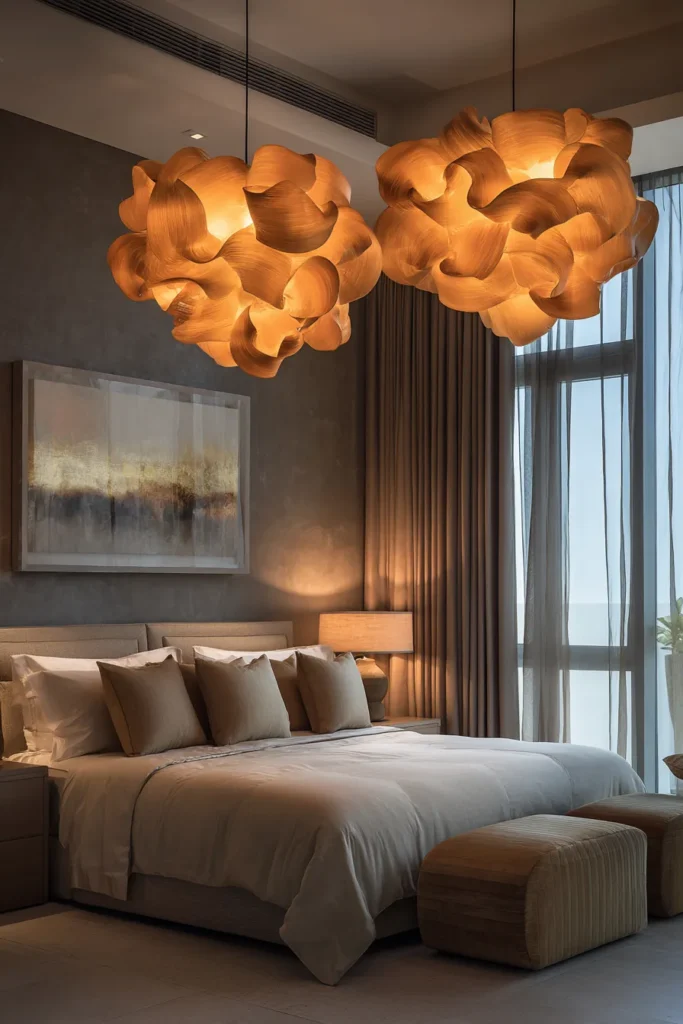
Oversized pendant lights (minimum 45cm diameter for standard bedrooms, 60cm+ for primary suites) function as sculptural focal points while providing ambient illumination. The critical specification: 2700K color temperature bulbs emit warm amber light that supports circadian rhythm by minimizing blue wavelength exposure before sleep.
Designer’s Secret: Install two pendant lights instead of one—flanking the bed at nightstand positions rather than centering over the mattress. This breaks the expected chandelier placement while providing targeted reading light that’s dimmable via wall controls. Ensure minimum 210cm clearance from floor to fixture bottom.
Design Breakdown:
- Fixtures: Pendant light fixtures in sculptural glass, woven rattan, or brushed brass (avoid chrome—reads too cold for bedrooms)
- Bulbs: Dimmable LED bulbs rated specifically 2700K (not 3000K which skews too white)
- Controls: Install dimmer switches; full brightness suitable for dressing, 20% for evening wind-down
- Alternatives: For rooms with low ceilings, substitute with adjustable wall-mounted swing-arm sconces
Best For: Homeowners ready to eliminate traditional table lamps entirely, creating cleaner nightstand surfaces. Also works beautifully in boho bedroom designs when using natural fiber shades.
Designer’s Warning: The Tactile Authenticity Test
The single most expensive mistake in luxury bedroom design is prioritizing visual impact over tactile experience. A room that photographs beautifully but feels synthetic to the touch fails the fundamental test of livability—your body registers material authenticity subconsciously, affecting sleep quality and daily satisfaction. Before purchasing any textile or finish, physically test the material. Run your hand across it. Check weight and drape. Polyester that mimics linen at 60% cost will disappoint within three months of lived experience, while genuine materials that feel substantial justify initial investment through years of sensory satisfaction.
Monolithic Stone Nightstand (Travertine or Limestone)
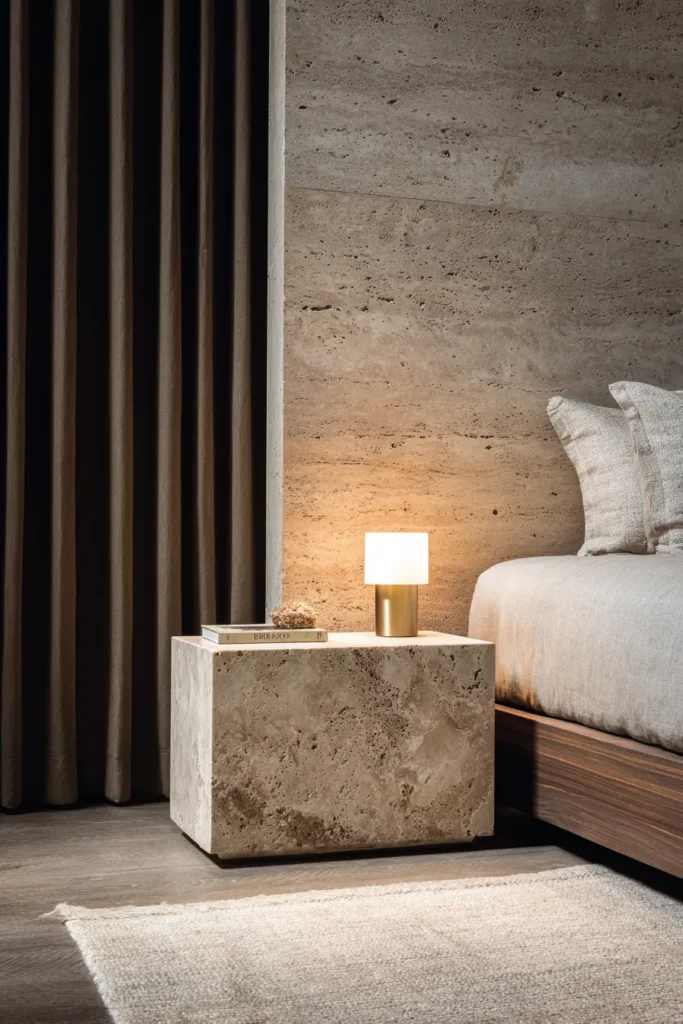
Solid stone nightstands—carved from single travertine or limestone blocks—replace conventional wood furniture with material gravitas. The honed surface (smooth but not polished) reads as refined without showroom sterility. These pieces weigh 30-50kg, telegraphing permanence that wood or metal alternatives cannot match.
Designer’s Secret: Stone nightstands require careful lighting placement. Top-mounted table lamps create harsh downward shadows; instead, position brass table lamps on adjacent surfaces or use LED strip lighting beneath the stone for floating illumination that highlights the material’s natural veining.
Design Breakdown:
- Material: Travertine with honed finish (tumbled reads too rustic; polished too formal)
- Dimensions: 45-50cm height, 40cm depth—standard proportions despite unconventional material
- Styling: Minimal accessorizing; stone presence suffices without decorative layering
- Pairing: Balance with soft textiles—handwoven wool area rugs or linen bedding prevent cold minimalism
Best For: Design maximalists seeking restraint through material quality rather than decorative quantity. Works exceptionally well in minimalist bedroom environments where each element carries visual weight.
Floor-to-Ceiling Drapery in Heavyweight Natural Linen
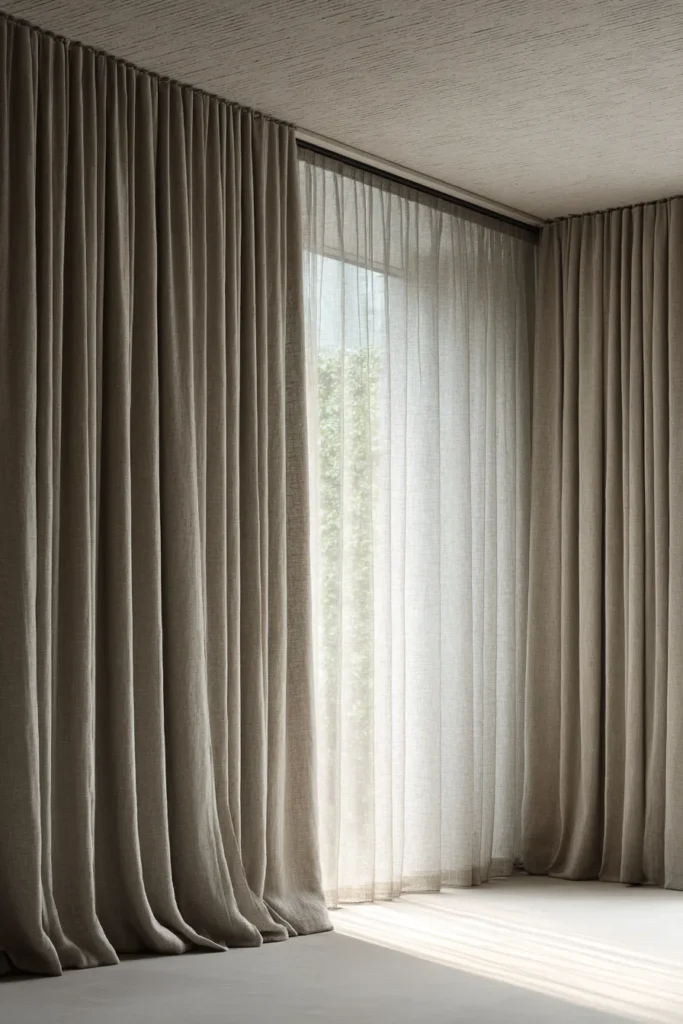
Ceiling-mounted drapery in 300-350gsm linen creates vertical lines that recalibrate room proportions. The weight ensures proper drape—lightweight fabrics balloon and gap, while heavyweight linens hang in clean columns that puddle slightly on the floor (intentional, not accidental pooling).
Designer’s Secret: Install drapery hardware 5-8cm from the ceiling, not directly at the ceiling line. This narrow gap creates shadow detail that enhances the height illusion. Direct ceiling mounting flattens the visual and complicates hardware installation into drywall rather than wall studs.
Design Breakdown:
- Panels: Heavyweight linen curtains in natural, unbleached tones (chemical whitening yellows over time)
- Hardware: Matte black or unlacquered brass rods, 3-4cm diameter for visual substance
- Heading: Ripplefold or pinch pleat—avoid grommets which read casual for luxury applications
- Length: 2-5cm floor puddle for custom appearance; exact length reads ready-made
Best For: Rooms with challenging window proportions (too narrow, too low) where fabric volume corrects architectural shortcomings. Essential for living room divider applications in open-plan homes as well.
Tonal Limewash Palette (LRV 55-60 Range)
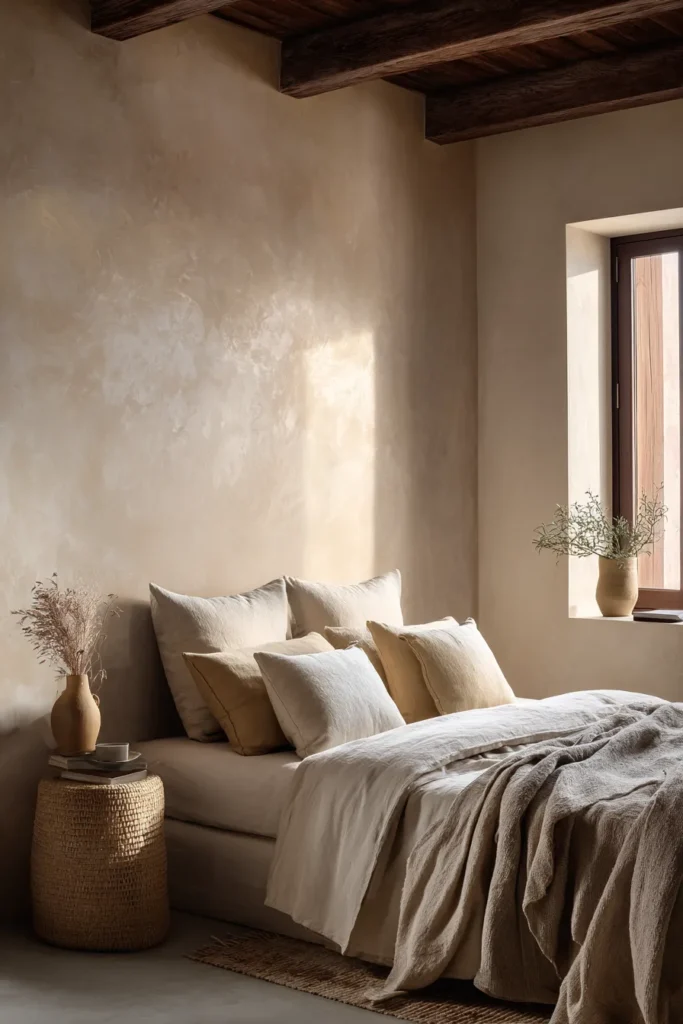
Monochromatic wall treatments in the LRV 55-60 range create enveloping warmth without darkness. This technical middle ground reflects sufficient light to prevent oppressive cave-feeling while maintaining enough depth to hide wall imperfections and create atmospheric intimacy. Think warm putty, soft clay, or greige tones with subtle pink or yellow undertones.
Designer’s Secret: Test paint in all four cardinal directions of your bedroom before committing. Northern light will cool any color by several degrees Kelvin, while southern exposure warms it considerably. What reads as perfect “greige” on a south wall may appear flat gray on a north wall in the same room. Purchase sample pots and paint 60cm squares on each wall, observing morning through evening.
Design Breakdown:
- Colors: Specify LRV between 55-60 (paint manufacturers list this on technical sheets)
- Undertone: Choose warm (pink, yellow, orange) over cool (blue, green) for sleep spaces
- Finish: Eggshell (20-30% gloss) rather than flat—reflects enough light to prevent dullness
- Application: Two coats minimum over primer; cheap paint requires three coats and still disappoints
Best For: Homeowners transitioning from stark white walls but hesitant about dramatic color commitment. The subtle depth improves sleep quality by reducing visual stimulation.
Integrated LED Cove Lighting (Indirect 3000K Ambient)
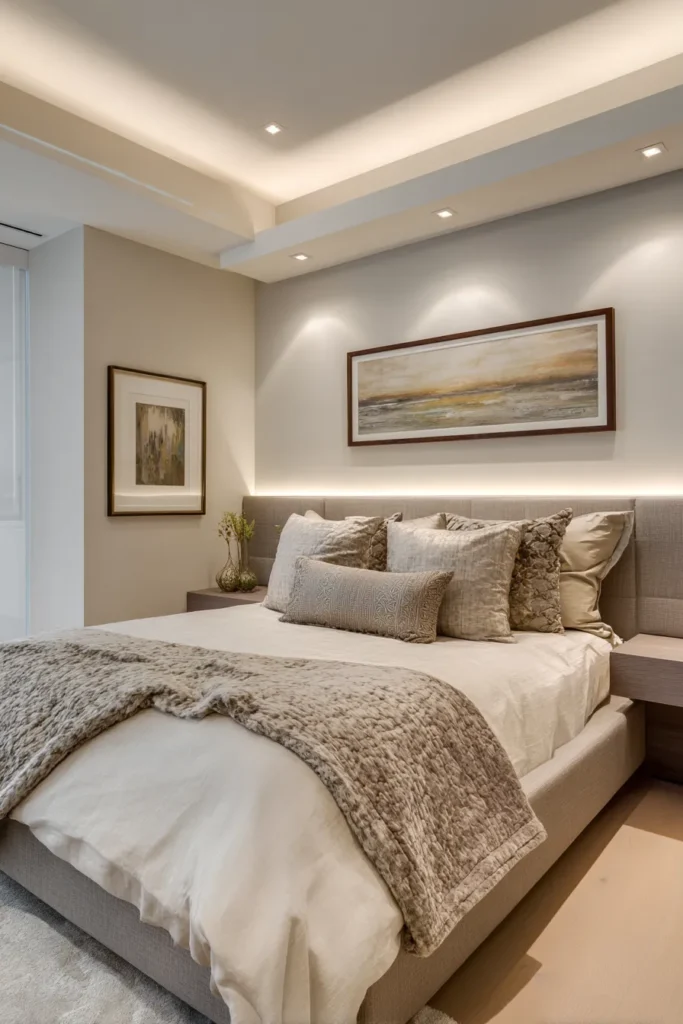
LED strips installed in architectural coves (recessed ceiling channels or behind floating headboards) provide indirect ambient lighting that illuminates ceilings rather than shining directly into eyes. The 3000K specification—slightly warmer than standard commercial lighting but less amber than 2700K—works for morning dressing while remaining sleep-friendly when dimmed for evenings.
Designer’s Secret: Install cove lighting on separate circuits from pendant or reading lights. This allows independent control of ambient glow versus task lighting. Dim cove lighting to 10% creates subtle night lighting that prevents stumbling without disrupting circadian rhythm like traditional nightlights.
Design Breakdown:
- Strips: LED strip lighting kit rated 3000K, high CRI (Color Rendering Index) 90+ for accurate color perception
- Placement: Behind crown moulding, inside bed frame perimeter, or behind floating nightstands
- Controls: DMX controllers allow programming for gradual morning wake-up lighting
- Power: Hire licensed electrician—improperly wired LEDs flicker and fail within months
Best For: Technology-comfortable homeowners who appreciate layered lighting control. Particularly effective in rooms without windows where artificial lighting must simulate natural light cycles.
Handwoven Wool Area Rug (High Pile 2.5cm Depth)
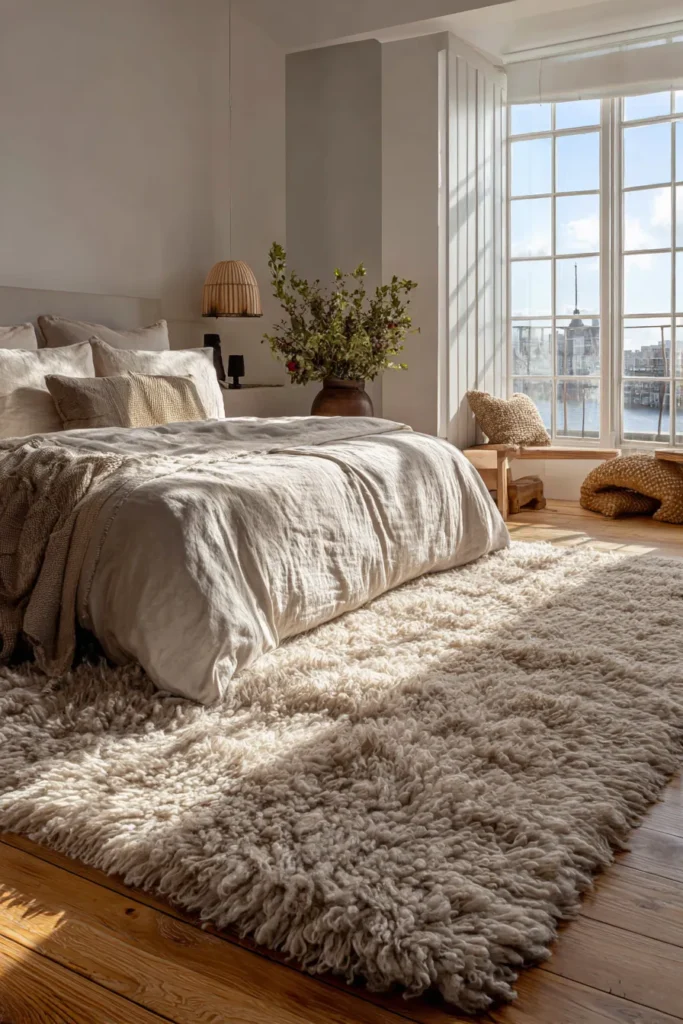
Natural fiber rugs with substantial pile depth (2.5cm minimum) anchor bedroom furniture while providing thermal and acoustic insulation. Handwoven construction in undyed wool creates organic color variation—creams to taupes to charcoals—that reads as sophisticated neutrality rather than bland beige.
Designer’s Secret: Size rugs larger than conventional wisdom suggests. For king beds, use minimum 270x360cm rugs that extend 90cm beyond nightstands on sides and 120cm past footboard. Undersized rugs make furniture appear to float awkwardly; oversized rugs create cohesive furniture groupings that feel professionally designed.
Design Breakdown:
- Material: Handwoven wool area rug in natural undyed fibers (vegetable dyes fade unevenly in sunlight)
- Pile: 2.5-3.5cm depth—too shallow (under 2cm) feels thin, too deep complicates vacuuming
- Construction: Hand-knotted or hand-tufted; machine-loomed alternatives lack textural variation
- Alternative: Vintage Turkish/Persian rug in Oushak style provides similar warmth with pattern interest for traditional-leaning aesthetics
Best For: Bedrooms with hardwood or tile floors where acoustic dampening improves sleep quality. The natural fibers regulate humidity better than synthetic alternatives.
Minimalist Black Steel Four-Poster Frame (Square Tube Profile)
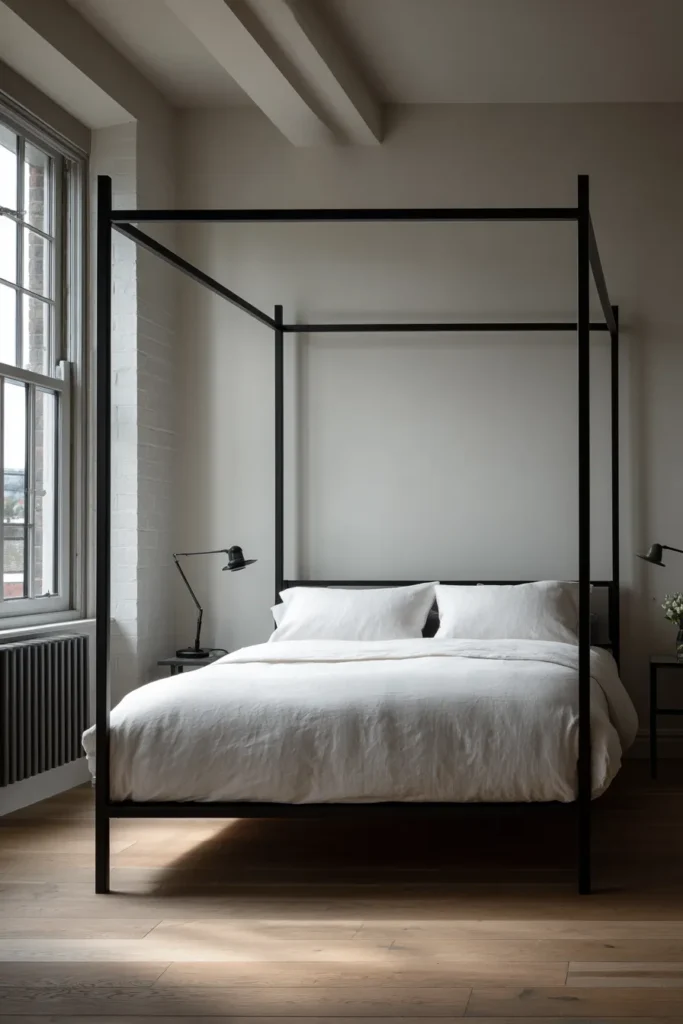
Modern four-poster beds use slim square-tube steel (2.5-3cm profile) rather than ornate turned wood posts, creating architectural definition without historical pastiche. Matte black powder coat finish reads as contemporary industrial rather than wrought-iron traditional. The vertical lines emphasize ceiling height while framing the bed as the room’s intentional focal point.
Designer’s Secret: Leave the canopy frame bare—no fabric draping. The structural geometry suffices as sculpture. For couples desiring privacy, install blackout cellular shades inside the frame perimeter on hospital track systems. This allows full enclosure when desired without permanent fabric that collects dust and visually shrinks the bed.
Design Breakdown:
- Frame: Black steel four-poster bed with welded corner joints (avoid bolted assembly that wobbles)
- Dimensions: Posts should extend 200-220cm from floor—lower reads stunted, higher works only in 3m+ ceiling rooms
- Bedding: Keep linens simple in white or cream; patterned bedding competes with frame geometry
- Flooring: Pair with light-colored floors (white oak, limestone) for maximum material contrast
Best For: Design-confident homeowners in loft spaces or renovated industrial buildings where modern minimalism suits architectural context. Also surprisingly effective in kids bedroom ideas for older children seeking sophisticated style.
Architectural Floating Nightstand with Concealed Mounting
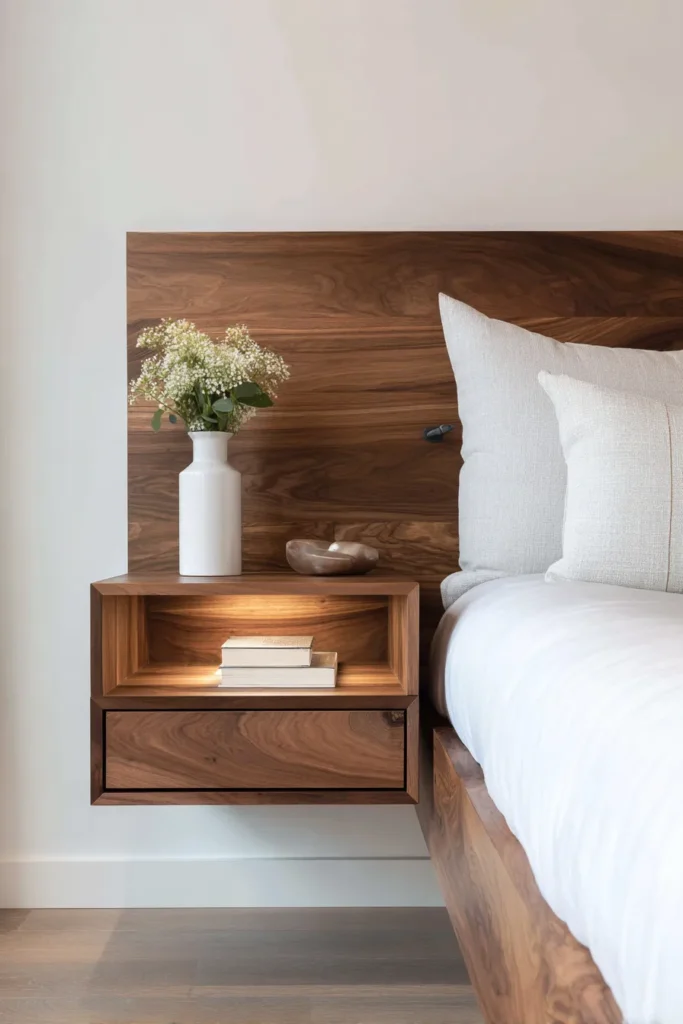
Wall-mounted nightstands with hidden bracket systems create the floating illusion while maintaining structural stability. This approach eliminates floor-level visual clutter and simplifies cleaning while providing standard nightstand functionality. The key: mounting height must align precisely with mattress top (58-63cm for standard beds, 40-45cm for low platforms).
Designer’s Secret: Floating nightstands require wall stud anchoring, not drywall anchors. The static load (lamp, books, phone) plus dynamic load (leaning, pulling drawer) easily exceeds 15kg—well beyond drywall anchor capacity. Pre-construction planning or exposed mounting hardware (beautiful bracket designs exist) solves this honestly.
Design Breakdown:
- Construction: Floating nightstands in solid walnut with oil finish (avoid lacquer that looks plasticky)
- Mounting: Concealed steel brackets secured to studs; minimum 30cm depth for leverage
- Drawers: Soft-close hardware mandatory—regular slides slam and sound hollow on wall-hung pieces
- Lighting: Integrate LED strip underneath for floating glow effect that enhances suspension illusion
Best For: Small bedroom ideas where floor space is premium, or contemporary design enthusiasts who appreciate the technical precision of cantilevered furniture. Works beautifully in wardrobe design bedroom schemes featuring built-in storage.
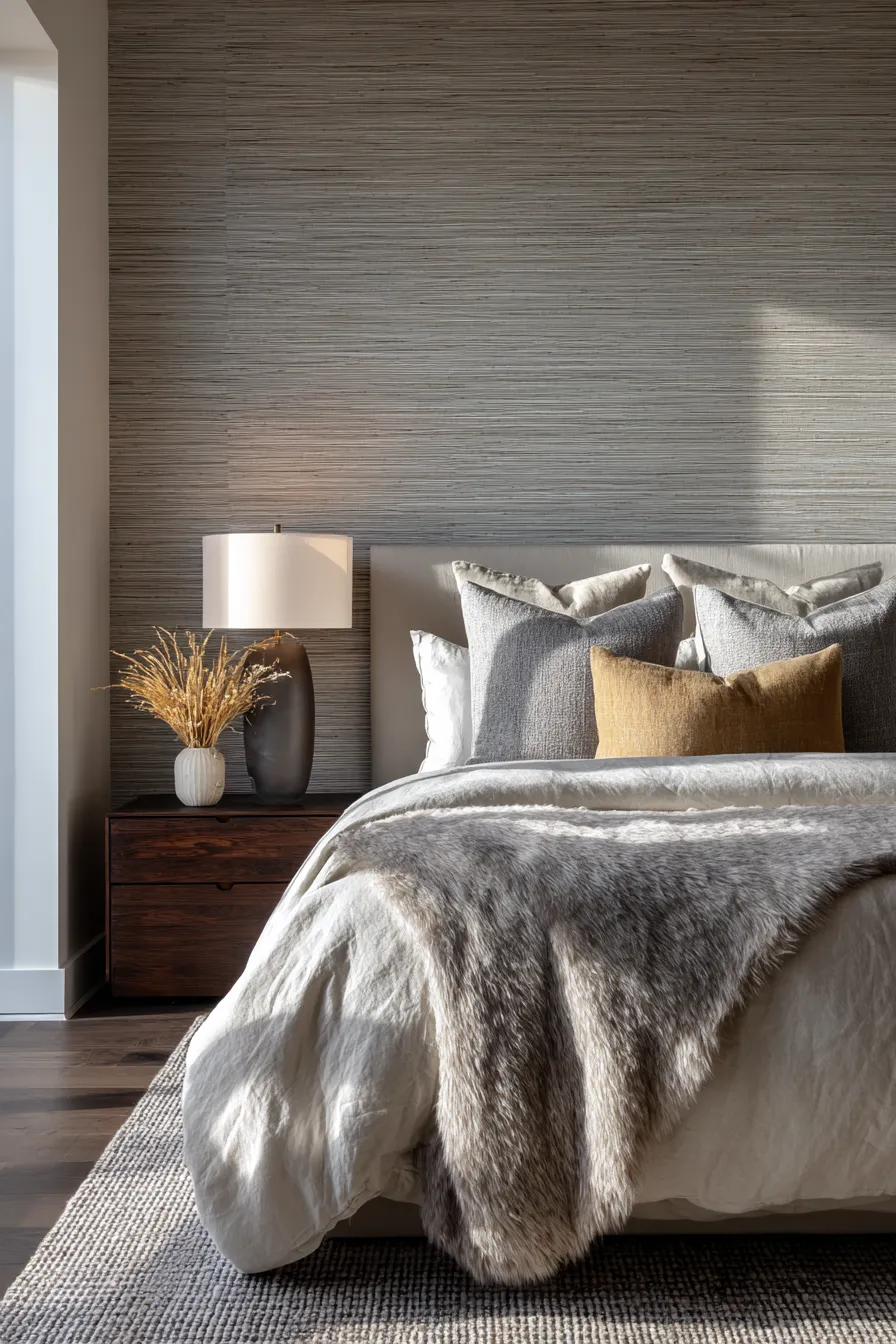
Textured Grasscloth Wallcovering (Single Accent Wall)
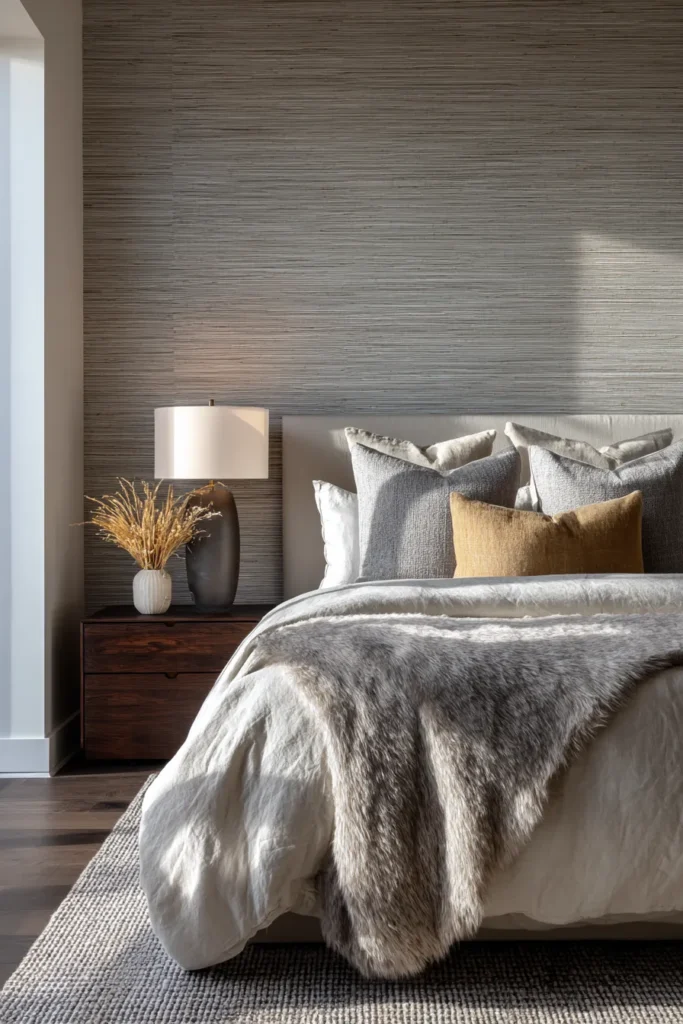
Natural fiber wallcovering—grasscloth woven from jute, seagrass, or abaca—provides three-dimensional texture that flat paint cannot replicate. Applied to the wall behind the bed, it creates focal depth while remaining neutral in color. The random fiber variations catch and reflect light differently throughout the day, creating a living surface that shifts with natural illumination.
Designer’s Secret: Grasscloth installation requires paper-hanging expertise beyond standard wallpaper skills. The natural fibers expand and contract with humidity, making seam matching nearly impossible if rushed. Budget for professional installation and accept that seams will be slightly visible—this is characteristic of the material, not installation failure.
Design Breakdown:
- Material: Grasscloth wallpaper in natural jute or abaca (avoid dyed versions that fade unevenly)
- Application: Single accent wall behind bed—full-room application overwhelms
- Prep: Wall must be perfectly smooth; texture telegraphs through grasscloth worse than regular paper
- Maintenance: Vacuum with brush attachment monthly; spot-clean impossible—plan for full panel replacement if damaged
Best For: Homeowners in newer construction lacking architectural character who want textural interest without permanent structural changes. Excellent for entryway decor accent walls as well.
Vintage Persian or Turkish Oushak Runner (Muted Palette)
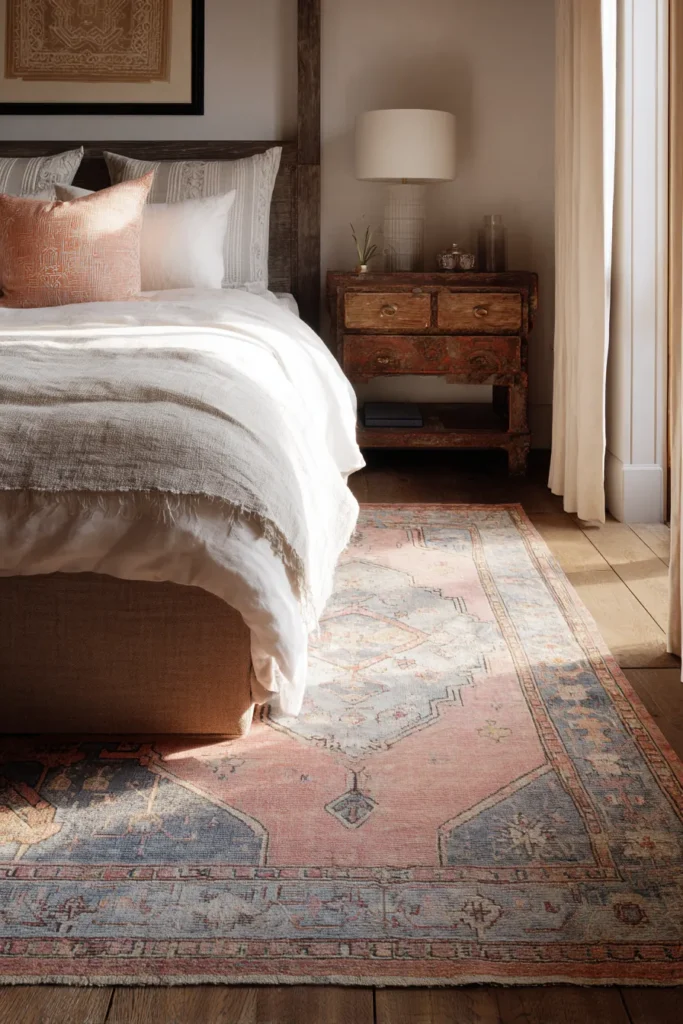
Antique or contemporary hand-knotted runners in Oushak style—characterized by oversized geometric medallions in soft, abraded colors—introduce pattern without overwhelming neutral bedrooms. The key lies in color selection: choose pieces where even the “red” has faded to dusty rose, and blues have mellowed to soft slate. These provide visual interest while maintaining tonal sophistication.
Designer’s Secret: Layer runners over natural fiber base rugs rather than using them alone. A 90x270cm Oushak runner centered over a 270x360cm handwoven wool base rug creates dimensional layering that reads as professionally styled. The base rug defines furniture grouping while the runner adds pattern in contained doses.
Design Breakdown:
- Style: Authentic Oushak or quality hand-knotted contemporary reproduction in muted palette
- Size: 90-120cm wide x 240-300cm long for king bed placement (extends beyond nightstands)
- Placement: Center under bed, extending to footboard but not beyond (defines sleeping zone specifically)
- Color: Maximum three colors total, none brighter than mid-saturation
Best For: Homeowners attracted to boho bedroom aesthetics but seeking refined restraint rather than maximalist layering. The vintage element adds soul to otherwise minimal spaces.
Upholstered Wall Panel System (Acoustic Linen or Velvet)
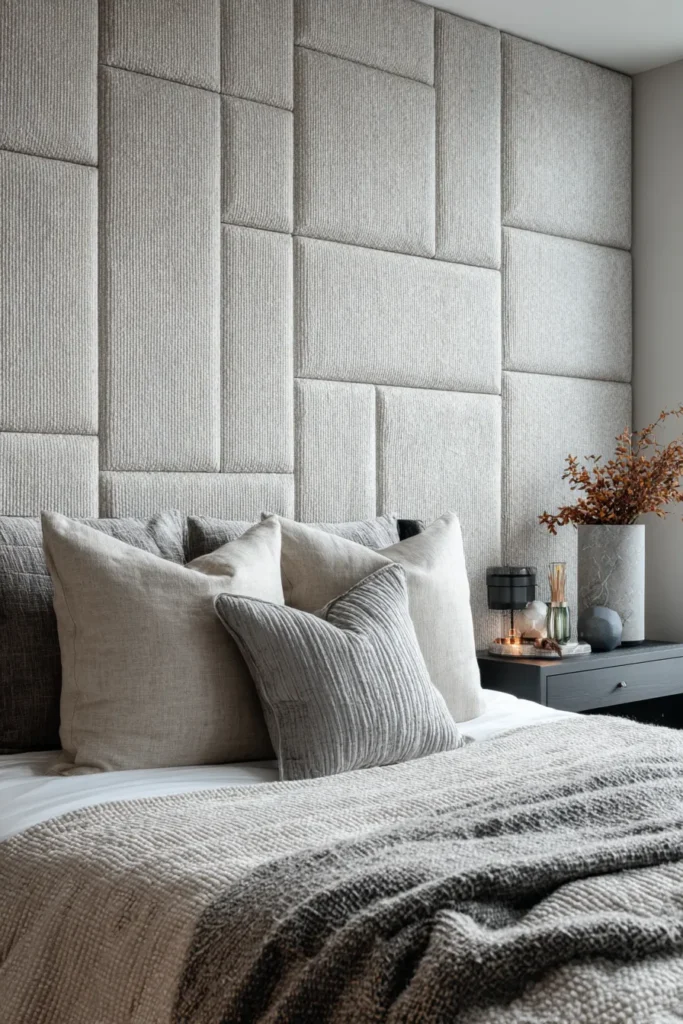
Fabric-wrapped acoustic panels spanning the wall behind the bed provide sound dampening that measurably improves sleep quality in noisy urban environments. Beyond function, the padded surface adds luxurious softness and eliminates the need for headboards or additional wall decor. Linen fabric reads subtle and organic; velvet creates dramatic depth through light absorption and reflection contrast.
Designer’s Secret: Configure panels in irregular grid patterns rather than uniform rectangles. Mix 60x60cm and 60x120cm panels in staggered arrangements that create rhythm without predictability. This technique—common in recording studio design—works equally well in residential applications for visual interest.
Design Breakdown:
- Panels: Acoustic wall panels in fabric-wrapped foam core (5-7cm thickness for acoustic effectiveness)
- Fabric: Linen for subtle texture, velvet for dramatic light play and deeper sound absorption
- Layout: Cover 60-80% of wall surface; complete coverage reads institutional, partial coverage looks intentional
- Installation: Z-clip mounting systems allow future rearrangement without wall damage
Best For: Light sleepers in apartments near traffic or other urban noise, or home theater enthusiasts who want bedroom acoustics as controlled as dedicated media rooms. Also excellent for reading corner bedroom acoustic optimization.
Blackout Cellular Shades with Sheer Overlay System
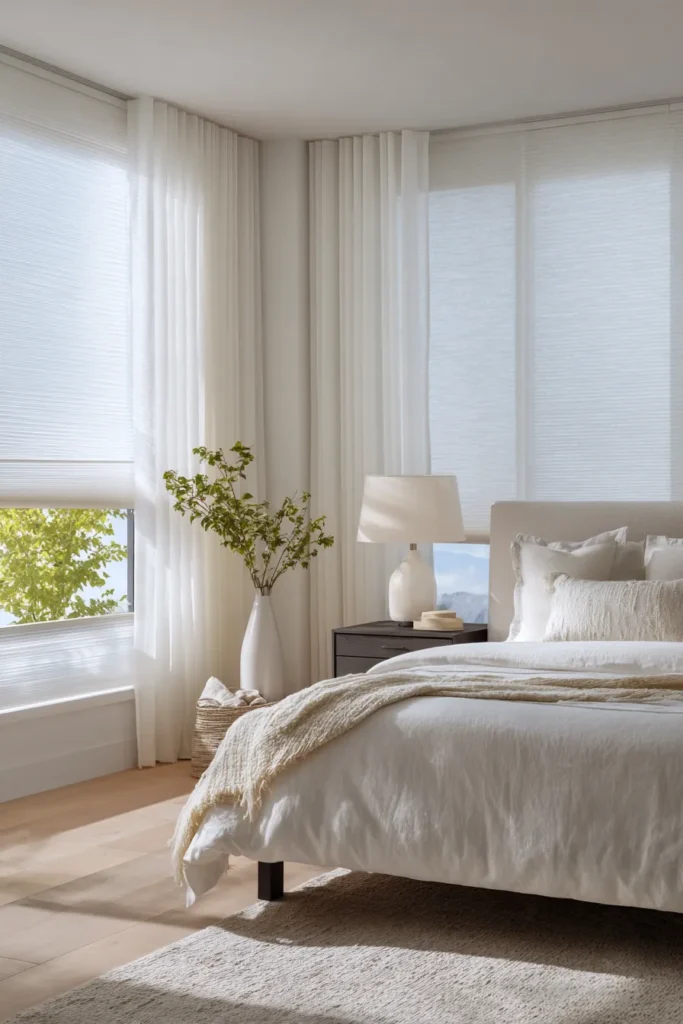
Dual-layer window treatments—blackout cellular shades for light control layered behind sheer panels for daytime privacy—provide functional flexibility without aesthetic compromise. The cellular shades disappear into top-mounted head rails during day, while sheers maintain soft diffusion. Both lower independently for variable light and privacy control throughout the day.
Designer’s Secret: Install motorized systems controlled via smartphone apps rather than manual cords. The convenience justifies the cost difference (typically $400-600 per window premium), and removes visual clutter of cord stacks. Program schedules that automatically raise shades 30 minutes before wake time for gradual natural light exposure that supports circadian rhythm.
Design Breakdown:
- Shades: Blackout cellular shades in cordless top-down bottom-up configuration
- Sheers: Simple linen panels on separate front-mounted rod, puddling slightly on floor
- Control: Motorization optional but highly recommended for daily use sustainability
- Color: Cellular shades in room-side white (exterior side can be dark for heat reduction)
Best For: Shift workers requiring daytime sleep darkness, or anyone prioritizing sleep quality over morning light. The dual system provides options for every scenario without complicated hardware.
Live Edge Solid Wood Bench at Bed Footboard
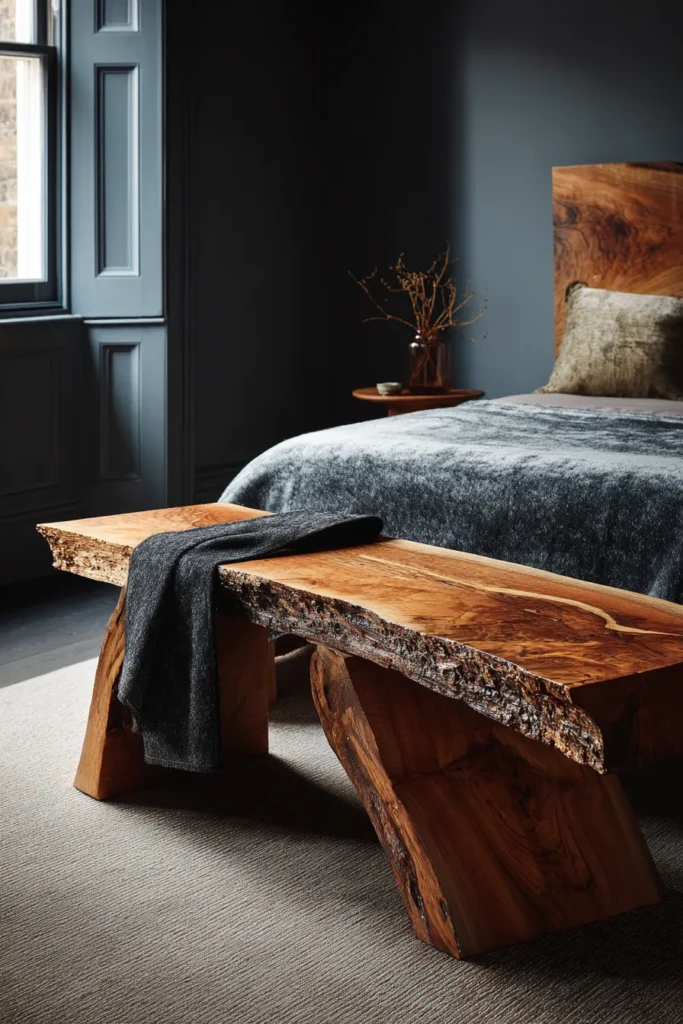
A live-edge bench—where one side retains the tree’s natural contour complete with bark remnants or spalting—introduces organic irregularity into otherwise rectilinear bedroom furniture arrangements. Functionally, it provides perch seating for dressing and display surface for folded throws or decorative objects. Aesthetically, it grounds modern bedrooms with biophilic connection.
Designer’s Secret: Match bench wood species to existing furniture undertones rather than exact color. Walnut benches pair beautifully with mahogany or cherry furniture despite color differences, because they share warm brown undertones. Oak or maple benches complement painted or light wood furniture through shared cool undertones. Mixed undertones create jarring disconnection regardless of style compatibility.
Design Breakdown:
- Bench: Live edge wood bench in walnut (warm rooms) or maple (cool rooms)
- Dimensions: 120-150cm length x 40cm depth x 45cm height (matches standard seating height)
- Finish: Oil or wax rather than polyurethane—allows wood to breathe and develop patina
- Styling: Fold a velvet throw blanket lengthwise across one end; avoid centering (reads too formal)
Best For: Rooms mixing modern and organic elements, or homeowners who appreciate furniture as conversation pieces rather than purely functional objects. Consider also for entryway table decor in transitional spaces.
Implementing Modern Luxury: Where to Begin
Start with materials, not colors. The 2026 aesthetic privileges tactile authenticity—the hand-feel of stonewashed linen, the cool smoothness of honed stone, the living patina of unlacquered brass. These material choices establish luxury credentials far more effectively than any paint color or decorative accessory.
Consider light before furniture. Install proper dimmable LED bulbs at 2700K throughout the bedroom, and add LED strip lighting for ambient glow. Lighting quality transforms perception of every material and color in the space—it’s the most cost-effective upgrade with the most dramatic impact.
Edit ruthlessly. Modern luxury in 2026 means removing rather than adding. That collection of decorative pillows, the gallery wall of unrelated frames, the three competing table lamps—all work against the material-forward aesthetic. Keep surfaces clear except for intentional styling: a single ceramic vase on the nightstand, an abstract art print above the bed, travertine bookends on a floating shelf. Each element should justify its presence through either function or exceptional beauty.
For additional inspiration on creating cohesive design throughout your home, explore our guides on living room paint colors, bathroom decor, and dining room wall decor to extend the same material-forward principles beyond the bedroom.
The bedrooms that define luxury in 2026 share a common thread: they prioritize sensory experience over visual complexity. They’re designed for the person inhabiting the space rather than the camera capturing it. This represents not trend-following but a return to fundamental design truth—spaces should serve those who live in them, with beauty emerging from that service rather than existing despite it.