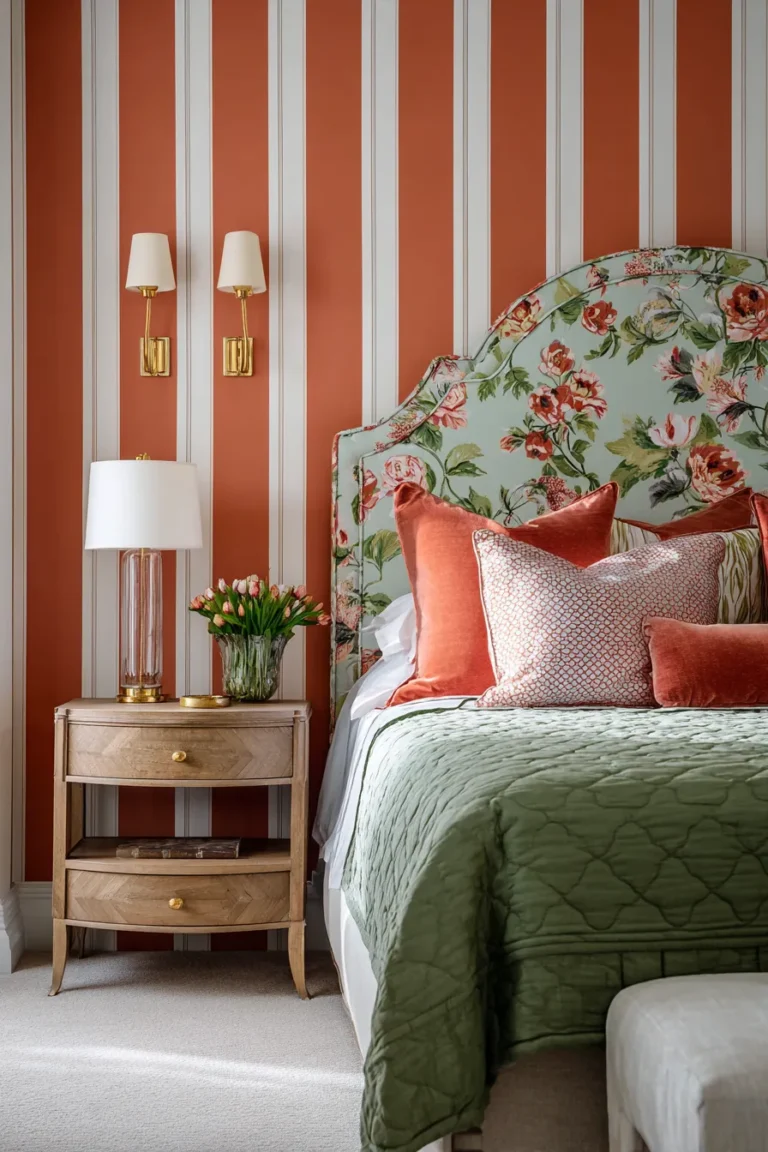
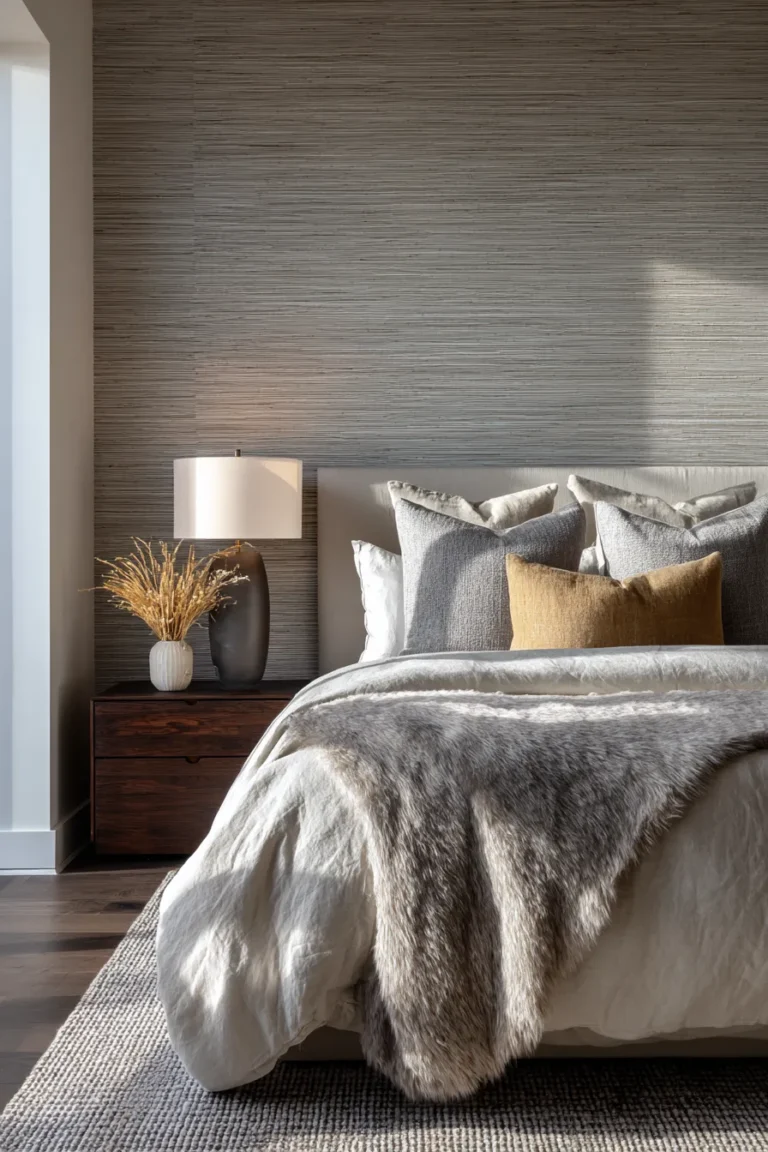
When I walk into a thoughtfully designed minimalist bedroom, something magical happens—my shoulders drop, my breathing slows, and the chaos of the day melts away into a sense of profound calm. This isn’t just about aesthetics or following the latest interior design trends; it’s about creating a personal sanctuary where every carefully chosen element serves a purpose, where negative space becomes as important as the furniture itself, and where the absence of clutter makes room for genuine rest and rejuvenation. In 2025, minimalist bedroom design has evolved beyond stark white walls and empty spaces into something far more nuanced and inviting—a movement toward warm minimalism that embraces texture, natural materials, and personalized touches while maintaining the clean lines and uncluttered philosophy that makes minimalism so psychologically restorative. Whether you’re working with a compact studio apartment where every square foot matters or reimagining a spacious master suite, whether your budget is modest or luxurious, these 15 distinct minimalist bedroom design ideas will help you create a space that reflects your values, supports your wellbeing, and proves that minimalism isn’t about having less—it’s about making room for more of what truly matters.
1. Japandi Minimalist Bedroom: Where Zen Meets Hygge
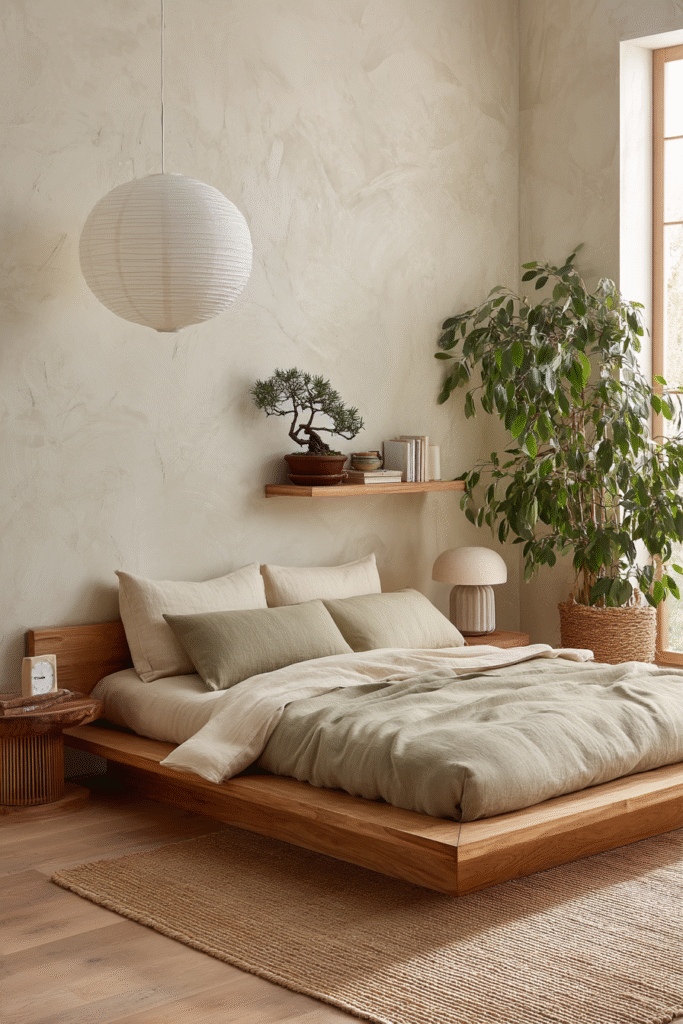
Japandi design represents the sophisticated fusion of two minimalist philosophies—Japanese zen principles and Scandinavian hygge—creating minimalist bedrooms that feel both serene and welcoming. This 2025 trend dominates minimalist bedroom searches because it solves the problem of cold, sterile minimalism by introducing warmth, texture, and organic elements while maintaining the uncluttered aesthetic that makes minimalist spaces so psychologically restorative. The foundation starts with a low-profile platform bed in natural wood like oak, walnut, or bamboo with clean horizontal lines that echo traditional Japanese furniture design. Furniture pieces should showcase craftsmanship and functional beauty with rounded edges, tapered legs, and visible wood grain. Lighting layers ambient sources like rice paper pendant lights providing soft illumination alongside ceramic table lamps for bedtime reading. Textural elements prevent these bedrooms from feeling flat through jute rugs, chunky knit throws, and woven baskets. Finally, bring nature indoors through plants like fiddle leaf figs or bonsai trees, understanding that in Japandi design, plants aren’t decorative afterthoughts but essential elements connecting interior spaces to the natural world.
2. Warm Minimalist Bedroom: Texture Over Pattern
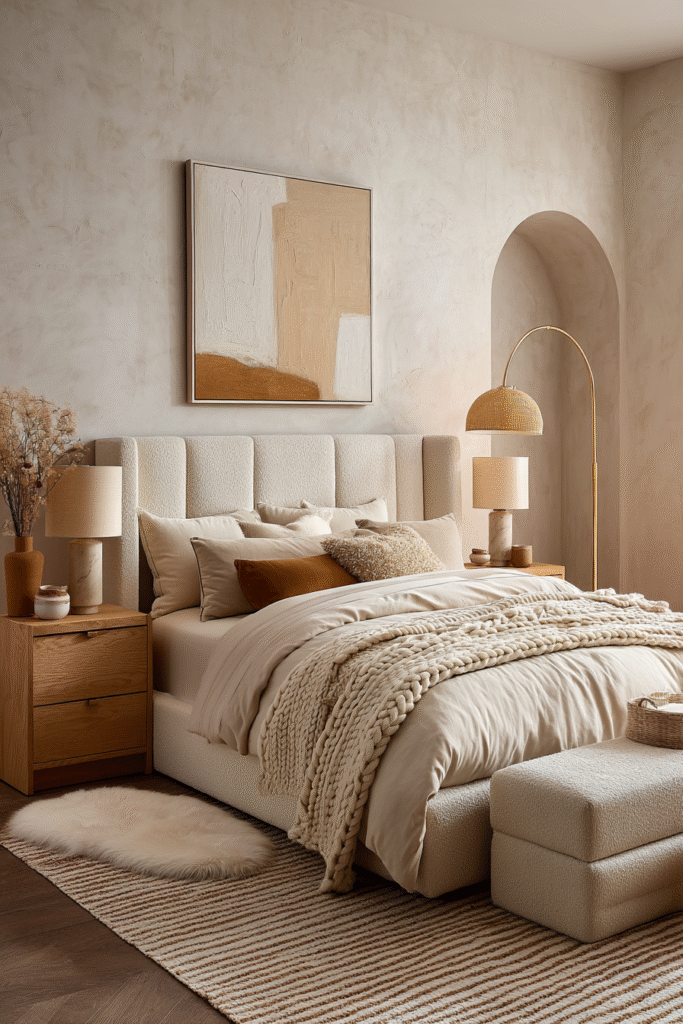
Warm minimalism addresses traditional minimalism’s coldness while maintaining uncluttered philosophy through textural variety within a cohesive color story. Select warm neutrals like cream, oat, sand, and terracotta that share similar undertones, then introduce maximum textural diversity where smooth percale contrasts with nubby linen, sleek velvet plays against chunky knits, and flat-weave rugs layer beneath plush sheepskins. Bouclé fabric has become the signature element bringing instant sophistication to platform beds and chairs. Lighting strategy matters with warm metallic fixtures in brass or copper adding subtle warmth while maintaining sleek lines. Wall treatments like limewash paint create organic surfaces that feel handcrafted. The key is restraint—each textured element needs breathing room where a chunky knit throw becomes a focal point when it’s the only item draped across the bed’s foot.
3. Scandinavian Minimalist Bedroom: Light and Functional

Scandinavian minimalism remains enduringly popular because it perfectly balances simplicity with warmth through Nordic design principles where long winters make interior spaces crucial to wellbeing. The foundation is light—paint walls in purest white to maximize light reflection creating brightness even during short winter days. Furniture showcases light wood like birch, ash, and pine with visible grain in platform beds featuring clean lines and tapered legs. Color palettes remain predominantly neutral but Scandinavians embrace subtle color accents where soft blues and sage greens appear in textiles. Textiles create hygge through layered bedding with high-quality cotton sheets, linen duvets, and wool blankets, plus sheepskin rugs and area rugs with gentle geometric patterns. Lighting layers multiple sources where candlelight is essential since Scandinavians burn more candles per capita than any other population. The result is a minimalist bedroom that feels clean and uncluttered yet genuinely welcoming.
4. Coastal Minimalist Bedroom: Beachy Without Kitsch
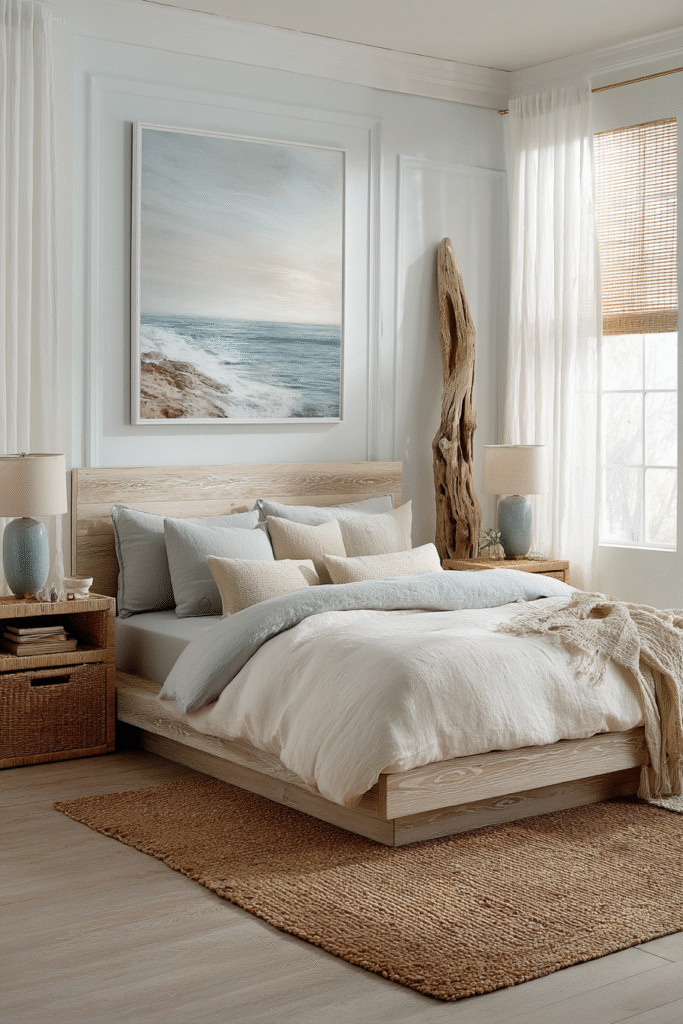
Coastal minimalism captures serene beach house living while avoiding overdone nautical themes through drawing inspiration from actual beach environments—colors of sand and sea, textures of driftwood and sea grass, quality of natural light. Color palette uses subtle, complex colors of coastal landscapes including soft blue-grays mirroring morning fog, sandy beiges in warm and cool tones, seafoam greens hinting at shallow water, and weathered whites suggesting sun-bleached wood. Material selection prioritizes linen as signature textile since this flax fiber is naturally cool and moisture-wicking with characteristic wrinkles evoking relaxed beach house living. Furniture features whitewashed, bleached, or driftwood finishes suggesting natural weathering, with rattan and woven furniture adding organic texture. Natural light management maximizes penetration through sheer curtains that filter rather than block. Decorative restraint prevents theme territory—bring coast indoors through single driftwood pieces, handful of stones, or abstract coastal artwork that suggests rather than depicts.
5. Earth Tone Minimalist Bedroom: Grounded and Organic

Earth tone minimalism proves rich, saturated color can coexist with minimalist principles when drawn from nature’s palette creating deeply grounding, psychologically warm minimalist bedrooms connected to the organic world. The earth tone palette offers variety where terracotta brings warmth, sage greens add freshness, warm browns provide stability, burnt sienna adds sophistication, ochre brings brightness, and taupe bridges tones. Material selection reinforces organic quality prioritizing solid wood furniture showcasing grain patterns, linen and organic cotton textiles, wool rugs, leather accents, and ceramic pottery celebrating raw beauty of natural substances. Handmade artisan elements particularly suit these spaces through pottery from ceramicists, textiles from fiber artists, and furniture from woodworkers. Wall color presents opportunity for boldness through accent walls in rich terracotta or sage. Texture creates visual interest through materials rather than color contrast by layering smooth leather against nubby linen and chunky wool with silky wood finishes.
6. Small Space Minimalist Bedroom: Maximizing Compact Rooms
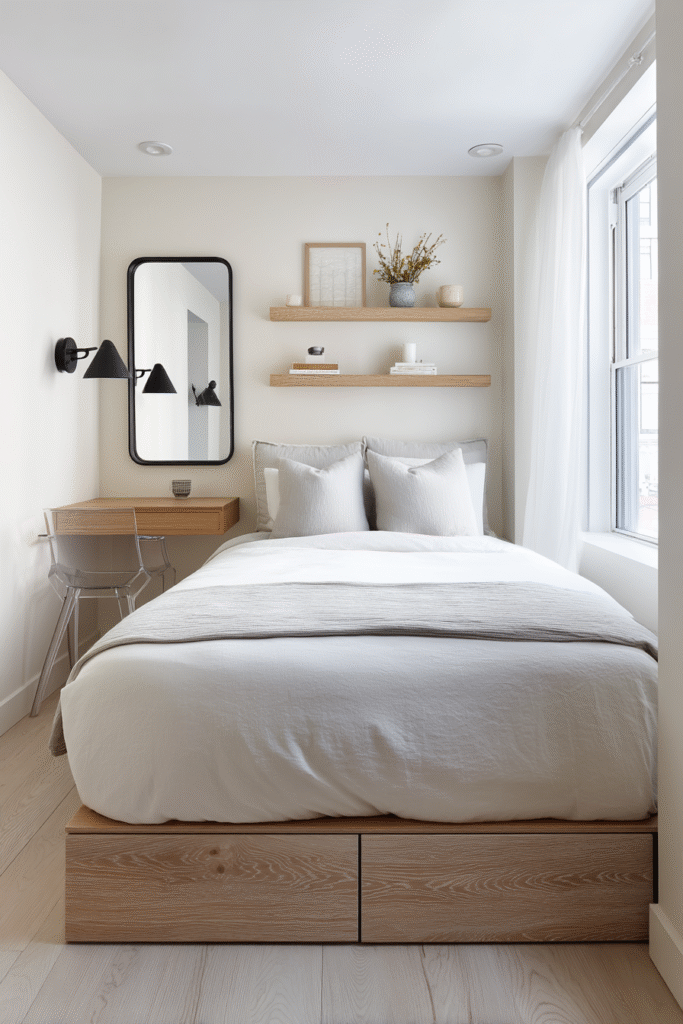
Small space minimalism solves how to create functional, restful sanctuary when square footage is severely limited where the minimalist approach particularly suits compact bedrooms because its emphasis on essentialism, multi-functionality, and visual clarity directly addresses space constraints. Color strategy becomes crucial where light colors genuinely expand space by reflecting light and reducing visual boundaries through painting walls, ceiling, and trim in coordinating light neutrals creating seamless flow. Furniture selection requires ruthless prioritization of multi-functional pieces where platform beds with integrated storage drawers eliminate separate dresser needs recovering 12-15 square feet, while floating wall-mounted shelves serve as nightstands without occupying floor space. Vertical space exploitation becomes essential through installing shelving near ceiling height and mounting televisions on walls. Mirror placement strategically expands space through reflection where large mirrors opposite windows create illusions of additional windows and extra square footage. Visual clutter elimination matters more in small spaces requiring absolutely clear floors, bare surfaces, and hidden storage solutions.
7. Biophilic Minimalist Bedroom: Nature-Connected Sanctuary

Biophilic design represents one of the most scientifically supported approaches where connection to nature—even through indoor plants and natural materials—measurably reduces stress, improves mood, enhances air quality, and supports better sleep. The foundation is living plants serving multiple functions where they actively clean indoor air absorbing CO2 and releasing oxygen with some species particularly effective at removing volatile organic compounds, while their presence reduces stress hormones promoting wellbeing since even brief exposure to greenery lowers cortisol levels and blood pressure. Implementing plants in minimalist bedrooms requires restraint creating single dramatic focal points like living walls or large floor plants rather than scattering many small plants throughout. Natural materials reinforce biophilic connections prioritizing solid wood furniture, natural fiber textiles like organic cotton and linen, and wool or jute rugs. Light management becomes crucial for both human and plant health by maximizing natural light through large unobstructed windows and positioning beds to capture morning sunlight supporting circadian rhythms.
8. Moody Minimalist Bedroom: Dramatic Dark Tones

Moody minimalism challenges the assumption that minimalist bedrooms must be light and airy where dark-walled bedrooms wrapped in charcoal, navy, or deep green create cocoon-like sanctuaries feeling intimate, sophisticated, and surprisingly restful when executed with careful attention to contrast, lighting, and material balance. Color selection requires choosing rich, complex tones rather than flat blacks where deep charcoal grays provide drama without harshness and rich navy blues feel timeless and peaceful, choosing matte or eggshell finishes since flat finishes absorb light creating enveloping effect. The critical element preventing oppressiveness is bright bedding contrast by dressing beds predominantly in white or very light textiles where high contrast between dark walls and bright bedding creates visual drama preventing monotonous darkness with white bedding becoming glowing focal point. Lighting strategy becomes absolutely critical requiring more intentional illumination than light-walled alternatives by layering multiple sources including overhead recessed lighting with dimmers, bedside reading lamps with three-way bulbs, wall-mounted sconces, and LED strips behind headboards. Metallic accents serve dual purposes adding necessary light reflection and contributing warmth through brass, gold, or copper.
9. Sustainable Minimalist Bedroom: Eco-Conscious Design
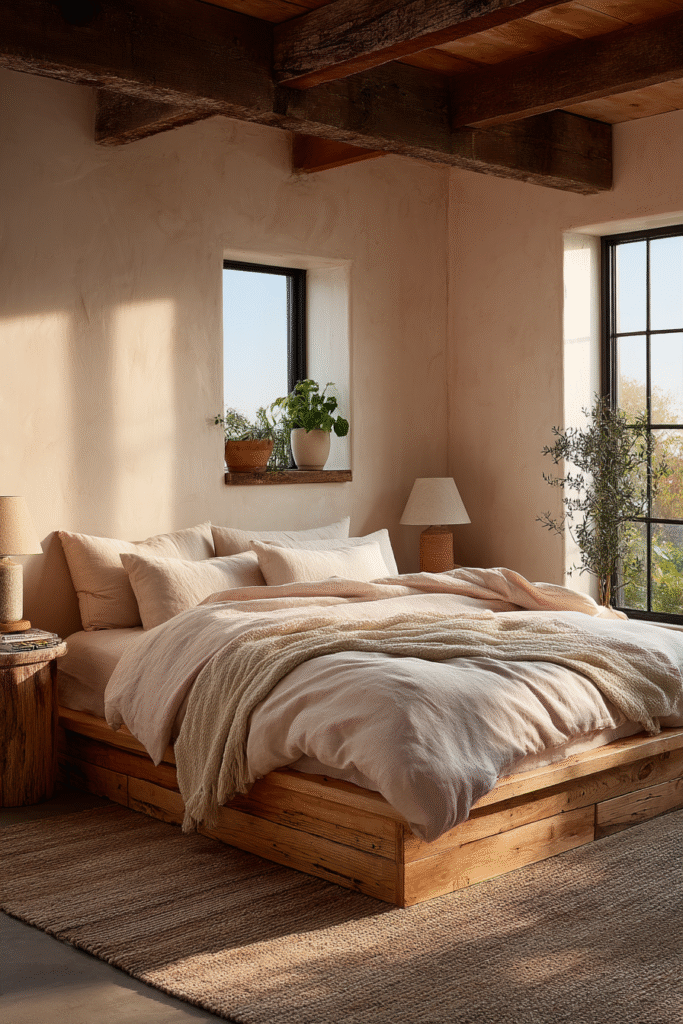
Sustainable minimalism merges environmental consciousness with minimalist principles creating bedrooms where every purchasing decision considers ecological impact, ethical production, and product longevity, recognizing that true minimalism isn’t just about having fewer things but choosing things that genuinely matter and will last. Furniture selection prioritizes pieces from sustainable or reclaimed materials where reclaimed wood offers unique character while preventing demand for newly harvested timber, FSC-certified wood ensures responsible forest management, and bamboo provides rapidly renewable alternative growing to harvestability in 3-5 years compared to decades for hardwoods, while vintage and second-hand furniture represents the most sustainable choice extending the life of existing pieces. Bedding demands attention to certifications where GOTS certification guarantees organic fibers grown without pesticides processed without toxic chemicals under fair labor conditions, organic cotton avoids massive pesticide use of conventional cotton, linen requires less water than cotton while offering exceptional durability, and organic wool provides sustainable renewable fiber naturally regulating temperature. Wall treatments significantly impact indoor air quality where zero-VOC or natural paints formulated from minerals and plant oils are essential for healthy bedrooms.
10. Industrial Minimalist Bedroom: Urban Edge

Industrial minimalism celebrates raw, unfinished aesthetic of urban loft living and converted warehouse spaces while applying minimalist restraint to prevent cluttered or thematic feeling, creating minimalist bedrooms balancing hard edges of industrial materials like metal, concrete, and exposed brick with soft warmth of layered textiles and carefully chosen organic elements for sophisticated, authentically urban spaces. The foundation embraces exposed structural elements and raw materials where exposed brick walls show authentic patina providing instant character and warmth through natural red-brown tones, poured or polished concrete floors offer smooth durable surfaces reading as modern and minimal, and exposed ductwork and pipes painted matte black become architectural features. Furniture combines metal frames and structures with wood elements where platform beds feature welded steel frames in matte black with clean geometric lines and visible construction celebrating craftsmanship, while nightstands might be welded metal stands, vintage factory stools, or reclaimed wood planks on black metal hairpin legs. Lighting becomes sculptural element through Edison bulbs with exposed filaments providing warm amber glow, pendant lights with metal dome shades, and articulating arm wall sconces in black metal with brass joints. The color palette remains predominantly neutral emphasizing blacks, grays, whites, and natural colors of raw materials.
11. Luxury Minimalist Bedroom: Sophisticated Simplicity
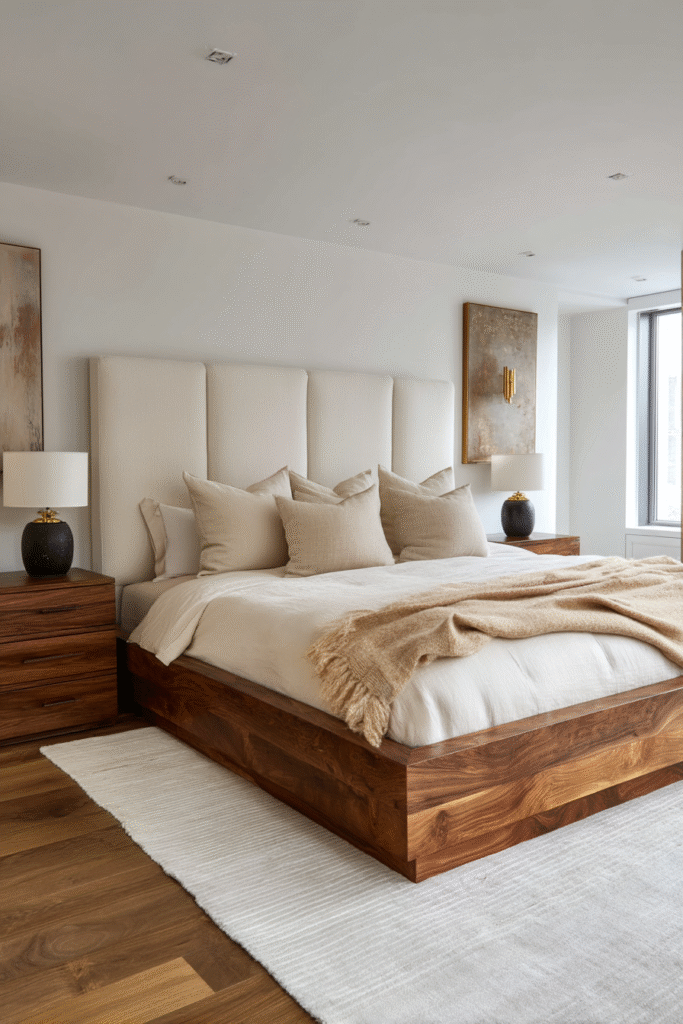
Luxury minimalism represents the pinnacle of minimalist bedroom design where core principles of simplicity, restraint, and uncluttered space remain paramount but every single element represents exceptional quality, superior craftsmanship, premium materials, and often custom fabrication that will last potentially generations. Furniture often involves custom fabrication or established design houses where platform beds might be commissioned using exceptional wood species like figured walnut with book-matching where grain patterns mirror perfectly, constructed using traditional joinery techniques like mortise-and-tenon without visible screws or hardware, finished with hand-rubbed oils applied in multiple coats. Bedding and textiles represent areas where luxury becomes immediately apparent where Egyptian cotton sheets with thread counts of 800-1000 in percale weave provide crisp cool luxury improving with washing, European linen from Belgian or French flax offers exceptional durability and perfectly rumpled aesthetic lasting decades, and cashmere throws provide cloud-like softness commanding prices of $500-2000 for genuine high-quality cashmere. Materials throughout celebrate natural substances in highest forms including marble from specific Italian quarries, premium hardwoods with perfect grain, full-grain leather developing beautiful patina, and hand-woven rugs using traditional techniques with high knot counts taking months to produce.
12. Monochrome Minimalist Bedroom: Black and White Contrast

Monochrome minimalism embraces the power of restraint by limiting color entirely to black, white, and gray creating minimalist bedrooms with graphic clarity, dramatic contrast, and sophisticated edge that appeals to those seeking bold minimalism without color distraction. Success in monochrome spaces relies on balancing light and dark elements where approximately 60% of the room should be lighter tones preventing the space from feeling cave-like, 30% can be medium grays providing transition, and 10% can be deep blacks or charcoals providing dramatic punctuation and visual anchor. Texture becomes absolutely crucial in monochrome rooms since color variation cannot create interest making layering varied materials essential through smooth percale cotton contrasting with nubby linen, glossy lacquer surfaces playing against matte painted walls, plush velvet pillows contrasting with structured geometric rugs, and organic plant shapes interrupting manufactured forms. Pattern works effectively in monochrome when limited to geometric designs like stripes, chevrons, or abstract graphics that enhance rather than disrupt the clean aesthetic, using pattern strategically in one or two elements like an area rug or throw pillows rather than throughout the space. Material finishes create depth where matte surfaces absorb light creating soft sophisticated effect while glossy surfaces reflect light adding energy and visual interest suggesting mixing finishes intentionally with perhaps matte black bed frame against glossy white nightstands or matte walls with glossy lacquer furniture. Lighting becomes particularly important in monochrome spaces requiring excellent layering to prevent flatness where multiple sources at different heights create dimension and shadows that add visual interest throughout the day.
13. Soft Modern Minimalist Bedroom: Curves and Organic Shapes

Soft modern minimalism represents a deliberate departure from the hard angles and geometric forms that dominate traditional minimalist design by embracing curves, rounded forms, and organic shapes creating minimalist bedrooms that maintain minimalist restraint and uncluttered space while feeling notably softer, more approachable, and often more feminine without relying on pattern or excessive decoration. Furniture selection prioritizes pieces with curved silhouettes where upholstered beds feature rounded headboards that arc gently rather than standing at sharp right angles, nightstands have circular or oval tops and curved legs rather than square corners, dressers might feature rounded drawer fronts, and seating includes chairs with curved backs and rounded arms creating visual softness. Lighting becomes sculptural opportunity for organic forms through table lamps with bases shaped like rounded gourds, abstract asymmetrical forms, or flowing sculptural shapes, pendant lights in rounded forms like spheres or organic bell shapes, and floor lamps with arched arms creating gentle curves overhead rather than straight angular arms. Color palettes in soft modern spaces typically trend toward warmer neutrals including cream, warm white, soft blush pink, pale gray, and natural beige creating gentle backdrop that supports the curved forms. Textiles and accessories continue the curved theme through rounded throw pillows, bolster pillows with curved ends, soft draped throws rather than structured blankets, rounded or oval mirrors, ceramic vases with rounded bellies rather than geometric forms, and abstract artwork featuring flowing organic lines rather than hard geometric shapes.
14. Smart Tech-Integrated Minimalist Bedroom: Invisible Technology
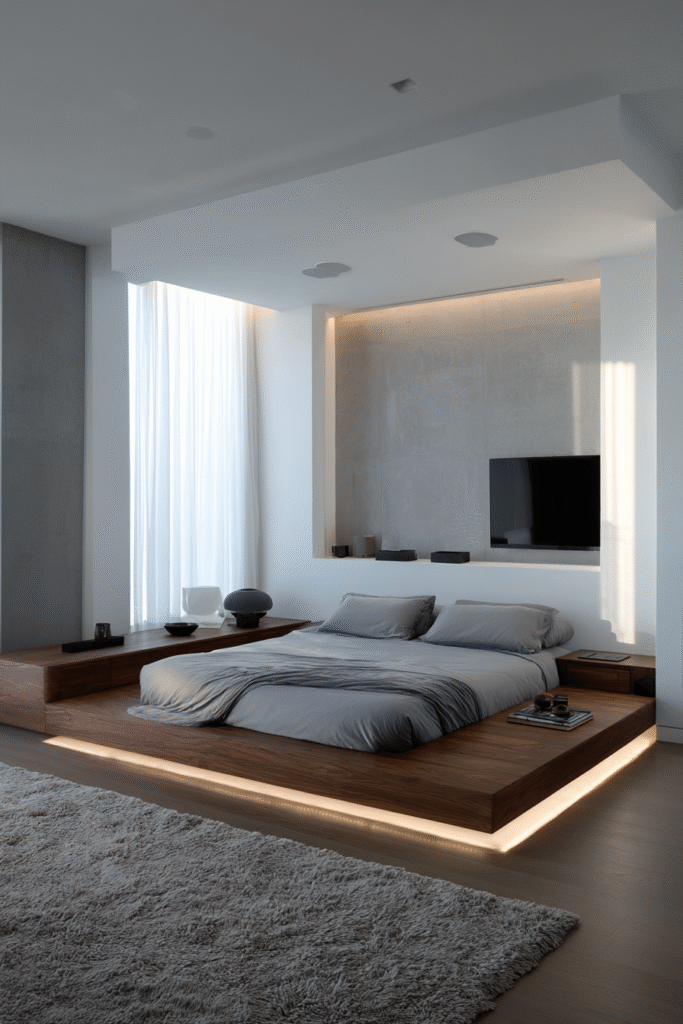
Tech-integrated minimalism addresses the contemporary challenge of incorporating extensive technology into bedrooms without creating visual chaos of visible cords, devices, and gadgets that contradicts minimalist aesthetics by embracing smart home convenience while maintaining clean lines and uncluttered surfaces essential to minimalist design proving technology and minimalism can coexist when integration is thoughtful and technology is hidden rather than displayed. The foundation is concealment where every wire, cable, and technical component should hide within furniture, walls, or channels designed specifically for cable management starting with platform beds featuring integrated technology including built-in USB ports and wireless charging pads mounted flush into nightstand surfaces or bed frames allowing device charging without visible cords, LED strip lighting hidden beneath bed platforms creating ambient glow controlled via app or voice command offering customizable color and brightness. Furniture selection prioritizes pieces designed with technology integration where floating nightstands with hidden compartments conceal router equipment or charging stations maintaining clean surfaces, media consoles with motorized TV lifts allow televisions to descend when not in use restoring clean sight lines, and desks with integrated cable management systems support work-from-home needs without cord chaos. Lighting takes advantage of smart technology for both convenience and circadian rhythm support through installing smart bulbs or fixtures allowing brightness and color temperature adjustment throughout the day using cool white in morning to support wakefulness and warm white in evening to promote melatonin production, all controlled via voice commands or apps eliminating visible switches and controls. Window automation through motorized blackout shades and curtains provides convenience and energy efficiency while maintaining minimal aesthetic since motorized treatments eliminate visible cords, chains, and manual controls, operating via voice command, smartphone app, or automatically based on time of day or sunlight sensors.
15. Budget Minimalist Bedroom: Affordable Simplicity
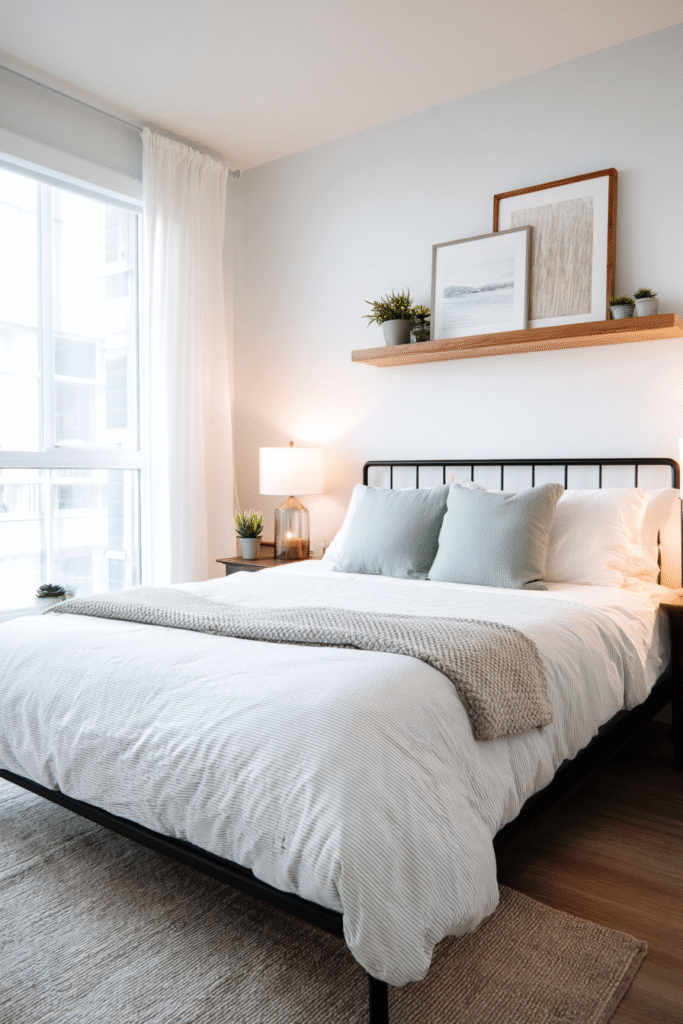
Budget minimalism proves that minimalist aesthetic and peaceful uncluttered bedroom are achievable at any price point through strategic priorities, creative solutions, and recognition that minimalism’s core principle—having less—actually supports limited budgets better than any other design style since the philosophy requires fewer purchases and celebrates simplicity over luxury. The foundation is ruthless decluttering which costs nothing but delivers immediate impact by removing everything unnecessary from the bedroom creating visual calm and spaciousness that no amount of furniture purchasing can match, making this the most important first step for budget minimalism. Furniture priorities should focus on one quality bed frame since you spend a third of your life sleeping making this worth investment even on tight budget, then creatively solving other furniture needs through DIY floating shelves replacing expensive nightstands, using simple boards on affordable brackets painted to match walls, repurposing existing furniture through paint and new hardware updating outdated pieces at fraction of replacement cost, and shopping second-hand through thrift stores, estate sales, and online marketplaces for solid wood furniture that can be refinished. Paint becomes primary design tool since it’s the most affordable way to completely transform a space where quality white or light neutral paint from big-box stores costs minimal investment delivering maximum impact by making small rooms feel larger and creating cohesive backdrop for minimalist design. Bedding should prioritize clean basics over luxury fabrics where simple white or light gray cotton sheets and duvet covers from budget retailers like IKEA, Target, or Amazon Basics provide the minimalist aesthetic at accessible prices. Lighting can be simple and affordable through basic lamps from budget stores, string lights providing ambient glow for under $15, or even maximizing natural light as primary source during day. DIY projects stretch budgets significantly through creating floating shelves from basic lumber, making simple headboards from painted plywood or fabric, creating artwork through abstract painting or framing pages from old books, and refinishing thrifted furniture with paint and sandpaper.
Conclusion: Your Minimalist Bedroom Journey Begins Here
The beauty of minimalist bedroom design in 2025 lies not in rigid rules or sterile perfection but in thoughtful curation of spaces that genuinely support your wellbeing and reflect your authentic self. Whether you’re drawn to the warm embrace of earth-tone minimalism, the serene fusion of Japandi aesthetics, the dramatic sophistication of moody dark walls, or the space-maximizing ingenuity of small-space solutions, each approach shares minimalism’s core truth—that by removing the unnecessary, we make room for what truly matters including rest, rejuvenation, and personal peace. These fifteen minimalist bedroom design concepts demonstrate that minimalism has evolved far beyond the cold, white, austere spaces of previous decades into something richer, warmer, and infinitely more livable, embracing texture over pattern, quality over quantity, and intentionality over impulse. As you embark on creating your own minimalist bedroom sanctuary, remember that the goal isn’t achieving some Instagram-perfect ideal but rather crafting a space that serves your specific needs, whether that means integrating smart technology that simplifies your routine, surrounding yourself with biophilic elements that connect you to nature, or simply clearing away the visual chaos that prevents genuine rest. Start small—perhaps with decluttering surfaces and choosing one quality piece of furniture over multiple mediocre items—and let your minimalist bedroom evolve organically as you discover what truly brings you calm. The minimalist bedroom you create today becomes the foundation for better sleep, reduced stress, and more intentional living tomorrow, proving that sometimes the most transformative design choice is knowing what to leave out rather than what to add in, and that the ultimate luxury in our cluttered, overstimulated world might simply be a minimalist bedroom where you can breathe, rest, and remember what matters most.