Okay, real talk—are you sitting in your tiny living room right now, wondering how on earth you’re supposed to fit a sofa, coffee table, AND have room to actually walk without doing some kind of sideways shuffle? Been there, friend. My first apartment was so small that I literally had to choose between a coffee table and the ability to fully extend my legs while sitting. Spoiler alert: I chose leg room, and honestly, it was the right call.
Here’s what nobody tells you about small space living rooms: they’re not actually a design curse. Nope! They’re an opportunity to get creative, intentional, and honestly, way more stylish than those cavernous spaces that echo when you sneeze. Small living rooms force you to make every inch count, and when done right? They feel cozy, curated, and infinitely more inviting than a massive room with furniture floating awkwardly in the middle.
So grab your measuring tape and let’s dive into eight living room designs for small spaces that’ll transform your compact area from cramped chaos into your favorite spot in the house. Trust me, by the end of this, you’ll be texting your friends pictures of your newly designed space with way too many fire emojis.
1. The Multifunctional Marvel: Furniture That Works Overtime

Listen, in a small living room, every piece of furniture needs to earn its spot. That gorgeous ottoman you love? It better provide storage, seating, AND double as a coffee table, or it’s gotta go.
Smart Furniture Choices That Maximize Space
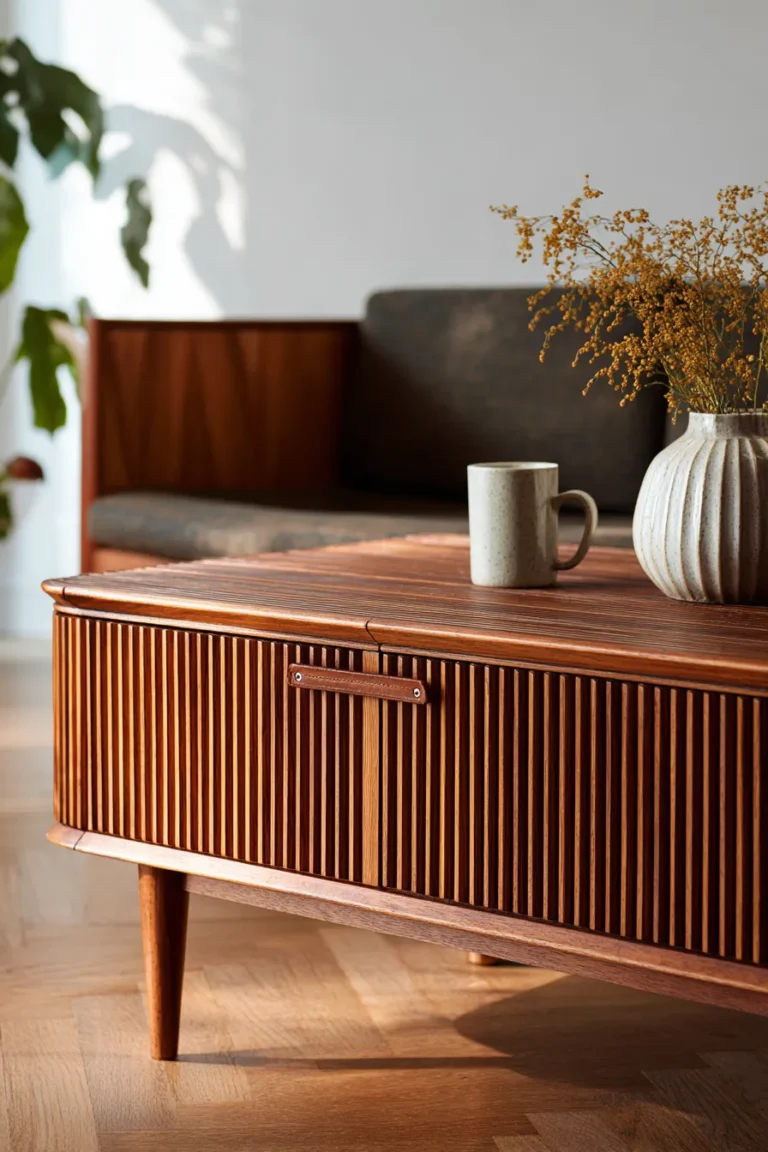
The secret to nailing a compact living room design is choosing pieces that multitask like a boss. I’m talking about sofas with built-in storage underneath, nesting tables you can tuck away, and ottomans that open up to hide your mountain of throw blankets.
Must-have multifunctional pieces:
- Storage ottomans that serve as coffee tables and extra seating
- Sofa beds or daybeds for overnight guests
- Nesting side tables you can spread out or stack away
- Console tables that convert to dining tables
- Wall-mounted fold-down desks
I swapped my bulky coffee table for a large storage ottoman, and wow—game changer. I can stash magazines, remotes, and random stuff inside, prop my feet up while binge-watching, and when friends come over, it’s extra seating. Three functions, one piece. That’s the kind of efficiency that makes small space living actually fun.
The Scale Game
Here’s something crucial: in small spaces, scale matters more than you think. One properly sized sectional beats three mismatched pieces any day. Measure your space, sketch it out, and for the love of design gods, please don’t just guess. That sofa might look perfect online, but if it blocks your walkway, you’ll hate it within a week.
2. The Vertical Vision: When You Can’t Go Out, Go Up
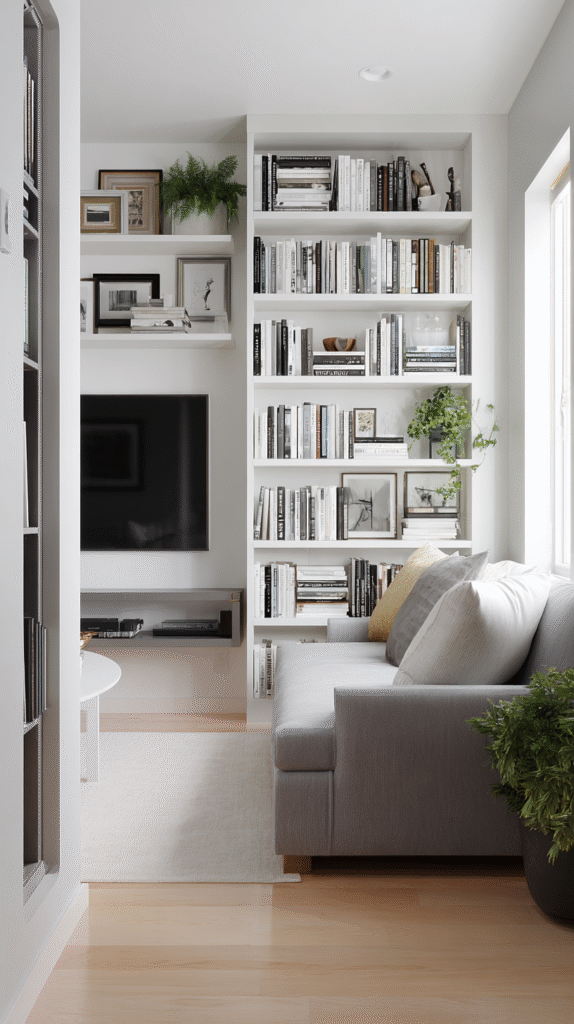
Can’t expand your floor space? No problem—use those walls! Vertical storage is your secret weapon in small living room ideas, and it’s criminally underutilized.
Maximizing Wall Space
Think floor-to-ceiling bookshelves, floating cabinets, and wall-mounted TV units that free up precious floor real estate. When you build upward, you create storage without sacrificing the walking space you desperately need.
Vertical solutions that work:
- Floor-to-ceiling shelving units for books and decor
- Wall-mounted TV with floating media console below
- Tall, narrow bookcases instead of wide, short ones
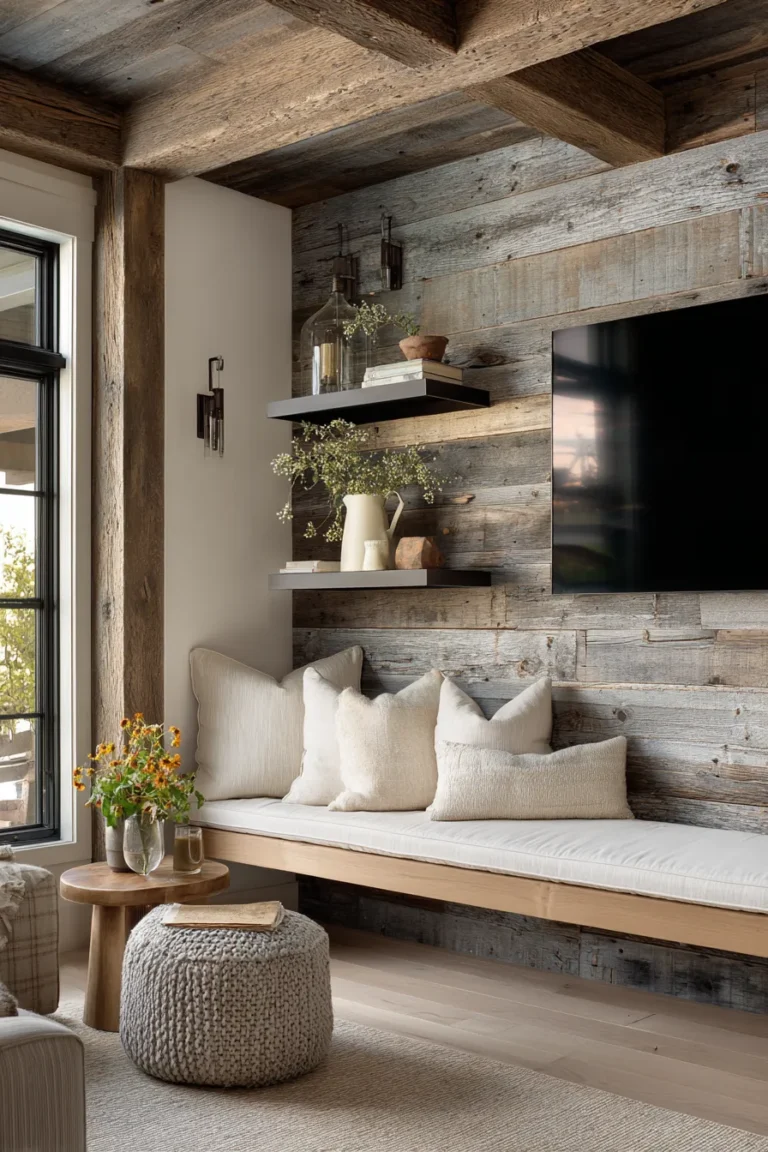
- Floating shelves in corners and above furniture
- Vertical storage ladders that lean against walls
I installed floating shelves above my sofa, and suddenly I had space for plants, books, and framed photos without adding a single piece of floor furniture. The room instantly felt more curated and less cluttered. Plus, drawing the eye upward makes your ceiling feel higher, which tricks the brain into perceiving more space. Psychology for the win! If you’re looking for more inspiration on creating inviting spaces, check out these luxury living room ideas that work beautifully even in compact areas.
The Corner Opportunity
Don’t ignore those corners! Corner shelves, corner TV stands, and even corner seating can transform dead space into functional areas. I’ve seen corner reading nooks in tiny living rooms that feel like luxury additions—all because someone recognized unused potential.
3. The Light and Bright Approach: Color Psychology at Work

Dark, moody living rooms are gorgeous—in magazines and mansions. In your 150-square-foot living room? Not so much. Light colors are your best friend when you’re working with limited space.
The Power of Light Colors
Light, neutral color palettes make spaces feel open and airy. This doesn’t mean everything needs to be stark white (unless that’s your vibe), but sticking to lighter tones on walls and major furniture pieces will visually expand your space.
Color strategies for small spaces:
- Soft whites, creams, and light grays for walls
- One accent wall in a slightly deeper tone for depth
- Lighter furniture upholstery to blend with walls
- Pops of color through pillows, art, and accessories
- Monochromatic schemes that create visual flow
My living room walls are a soft greige (that’s gray-beige, FYI), and I can’t tell you how many people comment that my space feels bigger than it is. The seamless color flow from walls to furniture creates an optical illusion of continuity, making boundaries feel less defined. It’s like magic, but it’s actually just smart design.
Strategic Color Placement
Want to use darker colors? Go for it—just be strategic. A dark accent wall behind your sofa adds depth without closing in the space. Dark floors can actually ground a room nicely. Just balance darker elements with plenty of light throughout the rest of the space.
4. The Mirror Magic: Reflecting Space You Don’t Actually Have
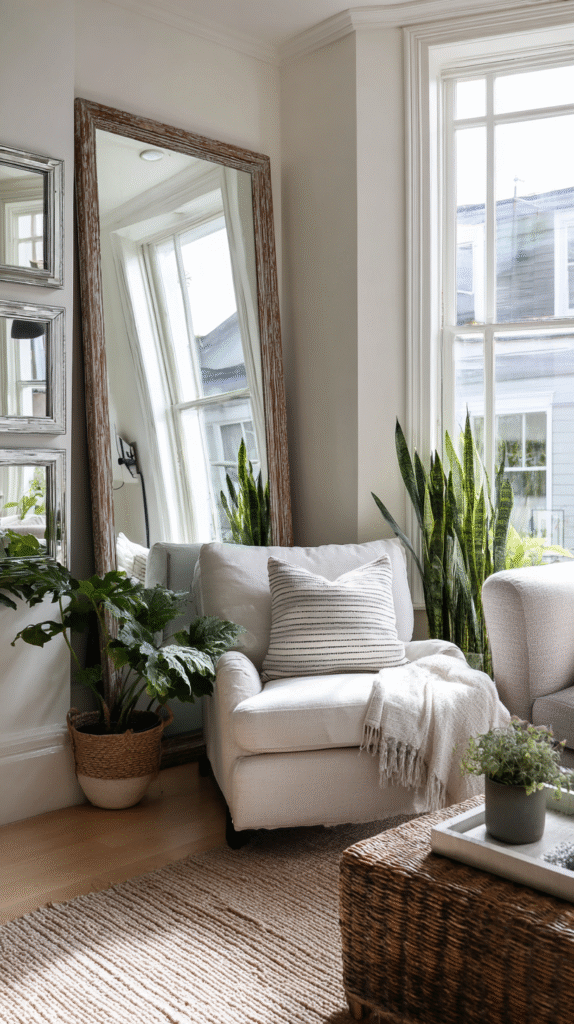
Okay, this one feels almost too easy, but mirrors are absolute sorcery in small space living rooms. They reflect light, create depth, and basically convince your brain there’s more room than there actually is.
Mirror Placement Strategies
The key is placing mirrors where they’ll reflect something beautiful—a window, artwork, or an interesting architectural feature. A mirror reflecting your cluttered bookshelf isn’t doing you any favors.
Mirror placement that works:
- Large mirror opposite a window to double natural light
- Mirror above the sofa to create vertical interest
- Mirrored furniture pieces for subtle reflection
- Gallery wall incorporating mirrors with artwork
- Floor-length mirrors leaning casually in corners
I have a massive vintage mirror leaning against the wall across from my window, and the amount of light it bounces around is incredible. My apartment doesn’t have great natural light, but that mirror makes it feel sun-drenched all day. Plus, it’s a great spot for last-minute outfit checks before heading out.
Don’t Overdo It
Quick warning: too many mirrors can make a space feel disorienting or like a funhouse. One or two strategically placed mirrors are perfect. Seven mirrors? That’s a panic attack waiting to happen.
5. The Minimalist Method: Less Really Is More

I know, I know—minimalism isn’t everyone’s jam. But hear me out: in a small living room, editing your stuff isn’t about being trendy. It’s about being able to breathe.
Curating Your Space
Compact living room design demands intentionality. Every item should either be functional, beautiful, or ideally both. If something doesn’t serve a purpose or make you happy, why is it taking up valuable space?
Minimalist principles for small spaces:
- Choose quality over quantity in furniture and decor
- Keep surfaces mostly clear for visual breathing room
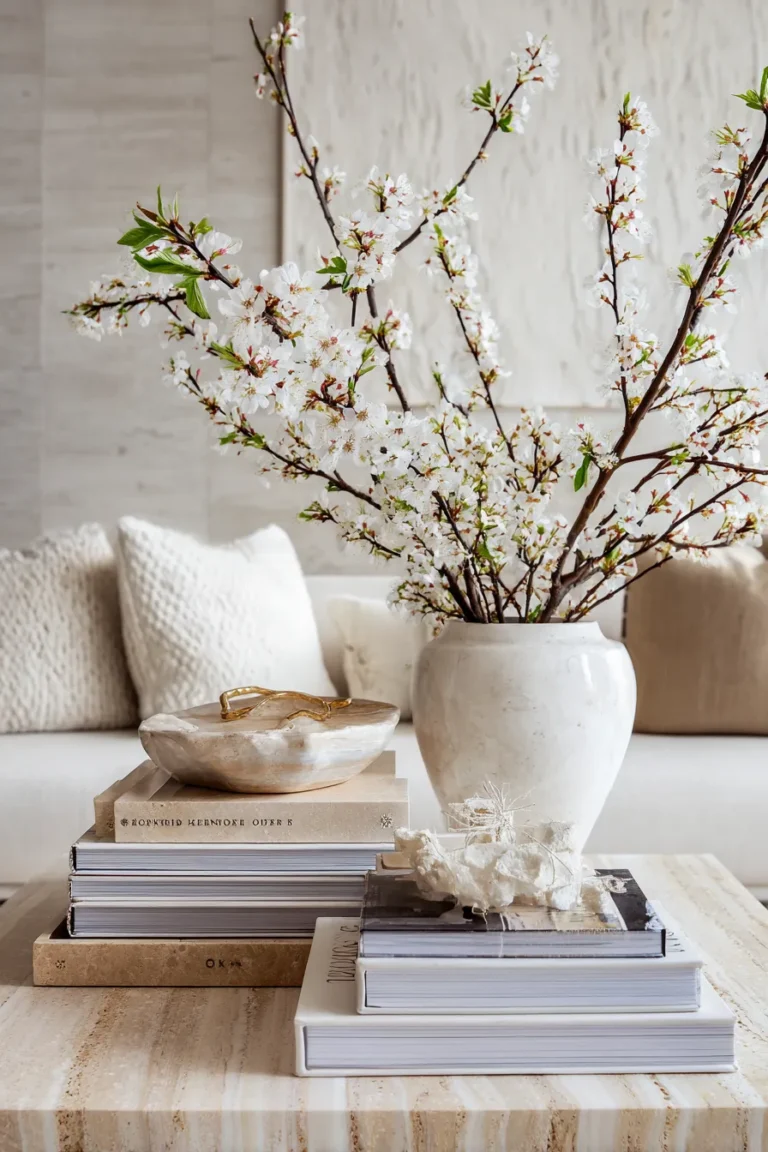
- Display items in curated vignettes rather than scattered everywhere
- Rotate decorative items seasonally to keep things fresh
- Embrace negative space as a design element
When I moved into my current place, I did a brutal purge. I kept only the books I’d reread, the decor I genuinely loved, and the furniture that earned its place. The result? My small living room feels calm, intentional, and somehow bigger than it did when it was packed with stuff. Less really can be more.
Hidden Storage Is Your Friend
Minimalism doesn’t mean you can’t own things—it means storing them smartly. Baskets under console tables, closed cabinets for media equipment, and storage benches are all fair game. The goal is keeping visual clutter at bay.
6. The Furniture Arrangement Formula: Layout That Actually Works

You can have all the right pieces, but if they’re arranged wrong, your small living room will still feel cramped. Layout is everything, people.
The Float-Away Technique
Here’s a counterintuitive tip: don’t push all your furniture against the walls. I know it seems like you’re maximizing floor space, but it actually makes rooms feel smaller and awkward. Instead, float your sofa slightly away from the wall to create a sense of depth.
Layout tricks for small living rooms:
- Create a conversation area with furniture slightly pulled from walls
- Use a small area rug to define the seating zone
- Angle furniture to create interesting sight lines
- Leave at least 18 inches for walkways
- Position seating to face a focal point (TV, fireplace, window)
In my space, I pulled my sofa about 10 inches from the wall and created a tiny console table area behind it. This layering adds dimension, and paradoxically, the room feels larger. Plus, I gained a spot for lamps and charging stations without losing any functional space.
Traffic Flow Matters
Walk through your living room. Are you constantly sidestepping furniture or squeezing through tight spots? If yes, something needs adjusting. Clear paths make small spaces feel comfortable rather than claustrophobic.
7. The Lighting Layers: Brightening Every Corner

Bad lighting makes small spaces feel like caves. Good lighting? It’s transformative. IMO, lighting is the most underestimated element in small living room ideas.
The Three-Layer Approach
Professional designers use three types of lighting: ambient (overhead), task (reading lamps), and accent (decorative). You need all three, even in a tiny space.
Lighting layers for small living rooms:
- Overhead lighting (ceiling fixture or recessed lights)
- Table or floor lamps for task lighting
- Wall sconces to save surface space
- LED strips under shelves for ambient glow
- Dimmer switches to control mood and brightness
I installed a dimmer switch on my overhead light and added two table lamps on either side of my sofa. The ability to adjust lighting based on time of day and activity completely changed how my living room feels. Movie night? Dim and cozy. Working from the couch? Bright and energizing.
Natural Light Is Gold
If you’re blessed with windows, treat them well. Skip heavy curtains that block light—opt for sheer panels or Roman shades that you can fully open during the day. Natural light makes any space feel more expansive and welcoming.
8. The Personal Touch Paradox: Making It Yours Without Overwhelming

Your living room should reflect your personality, but in a small space, there’s a fine line between “curated collection” and “I can’t see the walls anymore.”
Strategic Personalization
Choose a few meaningful pieces that tell your story rather than displaying everything you’ve ever collected. A gallery wall of family photos? Beautiful. Fifty tchotchkes covering every surface? Overwhelming.
Personal touches that don’t overwhelm:
- One statement piece of art instead of multiple small pieces
- A carefully curated gallery wall with consistent frames
- A few treasured books displayed spine-out on shelves
- One or two meaningful collections displayed intentionally
- Plants that add life without visual clutter
I have a vintage travel poster from my grandmother and a small plant collection that makes me smile every day. These personal touches make my living room feel like mine without creating visual chaos. The trick is editing ruthlessly and displaying thoughtfully.
The Breathing Room Balance
Remember, empty space isn’t wasted space—it’s breathing room. Your eyes and mind need places to rest. A small living room packed to the brim feels stressful, while one with intentional empty spaces feels serene.
Bringing It All Together: Your Small Space Success Story
So there you have it—eight proven approaches to designing a small living room that doesn’t feel small at all. Whether you embrace multifunctional furniture, go vertical with storage, play with mirrors, or master the art of minimalism, the key is making intentional choices that work for your specific space and lifestyle.
The truth is, small living rooms have taught me more about design than any large space ever could. They demand creativity, force you to prioritize what matters, and ultimately create cozy, intimate spaces that large rooms struggle to achieve. That awkward shuffle I mentioned at the beginning? It’s now a confident walk through a space I’m genuinely proud of.
Don’t let square footage limit your vision. Some of the most stunning, comfortable, and stylish living rooms I’ve seen have been tiny. They succeed because their owners got creative, stayed intentional, and refused to see size as a limitation. Your small living room has potential you haven’t even tapped into yet.
Now grab that measuring tape, start planning, and get ready to fall in love with your compact space all over again. And when friends start asking how you made your living room feel so much bigger, just smile knowingly. You’ve got the secrets now. 😊
Happy designing, space maximizer!