Ever scrolled through vintage interior photos and thought “why don’t rooms look this interesting anymore?” I had that exact moment flipping through my parents’ old photo albums—their 1970s living room with its sunken conversation pit, bold geometric patterns, and that iconic orange shag carpet looked way more fun than my beige-everything space. That’s when it hit me: 70s modern design wasn’t just a moment in time, it was a whole vibe that’s seriously overdue for a comeback.
Here’s the thing about living room designs from the 70s: they weren’t afraid of color, texture, or personality. While today’s minimalism has its place, there’s something incredibly refreshing about the maximalist, groovy aesthetic of 1970s modern design. The best part? You don’t need to go full Austin Powers to capture this look. Modern interpretations blend 70s boldness with contemporary sensibility, creating spaces that feel both nostalgic and fresh. Ready to bring some retro swagger to your living room? Let’s explore 8 ways to nail that 70s modern aesthetic.
Why 70s Modern Design is Making a Major Comeback
Before we dive into specific ideas, let’s talk about why 70s modern living room design is having such a resurgence. After years of gray-on-gray minimalism and sterile Scandinavian spaces, people are craving warmth, personality, and visual interest again.
The 1970s represented a unique moment in design history. It bridged the clean lines of mid-century modern with the bold experimentation of the disco era. You got organic shapes, earthy materials, and fearless color combinations that somehow all worked together. Plus, 70s design celebrated comfort and conversation—spaces were designed for actual living, not just looking pretty on Instagram.
Today’s take on 70s modern cherry-picks the best elements while leaving behind the dated bits (goodbye, wood paneling on every wall). What we’re left with is warm, inviting, personality-packed design that feels both nostalgic and completely current.
1. Embrace the Warm, Earthy Color Palette
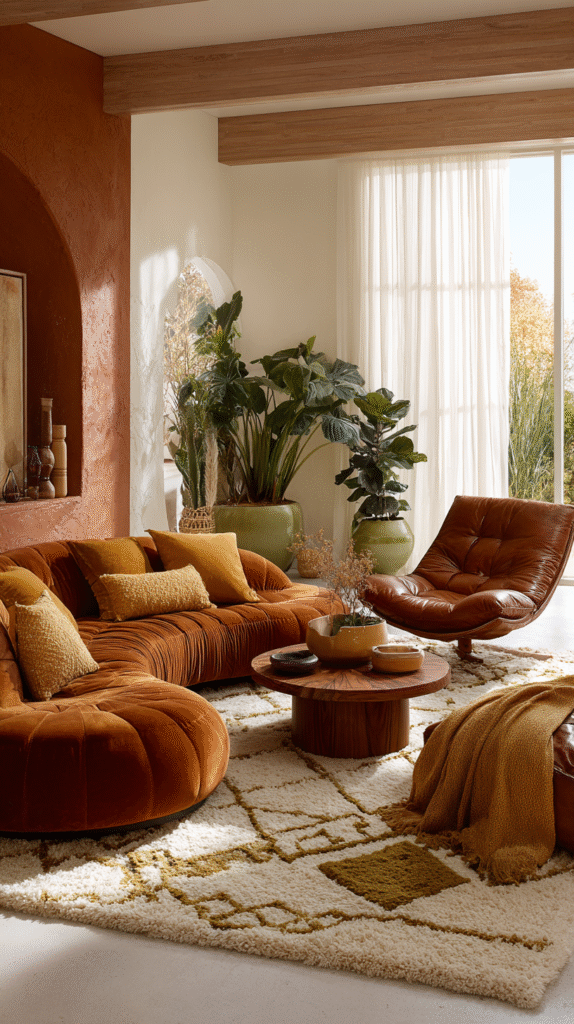
Let’s start with color because this is where 70s modern design really shines. Forget cool grays and whites—we’re talking warm, rich, earthy tones that make spaces feel cozy and inviting.
The quintessential 70s color palette includes:
- Burnt orange and terracotta
- Harvest gold and mustard yellow
- Avocado green and olive
- Chocolate brown and cognac
- Warm rust and brick red
The key is layering these colors rather than going monochrome. A burnt orange sofa against a cream wall with olive green accents and cognac leather chairs creates that perfectly balanced 70s vibe. Don’t be afraid to mix warm tones—the 70s proved that orange and brown are actually best friends.
Modern interpretations often use these colors more strategically. Maybe your walls stay neutral, but you bring in the 70s warmth through a terracotta sectional, mustard throw pillows, and a rust-colored area rug. This approach gives you that retro feel without overwhelming the space.
2. Low-Profile, Organic-Shaped Furniture

70s furniture was all about getting low and staying comfortable. We’re talking low-slung sofas, platform beds, and seating that practically invited you to sink in and stay awhile. The silhouettes featured organic, curved lines rather than the sharp angles of earlier decades.
Look for furniture with these characteristics:
- Low seat heights and low backs
- Rounded, sculptural forms
- Chunky, substantial proportions
- Visible wood bases or legs
- Deep, plush cushioning
A curved sectional sofa in a rich velvet or bouclé fabric immediately signals 70s modern. Pair it with a low-profile coffee table in natural wood or smoked glass. Add a sculptural egg chair or womb chair for that perfect retro accent piece.
The beauty of 70s furniture is that it prioritizes actual comfort. These pieces were designed for lounging, conversation, and relaxation—not just for show. Modern reproductions of iconic 70s pieces are widely available, or hunt vintage shops for authentic finds that bring genuine character to your space.
3. Texture, Texture, and More Texture
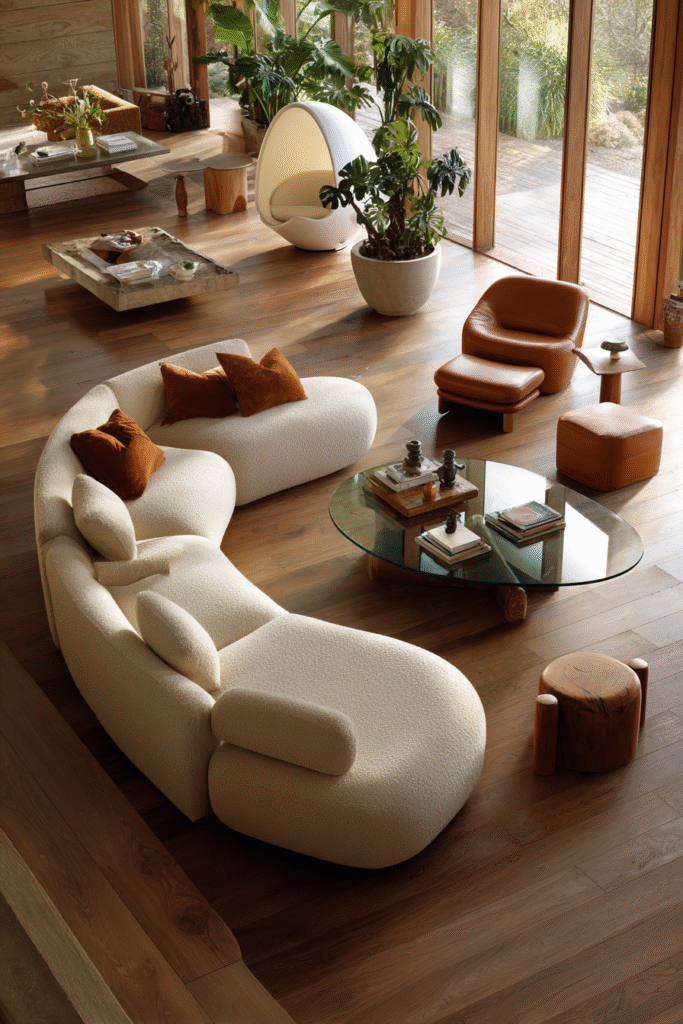
If there’s one thing the 70s understood, it’s the power of tactile variety. These living room decor ideas prove that mixing textures creates visual depth and sensory richness that flat, uniform spaces just can’t match.
Layer textures throughout your space:
- Shag rugs (yes, they’re back and better than ever)
- Bouclé or nubby textured upholstery
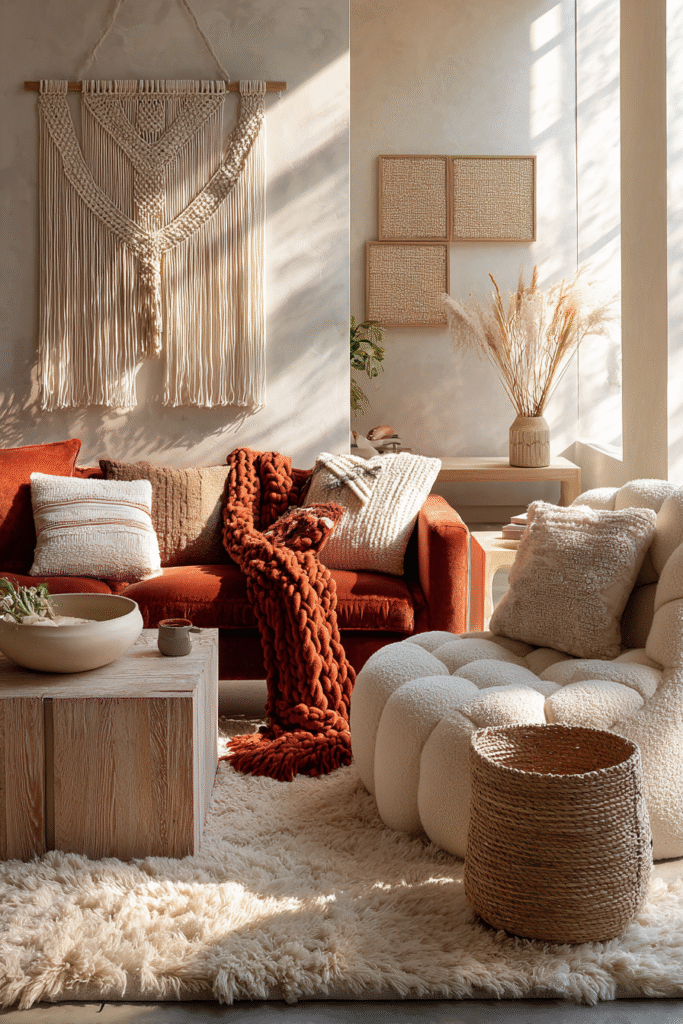
- Macramé wall hangings
- Woven rattan or cane furniture
- Velvet throw pillows
- Sheepskin throws
- Cork or grasscloth wallpaper
The goal is creating a space where every surface invites touch. A smooth leather sofa next to a nubby bouclé chair, on a shag rug, under a macramé wall hanging—that’s the textural variety that defines 70s modern design.
Modern takes often keep the color palette more restrained while going bold with texture. All cream and beige can work beautifully when you’re mixing bouclé, shag, velvet, and rattan. The texture creates the interest rather than relying solely on color.
4. Statement Lighting as Sculptural Art

70s lighting was nothing if not dramatic. Forget boring ceiling fixtures—we’re talking statement pieces that doubled as sculptural art. This is where you can really have fun bringing retro flair into your space.
Iconic 70s lighting styles include:
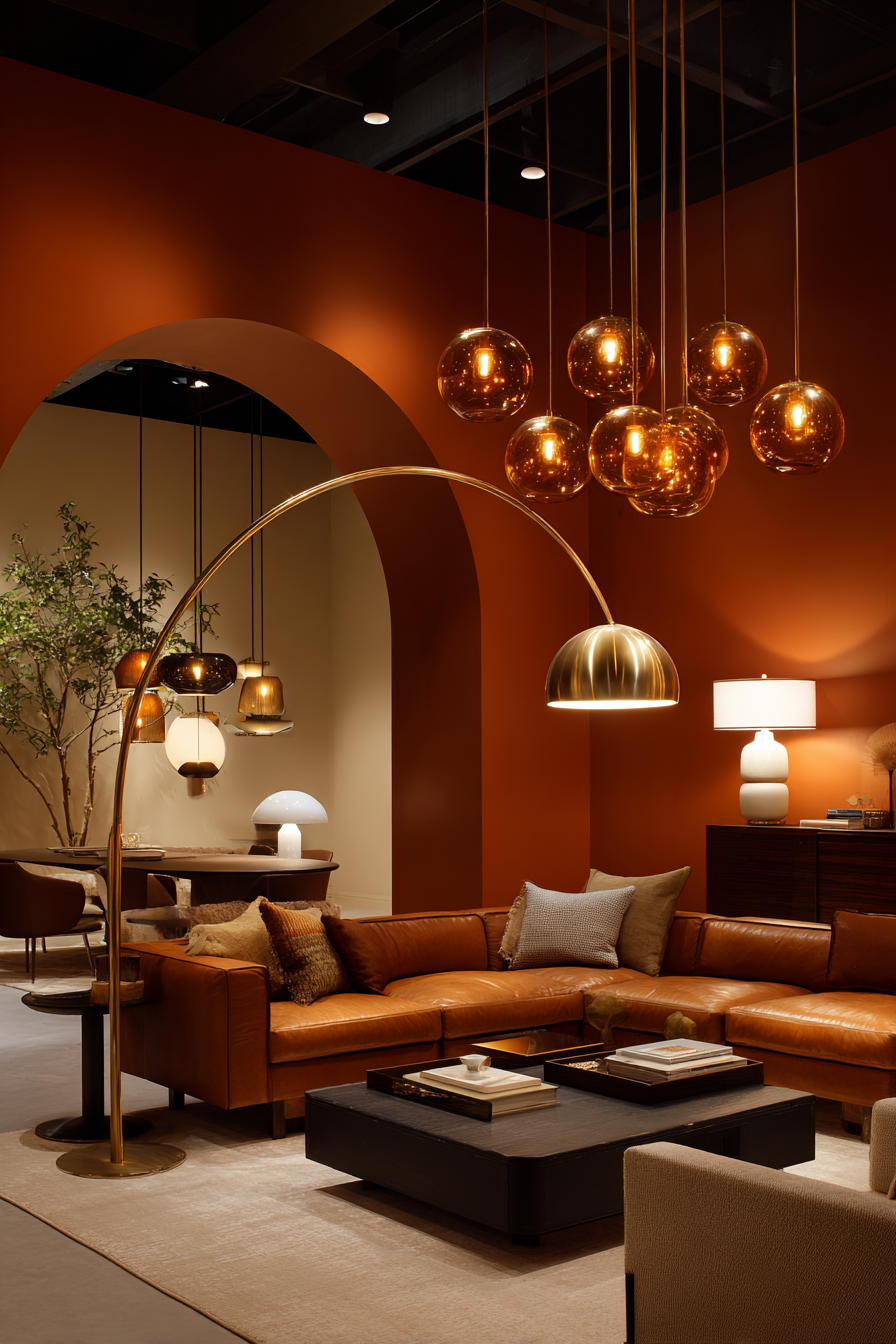
- Arc floor lamps with dramatic curves reaching over seating
- Sputnik chandeliers with multiple arms extending in all directions
- Globe pendant lights in smoked glass or amber
- Mushroom or dome table lamps
- Wicker or rattan pendant shades
- Lava lamps for pure retro kitsch (if you dare)
An oversized arc lamp is probably the single most effective way to add instant 70s vibes to any living room. Position it behind your sofa with the arcing arm reaching over the seating area—it’s functional, dramatic, and unmistakably retro.
Modern interpretations often stick with one or two statement lighting pieces rather than going full disco ball. A beautiful brass arc lamp or a cluster of globe pendants gives you that 70s moment without overwhelming the space. This approach works brilliantly in contemporary living rooms that want just a touch of retro charm.
5. Natural Materials and Organic Elements
The 70s marked a return to nature after the plastic-heavy 60s. Natural materials became central to the aesthetic—wood, stone, rattan, cork, leather, and plants everywhere. This created spaces that felt warm, grounded, and connected to the natural world.
Incorporate natural materials through:
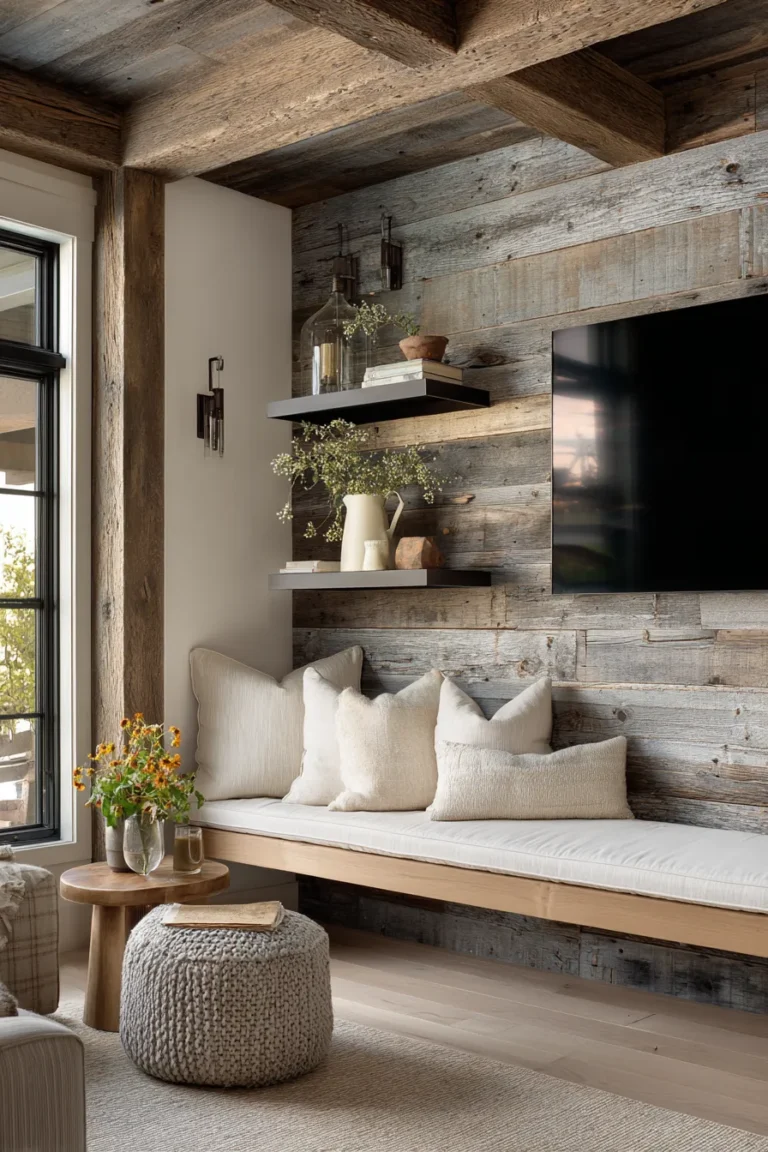
- Exposed wood beams or wood accent walls
- Natural stone fireplace surrounds
- Rattan or wicker chairs and side tables
- Cork wall tiles or bulletin boards
- Leather upholstery in cognac or caramel tones
- Live edge wood coffee tables
- Jute or sisal area rugs
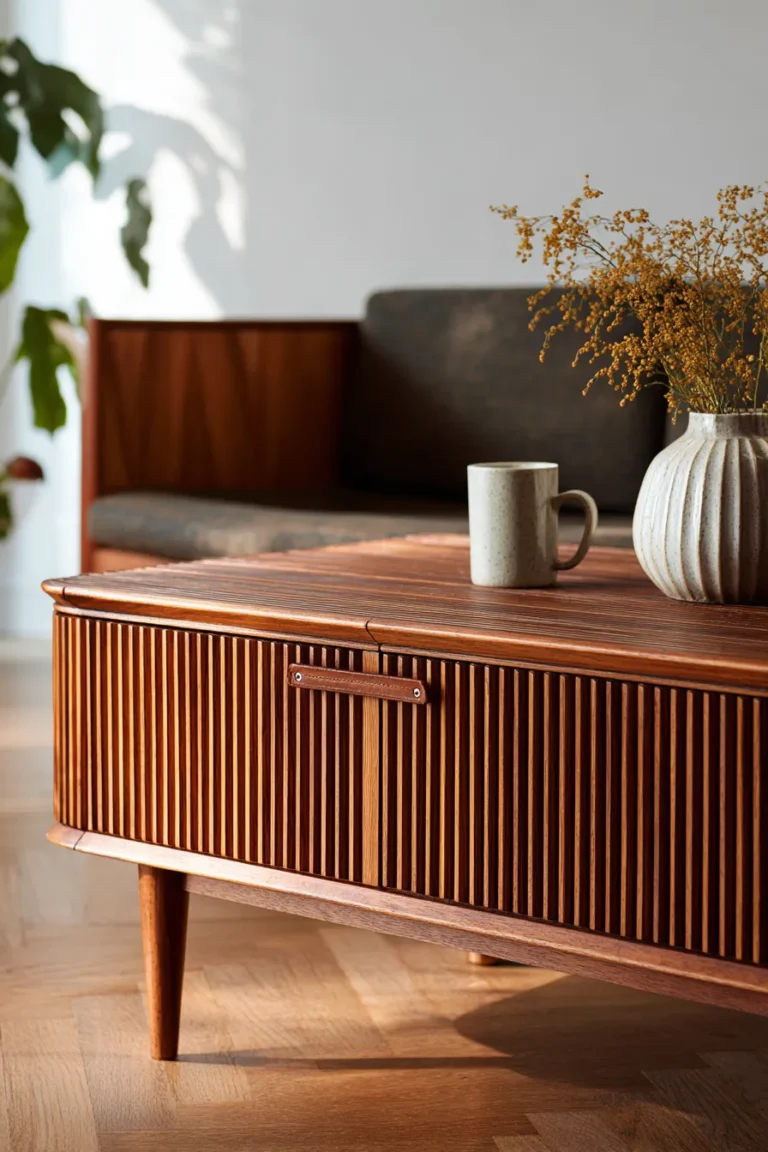
The wood tones of the 70s leaned warm—think walnut, teak, and oak rather than cool gray-washed finishes. These warmer woods pair beautifully with the era’s earthy color palette and create spaces that feel inherently cozy.
Plants were basically mandatory in 70s homes. Hanging macramé plant holders filled with trailing pothos, large floor plants like fiddle leaf figs or rubber trees, and plant stands at various heights created an indoor jungle vibe. This biophilic design approach feels incredibly relevant today as we seek to bring more nature into our living spaces.
6. Bold Patterns and Graphic Prints

The 70s weren’t shy about pattern mixing. Geometric prints, organic florals, paisley, and abstract designs appeared on everything from wallpaper to upholstery to rugs. The key was confidence—patterns were bold, large-scale, and unapologetic.
Popular 70s patterns include:
- Large-scale geometric shapes (circles, hexagons, waves)
- Stylized florals with organic, flowing lines
- Op-art black and white graphics
- Abstract sunburst or starburst motifs
- Paisley and psychedelic swirls
- Chevron and diagonal stripes
You don’t need to wallpaper every surface to capture this vibe. One accent wall with bold geometric wallpaper makes a statement. Or go with patterned upholstery on a single chair while keeping the sofa solid. Layer in patterned throw pillows, a graphic area rug, or printed curtains.
IMO, the secret to successful pattern mixing is sticking to a consistent color palette even when the patterns vary. If all your patterns pull from the same family of warm oranges, browns, and golds, they’ll naturally coordinate even if the designs are completely different. 😊
7. The Conversation Pit Revival

Okay, this one’s admittedly harder to pull off in existing spaces, but let’s talk about the ultimate 70s living room feature: the conversation pit. These sunken seating areas were designed specifically for gathering, talking, and connecting—how cool is that?
If you’re building or doing major renovations, a conversation pit creates an unforgettable focal point. Modern versions are often less dramatically sunken and feature built-in seating with plush cushions surrounding a low central table.
For the rest of us working with existing spaces, you can create the conversation pit vibe through furniture arrangement. Position seating in a circular or U-shaped configuration facing inward toward a central coffee table. This encourages interaction and conversation rather than everyone facing a TV. Add floor cushions or poufs for extra seating at a lower level.
The concept behind conversation pits—prioritizing human connection over media consumption—feels especially relevant today. Even without actual construction, arranging your living room design to encourage face-to-face conversation honors that 70s spirit.
8. Mix Vintage Finds with Modern Pieces

The most successful 70s modern living rooms don’t try to recreate a time capsule. Instead, they thoughtfully blend authentic vintage pieces with contemporary elements, creating a space that honors the past while living firmly in the present.
Here’s how to nail the mix:
- Start with one or two authentic vintage pieces (maybe a credenza or chair)
- Add modern reproductions of iconic 70s designs
- Include contemporary pieces in complementary styles
- Use modern technology and conveniences (hide those cords!)
- Keep some elements neutral and timeless
For example, you might pair an authentic vintage teak credenza with a contemporary modular sofa in burnt orange velvet. Add a reproduction arc lamp, some modern art with 70s-inspired colors, and a shag rug. The result feels curated and intentional rather than costume-y.
Shopping for vintage 70s pieces is half the fun. Check estate sales, thrift stores, Facebook Marketplace, and vintage furniture shops. Look for quality construction and good bones—you can always reupholster tired fabrics or refinish worn wood. Authentic vintage pieces bring character and authenticity that new furniture simply can’t replicate.
Creating Flow with Open-Plan Living
The 70s saw the rise of open-plan living as walls came down and spaces flowed together. While not every home can knock down walls, you can embrace the open, flowing feel through your furniture arrangement and design choices.
Create visual flow by:
- Using consistent flooring throughout open areas
- Repeating colors and materials across different zones
- Avoiding furniture that blocks sightlines
- Using area rugs to define spaces without walls
- Keeping the space feeling airy and uncluttered
Even in traditional closed-room layouts, you can create that sense of flow by using similar design elements throughout your home. If your living room goes full 70s modern, echo those warm tones and natural materials into adjacent spaces for cohesion.
Balancing Retro and Modern Elements
The biggest challenge with 70s modern design is finding that sweet spot between nostalgic and contemporary. Too much retro and your living room feels like a museum. Too timid and you lose the whole point. So how do you balance?
Follow the 70/30 rule: About 70% of your space should feel current and livable, with 30% dedicated to those bold 70s elements. This might mean modern neutral walls and flooring with 70s-inspired furniture and accessories. Or contemporary furniture shapes in those iconic 70s colors and textures.
Keep your technology and practical elements modern. No one wants to actually use 70s appliances or electronics. But you can house modern tech in vintage-inspired credenzas or hide flat screens behind art when not in use.
Choose your moments. Maybe you go all-in with a curved velvet sectional in burnt orange, but keep your coffee table sleek and modern. Or perhaps your furniture is relatively contemporary, but you add 70s flair through bold wallpaper, statement lighting, and accessories.
Accessories and Finishing Touches
The details complete your 70s modern living room. Accessories are where you can really have fun without major commitment or investment.
Essential 70s accessories include:
- Ceramic table lamps with sculptural bases
- Abstract or geometric wall art
- Macramé wall hangings
- Vintage bar carts (fully stocked, obviously)
- Decorative mirrors with sunburst or geometric frames
- Coffee table books from the era
- Ceramic planters in earth tones
- Vintage glassware and decanters
Hit vintage shops and flea markets for authentic 70s accessories at reasonable prices. These smaller pieces are easier to find and afford than large furniture, and they’re simple to swap out if you change your mind. Plus, collecting them over time creates a more authentic, curated feel than buying everything new at once.
Living with 70s Modern Style Today
Here’s what I love about 70s modern living room decor ideas: they prove that your space can be both stylish and genuinely comfortable. The best 70s-inspired rooms feel lived-in, welcoming, and personality-packed in a way that a lot of contemporary design misses.
FYI, you don’t need to commit 100% to pull this off. Start small—add a burnt orange throw pillow, hang a macramé wall hanging, or bring in a vintage brass arc lamp. See how it feels. If you love it, layer in more elements gradually. Your living room should evolve naturally rather than being an overnight transformation.
The beauty of this aesthetic is its flexibility. 70s modern design works equally well in small spaces and grand rooms, urban apartments and suburban homes. The key is adapting the principles—warm colors, natural materials, organic shapes, bold patterns—to your specific space and lifestyle.
The Bottom Line on 70s Modern Living Rooms
Bringing 70s modern design into your living room isn’t about recreating the past—it’s about capturing a feeling. That warm, welcoming, personality-rich vibe that makes a space feel genuinely lived-in and loved. Whether you go full retro with a curved velvet sectional and shag carpeting, or just add subtle nods through color and accessories, embracing 70s elements can transform a bland living room into something special.
The 1970s understood something we’re relearning today: your home should reflect who you are, make you feel good, and actually be comfortable to live in. Bold color, rich texture, natural materials, and unique vintage finds create spaces with soul and character that cookie-cutter modern rooms often lack.
So go ahead—add that burnt orange accent chair you’ve been eyeing. Hang that macramé wall hanging. Find a vintage arc lamp at the flea market. Your living room is waiting to get groovy, and honestly, we could all use a little more 70s optimism and style in our lives right now. Time to make your living room far out! ✌️