Let me paint you a picture: it’s 7:30 AM on a school day, and you’re standing in your kid’s bedroom surrounded by a tornado of clothes. Half the wardrobe contents are on the floor, your child can’t find their favorite shirt, and you’re questioning every life choice that led to this moment. Sound familiar? Yeah, I’ve been there too, friend. Multiple times. This week alone, actually.
Here’s the truth bomb nobody warns you about before having kids: children’s bedroom storage isn’t just about having a place to hang clothes. It’s about creating a system that actually works for tiny humans who think putting clothes “away” means shoving them under the bed. A well-designed kids’ wardrobe can be the difference between peaceful mornings and daily battles over missing socks.
The good news? With the right kids closet ideas, you can create a wardrobe system that’s functional, accessible, and—wait for it—might actually encourage your kids to use it. I know, revolutionary concept! So grab your measuring tape and let’s dive into ten wardrobe designs that’ll transform your child’s room from chaos central into an organized haven. Your future self (and your blood pressure) will thank you.
1. The Low-and-Accessible Design: Because Kids Are Vertically Challenged

Let’s start with the most important principle in children’s wardrobe design: if your kid can’t reach it, they won’t use it. Period. End of story.
Design at Their Level
The biggest mistake I see in kids’ wardrobes is designing them like miniature adult closets. News flash: a five-year-old can’t reach a clothing rod that’s six feet high. Install lower hanging rods, pull-out drawers at accessible heights, and open shelving they can actually see into.
Key features for accessible wardrobes:
- Hanging rods installed at 30-40 inches for toddlers and young kids
- Pull-out drawers instead of high shelves
- Clear bins at eye level for easy visibility
- Step stool storage within the wardrobe itself
- Adjustable components that grow with your child
My daughter’s first wardrobe had everything up high, and guess what? She never put anything away because she literally couldn’t reach it. We lowered everything, and suddenly she could dress herself AND (mostly) put things back. Game changer doesn’t even begin to cover it.
The Montessori Approach
Taking inspiration from Montessori principles, create a wardrobe where everything is within reach and visible. Use open shelving for folded items, low hooks for bags and jackets, and baskets they can easily pull out. This builds independence and makes morning routines infinitely smoother.
2. The Color-Coded Organization System: Making It Visual

Kids are visual learners, and color-coding is basically magic when it comes to children’s bedroom storage. Trust me on this one—it works even for the most organizationally-challenged tiny humans.
Rainbow Storage Solutions
Assign different colors to different categories: blue bins for pants, pink for dresses, yellow for pajamas. Add picture labels alongside words so even non-readers can navigate their wardrobe independently.
Color-coding strategies that work:
- Colored bins or baskets for different clothing types
- Rainbow organization of hanging clothes (yes, like a closet gradient)
- Different colored hangers for different seasons
- Picture labels with color borders for easy identification
- Matching storage boxes that double as decor
I color-coded my son’s wardrobe last year, and the difference was immediate. Instead of me fielding twenty questions about where things are, he just grabs the green bin for his sports stuff. It’s like I gave him a filing system his brain actually understands. For more inspiration on creating organized kids’ spaces, check out these kids bedroom ideas that incorporate smart storage solutions.
Visual Inventory System
Create a visual “menu” of outfit combinations on the inside of the wardrobe door. Take photos of complete outfits and laminate them. Kids can pick an outfit picture and find the matching pieces—reducing morning decision fatigue for everyone.
3. The Built-In Wonder: Maximizing Every Inch

If you’re renovating or building new, built-in wardrobes are worth every penny. They use awkward spaces, maximize storage, and can be customized exactly to your child’s needs.
Custom Configuration Benefits
Built-ins eliminate wasted space and can incorporate features like window seats, study nooks, or toy storage. They’re especially brilliant in small bedrooms where every square inch counts.
Built-in wardrobe advantages:
- Floor-to-ceiling storage maximizes vertical space
- Custom fit eliminates awkward gaps and wasted areas
- Can incorporate multi-functional elements
- Increases room value and aesthetic appeal
- Designed specifically for your child’s storage needs
We built custom wardrobes in both kids’ rooms, and the difference compared to freestanding furniture is night and day. Everything has a place, there’s no dust-collecting gap behind the wardrobe, and the rooms actually look bigger despite having more storage.
Zone Planning
Divide the built-in into zones: hanging space, folded clothes, shoes, accessories, and even a section for treasures and collections. This teaches organizational skills while keeping everything accessible and tidy.
4. The Drawer-Heavy Design: For the Non-Hangers

Real talk: some kids just won’t hang things up. Fighting this reality is exhausting. Instead, embrace it with a drawer-heavy wardrobe design.
Why Drawers Win
Drawers are easier for kids to use than hangers. They can see everything at a glance, and “putting away” means tossing items in a drawer rather than the precise motor skills required for hanging. Pick your battles, parents.
Drawer configuration tips:
- Shallow drawers for small items like socks and underwear
- Medium drawers for shirts and pants
- Deep bottom drawers for bulky items like sweaters
- Clear or mesh drawer fronts for visibility
- Drawer dividers to maintain organization
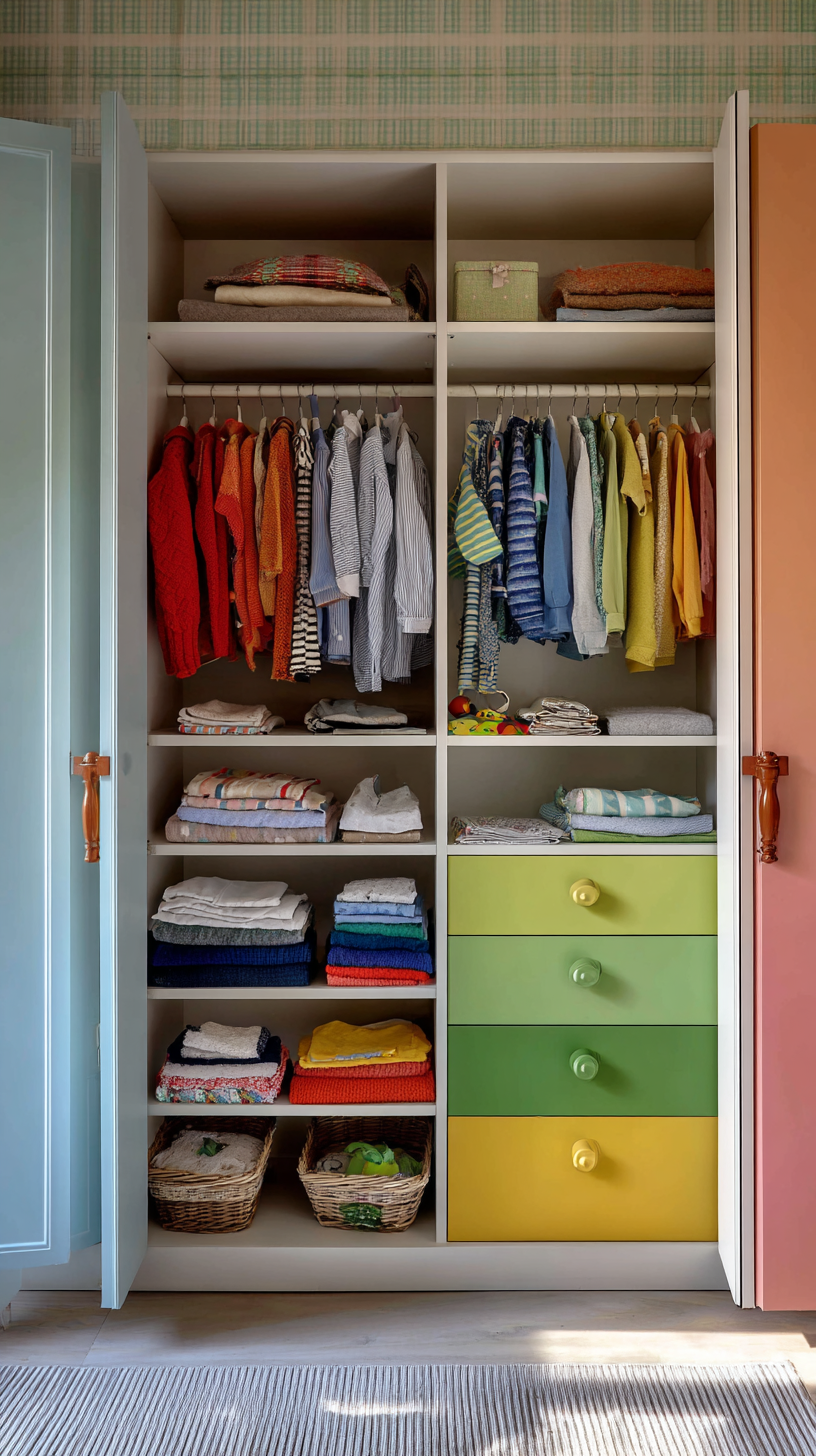
IMO, a wardrobe that’s 70% drawers and only 30% hanging space works better for kids under 10. They’ll actually use it, which is the whole point. Save the fancy hanging sections for when they’re teenagers and suddenly care about wrinkled shirts.
Label Everything
Even with drawers, labels are essential. Use pictures for young kids and words for older children. This removes the “I don’t know where it goes” excuse and builds independence.
5. The Open Wardrobe Concept: Out of Sight, Out of Mind

Here’s a controversial opinion: closed wardrobes might be your enemy. If kids can’t see their clothes, they “forget” they exist and claim they have nothing to wear while standing next to a full wardrobe.
The Visibility Advantage
Open wardrobes or those with glass/mesh doors keep everything visible. Kids can see their options at a glance, making outfit selection faster and more independent.
Open wardrobe design elements:
- Open shelving units instead of closed cabinets
- Mesh or fabric bins for visual inventory
- Lower hanging rods fully exposed
- Display-style organization for accessories
- Hooks and pegboards for frequently used items
My nephew’s room has an open wardrobe system, and getting him dressed in the morning went from a 30-minute negotiation to a five-minute process. He can see everything, grab what he wants, and there’s no door to slam when he’s frustrated. Win-win-win.
The Aesthetics Question
Yes, open wardrobes require more organization maintenance to look good. But if your choice is between a closed wardrobe that’s chaos inside and an open system that forces you to keep things tidy? I’ll take the forced organization every time.
6. The Growth-Friendly Adjustable System: Investment Pieces That Last

Kids grow at warp speed, and their storage needs change just as fast. Adjustable wardrobe systems adapt as they grow, saving you from replacing furniture every few years.
Modular Magic
Choose systems with adjustable hanging rods, removable shelves, and reconfigurable components. What works for a toddler’s onesies can be adjusted for a teenager’s hoodies.
Adjustable features to prioritize:
- Telescoping hanging rods that extend upward as kids grow
- Removable shelf brackets for custom spacing
- Modular cube systems you can rearrange
- Adjustable drawer dividers that change with needs
- Convertible components (like shelves that become hanging space)
We invested in a modular wardrobe system five years ago, and it’s been reconfigured three times already. The toddler section with low cubbies is now tween hanging space with a shoe rack. Same wardrobe, completely different configuration, no replacement necessary.
Future-Proofing Design
Even if you’re designing for a toddler, think ahead. Leave space for longer hanging items they’ll need later. Plan for growing shoe collections. Consider where homework supplies or hobby equipment might eventually live.
7. The Themed Fun Design: Making Storage Exciting

Who says wardrobes have to be boring? When you incorporate your child’s interests into the children’s wardrobe design, they’re more likely to engage with it.
Theme Integration Ideas
Whether your kid is obsessed with space, princesses, dinosaurs, or sports, subtle theme integration makes the wardrobe feel special without being overwhelming or quickly outgrown.
Theme-friendly wardrobe ideas:
- Custom door decals or paint designs
- Themed drawer pulls and hardware
- Color schemes matching their interests
- Interior wallpaper or paint in fun patterns
- Themed storage containers and bins
My daughter’s wardrobe has a subtle rainbow gradient painted on the interior back wall. It’s her “magical closet,” and suddenly putting clothes away became part of the magic instead of a chore. Sometimes it’s the little touches that make the biggest difference. Looking for more ways to personalize kids’ spaces? These bedroom decor ideas include great tips for adding character to children’s rooms.
Age-Appropriate Themes
Keep themes somewhat general so they don’t outgrow them immediately. “Ocean blue” lasts longer than “Baby Shark specific.” “Space theme” works longer than “current favorite superhero.”
8. The Multi-Zone Wardrobe: Beyond Just Clothes

Modern kids closet ideas go way beyond hanging shirts. Create a multi-functional wardrobe that handles clothes, toys, books, and school supplies in one organized system.
Integrated Storage Solutions
Why have five separate furniture pieces when one well-designed wardrobe can handle multiple needs? Integrate different storage types into one cohesive unit.
Multi-zone wardrobe sections:
- Upper section for out-of-season or occasional-use items
- Middle zone for daily clothing access
- Lower section for toys, books, or school supplies
- Built-in laundry hamper to encourage dirty clothes habits
- Accessories zone for jewelry, hair items, or small treasures
We combined wardrobe and toy storage into one unit, and it completely transformed the room’s functionality. Everything has a home, the room looks bigger without multiple furniture pieces, and cleanup became significantly easier.
The Homework Station Integration
For older kids, consider integrating a small desk or homework zone into the wardrobe unit. A pull-out desk or fold-down surface maximizes space while keeping the room multi-functional.
9. The Lighting Solution: Illuminating the Options

FYI, proper lighting inside wardrobes is criminally underrated. If kids can’t see what’s in there, they’ll claim nothing fits or everything’s lost.
Lighting That Makes a Difference
LED strip lights or battery-operated push lights transform wardrobe functionality. Kids can actually see what they’re looking for, and the wardrobe becomes easier to navigate independently.
Wardrobe lighting options:
- LED strip lights along shelves and hanging rods
- Motion-sensor closet lights that auto-activate
- Battery-operated puck lights for flexibility
- Back-lit shelving for wow factor
- Lighted mirror integration for older kids
After adding LED strips to my kids’ wardrobes, the “I can’t find it” complaints dropped by about 80%. They can actually see into drawers and cubbies, making selection and put-away so much simpler. It’s a small investment that makes a massive difference.
Safety First
Always use battery-operated or low-voltage LED lighting in kids’ wardrobes. Keep cords organized and out of reach. Choose cool-temperature LEDs that won’t heat up if covered by fabric.
10. The Divided Wardrobe: For Shared Bedrooms

Sharing a bedroom is tough enough without wardrobe wars. A properly divided wardrobe system reduces conflicts and teaches respect for personal space.
Fair and Clear Division
When siblings share a wardrobe, clear division is essential. Use color-coding, labels, or physical dividers so each child knows exactly what’s theirs.
Shared wardrobe strategies:
- Split wardrobe vertically (left side vs. right side)
- Assign different colored bins or baskets to each child
- Use dividers to clearly separate spaces
- Create matching but personalized sections
- Equal space allocation to prevent fairness arguments
My two kids share one large wardrobe, divided right down the middle. Each side is organized identically but with different colored bins and labels. This eliminated about 90% of the “they’re touching my stuff” complaints. Clear boundaries work, people!
Personal Expression Within Structure
Even in a shared system, let each child personalize their section. Different colors, stickers, or themes make their space feel individually theirs while maintaining overall organization.
Bringing It All Together: Creating Your Perfect Kids’ Wardrobe
So there you have it—ten children’s wardrobe design approaches that actually work in real life with real kids. Whether you go with accessible low designs, embrace the drawer-heavy approach, or create a multi-zone storage masterpiece, the key is designing for how your specific child actually functions.
The Reality Check
Here’s what I wish someone had told me: the perfect wardrobe design isn’t the prettiest one or the most Pinterest-worthy. It’s the one your kid will actually use. Period. You can have the most beautiful custom wardrobe in the world, but if your child can’t reach it, understand it, or navigate it independently, it’s just expensive furniture.
Start by observing how your child naturally organizes (or doesn’t organize) their stuff. Are they hangers or folders? Do they need to see everything or are they fine with closed storage? Do they respond to color-coding or labels? Let their natural tendencies guide your design choices instead of fighting against them.
The Investment Perspective
Quality wardrobe design is an investment in morning sanity, organizational skills, and bedroom functionality. When you’re not spending 20 minutes every morning helping your kid find clothes, that’s time back in your life. When your child can independently dress themselves and put clothes away, that’s a life skill they’re building. When the bedroom stays tidier because everything has a logical home, that’s worth its weight in gold.
Don’t be afraid to mix and match these ideas either. Maybe you need low-hanging rods AND drawer-heavy storage. Perhaps open shelving works great alongside some closed cabinets for formal clothes. The best wardrobe systems are customized to your child’s specific needs, room size, and family lifestyle. If you’re looking for more comprehensive bedroom organization strategies, these wardrobe design bedroom ideas offer additional inspiration that can be adapted for children’s spaces.
Making It Happen
Start small if a complete wardrobe overhaul feels overwhelming. Add lighting first. Introduce color-coded bins. Lower one hanging rod. Small changes create momentum, and before you know it, you’ve transformed the entire system. And please, involve your kids in the process. Let them choose bin colors or pick where certain items live. When kids have input in the organization system, they’re infinitely more likely to actually use it.
Remember, the goal isn’t perfection—it’s progress. Your kid’s wardrobe doesn’t need to look like a magazine spread. It needs to function for your actual life, with your actual child, on your actual busy mornings. If most clothes make it into the wardrobe most of the time? That’s a win. If your child can find what they need without a full-scale search operation? Victory. If morning routines become even 20% smoother? You’re crushing it.
Now go forth and create that wardrobe system that’ll finally bring peace to your mornings. Your future 7:30 AM self is already grateful. And who knows? Maybe you’ll even find those missing socks. 😊
Happy organizing, warrior parent!