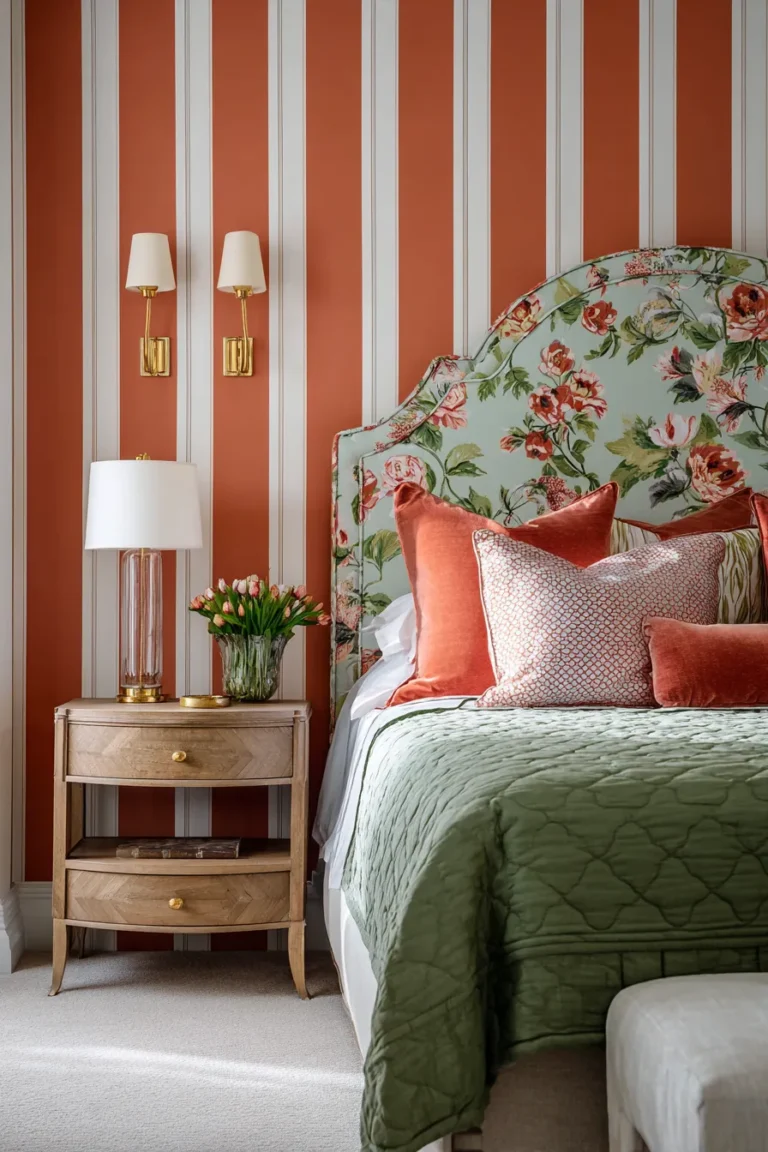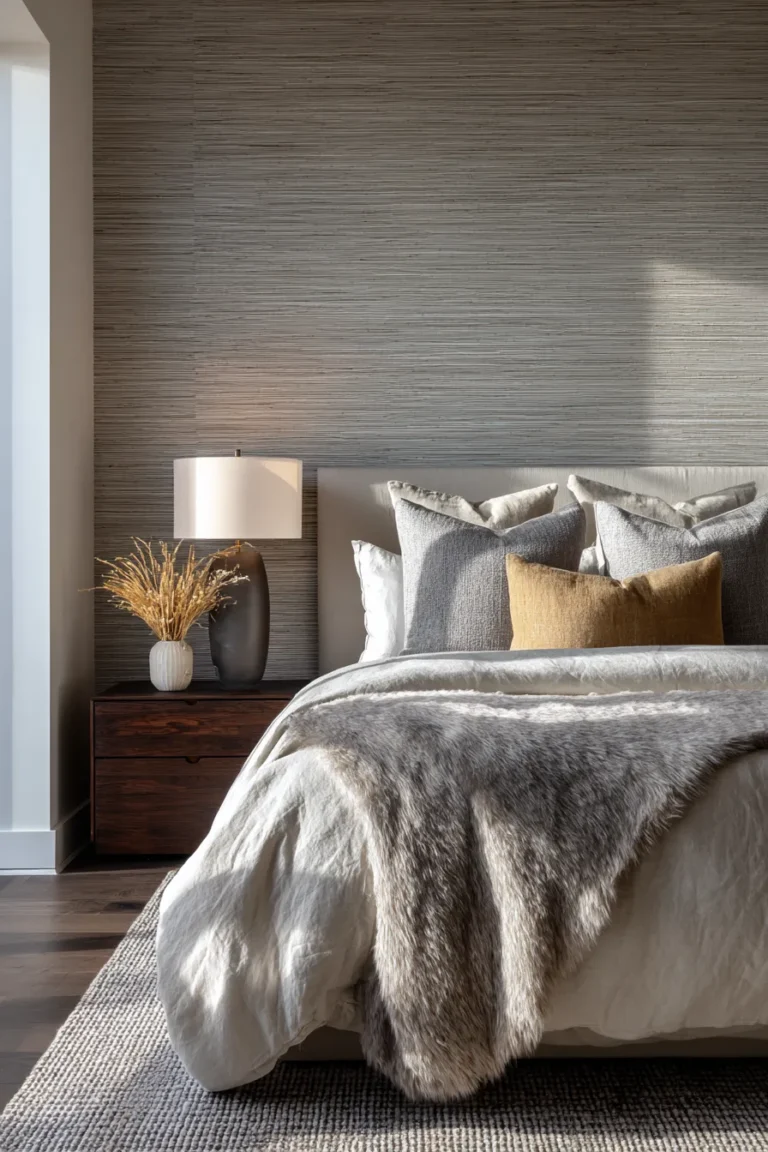
The walls of a child’s bedroom are more than just boundaries—they’re canvases for creativity, comfort, and self-expression. The right paint choice can transform an ordinary room into a magical retreat that fuels imagination during playtime and soothes restless minds at bedtime. Whether you’re designing a nursery, updating a toddler’s space, or creating a pre-teen sanctuary, thoughtful wall painting opens endless possibilities for personalization without the commitment of permanent fixtures or expensive renovations.
1. Soft Pastel Ombre Gradient Wall
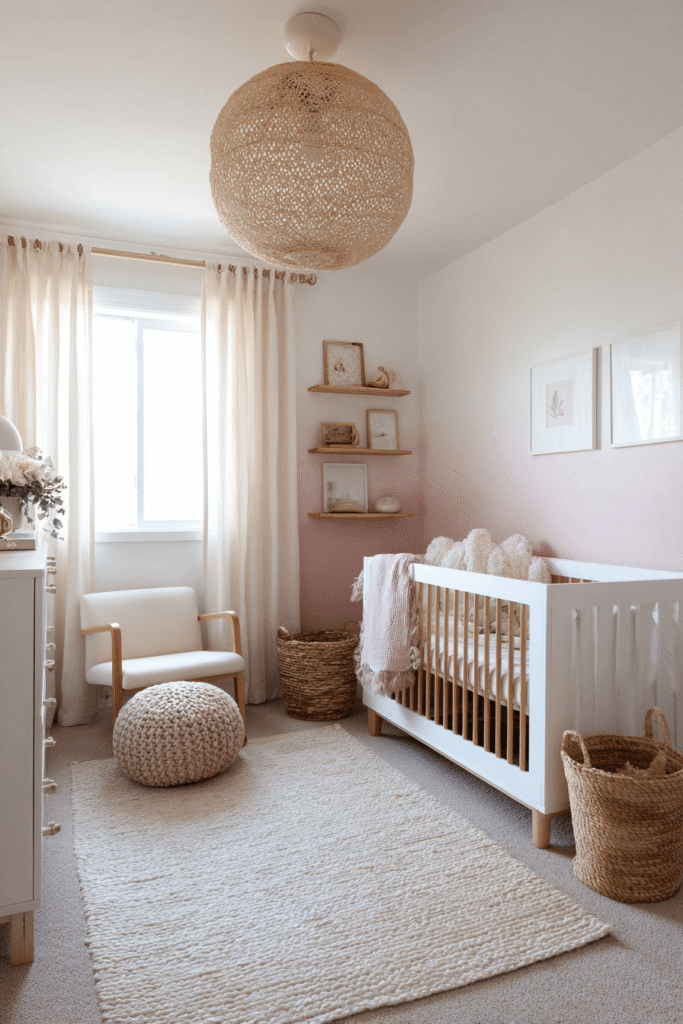
Picture a wall that melts from dusty rose at the ceiling into soft cream at the baseboard—gentle, dreamy, and utterly serene. The pastel ombre gradient brings a cloud-like softness to any child’s bedroom, creating a backdrop that feels both whimsical and calming. This technique works beautifully in nurseries and toddler rooms, where soothing tones help establish a peaceful sleep environment.
What makes this design so timeless is its versatility. Unlike bold character themes that children quickly outgrow, a pastel ombre wall adapts as your child matures. The gradual color shift adds depth without overwhelming the space, making even small bedrooms feel airier and more expansive. Interior designers favor this approach for its ability to complement any decor style—from modern minimalism to vintage charm.
Design Breakdown:
- Select two to three coordinating pastel shades from the same color family
- Start with the lightest tone at the bottom and gradually blend into deeper hues toward the ceiling
- Use a soft sponge or wide brush to create seamless transitions between colors
- Consider lavender-to-white, peach-to-cream, or mint-to-sage combinations
- Apply the technique to one accent wall or wrap the entire room for full immersion
- Pair with white furniture and natural wood accents to keep the focus on the wall treatment
- Add texture through woven baskets or linen curtains that echo the soft color palette
- Install adjustable lighting to highlight the gradient’s subtle shifts throughout the day
Best For: Nurseries, toddler rooms, or any child who appreciates calm, dreamy spaces that feel like stepping into a watercolor painting.
2. Navy Blue Accent Wall with Cloud Motifs
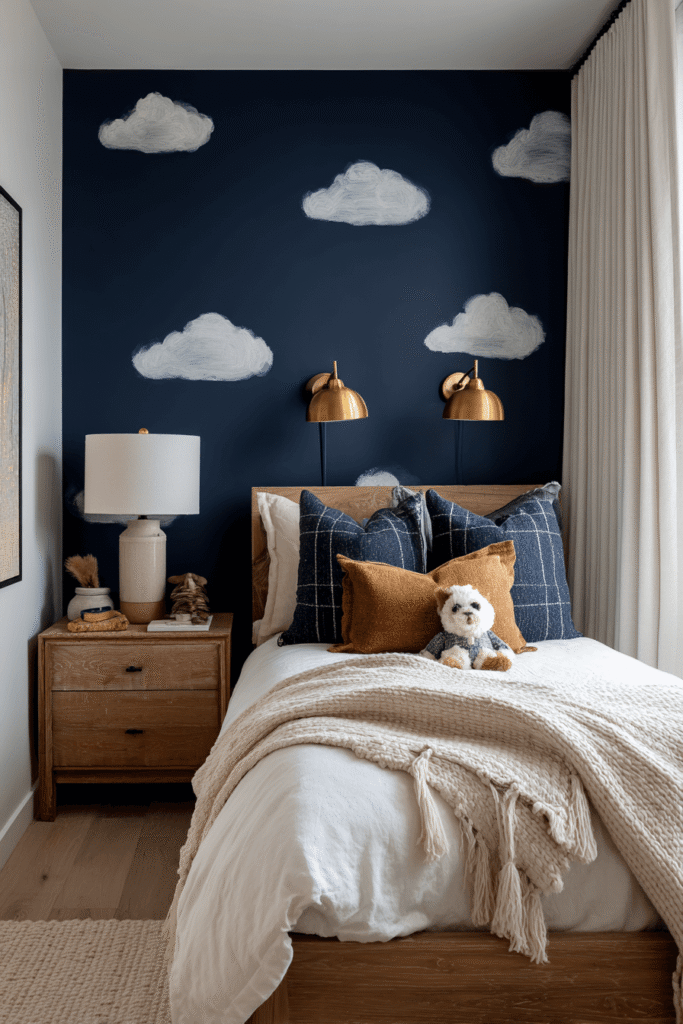
Deep navy creates an instant sense of sophistication in a child’s bedroom—anchoring the space with richness while maintaining a playful spirit when paired with whimsical cloud shapes. This navy blue bedroom design feels equally at home in a baby’s nursery or a teenager’s study corner. The dark backdrop makes white or cream cloud motifs pop dramatically, creating a sky-like atmosphere that encourages daydreaming and storytelling.
Navy is particularly brilliant for its gender-neutral appeal and its ability to hide minor scuffs and marks—a practical consideration for active children’s spaces. The cloud motifs can be hand-painted in organic, irregular shapes or stenciled for consistency. This design grows with your child, transitioning seamlessly from nursery mobile companion to sophisticated teen retreat simply by adjusting surrounding decor elements.
Design Breakdown:
- Paint one feature wall in a matte or eggshell navy finish
- Use soft white or cream to hand-paint irregular cloud shapes across the wall
- Vary cloud sizes and densities to create natural, sky-like movement
- Position clouds at different heights to avoid a repetitive pattern
- Add subtle silver or gold metallic accents within clouds for a touch of magic
- Complement with white bedding and natural wood furniture
- Incorporate brass or gold light fixtures that echo the celestial theme
- Layer with soft textiles in cream, gray, or soft yellow to warm the space
Best For: Gender-neutral nurseries, kids’ bedrooms of all ages, or spaces where parents want a sophisticated look that doesn’t sacrifice playfulness.
3. Rainbow Striped Feature Wall

Nothing captures childhood joy quite like a rainbow—and when painted as bold vertical stripes, it transforms an entire wall into a celebration of color and optimism. Each stripe creates a distinct band of personality, moving from red through orange, yellow, green, blue, indigo, and violet in a rhythmic progression that energizes the entire room. This design makes a powerful statement without requiring artistic skill, just careful taping and patience.
Rainbow stripes work particularly well behind beds or play areas, creating a vibrant focal point that anchors furniture arrangements. The vertical orientation also draws the eye upward, making ceilings appear higher—a clever trick for rooms with standard eight-foot heights. Consider this approach for children who love bright colors and bold expressions, or for playrooms where creativity and energy are encouraged throughout the day.
Design Breakdown:
- Measure and tape off equal vertical sections across your chosen wall
- Use painter’s tape to create crisp, clean lines between each color band
- Paint stripes in traditional rainbow order or customize the sequence
- Keep stripe widths consistent—typically 8 to 12 inches for visual balance
- Use high-quality satin or semi-gloss paint for durability in high-traffic areas
- Extend stripes from floor to ceiling for maximum impact
- Balance the bold wall with neutral furniture in white, natural wood, or soft gray
- Add complementary bedroom decor in colors pulled from the rainbow palette
Best For: Playrooms, creative children who love color, or spaces that need an instant energy boost and cheerful atmosphere.
4. Forest Green Nature-Inspired Corner

Forest green brings the tranquility of the outdoors inside, wrapping one corner of the room in a rich, earthy embrace that feels grounding and sophisticated. This deep, natural hue creates a cocooning effect—perfect for reading nooks or quiet corners where children retreat with books and imagination. Unlike bright greens that can feel juvenile, forest green matures with your child, remaining relevant from toddlerhood through teenage years.
The nature-inspired corner approach means you don’t need to commit an entire room to the bold color. Painting just two adjoining walls in forest green creates an architectural moment that defines a specific zone within the bedroom. Layer in natural materials like rattan, jute, and unfinished wood to enhance the organic aesthetic. Add wall art featuring botanical prints or woodland creatures to complete the narrative.
Design Breakdown:
- Paint two perpendicular walls meeting in a corner with matte forest green
- Leave remaining walls in soft cream or warm white for contrast
- Position a reading chair or floor cushions in the green corner
- Hang simple wooden shelves to display books and nature-inspired objects
- Add potted plants or hanging greenery to reinforce the natural theme
- Install warm-toned lighting—brass sconces or woven pendant lights
- Incorporate natural fiber rugs in jute or sisal
- Use throws and pillows in complementary earth tones like terracotta, mustard, or cream
Best For: Calm, thoughtful children who appreciate nature, or parents creating a minimalist bedroom with organic, timeless appeal.
5. Geometric Mountain Range Mural
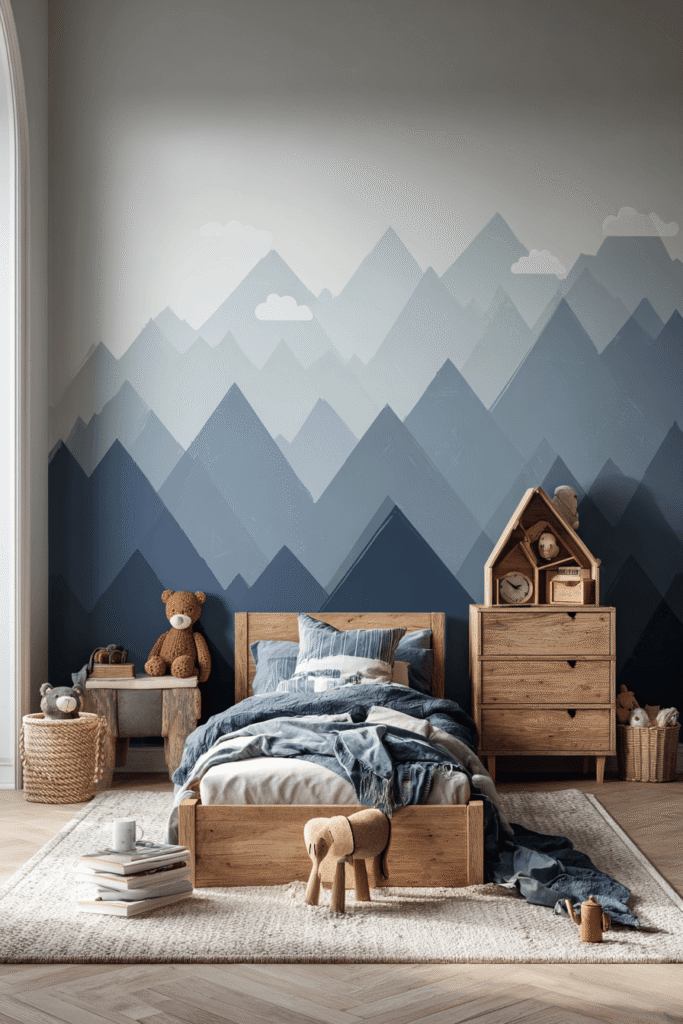
Sharp peaks rendered in layered triangles create a modern mountain range that brings adventure and geometry together in one striking mural. This design speaks to the child who dreams of exploration and the parent who appreciates clean, contemporary aesthetics. The mountain silhouette works horizontally along one wall, creating a horizon line that grounds the room while adding visual intrigue through overlapping geometric shapes.
The beauty of this approach lies in its customization—mountains can be painted in monochromatic grays and whites for a sophisticated Scandinavian feel, or in bold teals, rusts, and golds for a more vibrant, adventurous spirit. The angular shapes are surprisingly forgiving to execute, requiring only basic taping skills and steady hands. This is particularly effective in boys’ bedrooms but works equally well for any child drawn to outdoor exploration.
Design Breakdown:
- Sketch mountain peaks across the lower third of your wall using light pencil marks
- Create three to five overlapping mountain layers for depth and dimension
- Use painter’s tape to section off each triangular peak
- Paint each mountain layer in a different shade—lightest in front, darkest in back
- Consider a color progression from navy to dusty blue to pale sky blue
- Add a sun or moon accent in the upper corner for added narrative
- Keep the upper two-thirds of the wall in a light, neutral tone
- Complement with wood furniture and textiles in natural, earth-inspired hues
Best For: Adventure-loving children, outdoor enthusiasts, or modern nurseries with a Scandinavian or minimalist design direction.
6. Chalkboard Paint Interactive Wall
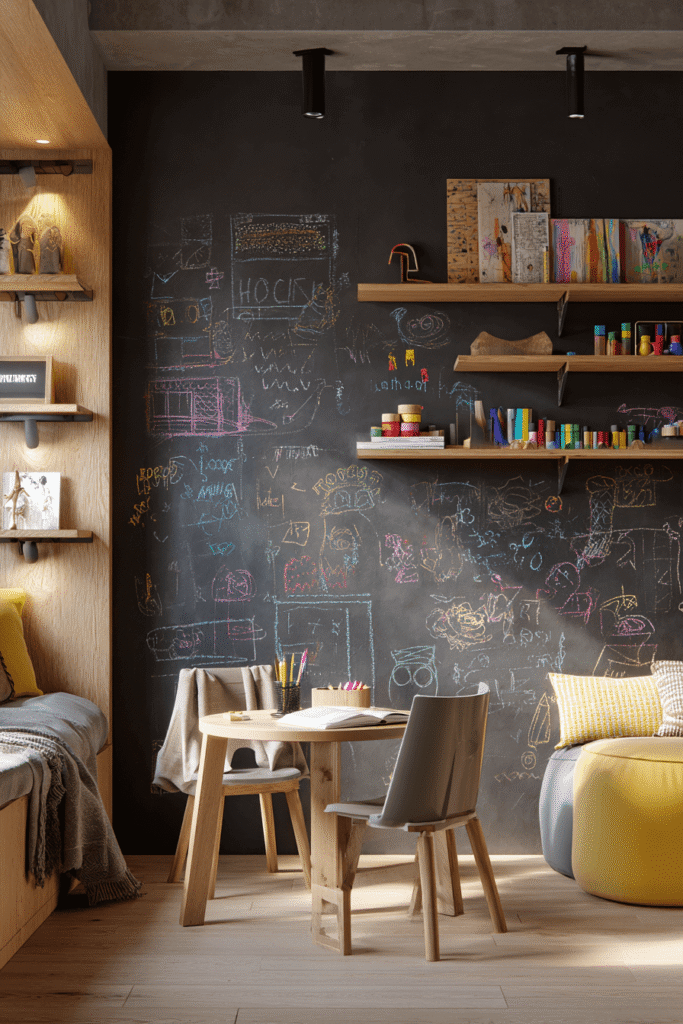
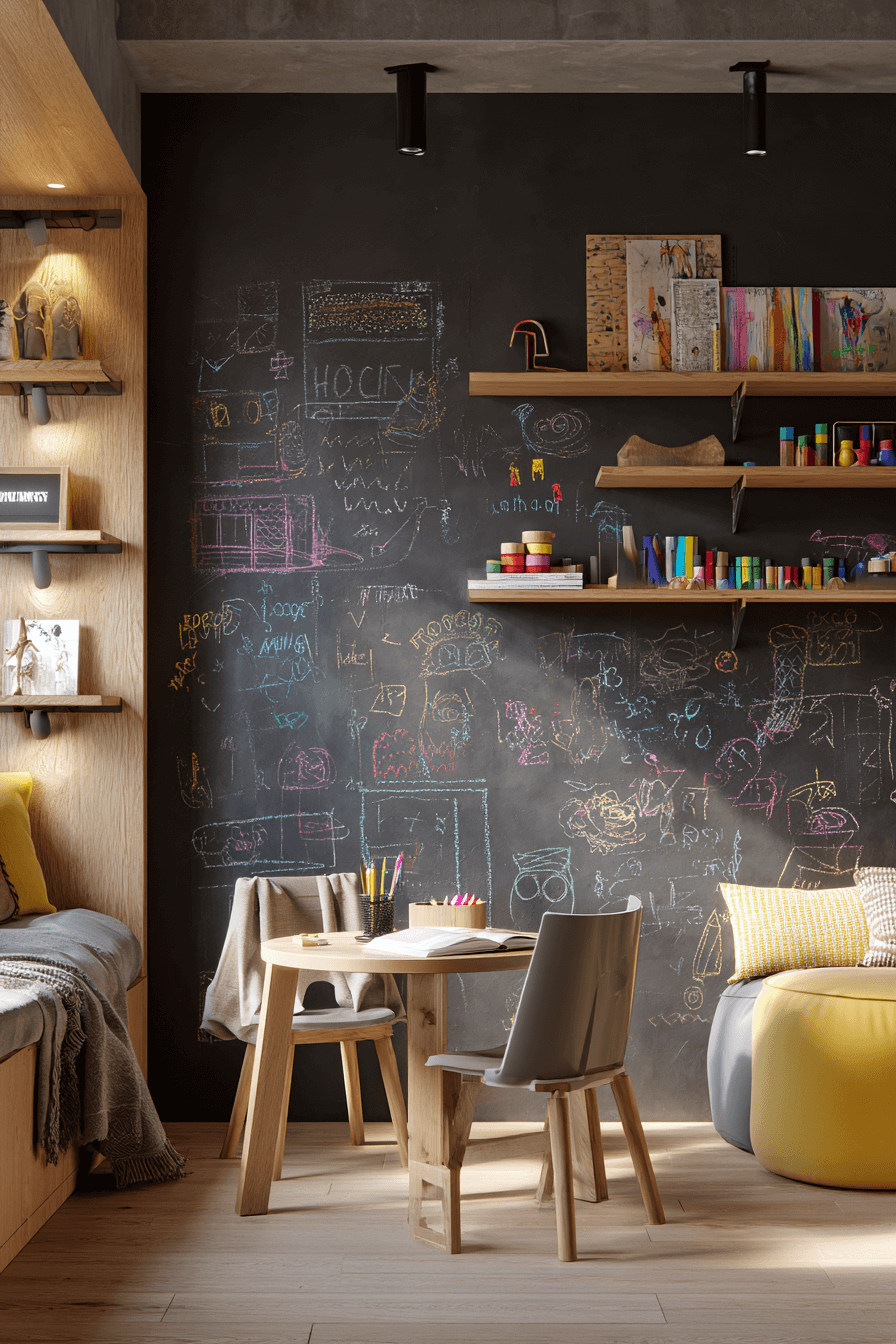
Transform one wall into an ever-changing canvas where creativity never ends—chalkboard paint invites children to become the artists of their own space. This interactive surface encourages drawing, writing, and imaginative play while containing the mess to one designated area. The matte black or deep charcoal surface adds unexpected sophistication to a child’s room, proving that functional design elements can also be aesthetically striking.
Chalkboard walls work brilliantly behind desks or in play areas, providing a dedicated spot for homework, doodling, and games. Modern chalkboard paint comes in various colors beyond black—consider deep green, navy, or even gray for a softer look. Frame the chalkboard wall with wooden trim to give it gallery-like importance, and keep a caddy of colorful chalks nearby for spontaneous creativity.
Design Breakdown:
- Apply two coats of high-quality chalkboard paint to your chosen wall
- Allow proper curing time (usually 3 days) before first use
- Season the surface by rubbing chalk sideways across the entire wall, then erasing
- Frame the chalkboard area with wood molding for a finished, intentional look
- Install a small shelf below to hold chalk, erasers, and cleaning supplies
- Position the chalkboard at child height for easy access
- Balance the dark wall with plenty of light—both natural and artificial
- Pair with light-colored furniture and bright textiles to prevent the room from feeling too dark
Best For: Creative, artistic children, homework zones, or playrooms where expression and experimentation are encouraged daily.
7. Blush Pink and Gold Accent Corner

Soft blush pink paired with subtle gold accents creates a sophisticated, modern approach to the traditional “pink room”—one that feels elevated, not saccharine. This color combination brings warmth and elegance to a child’s space without leaning too heavily into juvenile themes. The blush tone serves as a neutral base that complements virtually any decor style, while strategic gold touches add just enough glamour to feel special.
Rather than painting entire walls, concentrate this color story in one corner—perhaps behind a bed or vanity area. The blush provides a gentle backdrop that makes white furniture pop and creates a cozy, enveloping feeling. Gold can be introduced through painted trim, stenciled patterns, or even geometric shapes that add visual interest without overwhelming. This approach transitions beautifully as children grow, requiring only minor styling updates rather than complete repaints.
Design Breakdown:
- Paint two adjoining corner walls in a warm blush pink with gray undertones
- Use metallic gold paint to add thin accent stripes or geometric shapes
- Consider a gold-painted picture rail or chair rail for architectural interest
- Keep remaining walls in crisp white to balance the warmth
- Add gold hardware on furniture—drawer pulls, lamp bases, mirror frames
- Layer in white and cream textiles for a soft, cohesive look
- Incorporate brass or rose gold light fixtures that complement the wall tones
- Style with vanity ideas featuring elegant mirrors and organized storage
Best For: Elegant, sophisticated spaces, tween bedrooms, or parents seeking a refined alternative to traditional bright pink rooms.
8. Two-Tone Color Block Walls
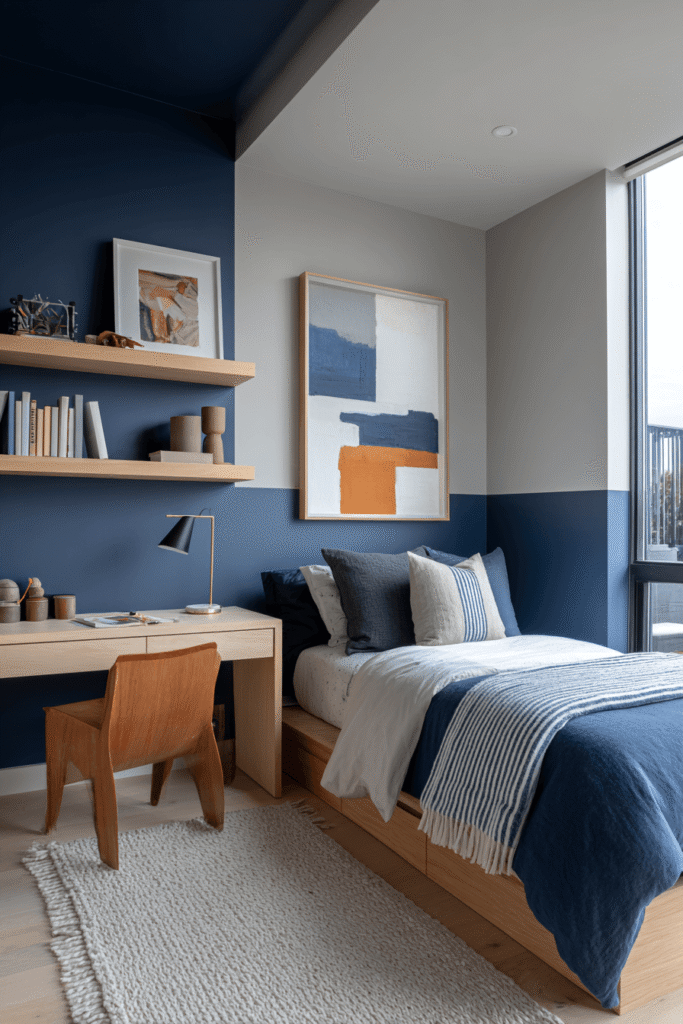
Bold and architectural, two-tone color blocking divides walls horizontally to create distinct visual zones that add dimension and modern flair. This technique typically features a darker color on the lower portion—roughly one-third to one-half of the wall height—with a lighter shade above. The result is a room that feels intentionally designed, with a grounded base that anchors furniture and prevents the space from feeling too airy or undefined.
Color blocking works with virtually any palette: navy below with soft gray above, forest green with cream, or even unexpected combinations like terracotta with dusty blue. The horizontal division draws the eye around the room rather than up, making it particularly effective in rooms with soaring ceilings that might otherwise feel disproportionate. This is a mature, design-forward choice that references living room paint color trends while remaining kid-friendly.
Design Breakdown:
- Measure and mark a horizontal line around the room at your chosen height
- Use painter’s tape along the line to ensure crisp, clean separation
- Paint the lower section in your darker, more saturated color first
- Allow to dry completely before taping off and painting the upper section
- Consider placing the division at chair rail height (32-36 inches) for classic proportions
- Use semi-gloss or satin finish on the lower portion for easier cleaning
- Keep upper walls in matte or eggshell for subtle contrast
- Coordinate furniture heights to work with the color division—not fight against it
Best For: Modern, design-conscious spaces, rooms with awkward proportions, or children who appreciate structured, intentional environments.
9. Celestial Night Sky with Glow Stars

Transform the ceiling and one wall into a magical night sky where stars, moons, and constellations encourage bedtime wonder and peaceful dreams. Deep midnight blue or charcoal gray creates the cosmic backdrop, while carefully positioned glow-in-the-dark stars add interactive magic that reveals itself when lights go out. This design taps into childhood fascination with space and astronomy while providing a calming environment conducive to sleep.
The celestial theme works particularly well when painted across both the ceiling and one accent wall, creating an immersive experience that wraps overhead and behind the bed. Silver or white hand-painted stars and moon phases add daytime visual interest, while glow stars offer nighttime entertainment and comfort for children nervous about the dark. This is one of those dreamy bedroom ideas that balances whimsy with sophistication.
Design Breakdown:
- Paint ceiling and one accent wall in deep navy or charcoal gray
- Use silver or white paint to add scattered stars in various sizes
- Apply glow-in-the-dark paint or stickers strategically across the sky
- Paint simple moon phases in a progression across one section
- Add constellation patterns connecting certain stars with thin white lines
- Consider a painted Milky Way band with subtle white and purple blending
- Install dimmable lighting to control the room’s ambiance
- Keep remaining walls in soft white or light gray to prevent darkness
Best For: Children fascinated by space and astronomy, kids who need comfort lights at night, or parents creating a peaceful sleep sanctuary.
10. Monochrome Black and White Patterns
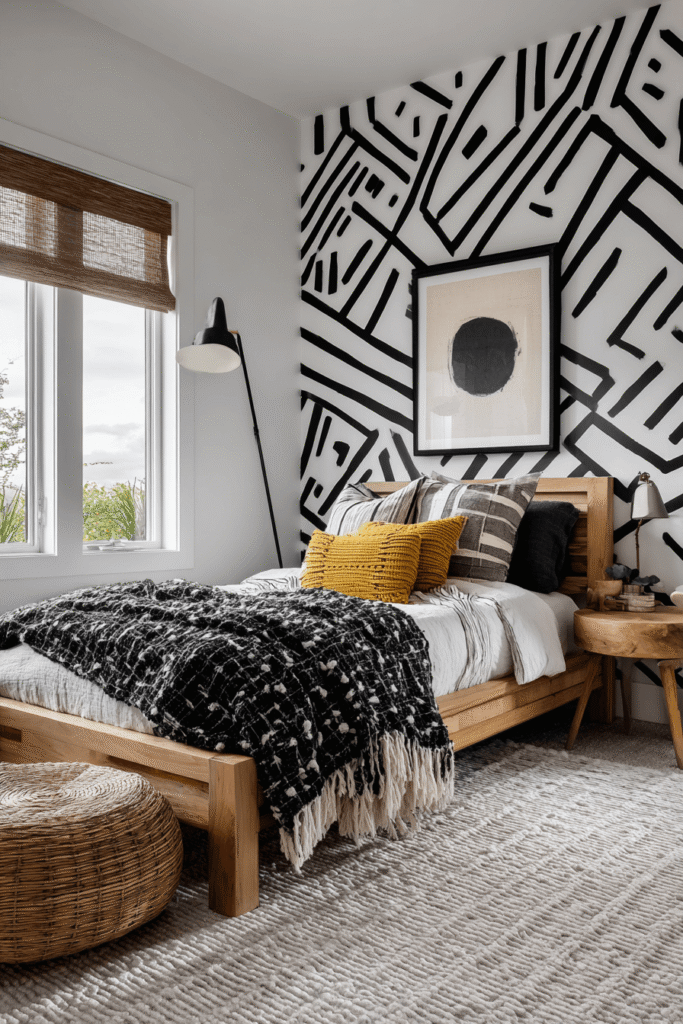
Crisp, graphic, and unexpectedly sophisticated—monochrome patterns in black and white bring visual drama to children’s spaces without the chaos of multiple colors. Think bold polka dots, oversized stripes, or geometric hexagons rendered in high contrast that creates instant impact. This palette offers timeless appeal that transcends trends and gender, making it ideal for shared rooms or parents who prefer neutral, design-forward aesthetics.
The key to successful monochrome design lies in scale and pattern variation. Large-scale patterns prevent the space from feeling busy or overwhelming, while strategic placement—perhaps just one accent wall—keeps the design from becoming visually exhausting. This approach pairs beautifully with pops of any accent color in bedding, rugs, or artwork, allowing easy seasonal updates without repainting. The graphic quality feels modern and intentional, similar to sophisticated bedroom decor approaches found in contemporary homes.
Design Breakdown:
- Choose one bold pattern—dots, stripes, triangles, or hexagons
- Paint base wall in crisp white or soft off-white
- Use matte black paint to create your chosen pattern
- Keep patterns large-scale (dots 12+ inches, stripes 8+ inches wide)
- Apply pattern to just one accent wall to avoid visual overwhelm
- Maintain clean edges with quality painter’s tape and steady application
- Balance with natural wood furniture and textured textiles
- Add strategic pops of color through accessories and soft goods
Best For: Modern minimalist families, shared sibling rooms needing gender-neutral design, or spaces where parents want sophisticated simplicity.
11. Abstract Watercolor Brush Strokes

Loose, flowing brushstrokes in soft watercolor hues create an artistic, dreamy atmosphere that feels like living inside a painting. This technique embraces imperfection—the beauty lies in organic edges and gentle color transitions that mimic actual watercolor art. Soft pinks bleed into lavender, or blues melt into seafoam greens, creating a serene backdrop that stimulates creativity without overwhelming the senses.
The abstract watercolor approach offers incredible flexibility. There’s no wrong way to apply the paint—swooping horizontal strokes, vertical cascades, or circular blends all work beautifully. This is particularly appealing for parents who want custom wall art but lack painting confidence, as the technique is forgiving and expressionistic by nature. Layer colors while wet for authentic watercolor blending, and don’t overthink placement—spontaneity enhances the artistic quality.
Design Breakdown:
- Select three to four coordinating colors in soft, muted tones
- Dilute paint slightly with water for transparent, watercolor-like application
- Apply colors in large, sweeping brush strokes using a wide, soft brush
- Allow colors to overlap and blend organically at the edges
- Work quickly while paint is wet to achieve natural color transitions
- Concentrate color intensity in certain areas, fading to nearly white in others
- Apply to one feature wall or wrap the room for full immersion
- Keep furniture simple and neutral to let the artistic wall shine
Best For: Creative, artistic children, nurseries with a soft aesthetic, or parents wanting one-of-a-kind custom artwork as architectural design.
12. Minimalist Scandinavian Neutrals

Whisper-soft grays, warm whites, and gentle beiges create a calming, minimalist foundation that puts focus on natural materials, quality design, and thoughtful simplicity. This Scandinavian-inspired palette prioritizes serenity over stimulation, providing a restful environment that supports focus during study time and relaxation during sleep. The neutral backdrop allows personality to emerge through carefully curated toys, books, and textiles rather than permanent wall color.
What makes this approach particularly smart is its longevity. Neutral walls never go out of style and transition effortlessly as children grow from infants to teenagers. The minimalist bedroom aesthetic embraces clean lines and uncluttered surfaces, teaching children to appreciate quality over quantity. Layer in natural wood furniture, linen textiles, and black accents for a sophisticated space that feels mature without sacrificing comfort.
Design Breakdown:
- Paint all walls in warm white or soft greige for an enveloping neutral base
- Consider a slightly darker gray-beige on one accent wall for subtle depth
- Use matte or eggshell finish for a soft, sophisticated look
- Pair with natural oak or birch wood furniture
- Add texture through woven baskets, linen curtains, and wool rugs
- Incorporate black accents sparingly—in frames, lamp bases, or hardware
- Style with plants and organic materials that add life without color chaos
- Keep surfaces clear and organized to maintain the minimalist philosophy
Best For: Parents who appreciate Scandinavian design, children who thrive in calm environments, or homes with a cohesive minimalist aesthetic throughout.
13. Jungle Safari Animal Silhouettes
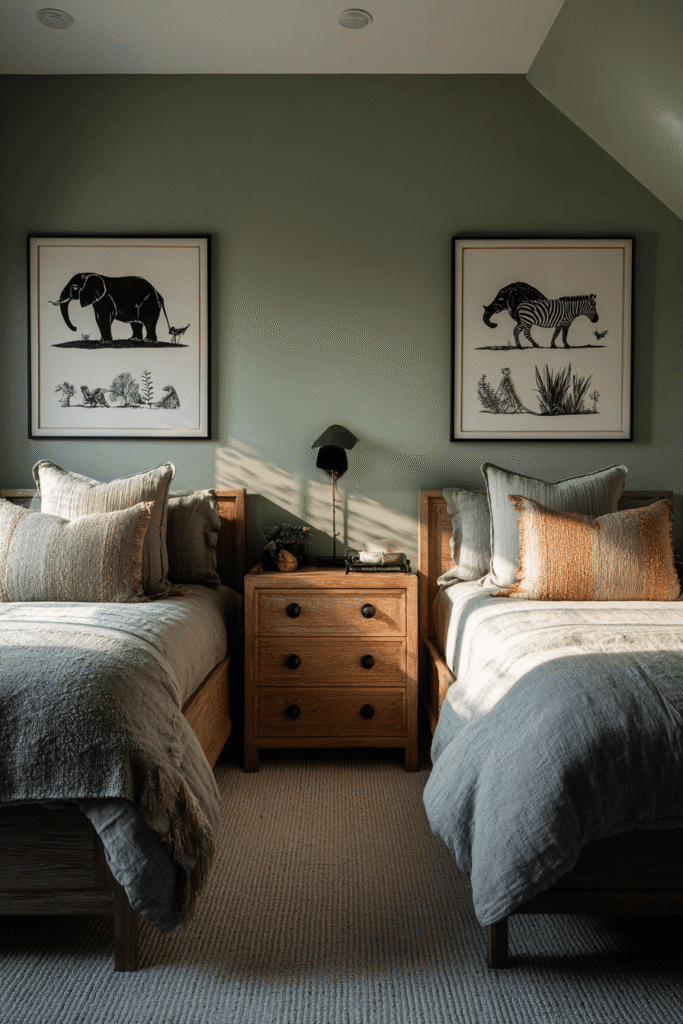
Elegant animal silhouettes in matte black or deep charcoal bring the magic of safari adventures indoors while maintaining sophisticated visual appeal. Rather than cartoon characters, these refined animal profiles—elephants, giraffes, lions, zebras—create a mature take on the jungle theme that grows with your child. The silhouettes work as scattered accents across one wall or arranged as a coordinated scene that tells a story.
This design pairs beautifully with earth-toned walls in sage green, sandy beige, or warm terracotta. The animal shapes can be hand-painted by artistic parents, applied via stencils for consistency, or created with peel-and-stick decals for rental-friendly application. Consider positioning animals at varying heights to create movement and visual interest, and coordinate with kids bedroom wardrobe solutions that continue the organizational, sophisticated approach.
Design Breakdown:
- Paint base wall in warm neutral—sandy beige, sage green, or soft gray
- Create or purchase animal silhouette stencils in various sizes
- Use matte black or charcoal paint for the animal shapes
- Arrange animals in a natural scene—grazing, walking, interacting
- Vary sizes to create depth—larger animals appear closer, smaller ones distant
- Add simple grass or tree silhouettes along the bottom for context
- Keep the design to one accent wall to avoid overwhelming the space
- Complement with natural wood furniture and botanical prints
Best For: Animal-loving children, parents wanting sophisticated theme execution, or rooms with earth-toned, organic design schemes.
14. Desert Sunset Gradient Wall

Warm terracotta melts into dusty rose, fading upward into peachy coral and finally soft cream—the desert sunset gradient captures the magic hour’s fleeting beauty in permanent form. This warm, earthy palette brings instant coziness to a child’s bedroom while maintaining a sophisticated, modern aesthetic that transcends typical kids’ room colors. The horizontal gradient mimics the natural progression of sunset skies, creating a calming effect that’s particularly effective for bedtime routines.
This design philosophy aligns beautifully with current earthy bedroom trends that celebrate natural materials and organic color palettes. The warm tones make rooms feel embracing and secure—important qualities for children’s personal spaces. Layer in rattan furniture, woven textiles, and potted cacti or succulents to complete the desert-inspired narrative without veering into literal theme territory.
Design Breakdown:
- Select four coordinating warm tones from terracotta to cream
- Start with the deepest terracotta at the bottom third of the wall
- Blend upward through dusty rose and peachy coral
- Finish with soft cream at the ceiling line
- Use a large, soft sponge or dry brush to blend color transitions
- Apply the gradient to one feature wall or wrap the entire room
- Pair with natural materials—jute rugs, rattan baskets, wooden furniture
- Add brass or copper accents in lighting and hardware
- Incorporate desert plants like cacti and succulents for thematic reinforcement
Best For: Warm, cozy spaces with natural materials, bohemian-leaning nurseries, or children who respond to earthy, grounding color palettes.
15. Personalized Name Typography Feature Wall

Bold, oversized letters spelling your child’s name transform a simple wall into a custom statement piece that celebrates their identity and ownership of space. This typography treatment works beautifully in various styles—from playful hand-lettered scripts to clean, modern sans-serif fonts to elegant serif classics. The personalization makes children feel seen and valued while creating an unmistakable focal point that anchors the room’s entire design.
The name can span horizontally across one wall, stack vertically for dramatic height, or arc gracefully over a bed or reading nook. Consider painting the letters in a contrasting color against the wall—charcoal on white, white on navy, or even a subtle tone-on-tone for understated elegance. This design element pairs particularly well with vanity areas where personal grooming and self-care routines reinforce positive self-image.
Design Breakdown:
- Choose a font that reflects your child’s personality or your design aesthetic
- Project or trace letters onto the wall at your desired size
- Use painter’s tape to mask edges for crisp, clean letter forms
- Paint letters in contrasting color—or use tone-on-tone for subtlety
- Position name at eye level for younger children, higher for dramatic impact
- Add decorative elements like stars, hearts, or flourishes around the name
- Consider outlining letters rather than filling them solid for a lighter feel
- Coordinate letter color with other room accents for cohesive design
Best For: Children proud of their names, spaces needing a custom focal point, or parents wanting personalization that celebrates their child’s individuality.
Conclusion
The perfect wall paint transforms a child’s bedroom from simple sleeping quarters into a personalized sanctuary that nurtures imagination, supports development, and evolves alongside growing personalities. Whether you gravitate toward calming neutrals that promote rest, bold geometrics that energize creativity, or personalized touches that celebrate individuality, these 15 painting ideas offer starting points for countless creative interpretations.
Remember that the best design choices balance your child’s current preferences with timeless appeal—opt for foundational colors and techniques that allow easy updates through accessories, textiles, and artwork as tastes mature. Wall paint offers the most impactful transformation for the smallest investment, making it the ideal place to experiment with color, pattern, and personality in your child’s most important space.
FAQs
What are the best paint colors for kids’ bedrooms?
Soft neutrals, pastels, and muted earth tones create calming environments that support sleep and focus, while still offering personality. Colors like soft sage, dusty blue, warm gray, and blush pink work beautifully for children of all ages and transition easily as preferences evolve.
How do I choose age-appropriate wall painting ideas?
Consider your child’s developmental stage and how long you want the design to last. Infants benefit from soft, calming colors; toddlers enjoy playful but not overstimulating designs; school-age children appreciate themes related to their interests; and pre-teens prefer sophisticated approaches that feel mature. Choose designs that can be easily updated with accessories rather than requiring complete repaints.
Are chalkboard walls safe for children’s bedrooms?
Yes, when properly executed with high-quality, low-VOC chalkboard paint and adequate curing time. Use dust-free chalk options and clean the surface regularly to minimize airborne particles. Position chalkboard walls away from beds to prevent dust settling on sleeping surfaces, and ensure proper ventilation during application and curing.
What paint finish works best for kids’ rooms?
Satin or semi-gloss finishes offer the best balance of durability and cleanability for high-traffic children’s spaces. These finishes resist scuffs and wipe clean more easily than flat or matte paints. Reserve matte finishes for ceilings or low-touch areas where subtle elegance matters more than scrubability.
How can I make a small kids’ bedroom look bigger with paint?
Light, cool colors naturally recede and create the illusion of more space. Paint walls, trim, and ceiling in similar light tones to blur boundaries and expand visual perception. Vertical stripes draw the eye upward, making ceilings feel higher, while ombre gradients that fade lighter toward the ceiling create airiness. Limit bold accent walls to one surface to avoid closing in the space.