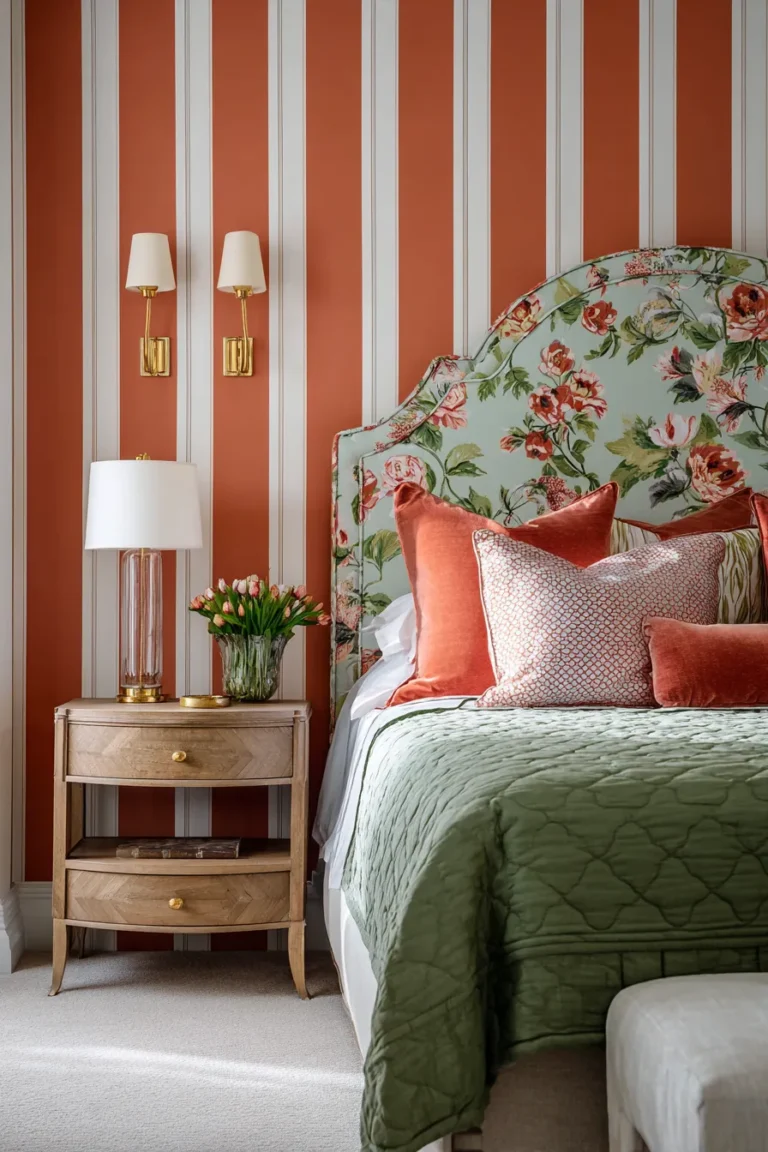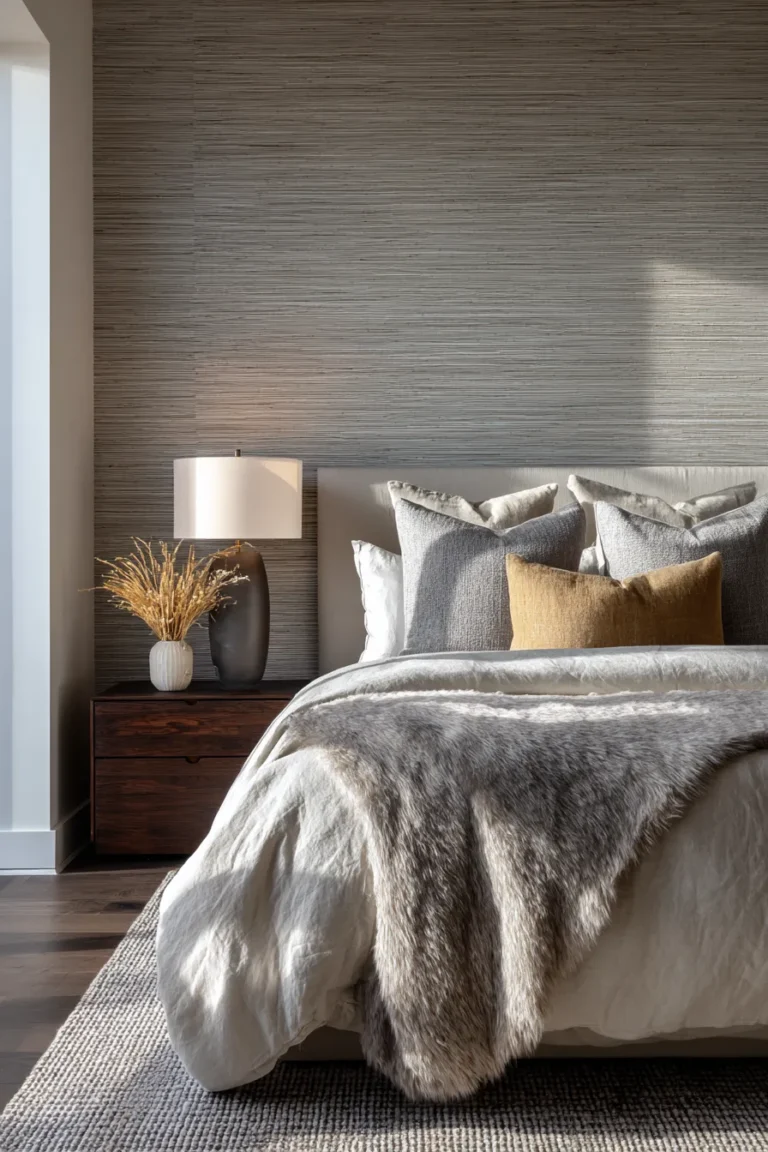
Ever walked past your son’s bedroom and wondered if a tornado hit it, or if that’s just his “organizational system”? I’ve been there—helping design my nephew’s room taught me that kids bedroom ideas for boys need to balance fun, function, and the reality that a 7-year-old’s definition of “clean” is wildly different from ours. His old room was basically a toy explosion with a bed somewhere in the middle. Sound familiar?
Here’s what most parents don’t realize: a well-designed boy’s bedroom isn’t just about looking cute for Instagram. It’s about creating a space that grows with him, encourages independence, sparks imagination, and (maybe, just maybe) makes cleanup slightly less painful. Whether you’re dealing with a dinosaur-obsessed toddler, a sports-loving tween, or a moody pre-teen who suddenly thinks everything is “cringe,” the right bedroom design can transform chaos into a space your son actually wants to hang out in. Let’s dive into 10 kids bedroom ideas that work in the real world—not just in staged photos.
Why Boy’s Bedroom Design Actually Matters
Before we jump into specific ideas, let’s talk about why putting thought into your son’s bedroom design is worth your time and energy. Kids spend a huge chunk of their childhood in their bedrooms—sleeping, playing, studying, and just being themselves. The space genuinely affects their mood, creativity, and even sleep quality.
A well-designed bedroom gives kids a sense of ownership and independence. When they have input into their space and it reflects their interests, they’re more likely to take care of it (emphasis on “more likely,” not guaranteed). Plus, smart storage solutions and thoughtful layout can actually reduce the daily battle over cleanup.
Think about it: wouldn’t you rather spend 30 minutes designing a functional toy storage system once than spend 5 minutes every single day yelling about toys on the floor? That’s the power of good kids bedroom design.
1. The Adventure-Themed Bedroom (Pirates, Space, Jungle, Oh My!)

Let’s start with what most boys love: adventure. An adventure-themed bedroom taps into their natural love for exploration and imagination. The key is choosing a theme specific enough to be exciting but flexible enough to grow with them.
Popular adventure themes include:
- Space exploration with planets, rockets, and astronaut elements
- Jungle safari with animal prints and forest greens
- Nautical/pirate theme with navy blues and ship details
- Mountain adventure with camping and outdoor vibes
The secret to making themes work long-term? Layer them in through easily changeable elements rather than permanent fixtures. Paint walls in neutral or classic colors (navy, forest green, gray), then bring the theme through bedding, wall decals, curtains, and accessories. This way, when he outgrows pirates at age 10, you’re not repainting the entire room.
Add interactive elements like a wall-mounted climbing holds for a mountain theme, or glow-in-the-dark star decals for a space room. These features make the theme functional, not just decorative. Check out these kids bedroom ideas for more inspiration on creating immersive themed spaces.
2. Sports-Focused Design (For Your Little Athlete)

Got a sports fanatic on your hands? A sports-themed bedroom celebrates their passion while keeping the space functional. The beauty of sports themes is they tend to have longer staying power than cartoon characters—a 6-year-old who loves baseball will likely still love it at 12.
Design elements for sports rooms:
- Team colors as your palette (but keep walls neutral)
- Jersey display frames or mounted baseball bat holders
- Sports equipment storage (ball cages, hockey stick racks)
- Scoreboard-style chalkboard or whiteboard
- Locker-style storage or metal shelving units
Create a mini trophy or medal display shelf to celebrate achievements. This adds personality and gives him something to be proud of. Use sports equipment as decor—a basketball hoop over a hamper makes cleanup a game, literally.
Pro tip: Even if he’s obsessed with one team now, avoid team-specific permanent fixtures. Kids’ allegiances can shift (especially after a move or new friends), and you don’t want to repaint because he switched from the Yankees to the Red Sox.
3. Minimalist Modern (Yes, Even for Kids)

Who says kids’ rooms have to be chaotic? A minimalist kids bedroom with clean lines and simplified design can actually help kids focus better and feel calmer. Plus, it’s way easier to maintain (and that’s saying something).
Minimalist boy’s room essentials:
- Neutral color palette with one or two accent colors
- Streamlined furniture with hidden storage
- Open floor space for play
- Limited but meaningful decor
- Quality over quantity approach to toys and belongings
This approach works especially well for kids who get overwhelmed easily or have trouble focusing. Less visual clutter means less distraction. Use closed storage to hide toys and keep surfaces mostly clear. Add personality through a few carefully chosen items—maybe one piece of meaningful art, a favorite Lego creation on display, or a special collection showcase.
The minimalist approach also teaches valuable lessons about choosing what’s truly important rather than accumulating everything. It’s basically Marie Kondo training wheels for kids. 😊
4. The Loft Bed Maximizer (Space-Saving Magic)

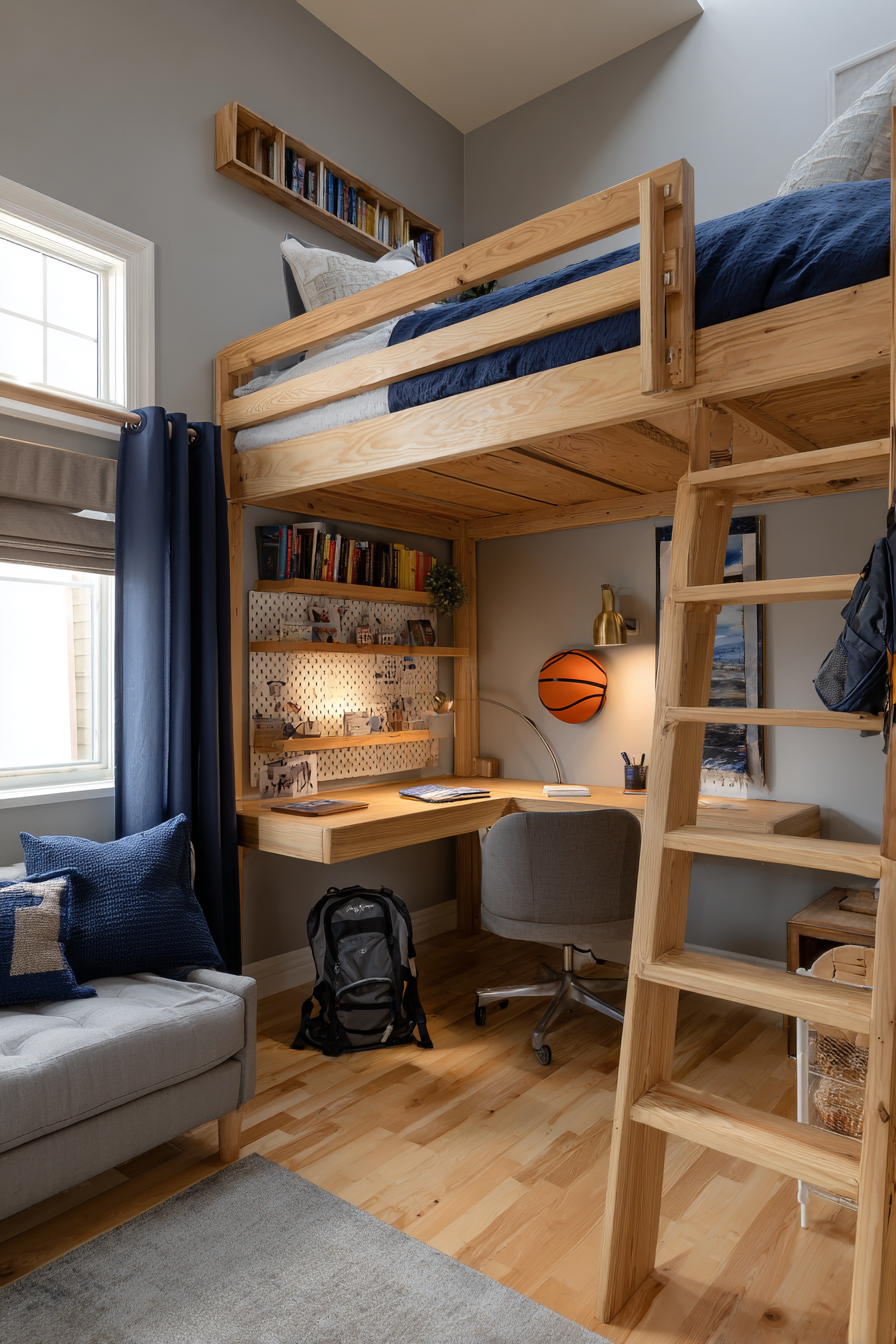
Loft beds are absolute game-changers for boys’ bedrooms, especially smaller ones. By elevating the bed, you free up valuable floor space underneath for a study area, play zone, or extra storage. It’s like adding a second room without knocking down walls.
Loft bed configuration options:
- Desk underneath for homework and creative projects
- Cozy reading nook or chill zone with bean bags
- Play area with toy storage underneath
- Built-in dresser and closet system below
Safety considerations matter here. Loft beds work best for kids 6 and older who can safely navigate the ladder. Install guardrails and make sure the structure is sturdy. Many modern loft beds come with built-in features like desks and shelving, maximizing functionality in one piece of furniture.
This setup is particularly brilliant for small bedroom ideas where every square foot counts. The vertical space utilization is unmatched, and most boys think sleeping in an elevated bed is pretty cool anyway.
5. Gaming and Tech-Friendly Setup

Let’s be real: today’s boys are growing up digital. Fighting it is exhausting. Instead, create a gaming-friendly bedroom that accommodates technology while maintaining boundaries and encouraging other activities too.
Tech-integrated bedroom features:
- Dedicated gaming corner with proper seating and lighting
- Cable management systems (keep those cords under control)
- Adjustable desk that works for gaming and homework
- Charging station for devices
- Blue-light reducing elements for better sleep
The key is creating dedicated zones. Gaming happens in this corner, sleep happens in the bed area, homework at the desk. This spatial separation helps create mental boundaries between activities. Add a timer or charging station outside the bedroom to enforce screen-time limits without constant battles.
Include non-digital entertainment too. Bookshelves, art supplies, board games, or sports equipment give him options when screens are off. Balance is the goal—acknowledge his interests while encouraging variety.
6. Creative Maker Space Integration
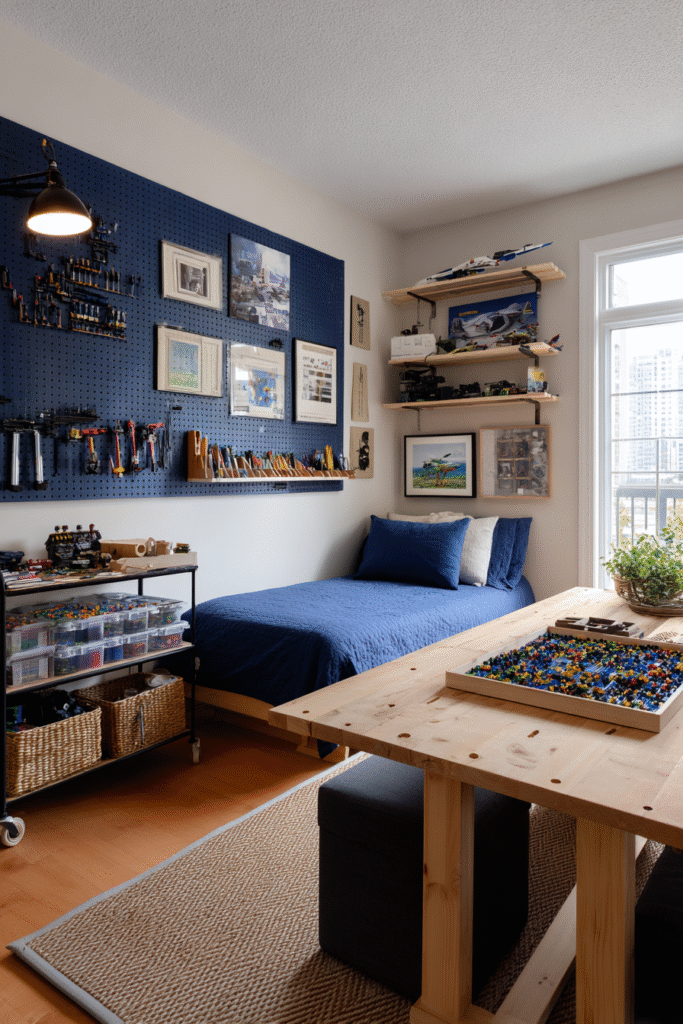
Some boys are builders, creators, and tinkerers. A maker-friendly bedroom gives them dedicated space for Lego constructions, art projects, building models, or whatever creative pursuit they’re into this month.
Maker space essentials:
- Large work table with good lighting
- Organized storage for supplies (clear bins work great)
- Display areas for finished projects
- Wall-mounted pegboard for tools and materials
- Easy-to-clean surfaces (trust me on this)
A dedicated craft corner with supplies organized and accessible encourages independent creativity. Use labeled bins so everything has a home—this makes cleanup easier and helps him find what he needs without your help. Install floating shelves to display completed Lego builds, painted models, or art projects. This validates his efforts and keeps finished projects off the floor.
The maker space approach works beautifully for kids with ADHD or high energy—having a designated spot for focused creative work provides an outlet and develops skills. Plus, it keeps the glitter and paint contained to one area instead of spreading throughout the house.
7. Growth-Friendly Furniture and Layout
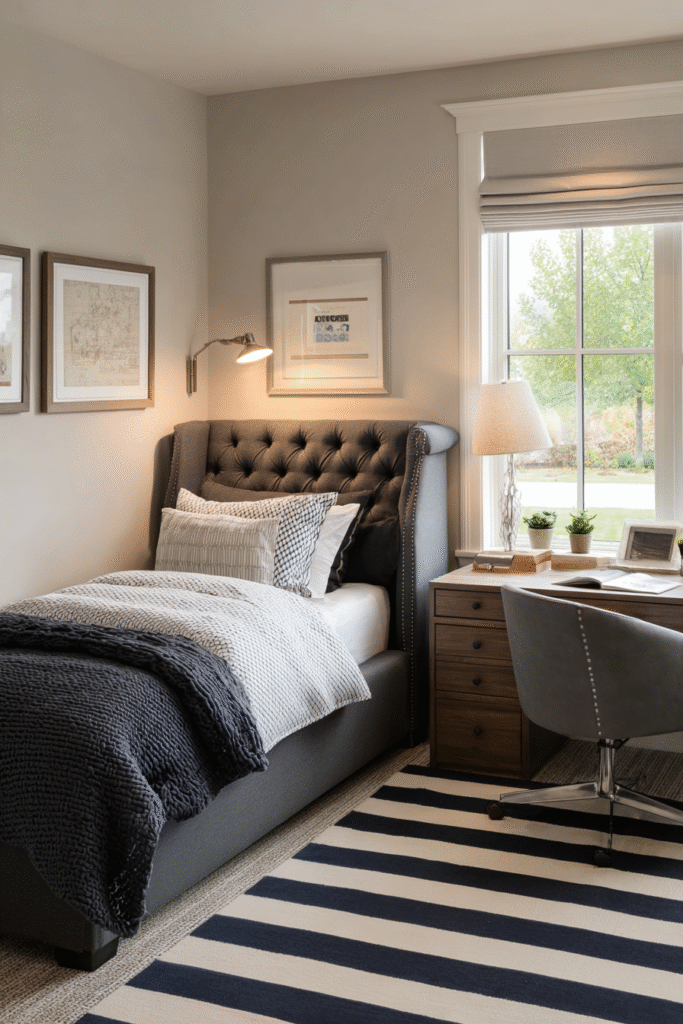
Here’s something many parents learn the hard way: kids grow fast. That adorable toddler bed becomes too small by age 5. The race car bed he begged for looks ridiculous at 11. Smart design accounts for this inevitable growth.
Growth-friendly design strategies:
- Full or queen bed instead of twin (he’ll use it longer)
- Adjustable-height desks and chairs
- Modular furniture that reconfigures as needs change
- Neutral foundational pieces with changeable accents
- Classic styles rather than trendy gimmicks
Choose furniture that transitions through life stages. A solid wood dresser works from toddler through teen years. A quality desk adjusts as he grows. Classic bed frames don’t scream “little kid” when he’s 14. Save the age-specific elements for easily changeable items like bedding, posters, and accessories.
This approach saves money long-term and reduces the need for complete room overhauls every few years. Invest in quality foundational pieces, then let the room’s personality evolve through accessories and decor.
8. Smart Storage Solutions (Because Boys and Mess Go Together)
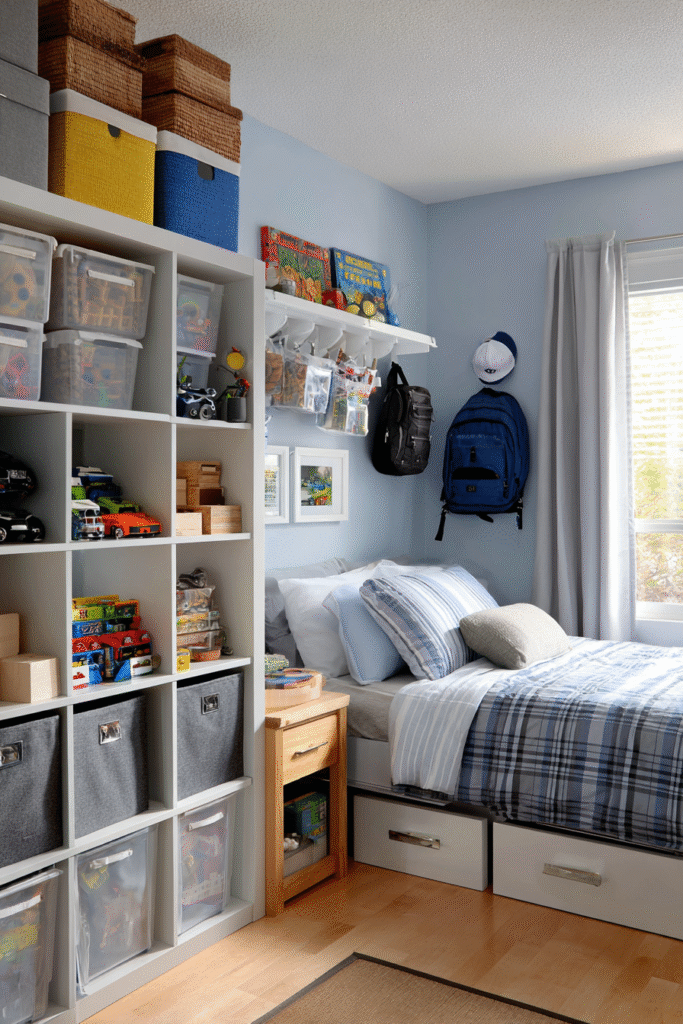
Let’s address the elephant in the room: boys and organization aren’t always natural friends. But the right storage solutions make maintaining order significantly easier for everyone involved.
Effective storage for boys’ rooms:
- Large toy bins with picture labels (no reading required)
- Under-bed storage drawers
- Over-door organizers for small items
- Open shelving for frequently used items
- Hooks at kid height for bags, jackets, sports equipment
The golden rule: make cleanup as easy as humanly possible. If putting toys away requires 17 steps, it won’t happen. Big bins where he can toss things require minimal effort. Label everything with pictures or colors for younger kids. Install hooks low enough that he can actually reach them—revolutionary concept, right?
Consider a wardrobe system that makes getting dressed independent and organized. Divided drawers, labeled bins for underwear and socks, and low-hanging rods he can reach all encourage self-sufficiency. The easier you make organization, the more likely it’ll actually happen (occasionally).
9. Color Psychology and Paint Choices

Color genuinely affects mood and behavior. Choosing the right bedroom colors for boys goes beyond just “what looks cool” to consider psychological impact and longevity.
Color considerations for boys’ rooms:
- Blues and teals: Calming, promote focus and sleep
- Greens: Peaceful, connect to nature, work for many themes
- Grays: Neutral, sophisticated, grow with him
- Navy: Classic, grounding, pairs with anything
- Accent walls: Add personality without overwhelming
Avoid super bright or intense colors for entire rooms—they’re overstimulating and make it harder to wind down for sleep. Save bold colors for accent walls or decor that’s easily changed. Cooler tones (blues, greens, grays) generally work better in bedrooms than warm tones (reds, oranges) which can be energizing rather than calming.
FYI, involving your son in color choices gives him ownership of the space. Offer a curated selection of appropriate options rather than full free reign (unless you want neon green on every wall). This teaches decision-making while keeping the result livable.
10. Multi-Functional Zones for Growing Independence

The best kids bedroom ideas for boys create distinct zones for different activities. This teaches spatial organization and helps kids develop independence by having everything they need in designated areas.
Essential bedroom zones:
- Sleep zone: Bed area with nightlight, books, cozy elements
- Study zone: Desk with supplies, good lighting, minimal distractions
- Play zone: Open floor space with toy storage nearby
- Dress zone: Closet/wardrobe area with mirror and hamper
- Quiet zone: Reading nook or chill spot for downtime
Even in smaller rooms, you can create these zones through furniture placement and area rugs. A rug under the desk defines the study area. The bed area gets different lighting than the play space. Visual separation helps kids understand that different activities happen in different spots.
This zoning approach prepares kids for independence. When everything has a place and a purpose, they can handle bedtime routines, getting dressed, and homework with less parental involvement. That’s good for them and amazing for you.
Safety Considerations for Boy’s Bedrooms
Let’s take a serious moment to talk safety. Boys are often physical, impulsive, and convinced they’re invincible. Bedroom safety prevents injuries and gives you peace of mind.
Safety checklist:
- Secure heavy furniture to walls (dressers tip over)
- Use cordless window treatments (strangulation hazard)
- Ensure loft beds have proper guardrails
- Remove or pad sharp furniture corners
- Install outlet covers if he’s young
- Keep cords organized and out of walking paths
- Ensure adequate lighting, especially near stairs or loft ladders
As they get older, safety considerations shift from physical hazards to privacy and appropriate boundaries. Discuss internet safety, appropriate content, and privacy expectations. The bedroom should feel like a safe space emotionally as well as physically.
Budget-Friendly Implementation Tips
You don’t need unlimited funds to create an awesome boy’s bedroom. Budget-conscious design with smart choices can deliver impressive results without breaking the bank.
Money-saving strategies:
- Paint is cheap transformation (DIY for more savings)
- Thrift and repurpose furniture (solid wood pieces refinish beautifully)
- DIY projects with your son (builds skills and memories)
- Invest in quality bed and mattress, save on decor
- Change accessories seasonally rather than whole room makeovers
- Use removable wall decals instead of custom murals
Shop sales, use coupons, and don’t buy everything at once. Rooms can evolve over time. Start with essentials—bed, storage, desk—then add personality pieces gradually. This approach also lets his interests solidify before you commit to theme-specific items.
Some of the best bedroom elements are free or nearly free: displaying his artwork, creating a photo wall of friends and family, showcasing collections he’s building. Personal touches matter more than expensive decor anyway.
Getting Your Son Involved in the Design
Here’s the secret sauce: involve your son in designing his space. Kids who help plan their rooms take more ownership and pride in maintaining them. Plus, you might be surprised by their creative ideas.
How to collaborate effectively:
- Show inspiration images and let him choose favorites
- Offer choices between 2-3 appropriate options
- Let him pick accent colors or theme direction
- Have him help with age-appropriate projects (painting, organizing)
- Respect his opinions while maintaining practical boundaries
The goal isn’t giving a 6-year-old complete design control (that way lies chaos). It’s about collaborative decision-making where he feels heard and involved. This teaches valuable skills about planning, compromising, and taking responsibility for choices.
When he’s older, this involvement becomes even more important. Teen boys especially need to feel like their space reflects their identity and interests, not their mom’s Pinterest board. Listen to what matters to him, even if it’s not your personal taste.
The Bottom Line on Boys’ Bedroom Design
Creating the perfect kids bedroom ideas for boys isn’t about perfection—it’s about function, personality, and adaptability. The best boy’s bedroom grows with him, encourages independence, reflects his interests, and makes daily life a little easier for everyone.
Whether you go for an adventure theme, sports focus, minimalist approach, or tech-friendly setup, what matters most is creating a space your son feels is truly his. A bedroom that works for his lifestyle, supports his development, and makes him excited to be there—even if “excited” means reading comics instead of sleeping at bedtime.
Start with one or two changes rather than overwhelming yourself with a complete overhaul. Maybe begin with better storage solutions, then add some personality through wall art, and gradually transform the space over time. Small improvements add up, and involving your son in the process creates something you both can be proud of.
Now go forth and create that awesome boy’s bedroom—and maybe, just maybe, it’ll stay clean for more than 24 hours. (Okay, that’s probably unrealistic, but we can dream, right?) 🚀