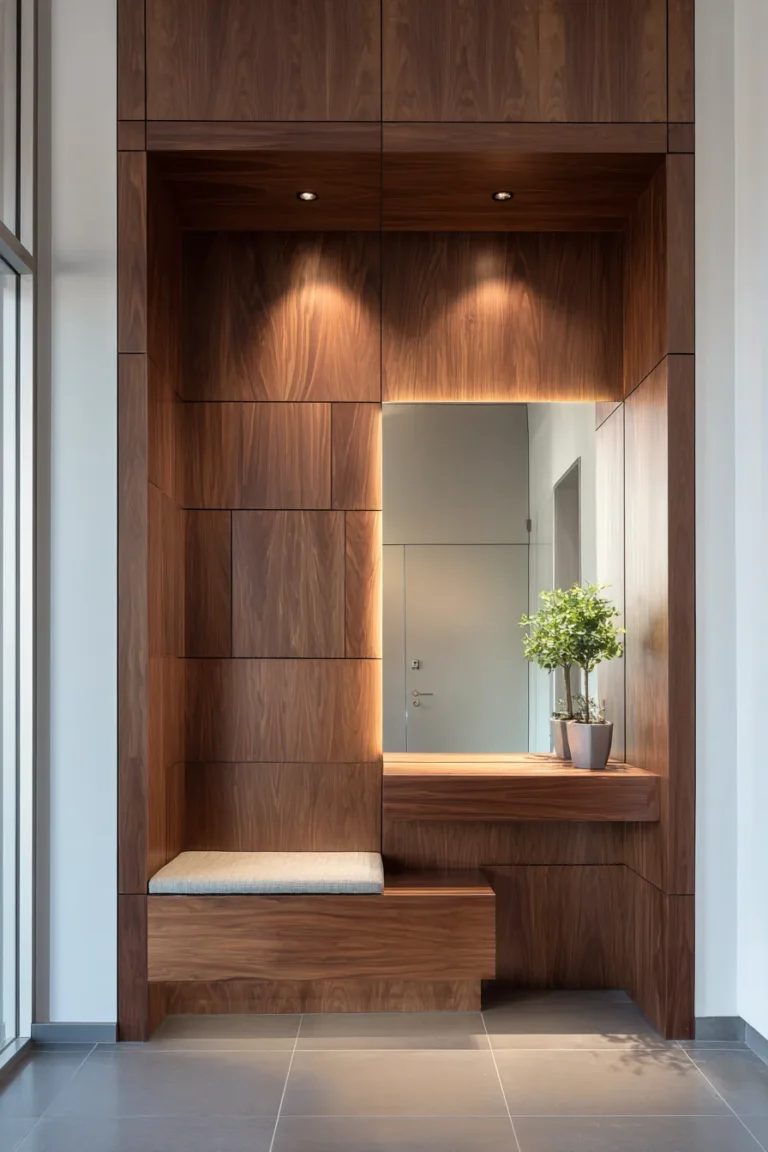
Walking into a home where shoes are piled by the door instantly disrupts the calm you crave after a long day. The entryway sets the tone for your entire home—and when it’s cluttered with footwear, it feels chaotic before you’ve even stepped inside. Whether you’re working with a spacious foyer or a narrow hallway, the right shoe storage transforms your entryway from messy to magazine-worthy while keeping your most-worn pairs within easy reach. These 18 ideas blend smart organization with beautiful design, proving that shoe storage can be just as stylish as it is functional.
1. Slim Tilt-Out Shoe Cabinet for Narrow Hallways
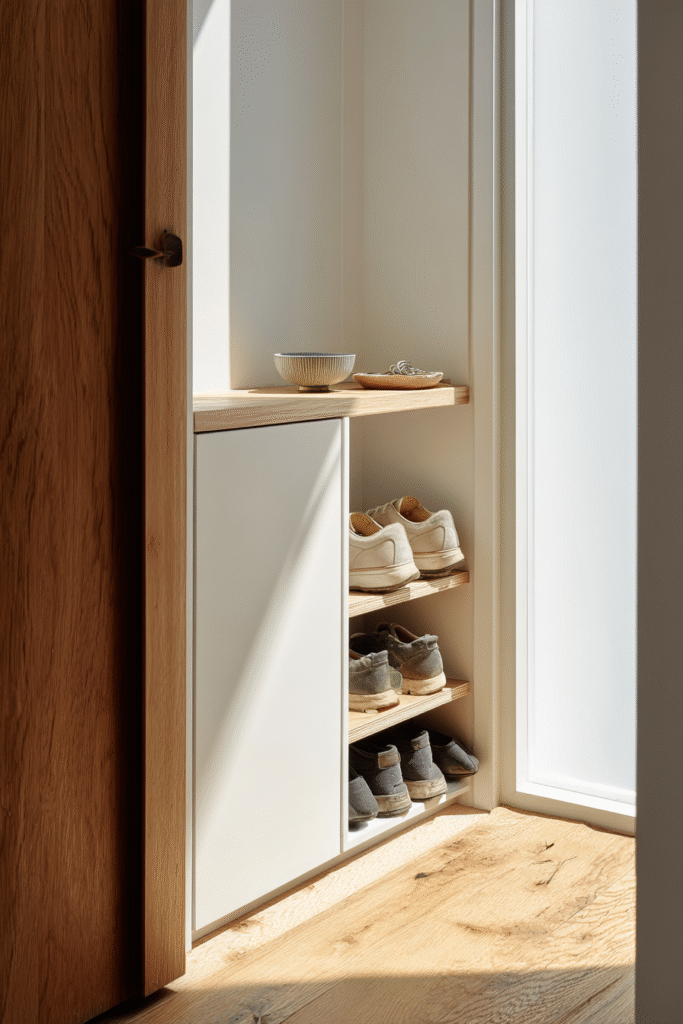
Picture a sleek, shallow cabinet pressed against your hallway wall—barely six inches deep, yet capable of concealing 12 to 20 pairs of shoes behind smooth, angled doors. Tilt-out shoe cabinets are the secret weapon of compact entryways, offering hidden storage that doesn’t eat into your walking space. The shoes rest at an angle inside slim compartments, visible only when you tilt the door open, keeping the exterior clean and minimal. This design works beautifully in narrow corridors where traditional shoe racks would feel bulky or intrusive. It’s the kind of solution that makes guests wonder where you actually keep your shoes—because they see nothing but a streamlined cabinet that could pass for a decorative console.
Designers love tilt-out cabinets for their ability to blend seamlessly into modern, Scandinavian, or minimalist interiors. The flat front panel offers a blank canvas for matte finishes, soft grays, or natural wood tones that complement your walls rather than compete with them. This storage style is ideal when you want your entryway to feel calm and uncluttered, without sacrificing the convenience of grab-and-go shoe access. It’s functional elegance at its finest—proof that storage doesn’t need to announce itself to work hard.
Design Breakdown:
- Choose a cabinet depth between 6-8 inches to maximize wall space efficiency
- Opt for soft-close hinges to prevent slamming and maintain a quiet, polished feel
- Select neutral finishes like white, walnut, or matte black for timeless appeal
- Position at eye level or below for easy access without bending awkwardly
- Pair with a narrow floating shelf above for keys and mail to create a cohesive drop zone
- Consider models with ventilation slats or perforated backs to prevent odor buildup
- Look for compartments that tilt at 30-45 degrees for optimal shoe visibility
- Keep the top surface styled with a small plant or tray to balance the look
Best For: Narrow hallways, apartment entryways, minimalist homes, or anyone who wants hidden storage that doesn’t sacrifice floor space.
2. Woven Basket Storage Under Console Tables
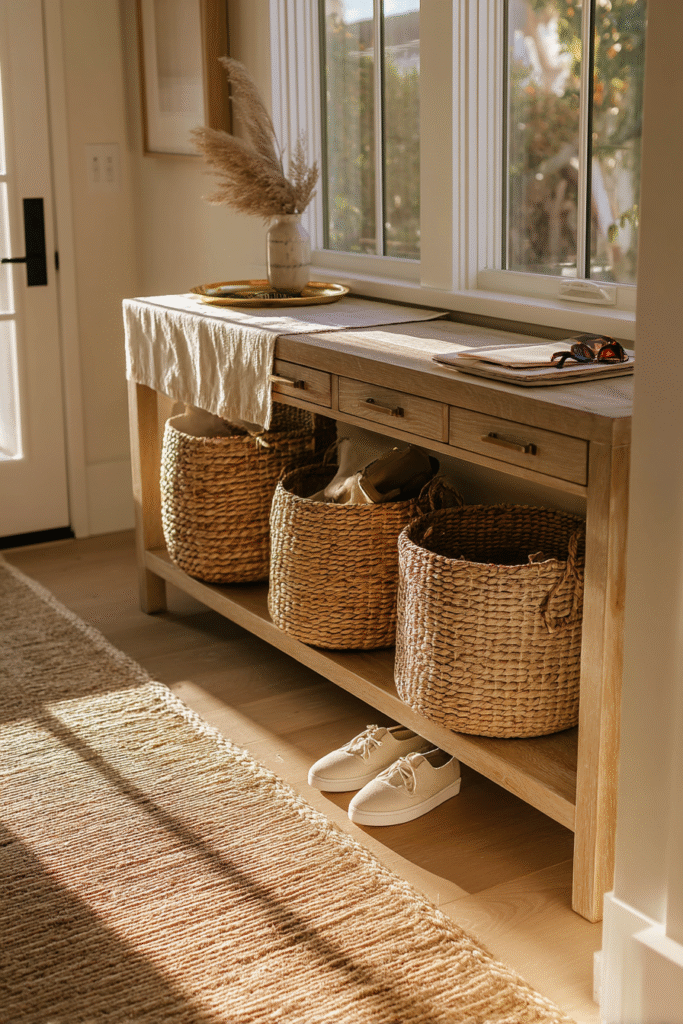
There’s something effortlessly chic about woven baskets tucked beneath a console table—the kind of organic texture that instantly warms a space while keeping shoes completely out of sight. These baskets slide neatly into the open shelf space under your entry table, creating discreet storage that feels more like a design choice than a practical necessity. The natural fibers—whether seagrass, rattan, or wicker—add a tactile, earthy element that softens the harder lines of your furniture and brings in that coveted lived-in, collected-over-time aesthetic. Each basket can hold several pairs of shoes, and because they’re portable, you can pull them out for quick access or cleaning without disrupting your entire setup.
This approach works particularly well in homes that lean coastal, farmhouse, or transitional in style, where organic materials and layered textures are celebrated. The beauty lies in the flexibility—you control how many baskets fit your needs, and you can easily swap them seasonally or when your design mood shifts. It’s also a genius solution for families, where each basket can be assigned to a different household member, keeping everyone’s shoes separated and easy to locate. The look is intentionally casual but undeniably pulled-together, like you hired a stylist who understands the value of beautiful, functional details.
Design Breakdown:
- Measure your console table’s shelf height to ensure baskets fit with a few inches of clearance
- Choose baskets with handles for easy pulling and carrying
- Mix basket sizes if your console has multiple shelves—larger ones below, smaller accent baskets above
- Stick to natural tones like honey, bleached white, or espresso for a cohesive look
- Line baskets with fabric inserts if you want to protect delicate shoe materials
- Leave a few inches between baskets for visual breathing room
- Style the console top with a mirror, small lamp, or greenery to complete the vignette
- Opt for low-profile baskets if your console shelf sits close to the floor
Best For: Coastal, farmhouse, or transitional entryways, families needing individualized storage, or anyone who loves natural textures and hidden organization.
3. Built-In Shoe Cubbies With Natural Wood Finish
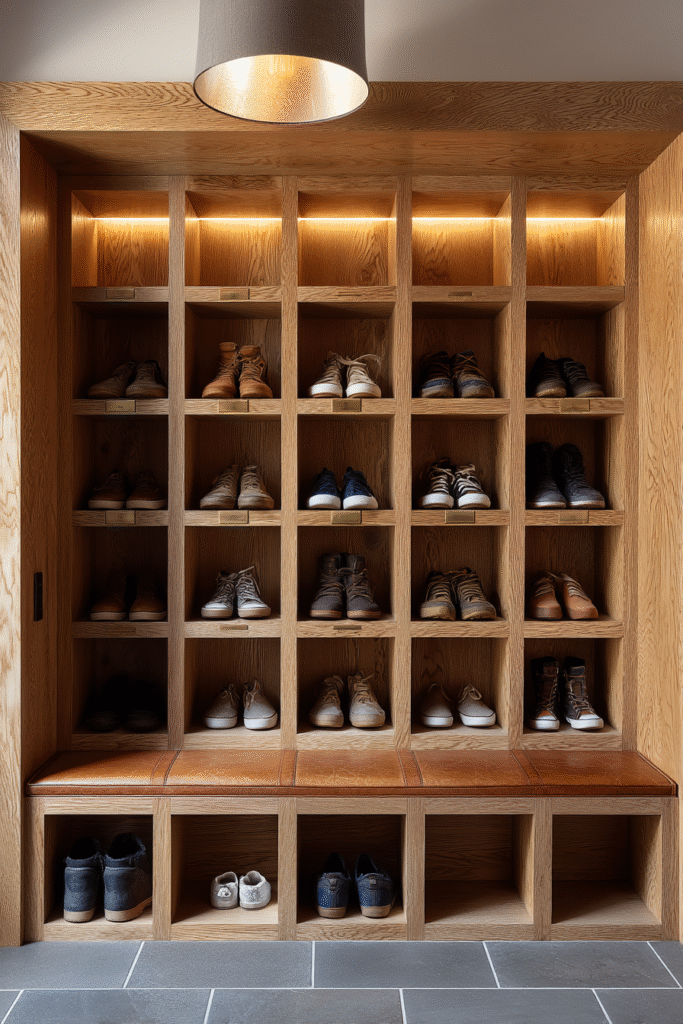
Built-in shoe cubbies bring the kind of custom, architectural detail that makes an entryway feel intentionally designed rather than pieced together. Imagine a wall of individual compartments, each perfectly sized to cradle a single pair of shoes, all crafted from warm wood with visible grain that adds character to every square. These cubbies transform shoe storage into a design feature—each pair becomes part of the visual composition, arranged like an organized collection rather than hidden away. The open structure keeps shoes ventilated and accessible while the repetition of squares creates a rhythmic, gallery-like effect that draws the eye and anchors the space.
This built-in approach is particularly powerful in mudrooms or larger entryways where you have vertical wall space to work with. The natural wood finish—whether oak, walnut, or pine—brings warmth and texture that contrasts beautifully with painted walls or tile floors. It’s a solution that grows with you: assign cubbies to family members, rotate seasonal shoes in and out, or use some compartments for accessories like scarves or hats. The permanence of built-ins signals investment in your home’s functionality and beauty, creating a space that feels both practical and heirloom-worthy.
Design Breakdown:
- Design cubbies at 10-12 inches wide and 6-8 inches tall to accommodate most adult shoe sizes
- Install at a comfortable height starting 6-12 inches from the floor for easy reach
- Use consistent wood stain or natural finish throughout for a cohesive, unfitted look
- Include a bench or seating directly adjacent for a complete drop zone experience
- Add label holders or small brass plates if assigning cubbies to family members
- Consider LED strip lighting inside cubbies for evening visibility and ambient glow
- Incorporate a few larger cubbies for boots or oversized footwear
- Finish with a clear protective coat to resist scuffs and moisture from shoes
Best For: Mudrooms, craftsman-style homes, families with multiple members, or anyone investing in permanent, custom storage solutions.
4. Upholstered Storage Bench With Flip-Top Seat
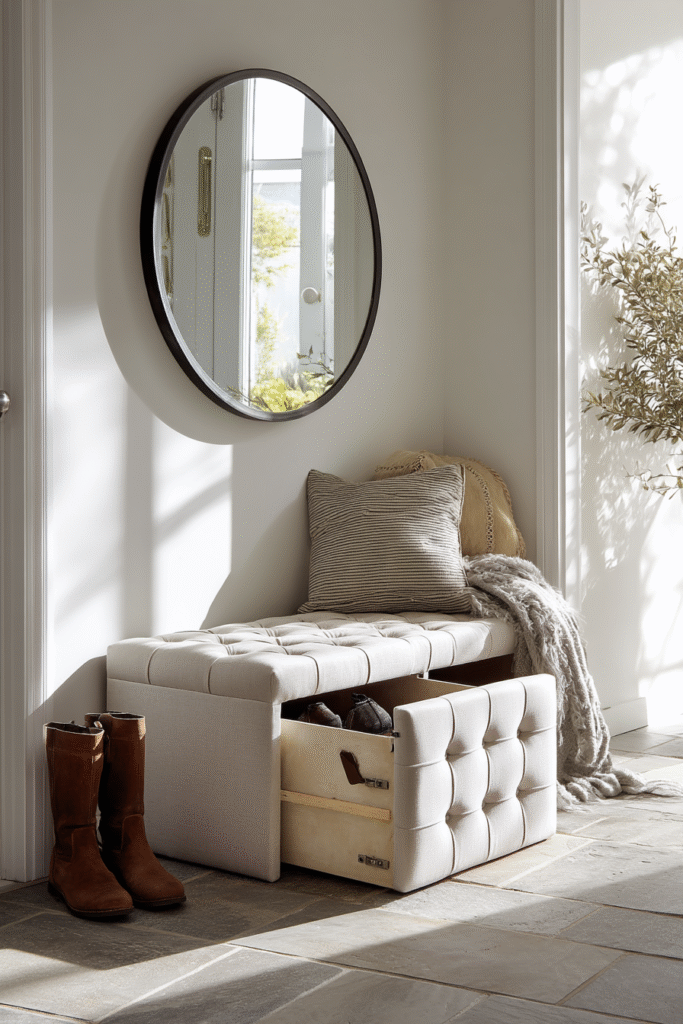
An upholstered storage bench does double duty with such grace—it’s where you sit to pull on your shoes in the morning and where those same shoes disappear when you’re done. The padded seat lifts to reveal a spacious hollow interior, deep enough to hold a dozen pairs while keeping them completely hidden from view. Wrapped in linen, velvet, or textured fabric, these benches feel more like elegant furniture than utilitarian storage, adding softness and comfort to an area that’s often dominated by hard surfaces. The lifted seat closes with a gentle drop, and suddenly your entryway looks curated and clutter-free, with no evidence of the organizational magic happening inside.
This piece works beautifully as a focal point in wider entryways or positioned against a wall where it won’t obstruct traffic flow. The upholstery introduces color and texture opportunities—think charcoal gray for modern spaces, oatmeal linen for farmhouse vibes, or rich navy for traditional homes. It’s the kind of furniture that guests naturally gravitate toward, perching on the cushioned seat while they remove their shoes, making your entryway feel welcoming and thoughtful. Beyond shoe storage, these benches can hold seasonal accessories, creating a flexible storage solution that adapts to your changing needs throughout the year.
Design Breakdown:
- Select a bench with slow-close hinges to prevent the lid from slamming on fingers
- Choose performance fabrics if you have kids or pets—stain resistance matters in high-traffic areas
- Measure your entryway width to ensure the bench doesn’t crowd the space
- Look for benches with interior dividers or removable bins to organize shoe types
- Consider tufted or channel-quilted upholstery for visual texture and sophistication
- Opt for a seat height of 18-20 inches for comfortable sitting while putting on shoes
- Add coordinating throw pillows on top for extra comfort and style layering
- Position near the door for convenient use when coming and going
Best For: Traditional or transitional entryways, homes with children, anyone who wants hidden storage combined with comfortable seating.
5. Floating Wall-Mounted Shoe Shelves
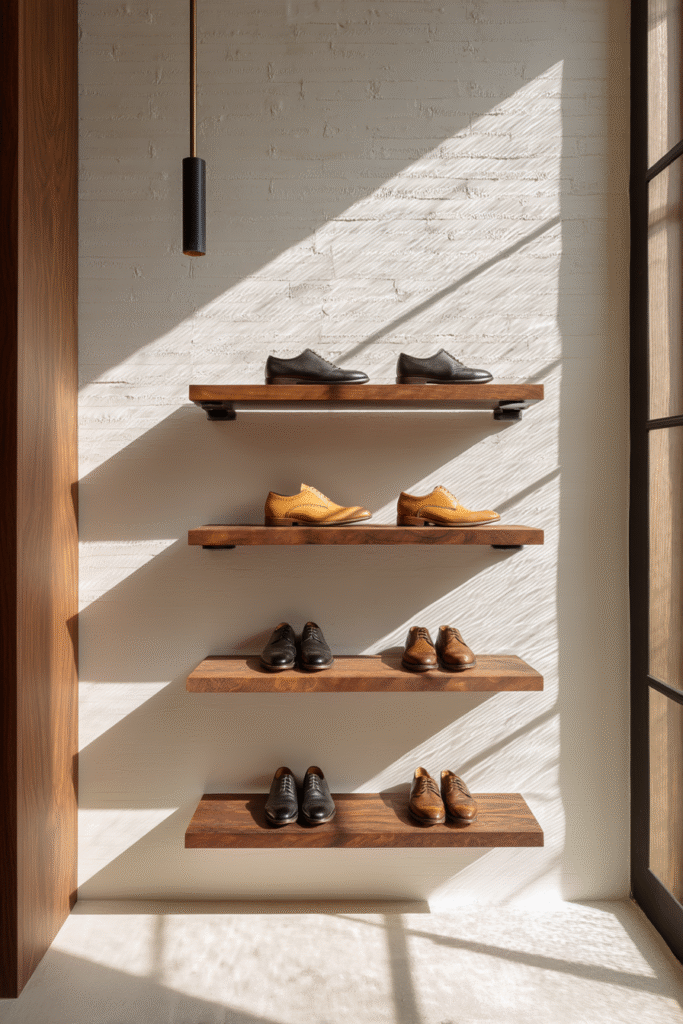
Floating shoe shelves hover along your wall like architectural art, creating a display-worthy storage solution that keeps shoes off the floor while maintaining an airy, open feel. These minimalist shelves—often just a few inches deep—project from the wall without visible brackets, making each pair of shoes appear to float in mid-air. The clean lines and uninterrupted surfaces create a modern, gallery-like aesthetic where shoes become part of the design story rather than something to hide. The vertical arrangement draws the eye upward, making even small entryways feel taller and more spacious while maximizing every inch of available wall space.
This approach transforms shoe storage into a curated display, working especially well for those who invest in beautiful footwear and want to show it off. The open design ensures proper air circulation, preventing moisture buildup and keeping shoes fresh between wears. Floating shelves also offer incredible flexibility—you can arrange them in geometric patterns, stagger them asymmetrically, or stack them in neat columns depending on your aesthetic preferences. It’s storage that celebrates rather than conceals, perfect for design lovers who appreciate the sculptural quality of well-made shoes and want their entryway to reflect that appreciation.
Design Breakdown:
- Install shelves 6-8 inches apart vertically to accommodate varying heel heights
- Use reinforced mounting hardware to support the weight of multiple shoe pairs
- Choose shelf depths of 10-12 inches to fully support shoes without overhang
- Arrange in vertical columns for organized symmetry or staggered for visual interest
- Select finishes that complement your walls—natural wood for warmth, white for clean minimalism
- Position the lowest shelf 12-18 inches from the floor to maintain a floating effect
- Limit each shelf to 2-3 pairs to prevent visual clutter and structural strain
- Consider adding small LED puck lights above each shelf for dramatic evening display
Best For: Modern or minimalist spaces, sneaker collectors, small entryways needing vertical storage, or anyone who wants shoes as design elements.
6. Over-the-Door Fabric Shoe Organizer
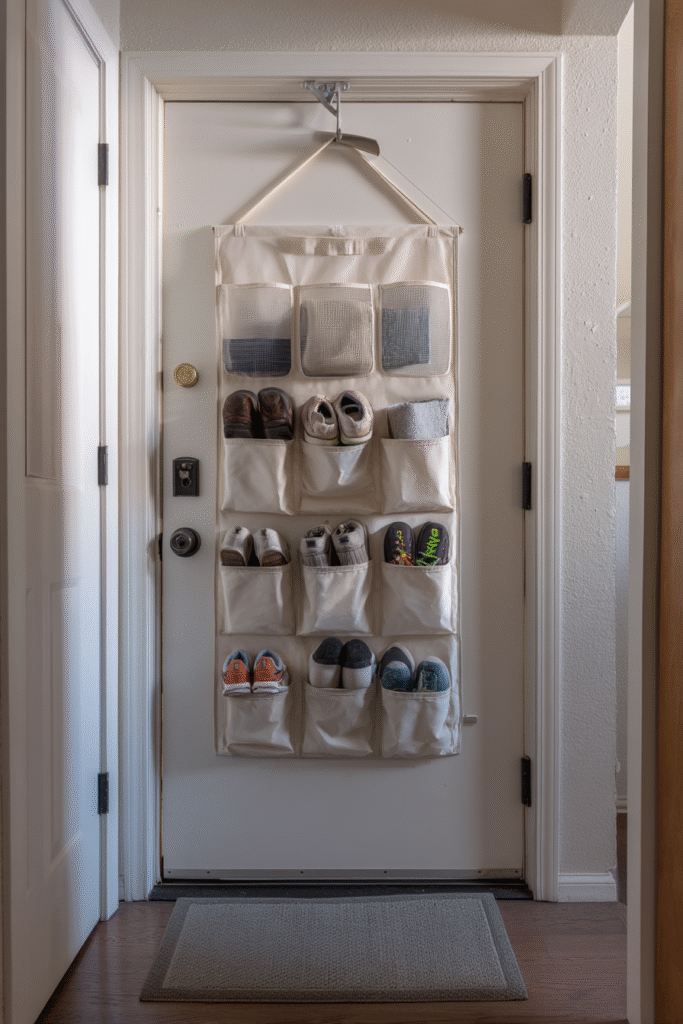
The over-the-door shoe organizer is the ultimate space-saver for entryways with literally no floor space to spare—it hangs on the back of your front door, transforming an otherwise unused surface into instant storage for 12 to 24 pairs of shoes. Made from canvas, polyester, or mesh fabric with individual pockets, this solution keeps shoes contained and visible while taking up zero precious square footage. Each pocket holds a single pair, creating a vertical grid that makes finding the right shoes effortless, even during rushed morning departures. The soft fabric construction means it won’t damage your door, and when you close the door, all that storage simply disappears from view.
This solution shines in apartments, dorm rooms, or starter homes where permanent installations aren’t possible and every inch of floor space matters. The lightweight design makes it easy to install and remove, perfect for renters who need temporary yet effective storage. While it may not win design awards, the over-the-door organizer solves real problems with remarkable efficiency—especially for families juggling multiple shoe wardrobes in tight quarters. The clear or mesh pockets let you see exactly what’s inside at a glance, eliminating the morning scramble to locate matching pairs buried in closets or kicked under furniture.
Design Breakdown:
- Choose organizers with reinforced metal hooks that distribute weight evenly across the door
- Opt for clear vinyl pockets if visual identification matters more than aesthetics
- Select neutral fabric colors like gray, beige, or white to blend with your door color
- Ensure the organizer doesn’t interfere with door closing—measure door clearance first
- Use bottom pockets for everyday shoes and top pockets for seasonal or occasional pairs
- Consider mesh pockets for ventilation if storing athletic or outdoor shoes
- Hang on closet doors instead of entry doors if you prefer keeping it completely hidden
- Rotate shoes seasonally to keep current favorites in the most accessible pockets
Best For: Small apartments, renters, dorm rooms, kids’ shoes, or anyone needing maximum storage with minimal space investment.
7. Vintage Wooden Crate Shoe Display

Stacked or arranged vintage wooden crates bring rustic charm and industrial edge to shoe storage, transforming humble fruit boxes into characterful compartments that feel collected and curated. The weathered wood, worn corners, and faded brand stamps tell stories while creating perfectly sized cubbies for shoes, boots, and accessories. You can stack them vertically like a tower, arrange them horizontally along a wall, or create an asymmetrical composition that feels organic and intentional. Each crate becomes its own contained storage space, and the open slat construction allows air to circulate while adding textural interest that standard cabinets simply can’t match.
This approach is ideal for those drawn to farmhouse, industrial, or eclectic interiors where imperfection and patina are celebrated design elements. The beauty lies in the flexibility—you can add or remove crates as your storage needs change, rearrange them whenever inspiration strikes, or even paint select crates for pops of color against the natural wood. It’s a solution that feels approachable and DIY-friendly while delivering serious style impact. The vintage quality adds instant character to new homes, making your entryway feel lived-in and personal from day one, like you’ve been collecting these treasures for years.
Design Breakdown:
- Source authentic vintage crates from flea markets, antique shops, or online marketplaces
- Secure stacked crates with L-brackets or wood screws to prevent toppling
- Sand rough edges lightly to prevent snags on clothing or skin
- Mix crate sizes for visual variety—standard fruit crates work alongside smaller wine boxes
- Position larger crates at the bottom for stability and boot storage
- Leave some crates empty or style with small plants and candles for design balance
- Consider backing the wall with reclaimed wood planks to enhance the rustic aesthetic
- Use the top surface of stacked crates as display space for keys, mail, or decor
Best For: Farmhouse, industrial, or eclectic spaces, vintage lovers, DIY enthusiasts, or anyone seeking affordable, flexible storage with character.
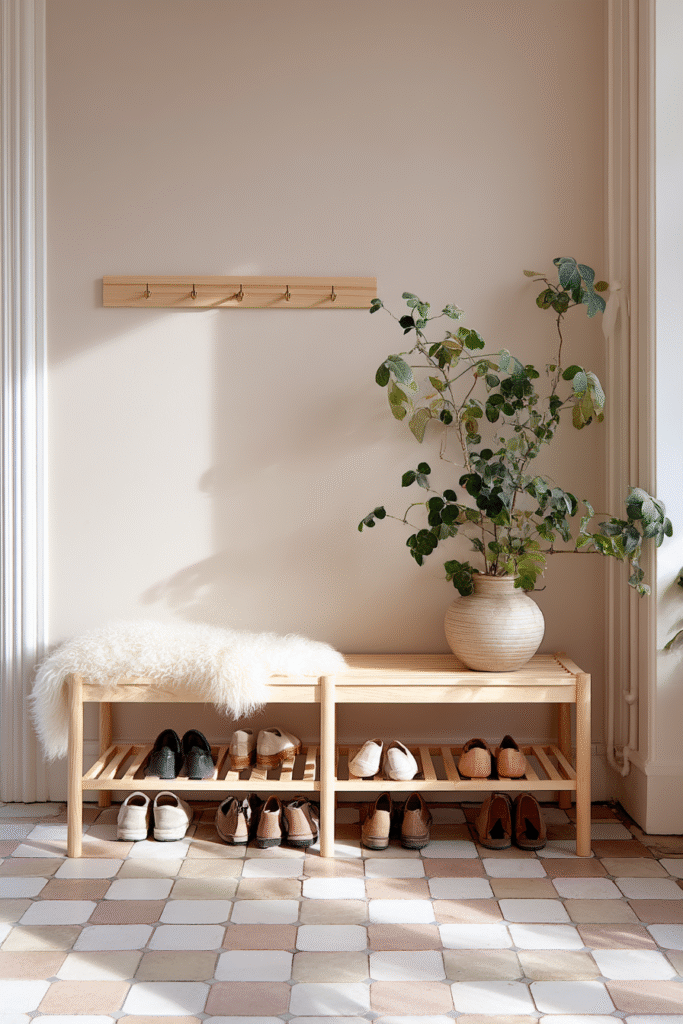
8. Scandinavian-Style Open Shoe Rack
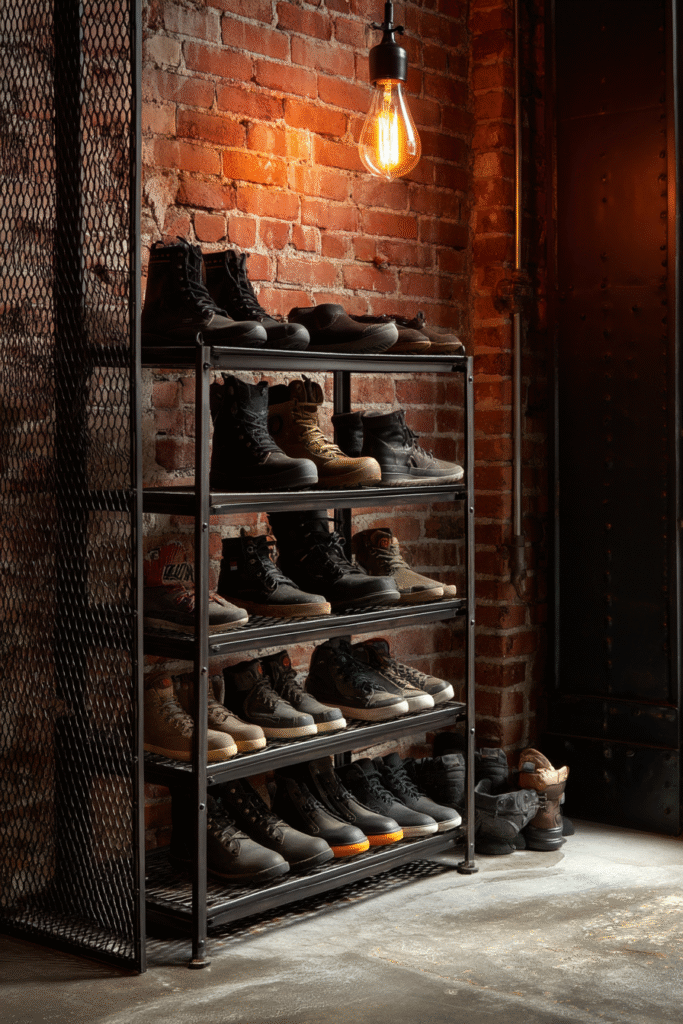
The Scandinavian open shoe rack embodies hygge principles—clean lines, natural materials, and functional beauty that makes everyday rituals feel intentional and calm. These racks typically feature light wood slats or dowels arranged in simple tiers, creating horizontal shelves that hold shoes while maintaining visual lightness and breathability. The minimal framework doesn’t visually weigh down your entryway; instead, it blends quietly into the background, letting your shoes rest without creating clutter or chaos. The pale wood tones—birch, ash, or beech—reflect light and make small spaces feel more open, while the honest construction celebrates craftsmanship without unnecessary ornamentation.
This design philosophy prioritizes quality and longevity over trends, making these racks wise investments that transcend fleeting styles. The open structure ensures proper ventilation, preventing moisture and odor buildup that can plague enclosed storage. There’s a meditative quality to arranging shoes on these simple shelves—pairs lined up neatly, spaced evenly, creating order from chaos. It’s storage that encourages you to own fewer, better shoes and to treat them with care, aligning perfectly with the Scandinavian value of intentional living. The rack becomes a quiet reminder to slow down, even in the everyday act of removing your shoes before entering your home.
Design Breakdown:
- Choose racks with 2-4 tiers depending on your shoe collection size and ceiling height
- Look for shelves spaced 6-8 inches apart to accommodate various shoe heights
- Select light wood finishes to maintain the airy Scandinavian aesthetic
- Position against white or light-colored walls for maximum visual impact
- Keep shoe selection minimal and well-curated to maintain the clean look
- Incorporate a small sheepskin rug or bench nearby for complementary Nordic texture
- Use the top tier for a simple vase or small plant to soften the utilitarian purpose
- Ensure the rack footprint doesn’t exceed 12 inches deep to preserve walkway space
Best For: Scandinavian, minimalist, or modern interiors, small-space dwellers, anyone embracing intentional living and quality over quantity.
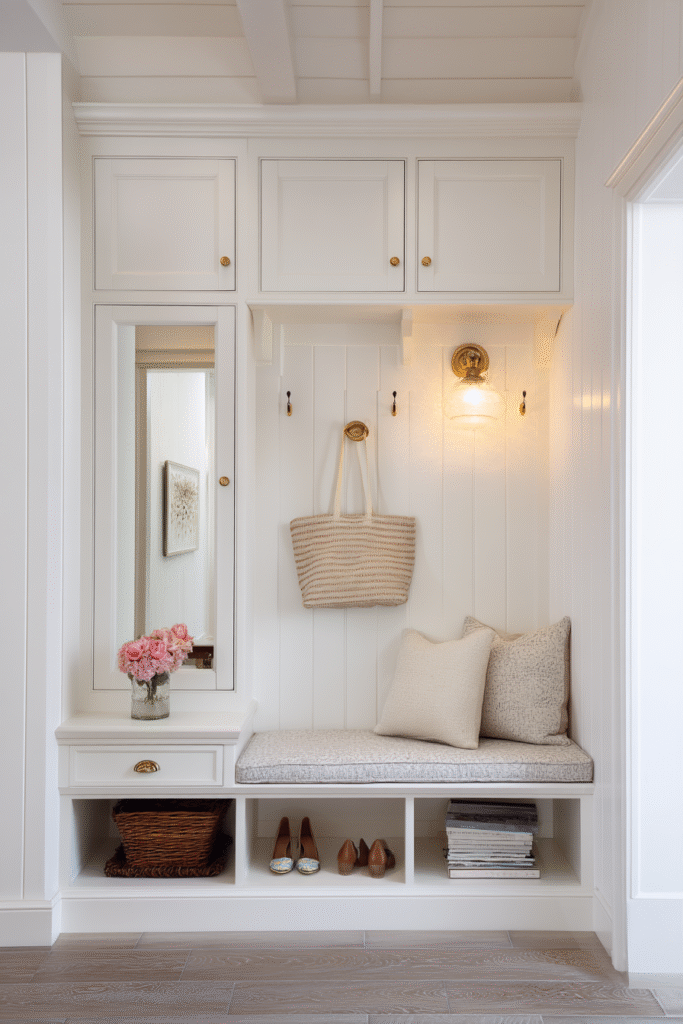
9. Hall Tree With Integrated Shoe Storage
The hall tree stands like a welcoming sentinel in your entryway, combining coat hooks, bench seating, and shoe storage into one commanding piece of furniture that handles the complete coming-and-going ritual. Rising from floor to ceiling (or near to it), these pieces typically feature upper hooks for coats and bags, a mid-level bench for sitting while changing shoes, and lower cubbies or shelves where shoes find their home. The vertical integration means everything you need for arrival and departure lives in one organized tower, eliminating the scatter of belongings across multiple surfaces. It’s a one-stop drop zone that looks intentional rather than improvised, like a piece of furniture specifically designed for the way you actually live.
Hall trees work beautifully in transitional or traditional homes where furniture with presence and purpose is valued. The taller silhouette draws the eye upward and makes standard-height ceilings feel grander, while the built-in seating eliminates the need for a separate bench. Many designs incorporate storage drawers, mirrors, or decorative panels that add personality and function beyond basic shoe storage. It’s particularly brilliant for families who need designated spots for each member’s belongings—assign a hook and cubby per person, and suddenly the morning chaos has structure. The hall tree transforms your entryway into a true transition space, acknowledging that this threshold deserves furniture as thoughtful as any other room.
Design Breakdown:
- Measure ceiling height to ensure the hall tree fits with adequate clearance
- Choose designs with lower open shelves for quick shoe access and upper cubbies for storage
- Look for bench seats with cushions for comfort during shoe changes
- Select finishes that complement your door and trim work for visual cohesion
- Ensure the bench height is 18-20 inches for comfortable adult seating
- Consider models with side panels or backing for structural stability
- Include a mirror in the design if your entryway lacks one for last-minute checks
- Position away from the door swing path to prevent interference
Best For: Traditional or transitional homes, families, larger entryways with vertical space, or anyone wanting comprehensive drop-zone storage.
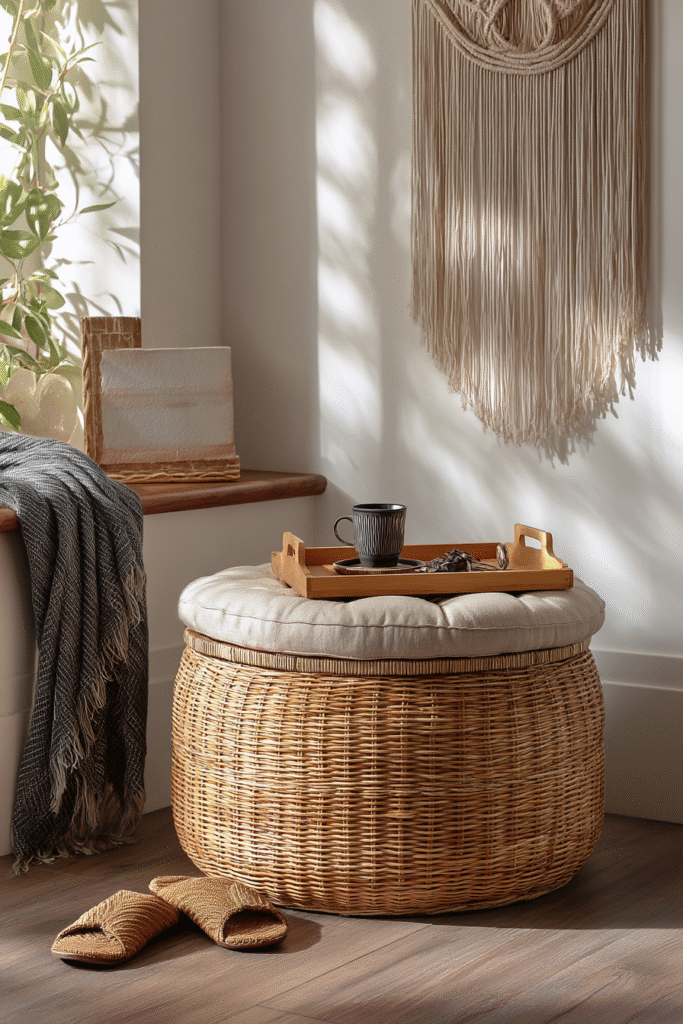
10. Round Wicker Storage Ottoman
A round wicker ottoman brings softness and organic texture to your entryway while concealing shoes inside its hollow core—it’s the kind of piece that looks decorative first and reveals its practical secret only when you lift the cushioned lid. The circular shape creates gentle flow in a space often dominated by rectangular furniture and sharp corners, while the woven wicker adds natural warmth and visual interest through its basketweave patterns and tactile surface. Topped with a removable cushion in linen or cotton, it serves as impromptu seating, a place to drop your bag, or a footrest after removing shoes—all while storing several pairs within its belly.
This piece excels in bohemian, coastal, or eclectic entryways where organic materials and unexpected curves bring personality and charm. The wicker construction allows for slight air circulation through its weave, keeping stored shoes fresher than solid wood alternatives. It’s furniture that doesn’t take itself too seriously—approachable, versatile, and always a little bit casual in the best possible way. The ottoman can migrate around your home as needs change, moving from entryway to bedroom to living room, making it a flexible investment that serves multiple purposes over time. Its rounded shape also makes it ideal for tight or awkward entryway layouts where rectangular furniture would create traffic bottlenecks or wasted corner space.
Design Breakdown:
- Choose ottomans 16-18 inches tall for versatile seating and storage depth
- Select natural wicker tones or painted finishes depending on your color palette
- Top with washable cushion covers in performance fabrics for practical maintenance
- Ensure the lid removes or lifts easily without complicated mechanisms
- Position near the door but slightly out of the main traffic path
- Style the top with a small tray when not using it for seating
- Look for reinforced wicker construction at stress points for longevity
- Consider adding felt pads to the base to protect flooring
Best For: Bohemian, coastal, or eclectic spaces, small entryways needing flexible furniture, or anyone who loves natural materials and curved lines.
11. Industrial Metal Tiered Shoe Rack
The industrial metal shoe rack brings urban edge and honest functionality to your entryway with its no-nonsense grid of black iron or steel shelves stacked in clean, functional tiers. The open metal framework feels deliberately utilitarian—exposing the structure, celebrating the materials, and making no attempt to disguise its purpose. Shoes rest on horizontal bars or mesh platforms, fully visible and easily accessible, while the negative space between tiers keeps the overall effect light despite the substantial metal construction. The matte black or raw steel finish adds masculine energy and pairs beautifully with exposed brick, concrete floors, or industrial lighting fixtures.
This style thrives in lofts, modern apartments, or any space embracing industrial design’s celebration of functional objects as aesthetic elements. The metal construction is practically indestructible, standing up to wet shoes, heavy boots, and daily wear without warping or degrading like wood alternatives might. There’s an honest, straightforward quality to these racks—they do one job exceptionally well without pretense or decoration. The industrial aesthetic also allows for creative placement: positioned openly along a wall as a design statement, tucked into a closet for hidden storage, or even used in mudrooms where durability matters more than delicacy. It’s storage for people who appreciate form that follows function without apology.
Design Breakdown:
- Choose racks with 3-5 tiers depending on your vertical space and shoe volume
- Look for powder-coated finishes to resist rust and moisture from wet shoes
- Ensure each tier is 6-8 inches tall to accommodate different shoe styles
- Select mesh or bar construction for maximum air circulation and drainage
- Position on tile or water-resistant flooring if storing wet outdoor shoes
- Keep the width narrow (24-30 inches) to avoid overwhelming smaller entryways
- Pair with industrial-style hooks or pipes above for coat storage
- Consider stackable or expandable models that grow with your collection
Best For: Industrial lofts, modern apartments, minimalist spaces, or anyone who needs durable, straightforward storage with urban edge.
12. Hidden Shoe Drawer Cabinet in Matte Black
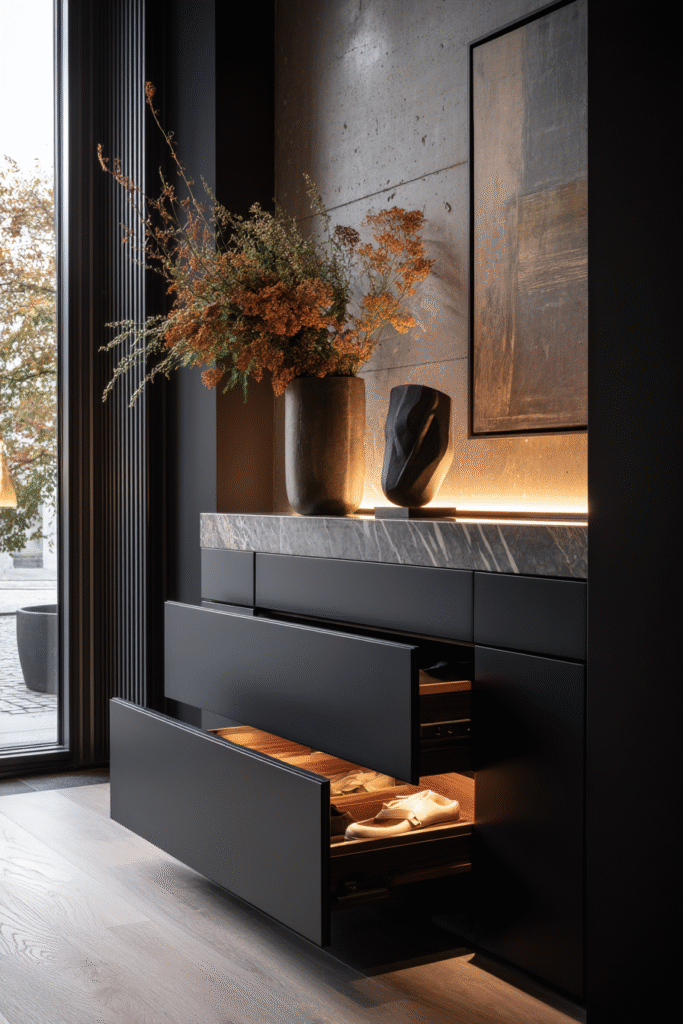
The hidden shoe drawer cabinet looks like a sophisticated dresser or console at first glance—until you pull open a drawer and discover shoes neatly arranged inside, tucked away behind a sleek facade. Finished in matte black, these cabinets exude modern elegance and architectural drama, adding weight and presence to your entryway while keeping every shoe completely concealed. The drawer fronts may feature minimalist handles, discreet finger pulls, or push-to-open mechanisms that maintain the clean surface. Inside, the drawers are often compartmentalized to prevent shoes from sliding around, keeping pairs separated and protected from scuffs or crushing.
This solution appeals to design purists who want their entryways to feel serene and uncluttered, without visual reminders of daily life’s practical demands. The matte black finish grounds the space and creates striking contrast against white walls, light floors, or natural wood tones elsewhere in your home. It’s the kind of storage that whispers rather than shouts—present but never intrusive, functional but distinctly beautiful. The cabinet style also offers top surface real estate for styling with artwork, table lamps, or decorative objects, turning your shoe storage into a proper furniture moment. It’s investment-level storage for those who want their homes to look considered and intentional, where even utilitarian needs are addressed with sophistication.
Design Breakdown:
- Select cabinets with soft-close drawer mechanisms for quiet, smooth operation
- Look for interior felt or fabric lining to protect delicate shoe materials
- Choose drawer depths of 6-8 inches to maximize storage without bulk
- Ensure the cabinet width fits your available wall space while leaving room for door swing
- Position drawer pulls or handles at consistent heights for visual symmetry
- Consider models with adjustable interior dividers for customizable organization
- Style the top surface as you would a console table for a polished finish
- Add interior LED lighting strips for enhanced visibility in deeper drawers
Best For: Modern or contemporary homes, minimalists, anyone who prefers completely hidden storage, or spaces where furniture needs to serve multiple aesthetic purposes.
13. Bamboo Stackable Shoe Shelves
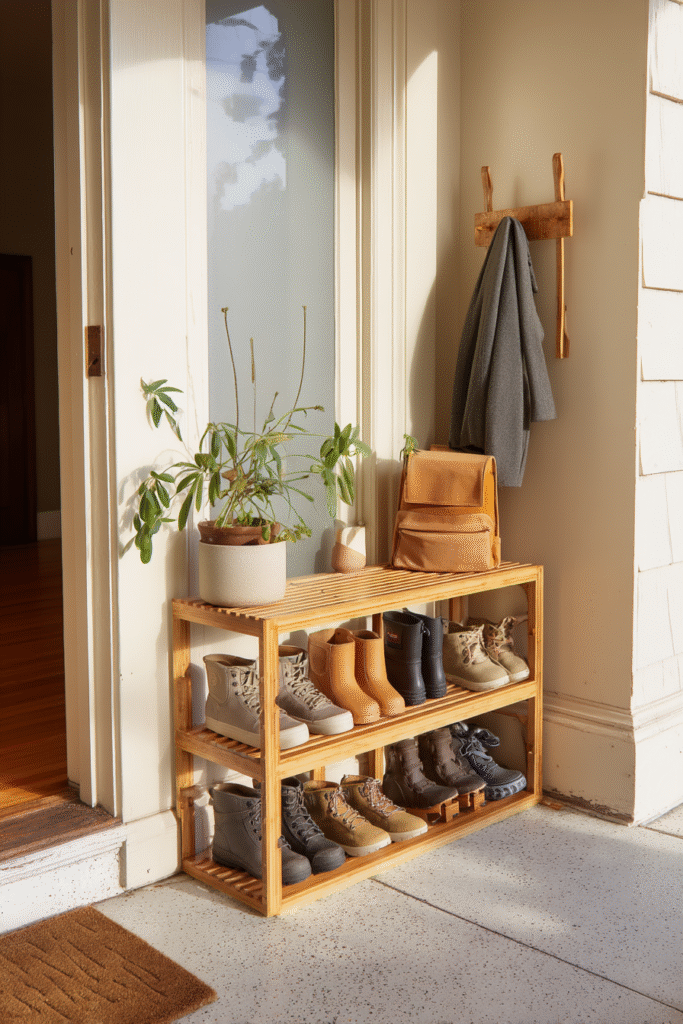
Bamboo stackable shoe shelves bring sustainable style and practical flexibility to entryway storage through modular units that you can arrange vertically or horizontally depending on your space and needs. The warm honey tones of natural bamboo add organic warmth and subtle texture, while the renewable material choice appeals to eco-conscious homeowners seeking sustainable alternatives to plastic or particleboard. Each stackable unit creates its own shelf or tier, and you can add or remove sections as your shoe collection grows or shrinks, creating a storage solution that adapts rather than becomes obsolete. The bamboo construction is surprisingly strong and moisture-resistant, naturally antimicrobial properties that make it ideal for footwear storage.
These modular shelves work beautifully in transitional spaces where flexibility is prized over permanence—perfect for renters, frequent movers, or those who like rearranging their homes seasonally. The stackable design means you can start small with a single unit and expand over time, avoiding the commitment and expense of large furniture pieces. The bamboo aesthetic bridges multiple design styles, fitting naturally into Scandinavian, Asian-inspired, coastal, or modern organic interiors. There’s a mindful quality to choosing bamboo—it signals awareness about material sourcing and environmental impact while delivering practical storage that looks intentionally selected rather than hastily purchased.
Design Breakdown:
- Start with 2-3 stackable units and expand as needed
- Choose models with interlocking mechanisms or connectors for stability when stacked
- Position against a wall to prevent tipping when stacked more than three units high
- Select natural bamboo finishes to showcase the material’s inherent beauty
- Ensure each shelf tier is 10-12 inches wide to accommodate adult shoe sizes
- Space units to create different height tiers for varied shoe types
- Clean with damp cloth only—avoid harsh chemicals that damage bamboo’s finish
- Mix with other bamboo accessories in your entryway for material cohesion
Best For: Eco-conscious homeowners, renters, small spaces, anyone wanting flexible and sustainable storage solutions.
14. Corner Shoe Cabinet for Awkward Spaces
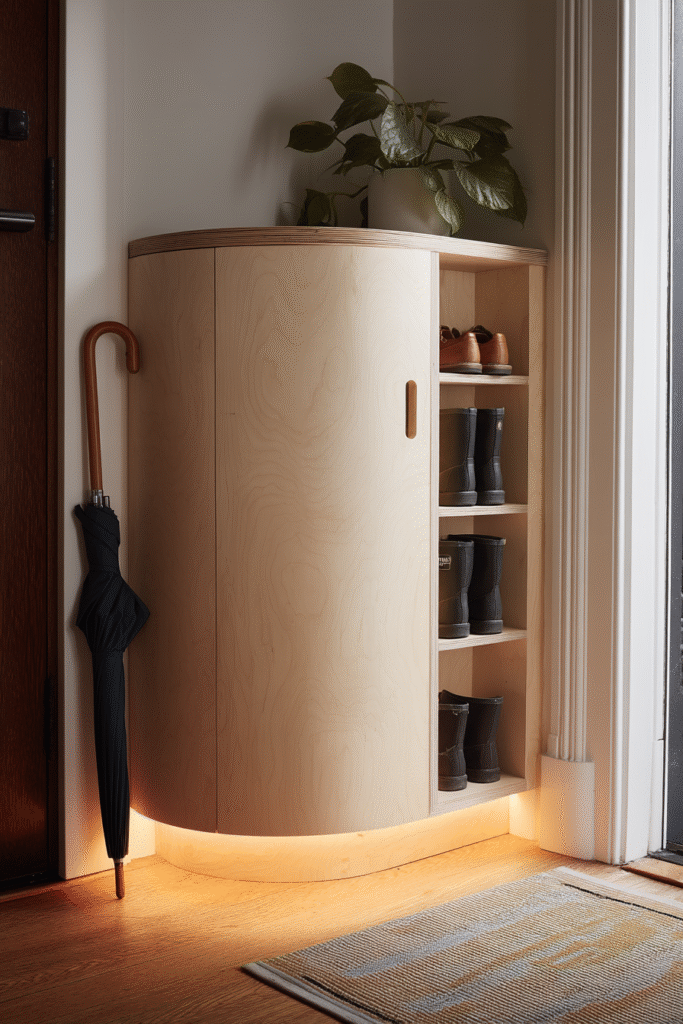
The corner shoe cabinet is the problem-solver for those dead zones where walls meet at odd angles and traditional furniture just won’t fit—it’s specifically designed to tuck into corners, transforming forgotten square footage into highly functional storage. These triangular or curved cabinets hug the wall intersection, maximizing vertical space while maintaining a small footprint that doesn’t protrude into your traffic flow. The angled design often features doors that open to reveal tiered shelves or cubby inserts, capable of holding surprising numbers of shoes within their deceptively compact exterior. It’s space optimization at its finest, proving that every inch of your entryway can work harder than you thought possible.
This solution shines in L-shaped or irregularly configured entryways where standard rectangular cabinets would create obstacles or feel awkwardly placed. The corner placement also creates interesting visual geometry, breaking up the monotony of furniture always pushed against flat walls. Many designs incorporate rotating carousels or pull-out mechanisms inside, making shoe retrieval effortless despite the angular format. It’s the kind of smart design that makes you wonder why you wasted that corner space for so long, especially when the cabinet can hold 15-20 pairs while appearing to occupy almost no room at all. The corner cabinet proves that limitations can inspire the most creative and effective solutions.
Design Breakdown:
- Measure both wall lengths to ensure the cabinet fits your specific corner angle
- Choose designs with doors that swing outward to avoid blocking access
- Look for interior rotating mechanisms or tiered shelves for easier shoe access
- Select heights that reach toward the ceiling to maximize vertical storage potential
- Consider models with top surfaces that create display space for small decor items
- Ensure the cabinet door clearance doesn’t interfere with adjacent doorways or furniture
- Pick finishes that blend with your walls to help the piece recede visually
- Add interior ventilation holes or leave cabinet doors slightly ajar to maintain air circulation
Best For: Awkward or small entryways, L-shaped layouts, anyone struggling with underutilized corner spaces.
15. Ladder-Style Leaning Shoe Rack
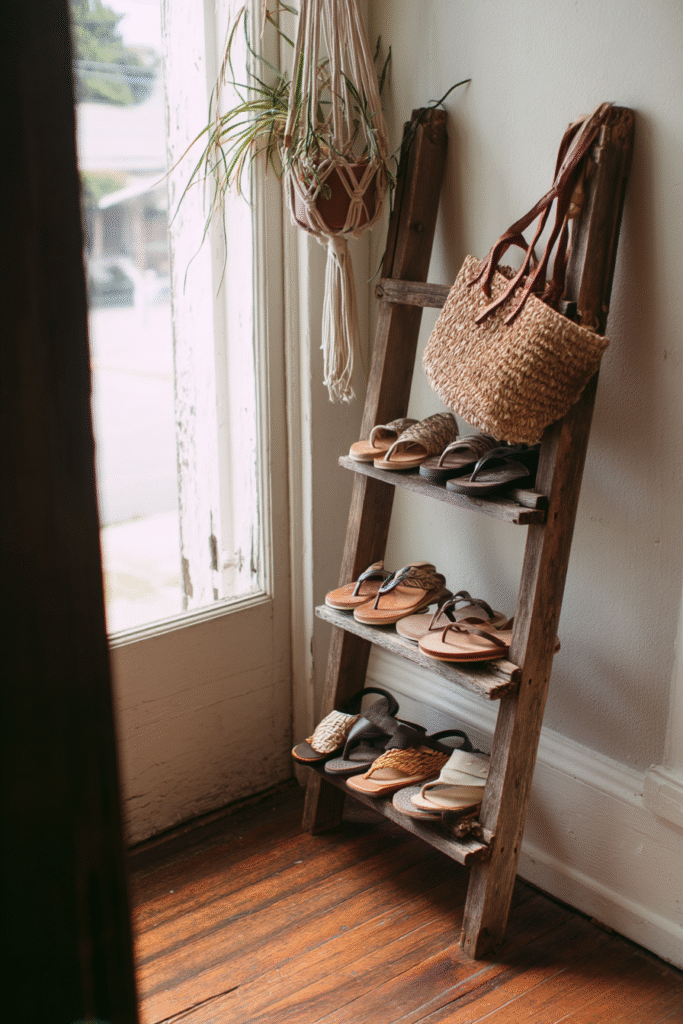
The ladder-style leaning shoe rack props casually against your wall at a relaxed angle, creating storage that feels effortless and deliberately undone—like you found the perfect vintage ladder and repurposed it with style rather than buying purpose-built furniture. The angled structure creates progressively deeper shelves as you move from top to bottom, with the lowest shelves projecting furthest from the wall to accommodate shoes while upper levels can hold accessories, plants, or small baskets. The ladder aesthetic adds vertical interest and architectural detail to flat walls while maintaining a light, open construction that doesn’t visually overwhelm smaller entryways. It’s storage with personality—relaxed, approachable, and casually chic.
This piece works brilliantly in industrial, farmhouse, or bohemian spaces where imperfection and organic arrangements are celebrated. The leaning design means no wall mounting or permanent installation—you simply position it where needed and adjust anytime inspiration strikes. It’s ideal for renters or commitment-phobes who want flexibility without sacrificing style. The progressive shelf depths also create interesting styling opportunities: display favorite shoes on lower shelves like art pieces, use upper shelves for decorative objects or plants, and mix functional storage with pure aesthetics. The overall effect is collected and curated rather than rigidly organized, perfect for spaces that value personality over perfection.
Design Breakdown:
- Look for ladders with 4-5 rungs spaced approximately 12-15 inches apart
- Ensure the base width is 20-24 inches for stability when loaded with shoes
- Choose wood finishes that complement your flooring for visual cohesion
- Position on non-slip rugs or use rubber pads to prevent floor scratching and sliding
- Lean at approximately 75-80 degrees for optimal stability and shelf depth
- Style top shelves with lightweight items only—ladder racks aren’t designed for heavy loads
- Consider models with side rails that act as additional storage for bags or scarves
- Keep shoe selection on lower shelves limited to 2-3 pairs per rung to prevent overloading
Best For: Industrial, farmhouse, or bohemian spaces, renters, small apartments, or anyone preferring non-permanent, flexible storage.
16. Tufted Storage Bench With Pull-Out Drawers
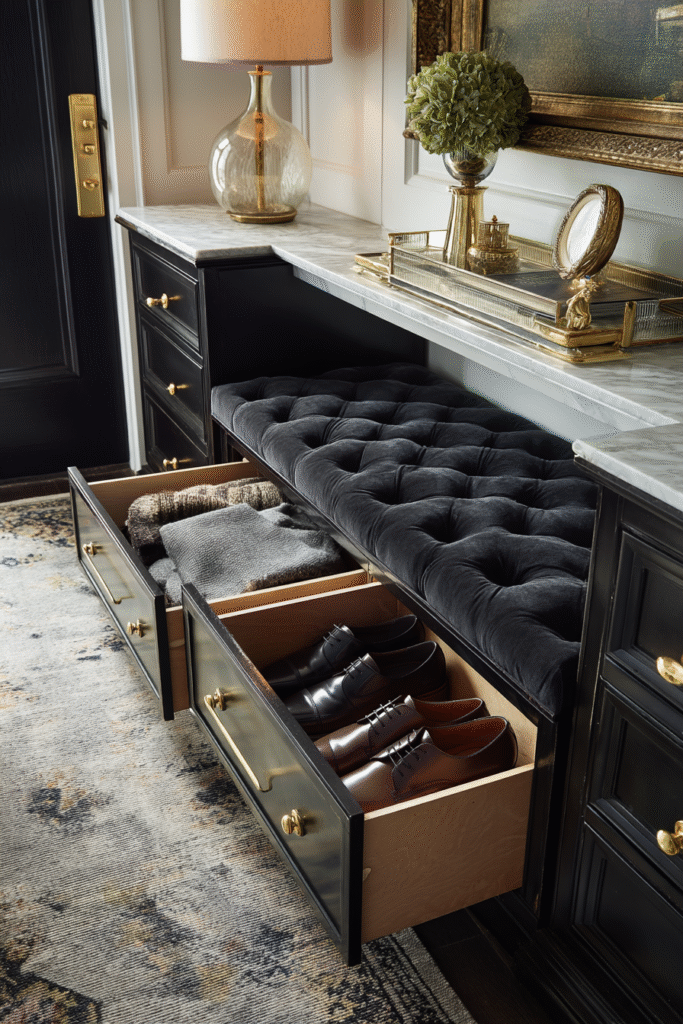
The tufted storage bench with pull-out drawers is furniture luxury meets practical storage—imagine sinking onto a plush, button-tufted velvet seat while sliding open the drawer beneath to find your shoes neatly arranged inside. The tufted upholstery adds immediate elegance and traditional charm, with each button creating architectural dimension across the cushioned surface. Unlike flip-top benches where you must clear the seat to access storage, pull-out drawers allow for simultaneous seating and shoe retrieval, making them more user-friendly for busy households. The drawer fronts often feature decorative hardware—brass pulls, leather tabs, or crystal knobs—that elevate the piece from functional storage to statement furniture.
This bench style brings formality and refinement to entryways, working beautifully in traditional, glam, or transitional homes where details matter and furniture makes deliberate design statements. The tufted surface invites touch and creates visual interest even from across the room, while the hidden drawer storage keeps the practical shoe clutter completely concealed. The dual functionality means you’re not sacrificing comfort for organization—both coexist elegantly. These benches often become favorite perching spots for quick phone calls, parcel sorting, or simply pausing to appreciate the beauty of a well-appointed space. It’s the kind of furniture that makes everyday moments feel a bit more special.
Design Breakdown:
- Choose bench heights of 18-20 inches for comfortable seating and ample drawer depth
- Look for drawers on smooth glide mechanisms for easy pulling when fully loaded
- Select performance velvet or linen for durability in high-traffic areas
- Ensure button tufting is securely attached—loose buttons are both unsightly and hazardous
- Consider benches with multiple drawers for organized separation of shoe types
- Select coordinating hardware finishes that match other metals in your entryway
- Position perpendicular to the entry door if space allows for better traffic flow
- Add decorative throw pillows on top for extra comfort and color coordination
Best For: Traditional or glam interiors, anyone who loves elegant furniture, households needing simultaneous seating and storage access.
17. Pegboard Wall System for Customizable Storage
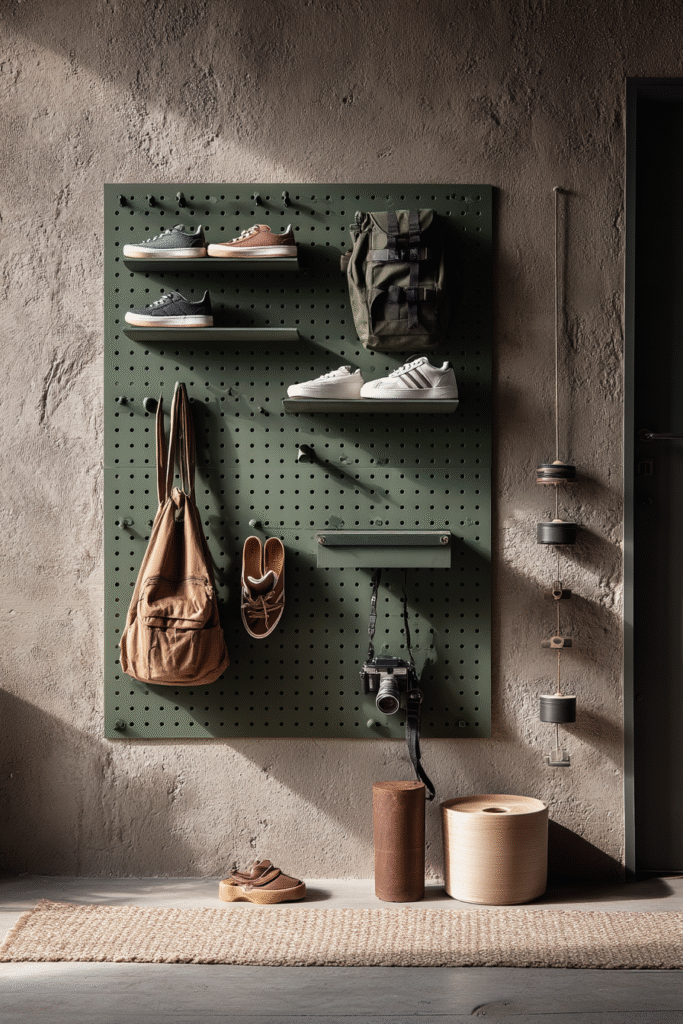
The pegboard wall system transforms shoe storage into an interactive, customizable display where every pair hangs or rests on hooks and shelves that you can rearrange at will. Originally a garage workshop staple, pegboard has been reclaimed by design-forward homes as a flexible, graphic solution that looks intentionally industrial-chic. The perforated panel—painted in bold colors or left in natural wood tones—mounts to your wall and accepts an array of accessories: S-hooks for hanging shoes by their heels, small shelves for displaying sneakers, baskets for sandals, or even clips for accessories. The grid pattern creates visual structure and rhythm, making even a diverse shoe collection look organized and considered.
This approach is particularly brilliant for sneakerheads and shoe collectors who view footwear as art worth displaying. The ability to reconfigure your storage layout as your collection changes means the system never becomes obsolete—just move hooks and shelves to accommodate new additions. The pegboard aesthetic reads as creative and slightly rebellious, perfect for modern, industrial, or eclectic spaces that embrace unconventional storage solutions. It also creates an engaging visual texture on otherwise blank walls, adding dimension and interest while serving genuine functional purpose. The transparency of the system—everything visible, nothing hidden—encourages you to curate your shoe collection thoughtfully and showcase only your favorites.
Design Breakdown:
- Mount pegboard panels directly to wall studs or use heavy-duty anchors to support shoe weight
- Paint pegboard in accent colors like navy, forest green, or matte black for design impact
- Space pegs 4-6 inches apart horizontally to accommodate various shoe widths
- Mix hook types—J-hooks for heels, straight pegs for sneakers, basket attachments for flats
- Create visual balance by arranging shoes symmetrically or in color gradients
- Frame the pegboard edges with trim for a finished, intentional look
- Position at eye level or slightly below for easiest access and best display
- Leave some pegs empty for breathing room and future collection growth
- Incorporate small shelves between hanging shoes for keys, sunglasses, or small plants
Best For: Sneaker collectors, modern or industrial spaces, creative personalities, anyone who wants flexible, display-worthy storage.
18. Clear Acrylic Shoe Display for Sneaker Lovers
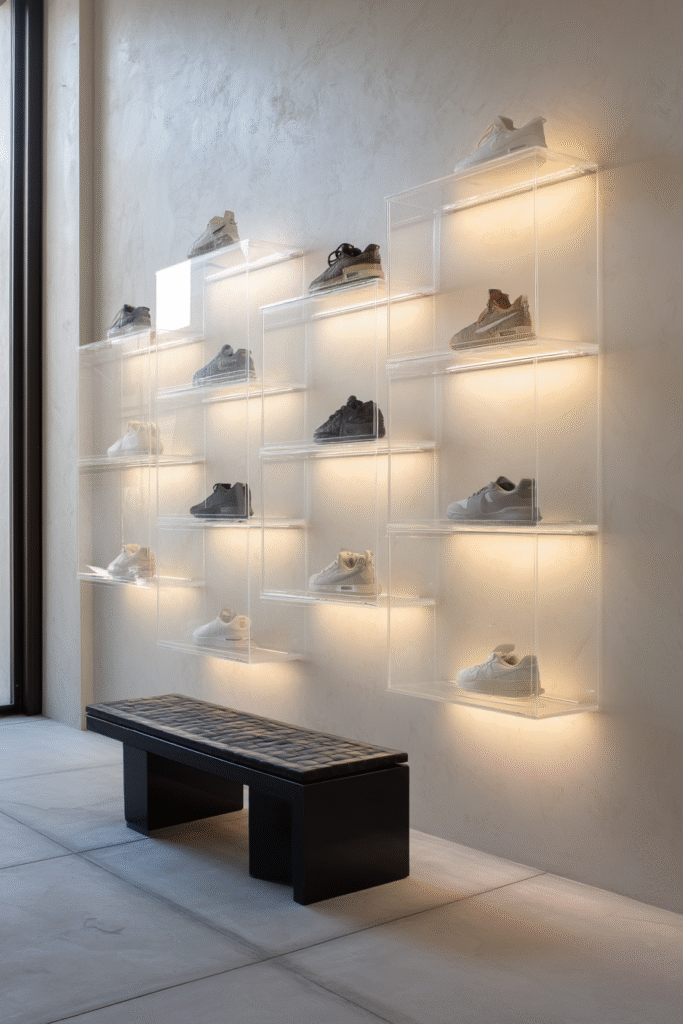
Clear acrylic shoe displays bring museum-quality presentation to your entryway, showcasing prized sneakers like the collectible art pieces they truly are. These transparent boxes or floating shelves create individual pedestals for each pair, protecting them from dust while keeping them fully visible from every angle. The crystal-clear material disappears visually, making shoes appear to float in mid-air and drawing all attention to the footwear’s design, colorways, and details. It’s the kind of storage that signals serious appreciation—these aren’t just shoes you wear; they’re investments, limited editions, or beloved pieces that deserve proper display. The acrylic construction catches and reflects light beautifully, creating subtle shimmer that elevates the entire presentation.
This display method works spectacularly in modern, contemporary, or minimalist spaces where clean lines and transparency are design values. It’s particularly popular among sneaker enthusiasts with curated collections of rare or designer pairs that represent significant cultural or personal value. The protected display keeps shoes pristine while allowing you to appreciate them daily, turning your entryway into a personal gallery. The modular nature of acrylic displays means you can start with a few boxes and expand as your collection grows, creating wall compositions that evolve with your tastes. It’s storage that celebrates rather than conceals, transforming functional necessity into intentional design expression.
Design Breakdown:
- Choose individual drop-front boxes for premium sneakers or wall-mounted shelves for larger displays
- Ensure acrylic thickness is at least 1/4 inch to prevent warping or cracking
- Position displays at eye level for optimal viewing and appreciation
- Install LED strip lighting behind or below displays to create dramatic glow effects
- Arrange shoes by color gradient, brand, or release date for visual storytelling
- Keep displayed shoes limited to your absolute favorites—overcrowding dilutes impact
- Clean acrylic regularly with microfiber cloths to maintain crystal clarity
- Mount securely to wall studs if creating stacked display arrangements
- Consider UV-resistant acrylic if displays receive direct sunlight
Best For: Sneaker collectors, modern minimalist spaces, anyone with designer or limited-edition shoes worth showcasing, homes where footwear is genuine passion.
Conclusion
Your entryway deserves storage that works as hard as you do while looking effortlessly composed. From slim tilt-out cabinets that vanish against walls to bold acrylic displays that celebrate your collection, these 18 shoe storage ideas prove that organization and style aren’t mutually exclusive—they’re essential partners in creating homes that feel both welcoming and wonderfully functional. The right solution depends on your space, your aesthetic, and how you actually live—whether that means hidden compartments that maintain minimalist serenity or open displays that showcase personal style. Choose the approach that makes your daily routine smoother and your entryway more beautiful, because the space where you transition between outside world and private sanctuary should set the perfect tone for everything that follows.
FAQs
How do I choose shoe storage for a small entryway?
Prioritize vertical solutions that maximize wall space without consuming precious floor area. Slim tilt-out cabinets, floating wall shelves, over-the-door organizers, and corner cabinets all deliver substantial storage within minimal footprints. Look for multi-functional pieces like storage benches that provide seating while hiding shoes inside, or ladder-style racks that lean rather than protrude. The key is selecting furniture scaled appropriately to your space—measure carefully and choose pieces that enhance rather than crowd your entry.
What’s the best way to store seasonal shoes in an entryway?
Create a rotation system where current-season shoes occupy prime real estate in easy-access storage, while off-season pairs move to higher shelves, back drawers, or interior closets. Use the top tiers of multi-level racks for winter boots during summer months, and swap them down when weather changes. Labeled baskets or bins work beautifully for tucking away seasonal shoes within larger storage systems, keeping them protected but accessible when needed. The goal is maintaining a curated selection in your entryway that reflects what you actually wear right now.
How many pairs of shoes should I keep by the door?
Aim for 3-5 pairs per household member in your most accessible entryway storage—typically one pair of everyday shoes, weather-appropriate footwear, athletic shoes, and perhaps one dressier option. This prevents decision fatigue during rushed departures while keeping your entryway from becoming cluttered with rarely-worn pairs. Store additional shoes in bedroom closets or dedicated storage areas, rotating them seasonally or as needs change. The entryway should hold your active rotation, not your entire shoe wardrobe.
How do I prevent shoe storage from looking cluttered?
Limit visible shoe quantities by choosing enclosed storage options like cabinets, benches with lids, or drawer systems that conceal contents completely. If using open storage, maintain discipline about shoe volume—edit ruthlessly and display only what you actively wear. Arrange shoes uniformly with toes facing the same direction and pairs positioned consistently. Stick to cohesive color palettes when possible, and leave intentional empty space between shoes rather than cramming every available spot. Regular purging of outgrown, damaged, or unworn shoes maintains the curated look.
What materials work best for entryway shoe storage?
Choose materials that handle moisture, dirt, and daily wear without degrading quickly. Sealed wood resists humidity better than raw wood, while metal offers maximum durability for high-traffic use. Woven materials like wicker and rattan provide natural ventilation that keeps shoes fresh. Painted or powder-coated finishes protect underlying materials while offering easy cleaning. Avoid delicate fabrics in direct floor contact where wet shoes might rest. The best material ultimately depends on your climate, household activity level, and aesthetic preferences—prioritize durability and maintenance ease alongside beauty.