
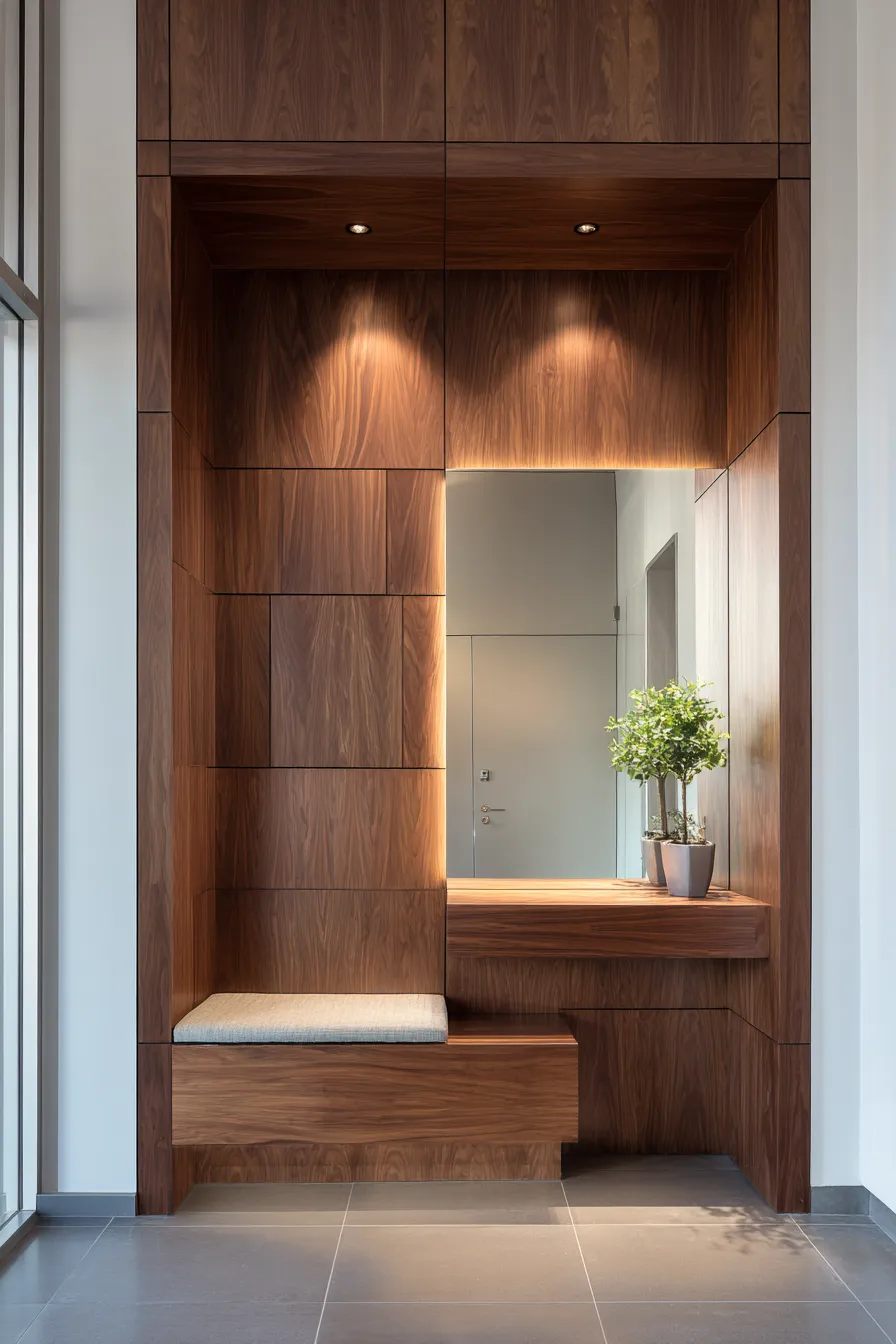
The entryway is the first impression of your home, setting the tone for what lies beyond. Thoughtfully chosen mirrors can transform this transitional space by enhancing light, expanding visual depth, and creating a sense of quiet intention. When styled with care, entryway mirrors become more than functional elements—they act as architectural statements that balance form and atmosphere. By embracing purposeful materials, considered proportions, and subtle design details, you can shape an entryway that feels welcoming, grounded, and effortlessly elevated.
Unlacquered Brass Portal Mirrors with Active Patina Development
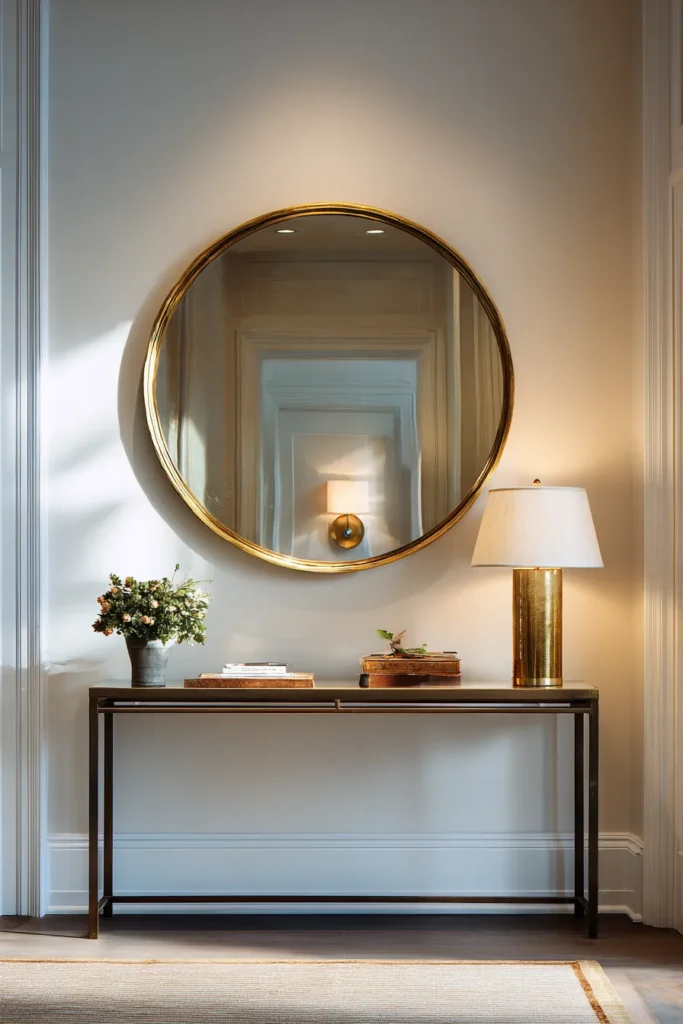
Unlacquered brass mirrors bring a sense of warmth and quiet luxury to an entryway. Over time, the surface naturally develops a living patina, adding depth, character, and an unmistakably organic feel. This evolution makes the mirror feel less like a static object and more like a design element that grows with your home. Positioned in an entryway, it creates a welcoming moment that feels both grounded and refined. The subtle variations in tone catch light beautifully, offering softness rather than shine.
These mirrors work especially well in minimalist spaces where fewer elements are allowed to stand out. The patina introduces visual interest without adding clutter, making it ideal for calm, intentional interiors. To maintain balance, pair the brass with neutral walls, natural stone, or warm wood tones. Let the mirror age naturally rather than polishing it back—its imperfections are what make it special.
Helpful Styling Tips
- Allow the brass to patina naturally for an authentic look
- Pair with limestone, travertine, or light wood consoles
- Keep surrounding decor minimal to let the material shine
- Use warm lighting to enhance the brass’s evolving tones
Floor-Anchored Architectural Leans at 8-Degree Angles
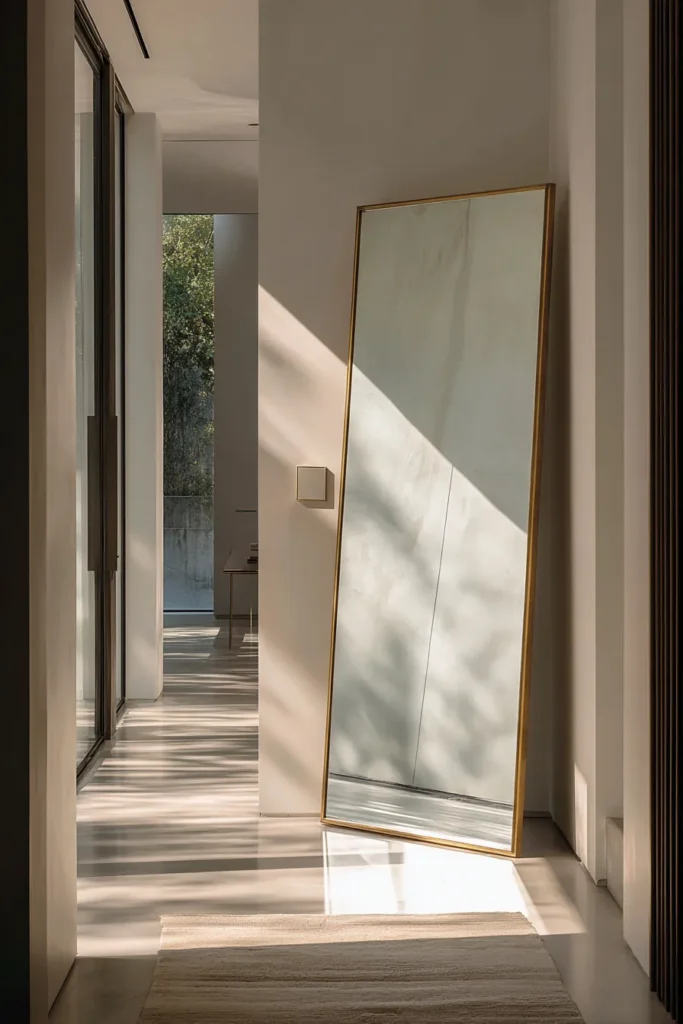
Leaning mirrors anchored subtly at the floor create an architectural presence that feels relaxed yet intentional. An 8-degree angle offers just enough tilt to soften the form while maintaining visual stability. This slight lean introduces movement and depth, making the entryway feel more dynamic without overwhelming the space. It also encourages light to bounce upward, gently brightening darker entrances.
This approach works particularly well in modern or earthy minimalist homes where structure and simplicity are key. Floor-anchored leans feel less formal than wall-mounted mirrors, lending a lived-in, gallery-like quality. They pair beautifully with textured walls or plaster finishes, where the angle enhances shadow play throughout the day. For safety and longevity, discreet anchoring ensures the mirror remains secure while preserving its effortless look.
Helpful Styling Tips
- Choose a slim frame to keep the look architectural
- Anchor discreetly to maintain safety without visual clutter
- Pair with tall greenery or sculptural vases for balance
- Allow breathing room around the mirror for maximum impact
Antique Mercury Glass with Deliberate Degradation
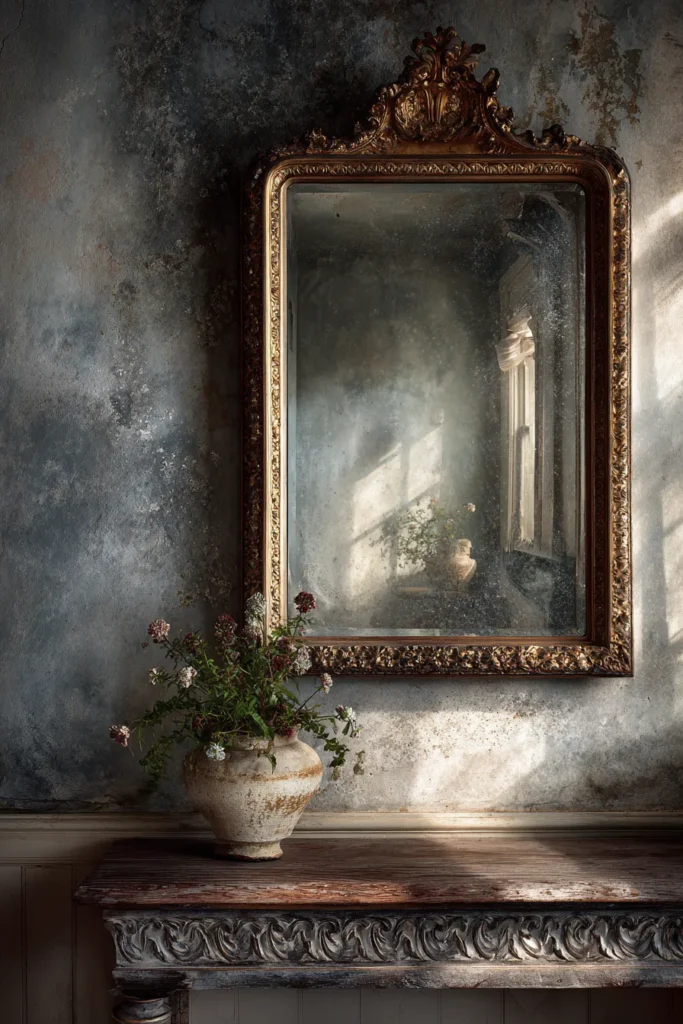
Antique mercury glass mirrors introduce a sense of history and softness that instantly elevates an entryway. Their intentionally degraded surfaces diffuse reflections, creating a dreamy, imperfect glow rather than a sharp mirror image. This makes them ideal for transitional spaces, where mood matters more than precision. The aged finish brings depth and storytelling, turning the mirror into a quiet focal point.
These mirrors are especially effective in calm, neutral entries where texture plays a key role. The worn silvering adds visual complexity without introducing bold color or pattern. When paired with simple furniture and natural materials, mercury glass mirrors feel timeless rather than ornate. They invite a slower, more mindful experience—perfect for entering or leaving the home with intention.
Helpful Styling Tips
- Pair with matte walls to enhance the softened reflection
- Avoid over-accessorizing to let the glass texture stand out
- Use subtle, warm lighting to prevent harsh glare
- Combine with vintage or handcrafted elements for cohesion
Horizontal Landscape Mirrors for Ceiling Height Manipulation
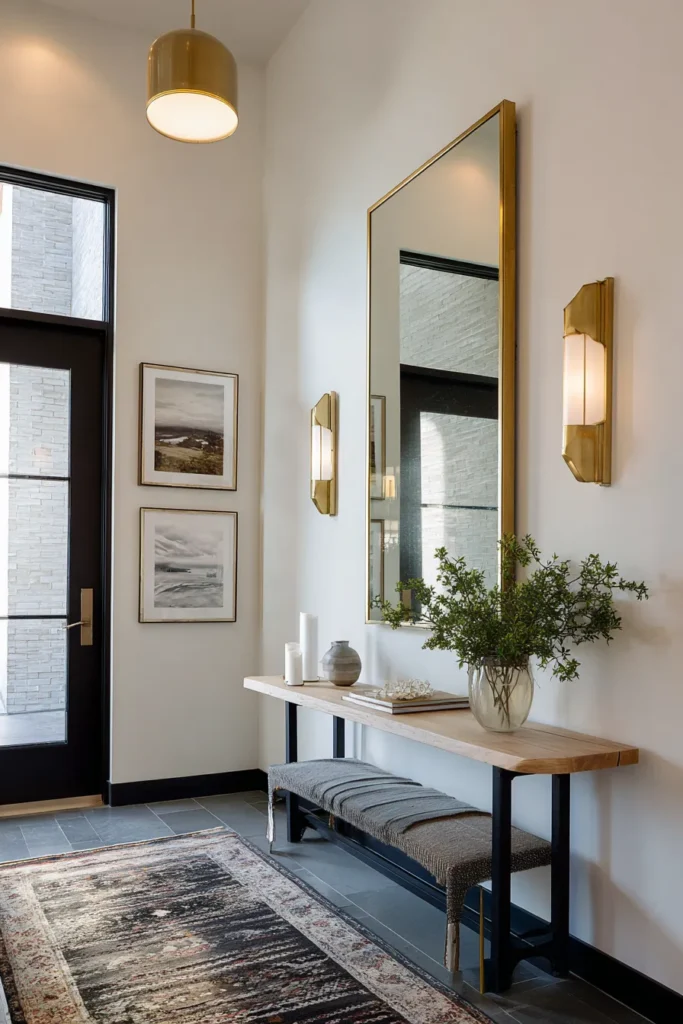
Horizontal mirrors are a powerful visual tool for reshaping perception in an entryway. By extending the mirror width rather than height, the eye is drawn laterally, creating the illusion of expanded space and balanced proportions. This approach is especially effective in narrow or tall entries where vertical elements already dominate. The reflected line grounds the room, offering visual calm rather than vertical tension.
Landscape mirrors work beautifully above slim consoles or floating shelves, where they act as quiet anchors. Their elongated form softens architectural rigidity and creates a gallery-like presence without overwhelming the wall. When framed simply—or left minimal—the mirror becomes an understated gesture that subtly corrects scale while maintaining a refined aesthetic.
Helpful Styling Tips
- Mount at eye level to emphasize width over height
- Pair with low-profile furniture for proportional balance
- Keep frames thin or minimal to avoid visual heaviness
- Use warm, diffused lighting to enhance the horizontal flow
Layered Mirror Compositions with Depth Staging
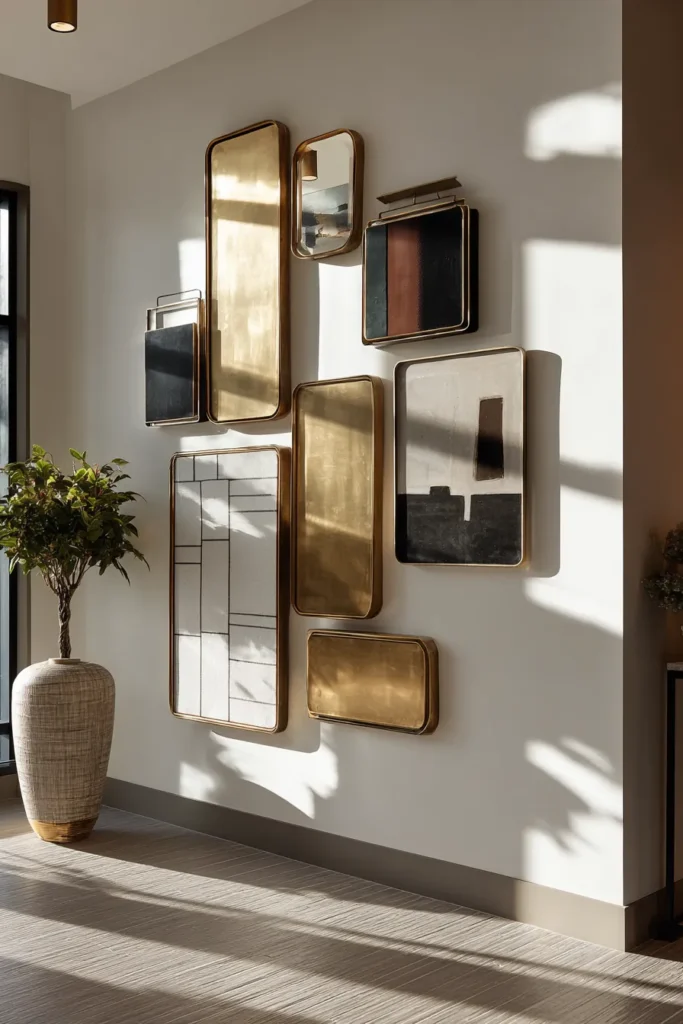
Layering mirrors introduces depth and dimension, transforming a flat entryway wall into a visually engaging composition. By overlapping or offsetting mirrors of varying sizes, you create a sense of movement that feels curated rather than decorative. This approach adds richness without relying on color or ornamentation, making it ideal for minimalist interiors seeking quiet complexity.
Depth staging works best when negative space is respected. Each mirror should feel intentional, with enough breathing room to allow shadows and reflections to interact naturally. The result is a sculptural wall moment that changes subtly throughout the day as light shifts—never static, never overwhelming.
Helpful Styling Tips
- Mix sizes while keeping shapes within the same family
- Use neutral or muted frames to maintain cohesion
- Allow partial overlaps rather than full symmetry
- Anchor the composition with a simple console or bench
Minimalist Frameless Float-Mounted Systems
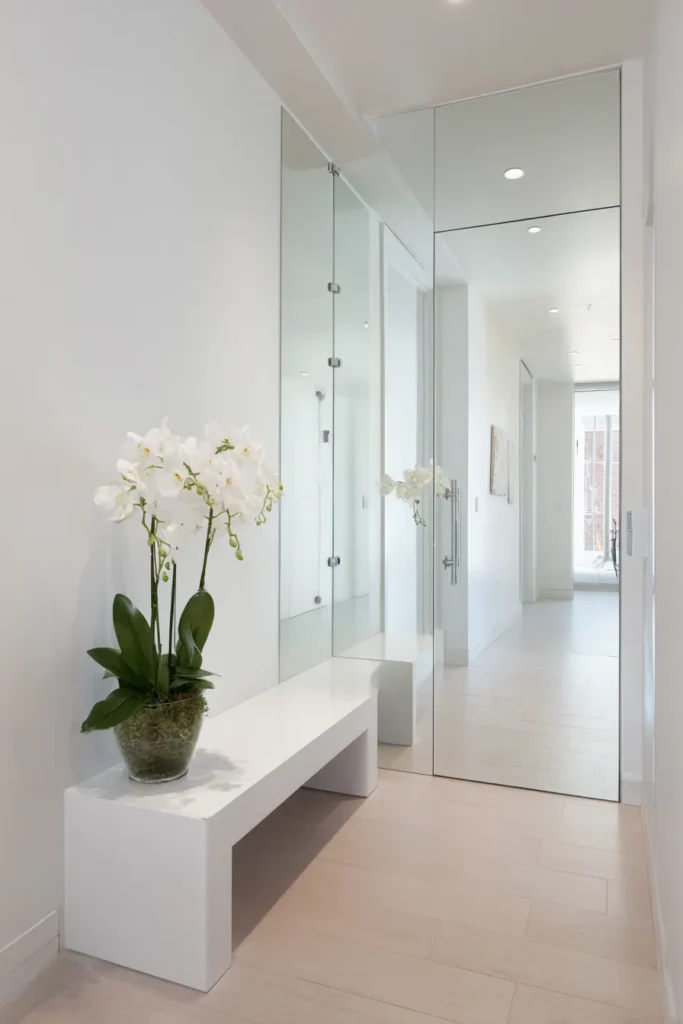
Frameless float-mounted mirrors offer a clean, almost weightless presence in the entryway. By separating the mirror slightly from the wall, this system introduces a soft shadow line that adds depth without visual clutter. The result feels architectural and precise, yet calm—perfect for modern and earthy minimalist spaces.
These mirrors allow materials around them to shine, whether it’s plaster walls, textured paint, or natural stone. Without a frame to define boundaries, the mirror blends seamlessly into the architecture, reflecting light and space in an understated way. This restraint creates a sense of quiet luxury, where the design speaks through absence rather than embellishment.
Helpful Styling Tips
- Use concealed mounting hardware for a seamless look
- Pair with textured walls to enhance shadow contrast
- Keep nearby accessories minimal and intentional
- Choose soft, warm lighting to avoid harsh reflections
Oversized Arched Mirrors as Structural Focal Points
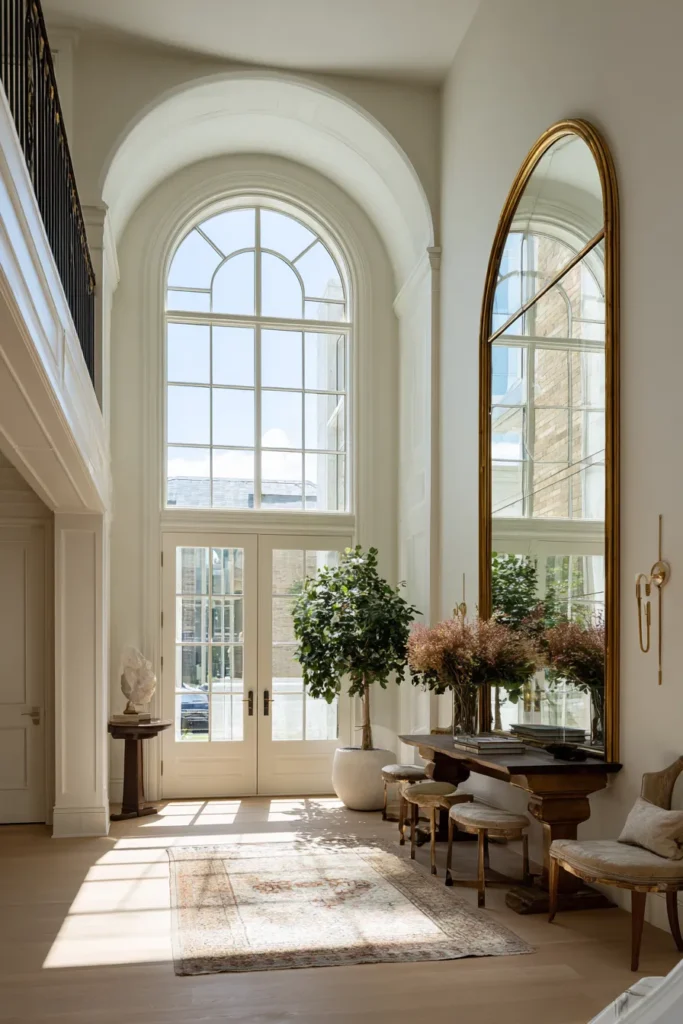
Oversized arched mirrors introduce softness and architectural presence in equal measure. Their curved silhouette gently offsets sharp lines often found in entryways, creating a natural focal point that feels intentional rather than decorative. When scaled generously, an arched mirror reads almost like a built-in element, anchoring the space with quiet confidence.
This style works particularly well in neutral or monochromatic entries, where form becomes the primary visual interest. The arch draws the eye upward while maintaining a grounded elegance, subtly enhancing both height and flow. Whether leaned or wall-mounted, an oversized arched mirror transforms the entryway into a composed moment of arrival.
Helpful Styling Tips
- Choose a height that nearly reaches door trim for architectural impact
- Keep surrounding decor minimal to let the form stand out
- Pair with plaster walls or soft matte finishes for cohesion
- Use warm ambient lighting to highlight the curve
Vintage Gilt Frames with Museum Wiring
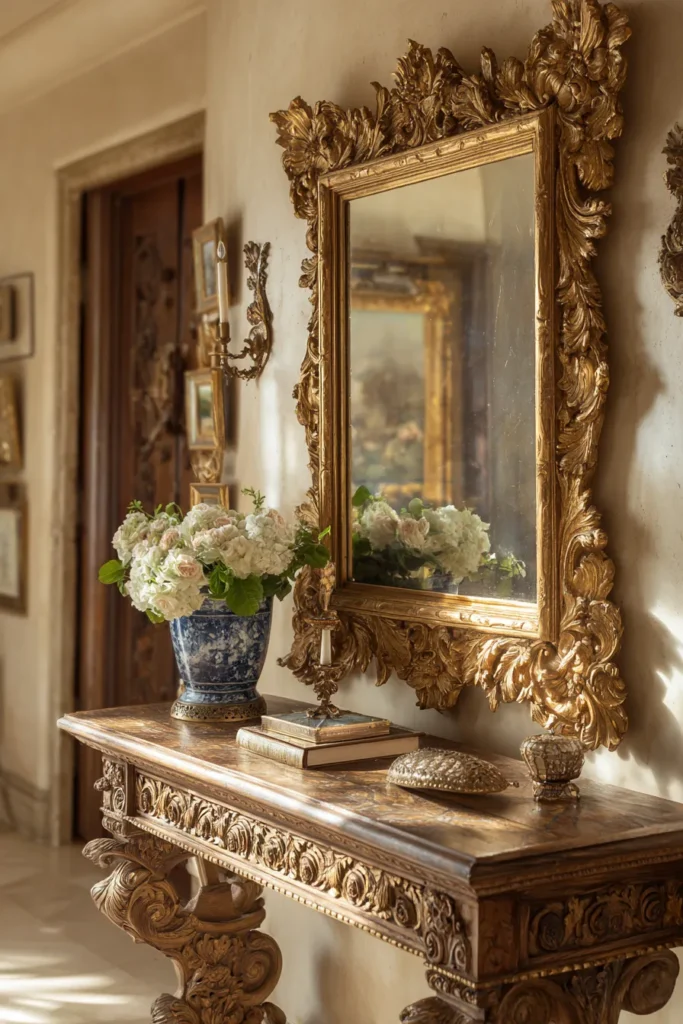
Vintage gilt-framed mirrors bring a sense of collected history to an entryway, adding warmth and character without disrupting a minimalist palette. When hung using museum-style wiring, the mirror feels curated rather than ornate—more gallery than antique shop. The subtle gold tones catch light softly, introducing richness in a restrained, intentional way.
This approach works best when the rest of the entryway remains calm and edited. The contrast between aged detail and clean surroundings creates balance, allowing the mirror to feel storied rather than heavy. The result is an entry that feels personal, layered, and quietly sophisticated.
Helpful Styling Tips
- Choose frames with worn or muted gilding rather than high shine
- Hang slightly lower than traditional placement for a relaxed feel
- Pair with simple consoles in wood or stone
- Limit nearby artwork to maintain visual clarity
Industrial Pivot Mirrors on Exposed Hardware
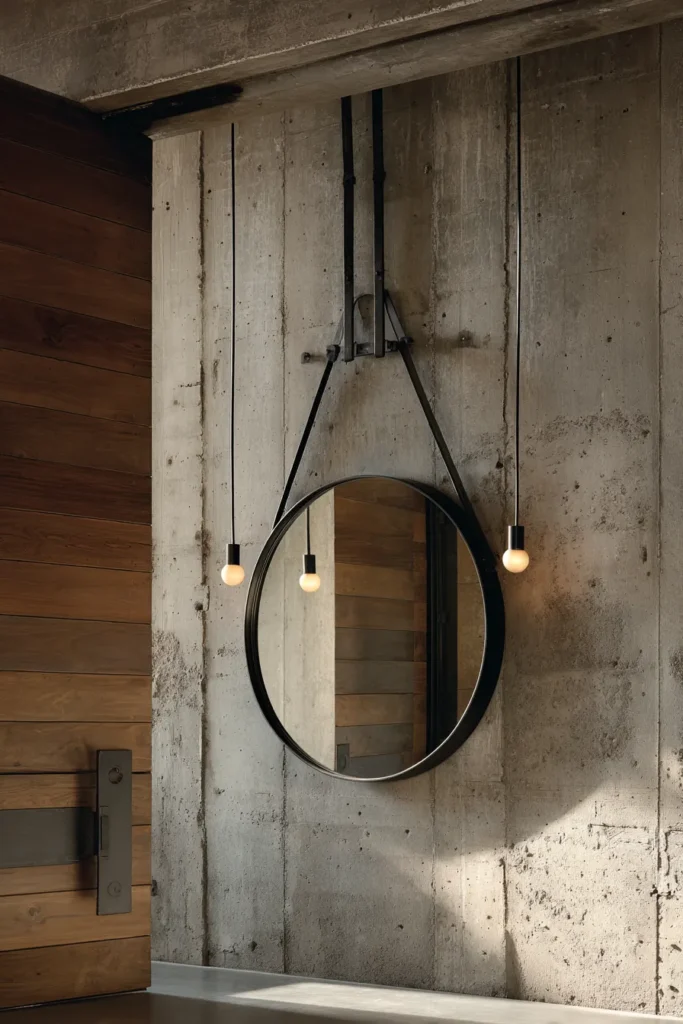
Industrial pivot mirrors add a subtle sense of movement and functionality to the entryway. Mounted on exposed hardware, these mirrors feel mechanical yet refined, blending utility with sculptural appeal. The ability to adjust the angle introduces flexibility while also signaling intentional design, making the mirror feel integrated rather than fixed.
This style pairs especially well with concrete, stone, or wood surfaces, where contrast enhances texture and depth. The exposed hardware becomes part of the visual language, offering an honest, architectural expression. In minimalist spaces, pivot mirrors introduce edge without excess—clean, purposeful, and quietly bold.
Helpful Styling Tips
- Choose hardware in blackened steel or brushed metal
- Keep wall finishes simple to highlight the mechanism
- Allow clearance around the mirror for full pivot range
- Balance with softer elements like textiles or greenery
Reclaimed Window Frame Mirror Conversions
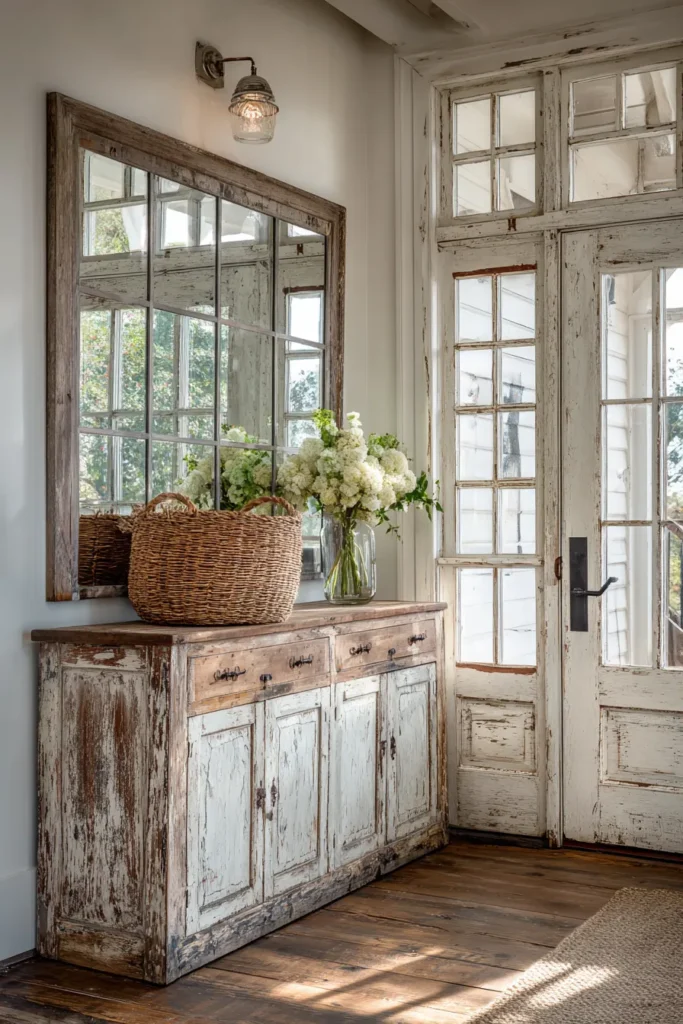
Reclaimed window frame mirrors introduce a sense of quiet history and material honesty into the entryway. The original mullions and weathered imperfections tell a story, adding depth without relying on ornament. When converted into mirrors, these frames blur the line between architecture and decor, making the entry feel layered and intentional.
This style works beautifully in earthy minimalist spaces where texture matters more than polish. The segmented reflection softens light and breaks up visual continuity, creating a calm, diffused effect. Paired with simple surroundings, reclaimed window mirrors feel grounded and timeless rather than rustic or themed.
Helpful Styling Tips
- Choose frames with subtle wear rather than heavy distressing
- Keep wall colors neutral to highlight the frame’s texture
- Pair with stone or wood consoles for material continuity
- Avoid overcrowding nearby walls to let the piece breathe
Blackened Steel Geometric Frame Systems
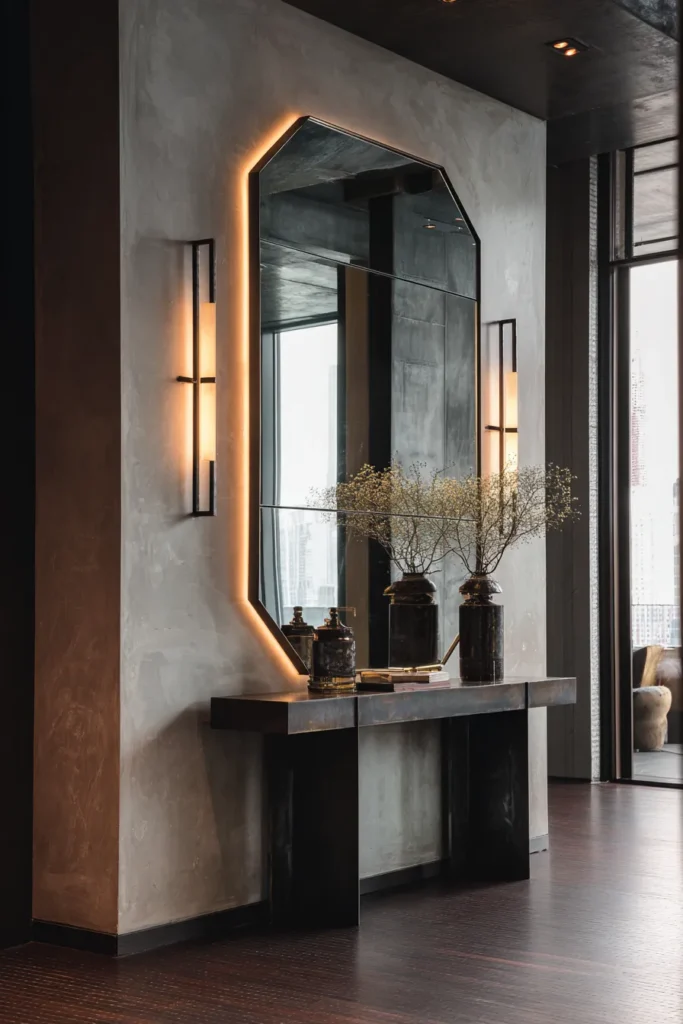
Blackened steel mirrors bring a graphic, architectural clarity to the entryway. Their clean lines and structured geometry create contrast against softer materials, grounding the space with quiet strength. The dark finish absorbs light rather than reflecting it, adding depth and visual weight without feeling heavy.
These mirrors are especially effective in modern or minimalist entries where precision and restraint are key. The geometry provides definition, while the muted steel finish keeps the look understated. When balanced with organic textures, the result feels composed, contemporary, and intentionally minimal.
Helpful Styling Tips
- Use simple geometric shapes to avoid visual complexity
- Pair with warm woods or plaster walls for contrast
- Keep accessories minimal and sculptural
- Choose a matte or satin finish over high gloss
Venetian-Style Etched Glass with Historical References
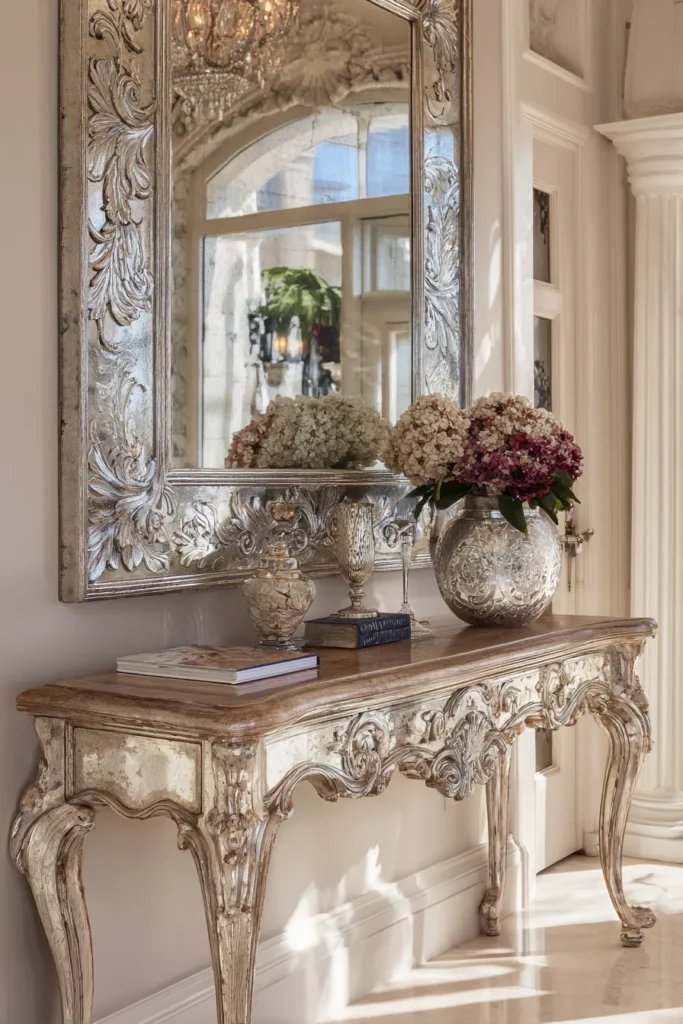
Venetian-style etched mirrors bring artistry and tradition into the entryway through delicate detailing rather than bold form. The etched patterns catch light softly, creating a layered reflection that feels refined and atmospheric. These mirrors reference classical craftsmanship while remaining surprisingly adaptable to modern interiors.
When styled thoughtfully, etched glass adds elegance without excess. The key is restraint—allowing the mirror to act as a subtle accent rather than a dominant statement. In calm, neutral entryways, Venetian-style mirrors introduce a sense of heritage and quiet sophistication that feels both timeless and personal.
Helpful Styling Tips
- Choose subtle etching over highly ornate designs
- Pair with simple wall finishes to avoid visual competition
- Use soft, diffused lighting to highlight the detailing
- Limit surrounding decor to maintain a composed look
Console-Integrated Mirror Blocks (Unified Furniture)
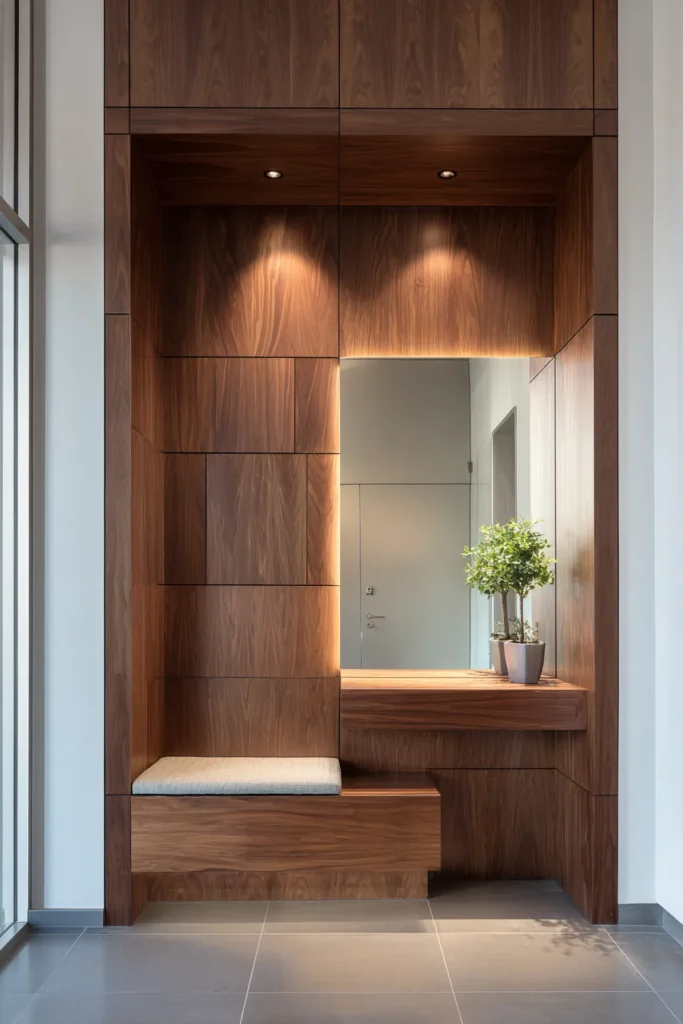
Console-integrated mirror blocks blur the boundary between furniture and architecture, creating a unified, sculptural presence in the entryway. By merging mirror and console into a single composition, the space feels intentional and cohesive rather than layered with separate elements. This integration reduces visual noise while enhancing function, allowing the entry to feel calm, ordered, and refined.
This approach works especially well in minimalist interiors where restraint is key. The mirror no longer floats independently on the wall but becomes part of a grounded system, visually anchoring the space. The result is an entryway that feels thoughtfully designed, where every element serves both form and purpose.
Helpful Styling Tips
- Choose consoles with clean lines and minimal detailing
- Keep materials consistent between mirror and furniture
- Limit accessories to a few functional objects
- Allow negative space around the unit for balance
Asymmetric Multi-Mirror Installations

Asymmetric mirror installations introduce movement and visual intrigue without relying on bold color or ornamentation. By intentionally offsetting mirrors of varying shapes or sizes, the composition feels organic and collected rather than rigidly designed. This imbalance creates energy while still maintaining a sense of calm when executed with restraint.
The key to success lies in spacing and alignment. Each mirror should feel connected to the whole while retaining its own presence. When placed thoughtfully, asymmetry adds depth and personality to an entryway, encouraging the eye to wander without overwhelming the space.
Helpful Styling Tips
- Stick to a cohesive material or finish palette
- Vary scale while keeping shapes complementary
- Leave generous negative space between pieces
- Anchor the installation with a simple console or bench
Convex Security Mirrors for Spatial Drama
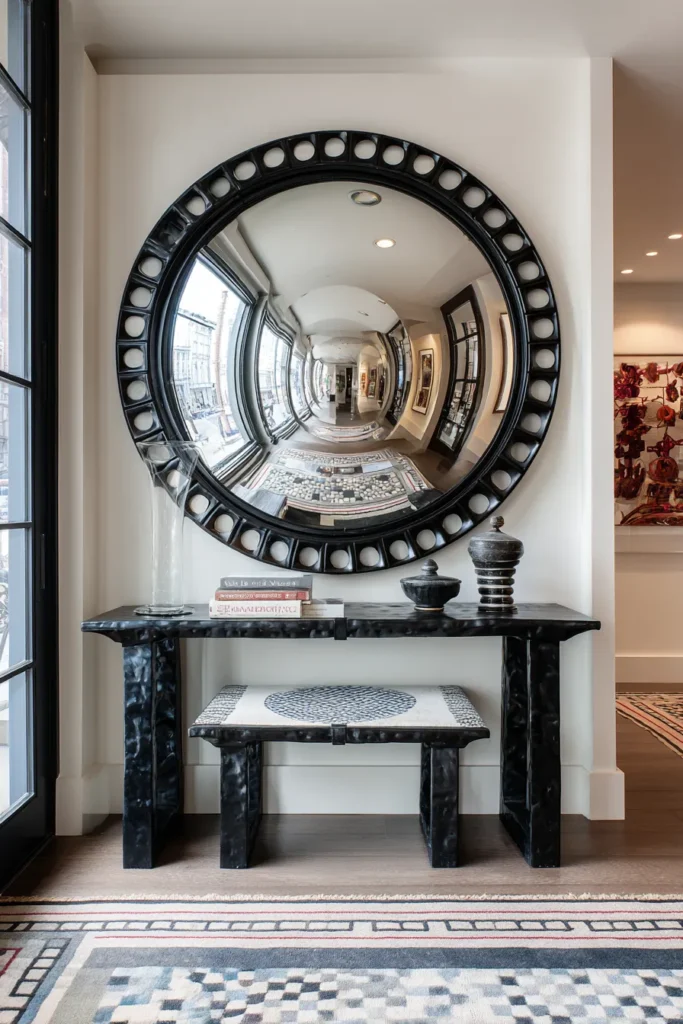
Convex mirrors offer an unexpected way to introduce drama and dimension into the entryway. Their curved surface captures a wider field of view, creating a distorted reflection that feels dynamic and sculptural. What was once purely utilitarian becomes a striking design feature when placed with intention.
In minimalist spaces, convex mirrors add intrigue through form rather than embellishment. The gentle curvature plays with light and perspective, making even small entries feel more expansive. When balanced with understated surroundings, a convex mirror becomes a quiet statement—functional, artistic, and visually engaging.
Helpful Styling Tips
- Choose frames in muted or industrial finishes
- Position where light can interact with the curved surface
- Keep surrounding decor minimal to avoid visual clutter
- Use as a singular focal point rather than part of a group
Floor-to-Ceiling Panel Mirrors in Narrow Entries
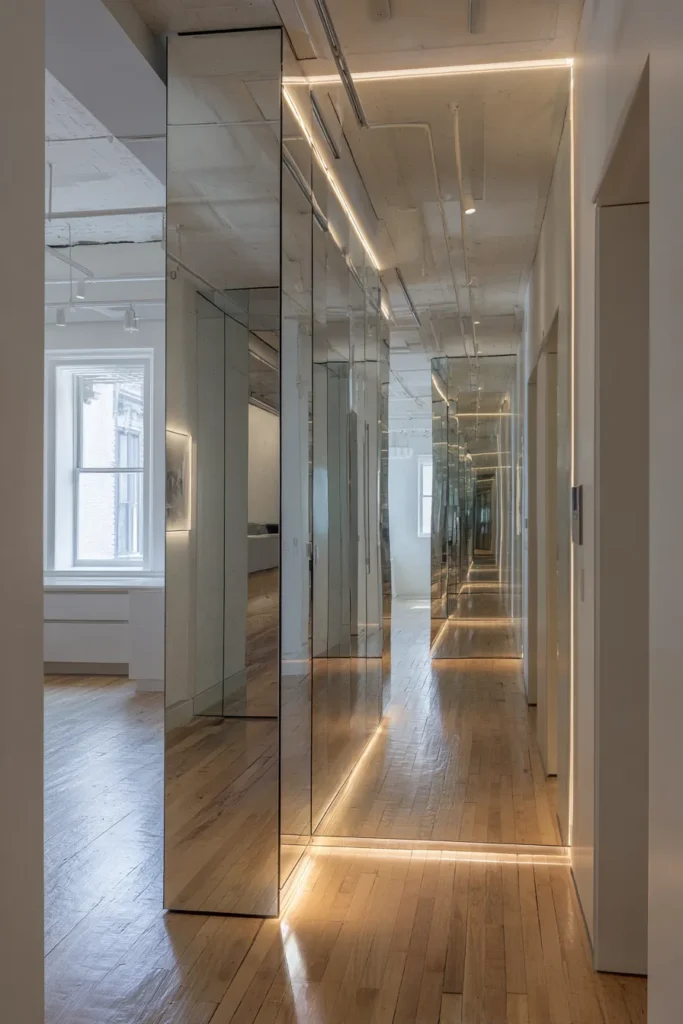
Floor-to-ceiling panel mirrors are a powerful solution for narrow or enclosed entryways. By extending the mirror vertically from base to ceiling, the space immediately feels taller, brighter, and more open. The uninterrupted surface creates a clean architectural line, allowing the mirror to read as part of the wall rather than an added object.
This approach works best when detailing is kept minimal. Slim panels or discreet seams maintain visual clarity while maximizing reflective impact. In tight entries, floor-to-ceiling mirrors create a sense of continuity, softening transitions and making the space feel considered rather than constrained.
Helpful Styling Tips
- Use slim panels or edge-polished glass for a seamless look
- Keep adjacent walls free of visual clutter
- Pair with recessed or wall-wash lighting for softness
- Avoid heavy frames that break the vertical flow
Organic Edge Live-Wood Framed Mirrors
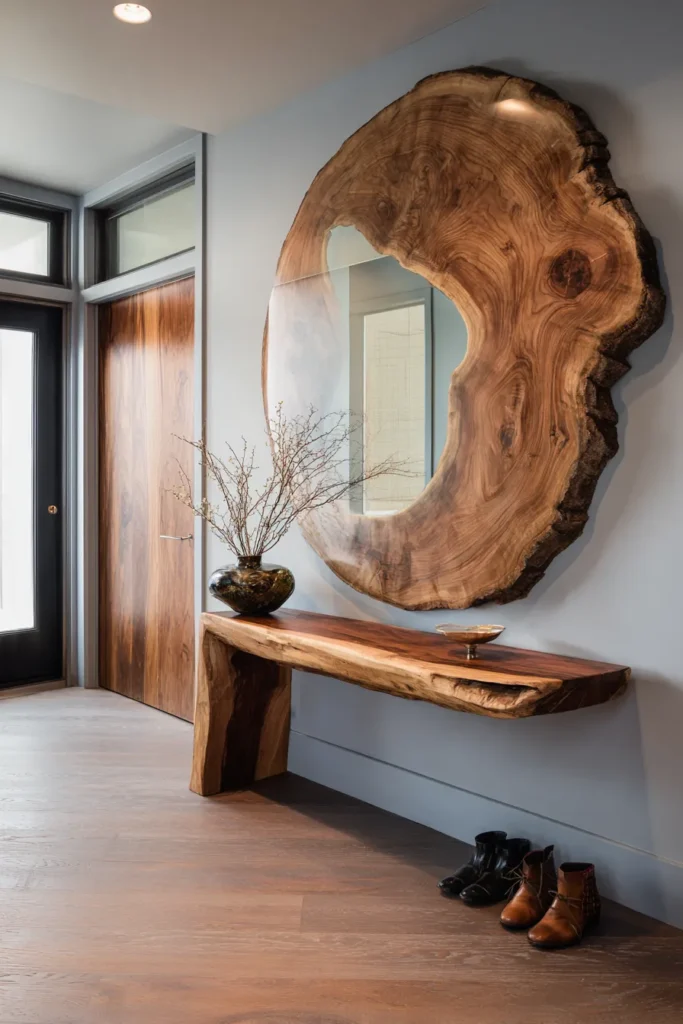
Live-wood framed mirrors introduce organic movement and warmth into the entryway through naturally irregular edges. Each piece feels sculptural and one-of-a-kind, offering contrast to the clean lines often found in minimalist interiors. The raw edge brings nature indoors, grounding the space with texture and authenticity.
These mirrors work beautifully when allowed to stand alone as a statement. The natural variation in the wood creates visual interest without the need for additional decoration. When paired with neutral walls and simple furnishings, live-wood mirrors add depth and character while maintaining a calm, intentional atmosphere.
Helpful Styling Tips
- Choose wood tones that complement existing flooring or furniture
- Let the mirror stand alone without surrounding artwork
- Pair with stone or linen textures for balance
- Use soft, directional lighting to highlight the wood grain
Grouped Vintage Compacts as Mirror Clusters
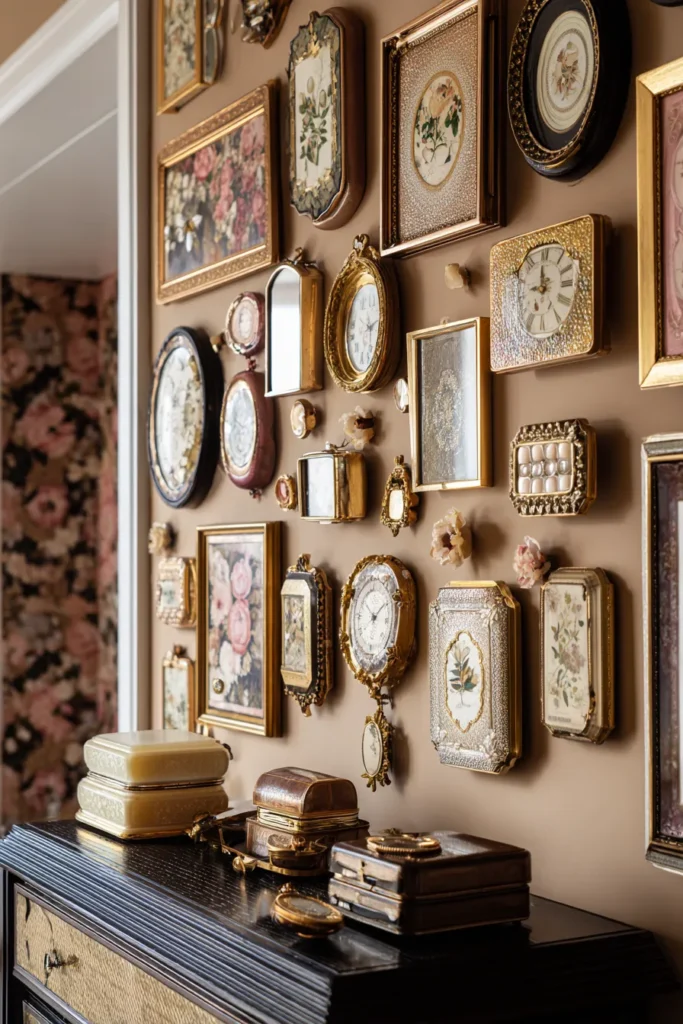
Grouped vintage compact mirrors offer a delicate, unexpected approach to entryway mirror styling. Their small scale and varied patina create a layered composition that feels personal and collected over time. Rather than serving as a single reflective surface, the cluster functions as an artistic installation with subtle shimmer and charm.
This approach is ideal for smaller entryways where a large mirror may feel overpowering. The repetition of form creates cohesion, while individual differences add character. When arranged thoughtfully, compact mirrors bring intimacy and quiet detail to an otherwise simple space.
Helpful Styling Tips
- Stick to a limited finish palette for cohesion
- Arrange loosely rather than in rigid patterns
- Keep wall color neutral to let the mirrors stand out
- Balance the cluster with minimal furniture below
Backlit LED Mirror Systems with Tunable Kelvin
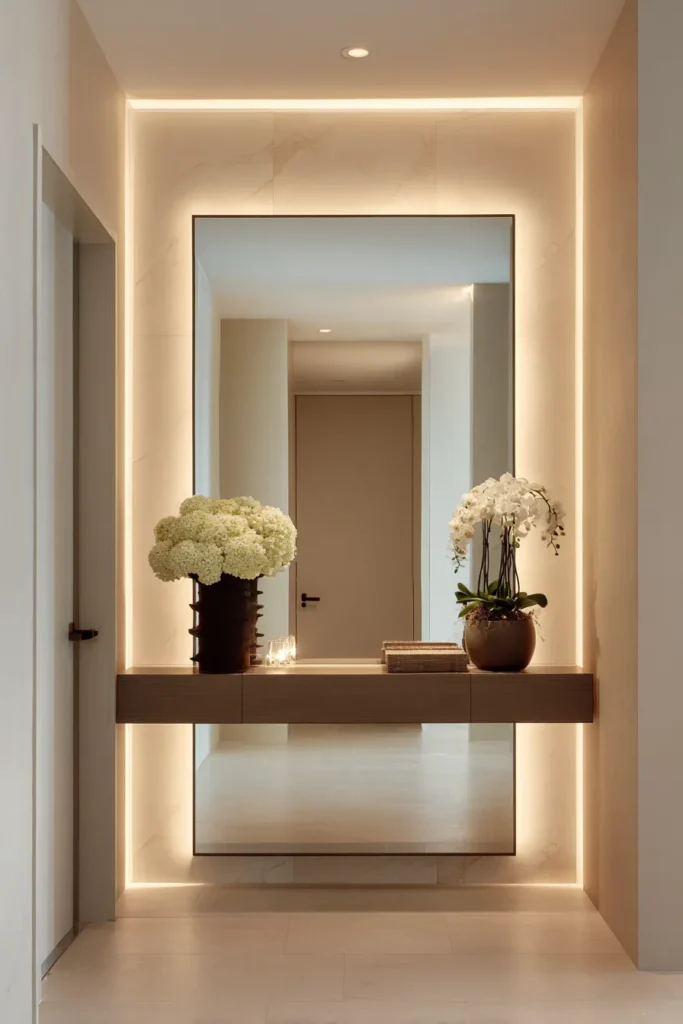
Backlit LED mirrors introduce a subtle layer of technology while preserving a calm, architectural aesthetic. When designed with tunable Kelvin settings, these mirrors allow the light temperature to shift throughout the day—from crisp and energizing in the morning to warm and soothing in the evening. The glow feels ambient rather than decorative, enhancing the entryway without drawing attention to the source.
This style works best when the lighting is integrated seamlessly, creating a soft halo that defines the mirror’s shape while elevating the overall atmosphere. In minimalist entryways, backlit mirrors add depth and refinement, blending function with quiet luxury. The result is a space that feels thoughtful, modern, and effortlessly composed from the moment you arrive home.
Helpful Styling Tips
- Choose warm-to-neutral Kelvin ranges for a natural glow
- Opt for concealed light sources to maintain a clean look
- Pair with simple wall finishes to enhance the halo effect
- Use dimmable settings to adapt light levels throughout the day
Conclusion
Entryway mirrors have the power to shape how a home is experienced from the very first step inside. When chosen with intention, they do more than reflect light—they influence proportion, mood, and atmosphere. By focusing on thoughtful materials, considered placement, and restrained design, even the smallest entryway can feel composed and welcoming. Whether you gravitate toward sculptural forms or subtle architectural details, start with one approach that resonates and allow the space to evolve naturally. A well-styled entryway sets a quiet, confident tone—one that carries through the rest of your home.


