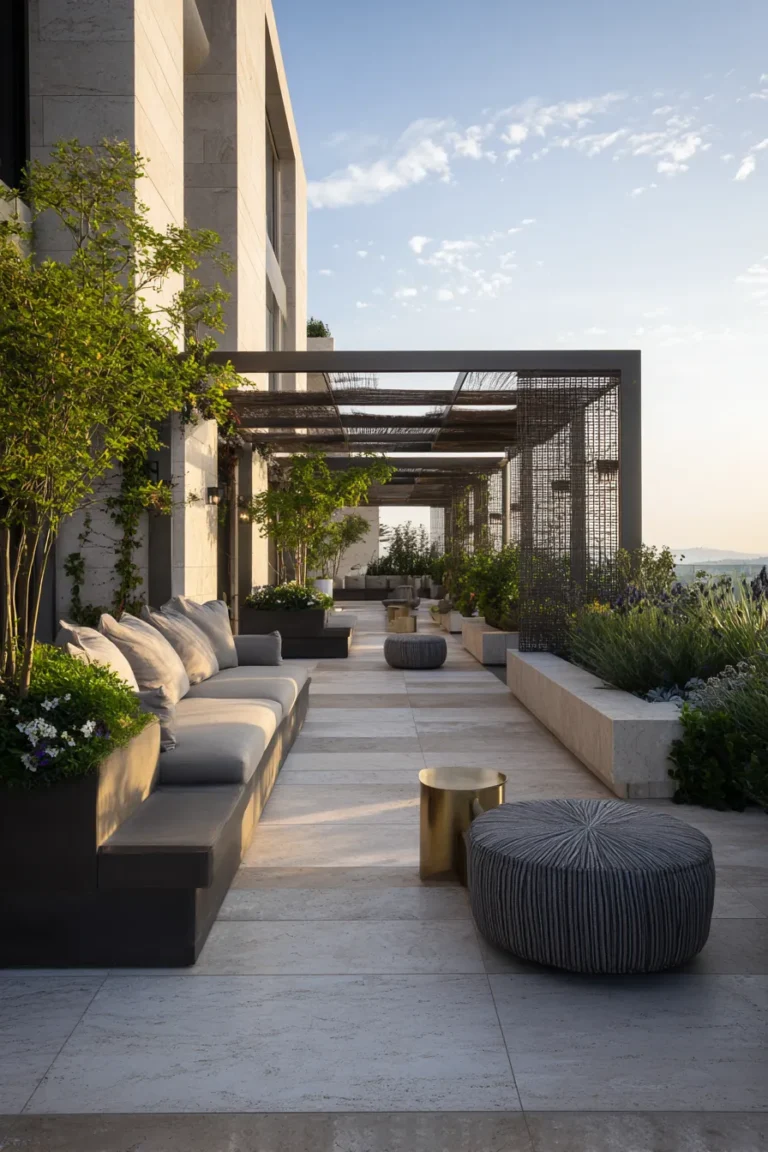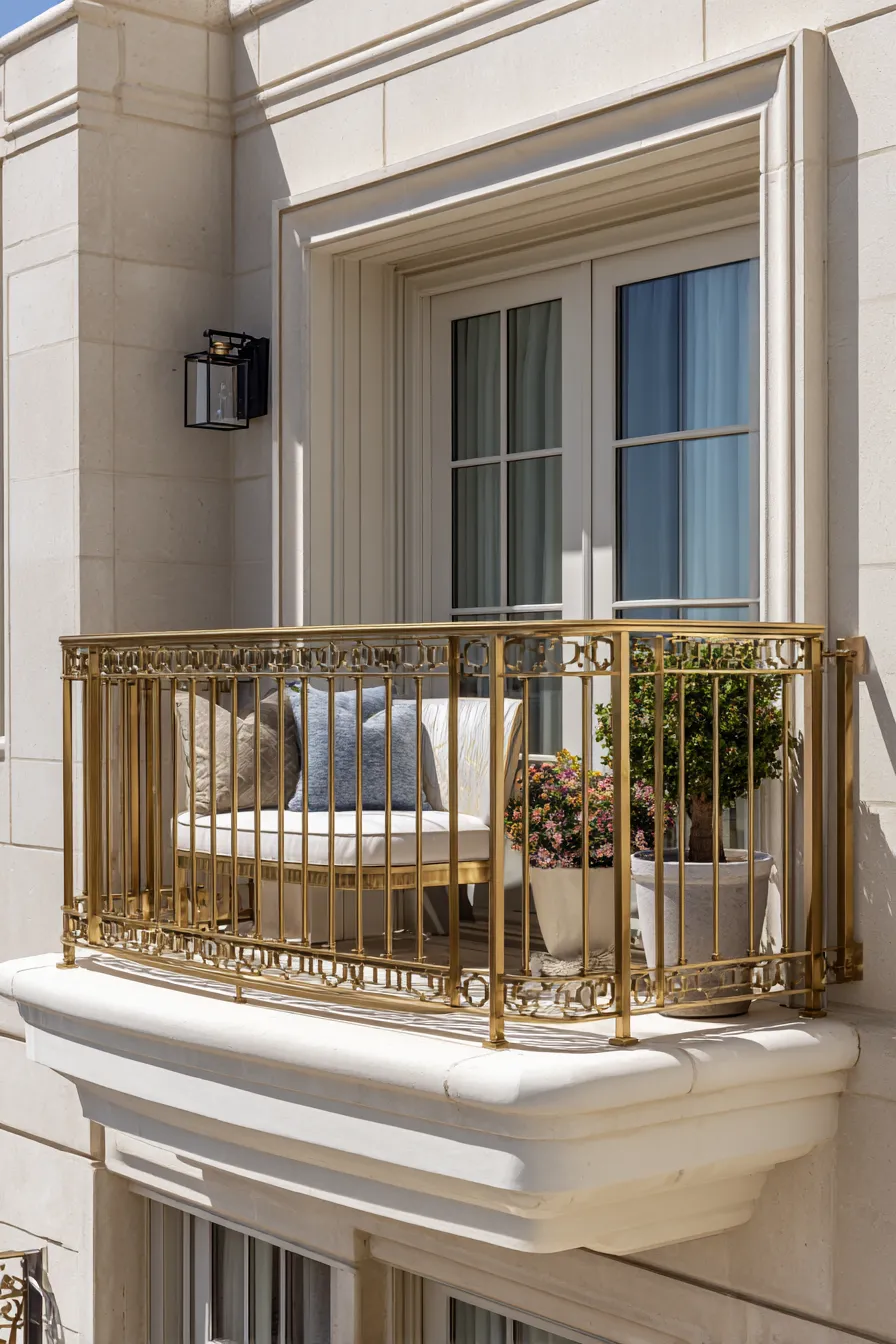
Your balcony railing is the unsung hero of your exterior façade—it dictates your privacy, frames your view, and defines the architectural “jewelry” of your home. We are moving past the era of purely utilitarian barriers; in 2025, the best designs bridge the gap between high-end safety and bespoke style, turning your outdoor edge into a seamless extension of your interior living space.
1. The “Invisible” Frameless Glass
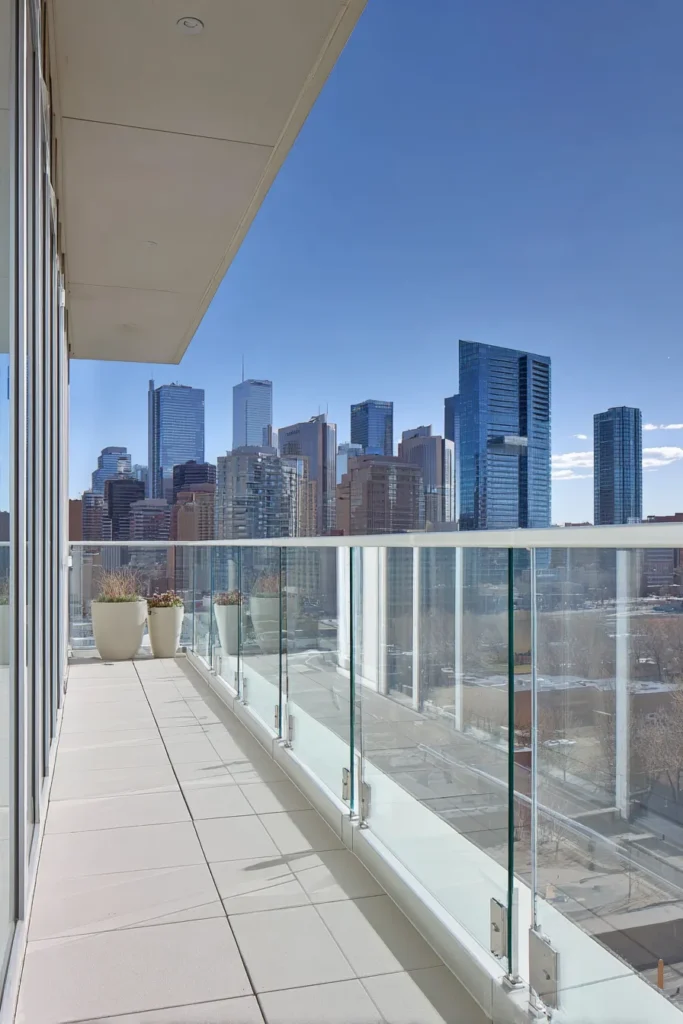
For high-rise dwellers and coastal homeowners, the ultimate luxury is the erasure of boundaries. A frameless glass railing system creates a “floating” barrier that offers a vertiginous, thrilling connection to the skyline or ocean. By removing top rails and heavy posts, you effectively turn your balcony into an open-air theater where the view is the only protagonist. The glass acts as a wind buffer without compromising visual flow, creating a “sky lounge” effect that feels expansive and limitless.1
From a design perspective, this style works because it minimizes visual weight. It allows sunlight to flood the interior, making adjacent living rooms feel larger and brighter. The absence of horizontal or vertical lines means there is nothing to distract the eye, making it the perfect choice for modern minimalist interiors that spill out onto the terrace. Styling this look requires restraint; the railing is invisible, so your furniture and flooring become the focal points.3
Design Breakdown:
- Opt for low-iron tempered glass panels to ensure absolute clarity and avoid the greenish tint of standard glass.
- Use minimal stainless steel spigots or a recessed base channel to anchor the glass, keeping hardware out of sight.
- Apply a hydrophobic coating to the exterior face to repel water spots and city grime, keeping the “invisible” look crisp.
- Style the balcony with low-profile furniture to maintain the unobstructed sightlines.
- Incorporate a light-colored flooring material to reflect the abundance of natural light entering through the glass.
- Use weighted, sculptural planters in corners to add a grounding element to the floating aesthetic.
- Best For: High-rise apartments, coastal properties, and homes with panoramic views.
2. Matte Black Horizontal Rails
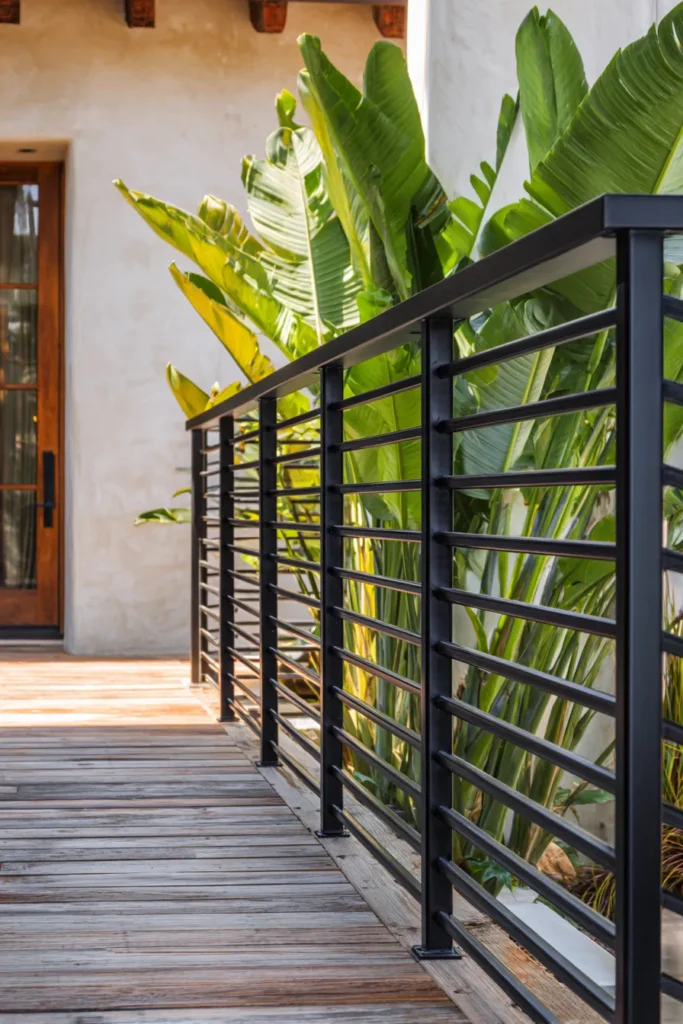
Matte black has dethroned chrome and silver as the finish of choice for 2025. A horizontal railing system in this finish acts like a graphic eyeliner for your building, creating a bold, architectural frame that defines the space with authority. Unlike white railings that can disappear or look builder-grade, matte black recedes visually at night while providing a sharp, sophisticated contrast against the sky during the day. It evokes a modern farmhouse or urban industrial aesthetic that is incredibly photogenic.3
The power of this design lies in its contrast. When paired with light stucco, brick, or warm wood siding, the black railing pops, creating a structured, intentional look. It feels substantial and grounded, offering a psychological sense of security without feeling heavy or ornate. The horizontal lines also visually elongate the balcony, tricking the eye into perceiving a wider space.1
Design Breakdown:
- Choose a powder-coated aluminum or steel finish to achieve that deep, non-reflective charcoal or black tone.
- Ensure the horizontal bars are slim to maintain visibility while establishing a strong linear rhythm.
- Pair with warm wood decking or teak furniture to soften the industrial edge of the black metal.
- Use monochromatic soft furnishings—creams, greys, and blacks—to maintain a cohesive, graphic palette.
- Add bold, broad-leafed plants (like Fiddle Leaf Figs or Monsteras) which look stunning against the black backdrop.
- Consider a flat top rail that is wide enough to rest a drink on, adding functionality to the form.
- Best For: Modern farmhouses, urban lofts, and wide, shallow balconies needing visual elongation.
3. Nautical Cable Railing Systems
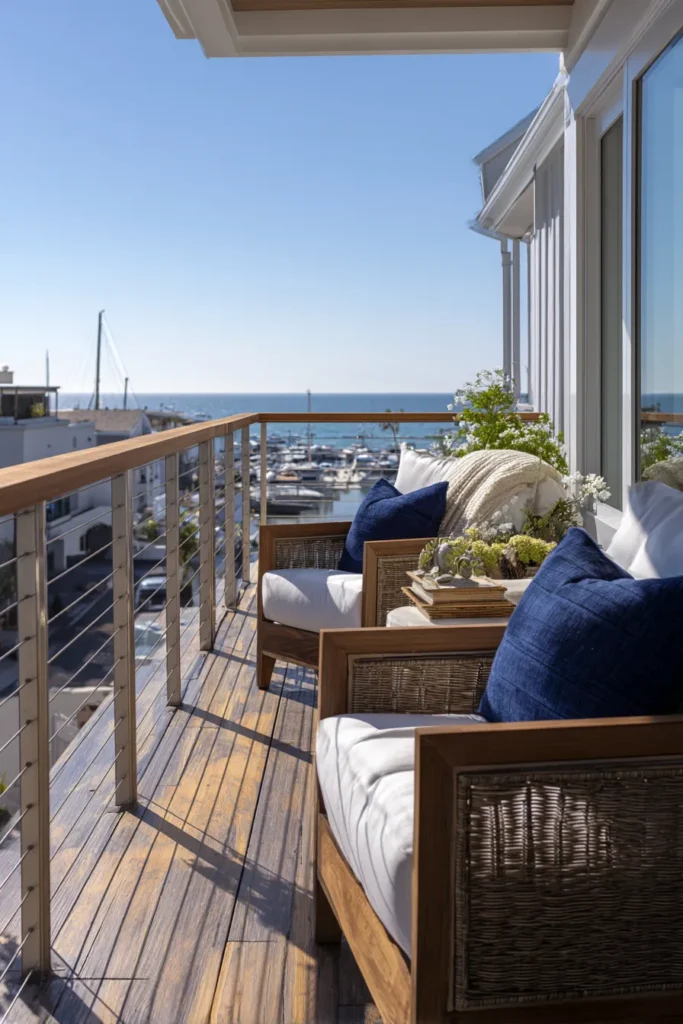
Borrowing from the sleek, functional aesthetic of luxury yachts, cable railings offer a breezy, linear look that is perfect for open-air living. Thin, high-tension stainless steel cables run horizontally through posts, virtually disappearing from a distance while providing a strong safety barrier. This design promotes maximum airflow, keeping your balcony cool and breezy even in the height of summer, while the “shimmer” of the cables adds a subtle, metallic texture.3
This aesthetic is all about clean lines and engineering precision. It pairs beautifully with wood posts for a “deck” feel or metal posts for a more industrial vibe. The slim profile of the cables ensures that even when sitting down, your view remains relatively uninterrupted. It’s a look that says “relaxed luxury” and works exceptionally well in homes that want to bridge the gap between rustic and contemporary.
Design Breakdown:
- Use marine-grade (316) stainless steel cables to prevent rust and maintain a silver sheen.
- Combine with a wood top rail (cedar or mahogany) to give the hands a warm surface to touch.
- Keep vertical posts spaced evenly to create a satisfying, rhythmic repetition along the façade.
- Style with navy blues, stripes, and natural linen textiles to lean into the coastal/nautical vibe.
- Ensure the tensioners and hardware are sleek and hidden inside the posts for a clutter-free look.
- Allow the cables to catch the sunlight; they create beautiful linear shadows on the deck floor.
- Best For: Beach houses, lakefront cabins, and windy balconies requiring airflow.
4. Industrial Metal Mesh
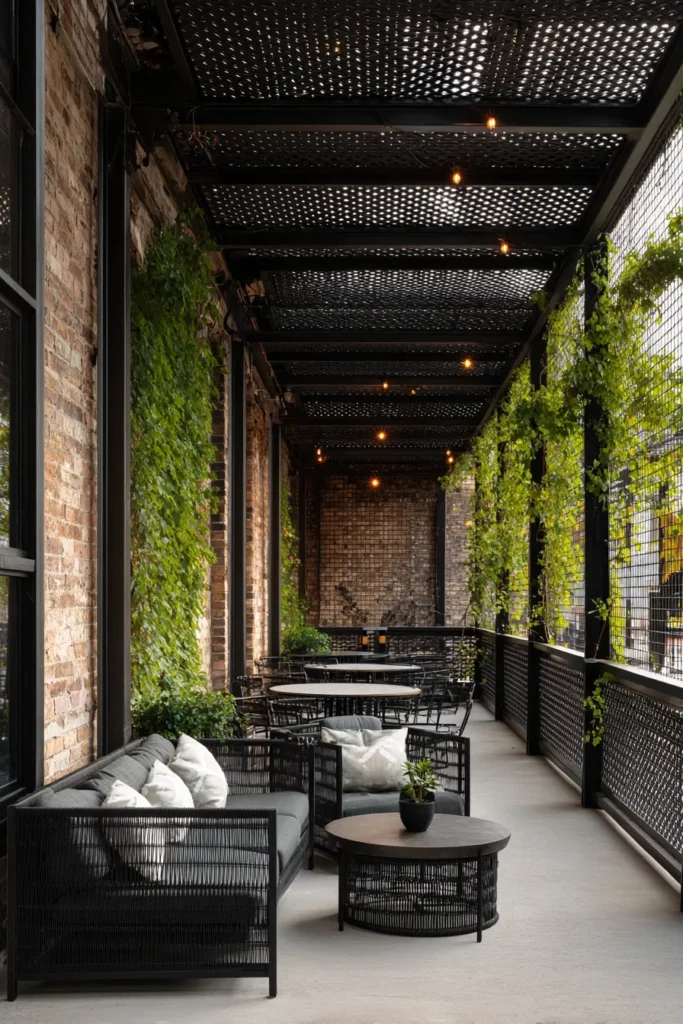
For those craving texture and a bit of “warehouse chic,” industrial metal mesh is a rising trend for 2025. Woven wire or expanded metal panels introduce a gritty, tactile element to the balcony. This semi-transparent screen offers a unique advantage: it obscures the view looking in from the street (providing privacy) while allowing the resident to see out. It filters light beautifully, creating a dappled effect that changes throughout the day.7
The aesthetic here is raw and urban. It breaks away from the polish of glass and the tradition of pickets. Mesh railings work incredibly well in mixed-use developments or converted loft spaces, where they complement exposed brick and concrete. They add “visual friction” to the façade, making the balcony feel like a fortified, private sanctuary within the bustle of the city.4
Design Breakdown:
- Select a mesh density that balances your need for privacy with your desire for light.
- Frame the mesh panels in a sturdy, matte black or raw steel frame to neaten the edges.
- Soften the hard, cold look of the mesh with hanging planters or climbing vines (like Star Jasmine).
- Use industrial-style lighting, such as cage lights or exposed bulbs, to complement the wire texture.
- Pair with concrete or stone flooring to enhance the brutalist/industrial theme.
- Keep furniture simple and structural—metal wire chairs or heavy timber benches work best.
- Best For: Urban apartments, converted lofts, and spaces needing privacy from street level.
5. The Biophilic Hybrid: Wood Cap on Metal
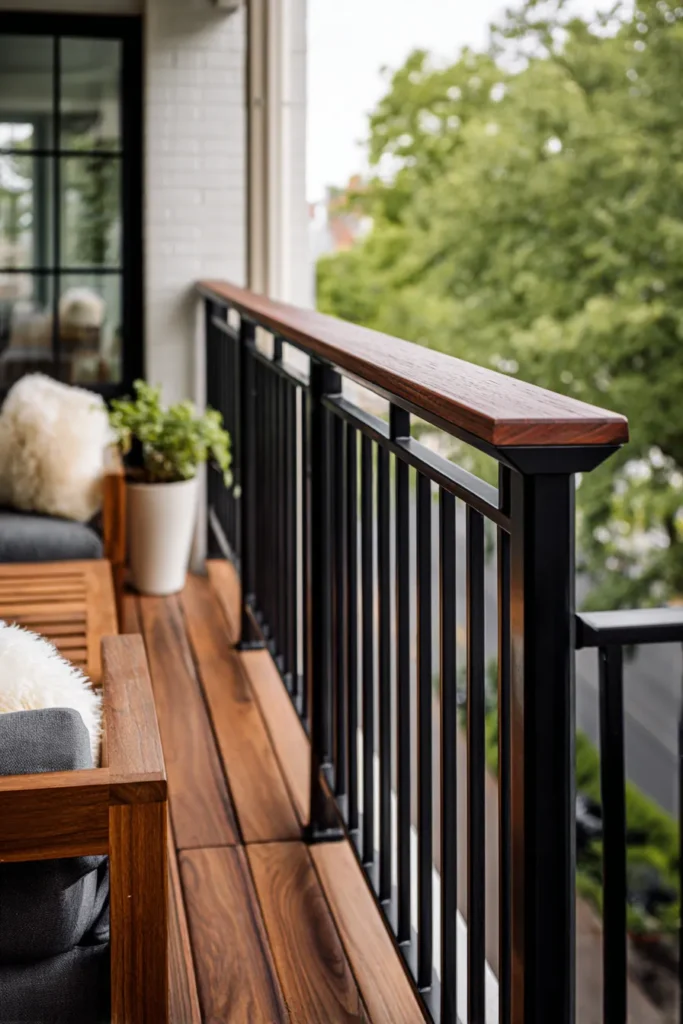
This design is a masterclass in sensory balance. While metal provides the structural strength and modern silhouette, a natural wood cap rail offers tactile warmth. It addresses a common practical issue: metal rails can be freezing in winter or scorching in summer. A timber top rail invites you to lean, rest your arms, and linger at the edge. Visually, the wood softens the “coldness” of modern architecture, bridging the gap between the built environment and the natural landscape.2
This hybrid approach is incredibly versatile. You can pair a rich mahogany cap with a black metal frame for a moody, luxurious look, or use a light teak cap on white metal for a Scandinavian vibe. It creates a horizontal “horizon line” of wood that draws the eye and makes the balcony feel like a crafted piece of furniture rather than just a building appendage.1
Design Breakdown:
- Choose a rot-resistant hardwood like Ipe, Teak, or Cedar for the top rail to ensure longevity.
- Treat the wood with a penetrating oil rather than a varnish to maintain a natural, matte feel.
- Match the wood tone of the railing to your balcony decking or interior flooring for a seamless indoor-outdoor flow.
- Keep the metal infill simple (vertical bars or cable) to let the wood cap be the star.
- Style with wooden furniture that echoes the railing’s timber tone.
- Add soft textiles like sheepskins or chunky knits to enhance the “warm and cozy” atmosphere.
- Best For: Homes seeking warmth, Scandi-style exteriors, and tactile-focused design.
6. Integrated “Living” Planter Rails
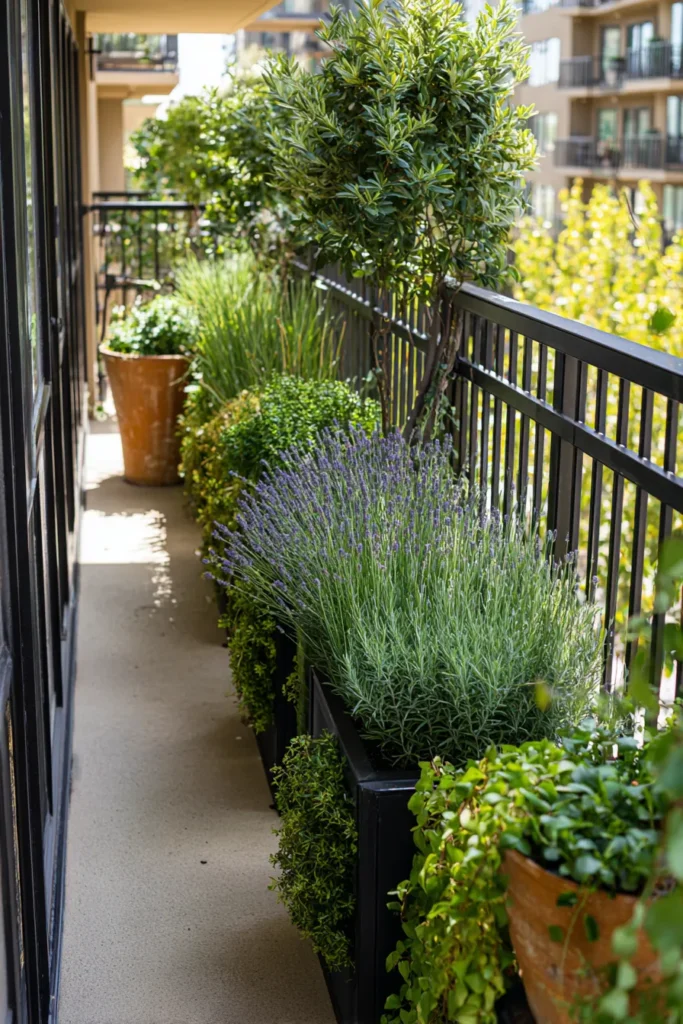
In 2025, the railing is no longer just a barrier; it’s a vertical garden. Integrated planter railings—either custom-built channels or “straddle” designs—transform the balcony edge into a lush, green perimeter. This is the ultimate biophilic design, replacing the hard line of metal or glass with soft, swaying foliage. For small balconies, this is a game-changer, as it moves the garden off the floor and onto the rail, freeing up precious square footage for seating.1
This design softens the transition between your home and the city. Looking through a veil of lavender or ornamental grasses changes the acoustic and visual quality of the space, dampening street noise and filtering pollution. It turns the railing into a living ecosystem that attracts pollinators and changes with the seasons, grounding your high-rise life in the rhythms of nature.1
Design Breakdown:
- Use “straddle” planters that fit securely over the top rail or custom-welded baskets attached to the exterior face.
- Plant drought-tolerant species like Sedum, Lavender, or ornamental grasses that can withstand wind and sun.
- Ensure planters have proper drainage holes that don’t drip directly onto the neighbor below (use a drip tray system).
- Create a “layered” look by mixing trailing plants (like Ivy) with upright plants (like Rosemary).
- Use the planters to introduce color—terracotta pots for warmth, or matte black troughs for a modern look.
- Incorporate solar stake lights into the planters to illuminate the greenery at night.
- Best For: Micro-balconies, urban gardeners, and softening harsh concrete views.
7. Vertical Timber Slats (The Zen Screen)
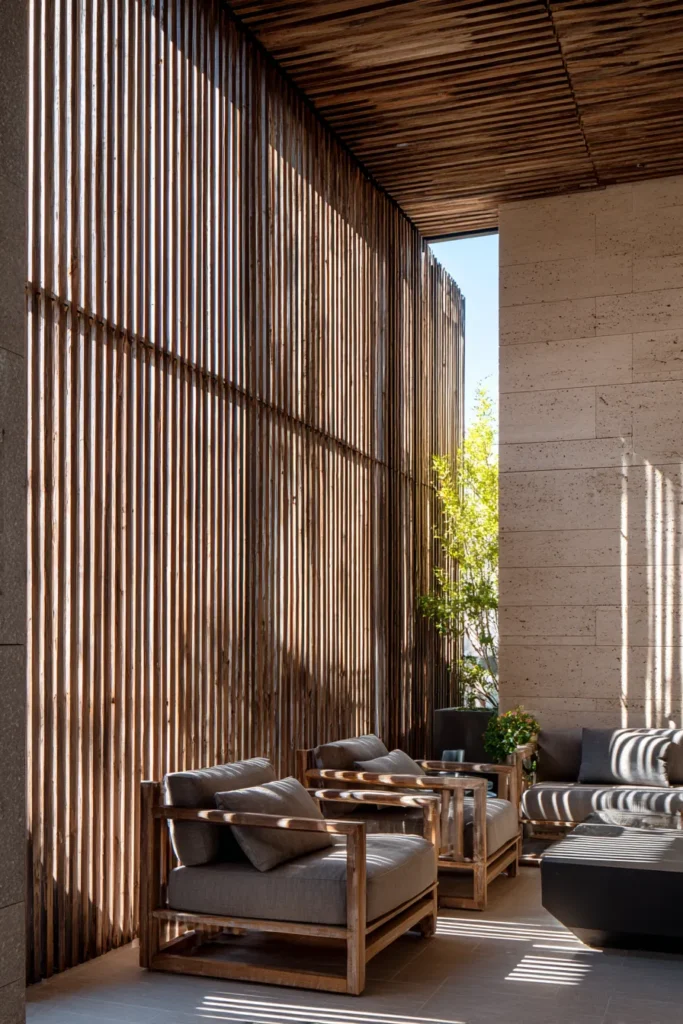
Drawing inspiration from Japanese architectural screens, vertical timber slats offer a sophisticated, spa-like aesthetic. By placing wood slats closely together (with 1-2 inch gaps), you create a “shifting” view: from a straight-on angle, you can see through the gaps, but from an oblique angle, the railing appears solid. This provides excellent privacy from neighbors on the side while maintaining a sense of airiness.1
This style is warm, rhythmic, and incredibly calming. The vertical repetition draws the eye upward, making low ceilings feel higher. It transforms a standard balcony into a secluded retreat, blocking out unsightly car parks or adjacent buildings while allowing dappled sunlight to filter through. It’s a design that prioritizes “refuge”—making you feel safe and enclosed without feeling trapped.1
Design Breakdown:
- Use uniform, narrow slats of cedar or thermally modified ash for a sleek, contemporary look.
- Install the slats from floor to ceiling (if allowed) for a full privacy screen effect, or standard railing height for a lighter look.
- Allow the wood to weather to a silvery-grey for a low-maintenance, organic aesthetic.
- Backlight the slats with floor-mounted uplights to create dramatic shadows at night.
- Pair with minimalist, low-profile furniture and stone elements to enhance the “Zen” vibe.
- Keep the spacing consistent; precision is key to making this look high-end rather than makeshift.
- Best For: Privacy-seekers, spa-inspired terraces, and blocking unsightly views.
8. Sculptural Curved Glass
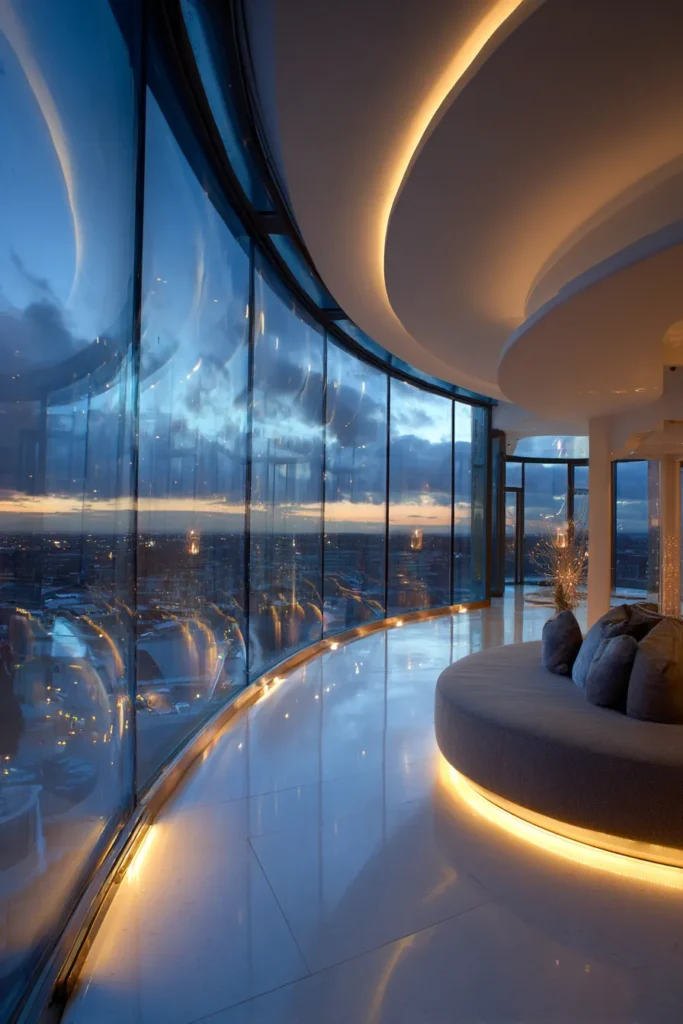
Breaking away from the rigid boxy geometry of most apartment blocks, curved glass balustrades introduce a fluid, organic luxury. This design trend is appearing in high-end villas and penthouses, where the balcony edge sweeps in a gentle arc rather than a sharp corner. The curve softens the façade and offers a panoramic, distortion-free view that feels continuous and embracing.4
The aesthetic is futuristic and soft simultaneously. It mimics the curves found in nature—waves, dunes, and horizons—making the building feel more harmonious with its environment. Inside, the curve invites you to move towards the edge; it feels less like a barrier and more like a lens. Styling this space involves using round tables and curved sofas that echo the railing’s geometry, creating a cohesive “flow”.7
Design Breakdown:
- Requires custom bent tempered glass; this is a premium investment for a standout look.
- Use a recessed base channel to keep the glass looking like a seamless ribbon.
- Avoid handrails if possible, or use a slim, round metal cap rail that follows the curve perfectly.
- Style with organic-shaped furniture—kidney bean sofas or round coffee tables.
- Keep the deck floor clear to emphasize the shape of the footprint.
- Use flexible LED strip lighting along the base to make the curve glow at night.
- Best For: Luxury villas, penthouses, and modern architecture with organic lines.
9. Frosted & Etched Privacy Panels
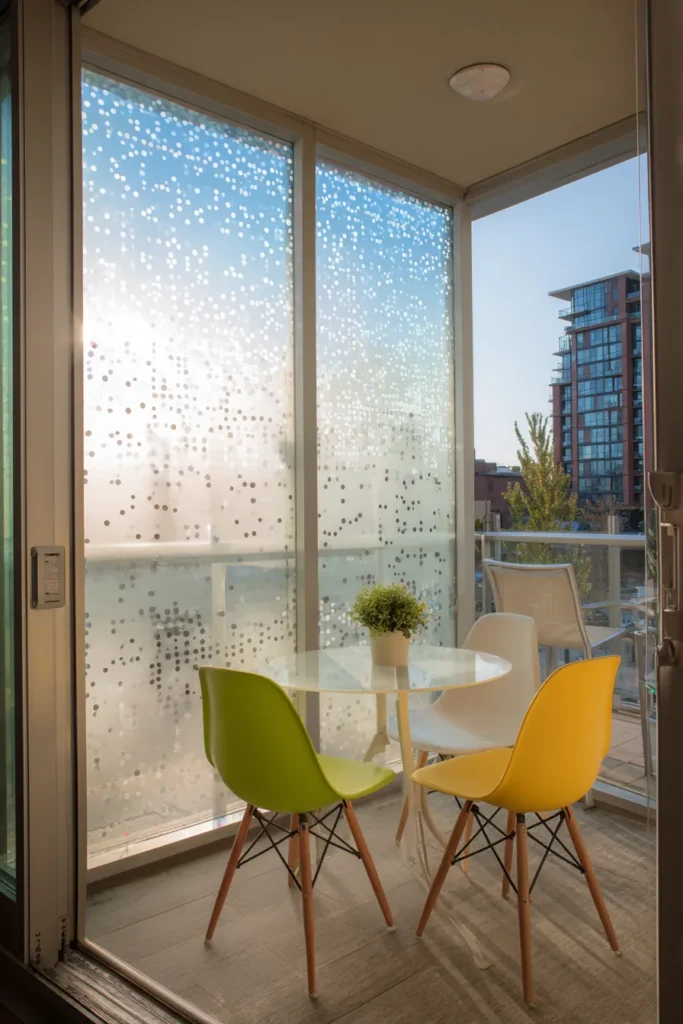
The “fishbowl effect”—where you feel exposed to everyone on the street—is a major complaint for balcony owners. Frosted or acid-etched glass panels offer the perfect solution: they admit 80-90% of natural light while blurring the image completely. You get the glow of the sun without the prying eyes. This design creates a luminous, paper-lantern effect that feels light and airy, avoiding the “heavy” feeling of a solid wall.1
Designers are now using “gradient frost” patterns, where the glass is opaque at the bottom (hiding your legs and furniture clutter) and gradually becomes clear at the top, allowing you to see the sky while sitting down. This creates a refined, custom look that balances connection and seclusion beautifully. It turns the balcony into a glowing light box at night.1
Design Breakdown:
- Opt for a “gradient” or “fade” frost to maintain a view of the sky while blocking the street.
- Use matte silver or brushed nickel hardware to complement the cool tone of the frosted glass.
- Style with colorful furniture; the frosted glass acts as a neutral canvas that makes colors pop.
- Backlight the panels for a stunning, glowing perimeter effect in the evening.
- Clean with non-abrasive cleaners to maintain the uniform matte finish.
- Combine with clear glass panels in non-private areas to vary the visual rhythm.
- Best For: Busy street-facing balconies, messy balconies (hides clutter), and privacy lovers.
10. Hidden LED Under-Rail Glow
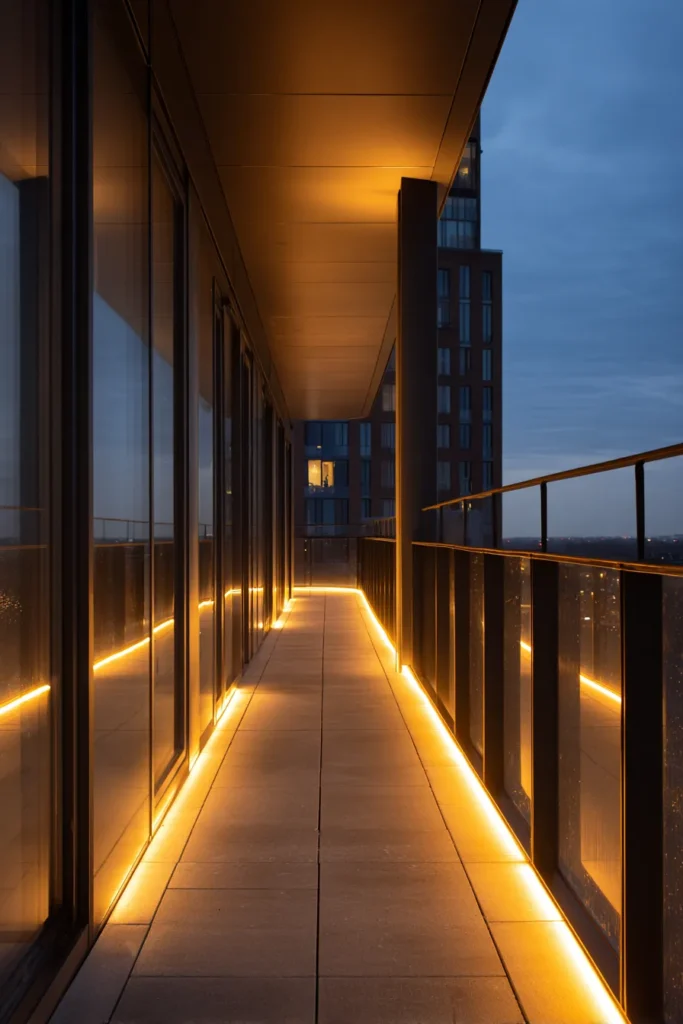
Lighting is the new frontier for railing design. 2025 trends see lighting moving from an add-on to an integrated architectural feature. LED strips hidden inside the channel of the top handrail cast a downward “wash” of light. This illuminates the glass or balusters and the deck floor without shining in your eyes or ruining your night vision. It creates a floating, ethereal boundary that defines the space after dark.3
This “dark sky compliant” approach is sophisticated and moody. It replaces the harsh glare of a wall-mounted security light with a soft, ambient glow that feels like a high-end hotel terrace. It also enhances safety by clearly marking the edge of the balcony and the floor surface. The light can catch the edges of glass panels, creating a futuristic “Tron-like” outline, or wash down textured wood for a warm, cozy feel.13
Design Breakdown:
- Use IP65 or IP67 rated waterproof LED strips hidden in a designated channel under the handrail.
- Choose a warm color temperature (2700K-3000K) to create a cozy, inviting atmosphere.
- Put the lights on a dimmer or smart timer to control the mood and save energy.
- Allow the light to graze textured surfaces (like stone or wood posts) to highlight the material.
- Avoid pointing lights upward, which contributes to light pollution and blocks the view of stars.
- Style with floor lanterns to create layers of light at different heights.
- Best For: Entertaining at night, creating ambiance, and modern high-tech homes.
11. Laser-Cut Artistic Metal Sheets
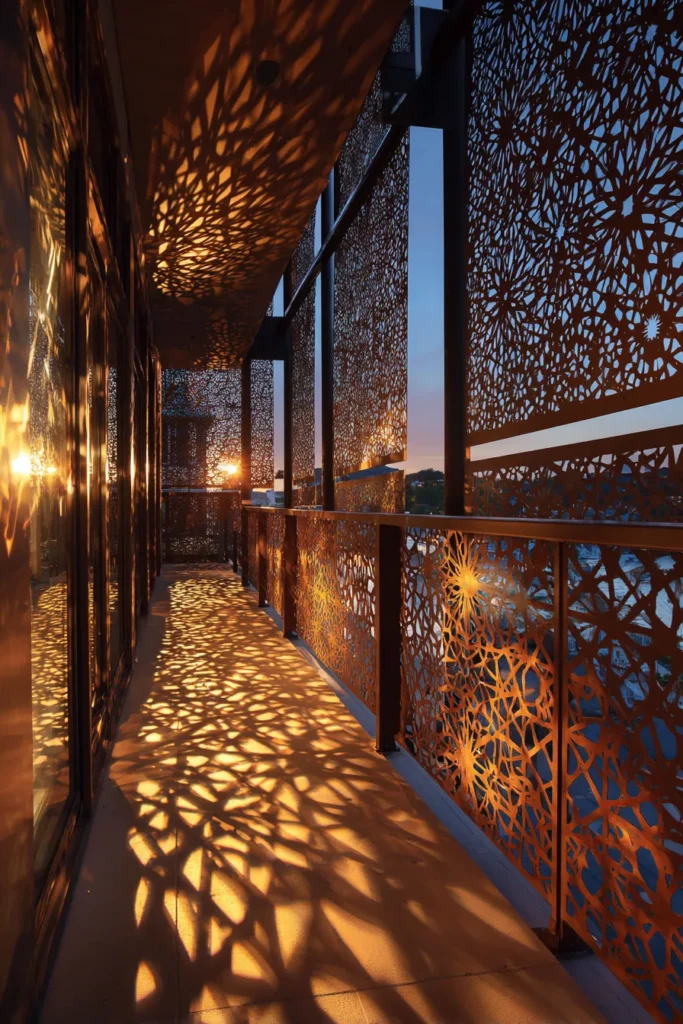
For those who view the railing as art, laser-cut metal panels are the trend to watch. Technology allows intricate patterns—geometric Islamic stars, organic leaf motifs, or abstract topographical lines—to be precision-cut into aluminum or steel sheets. This turns the railing into a decorative screen that casts fascinating, shifting shadows on the balcony floor as the sun moves across the sky.7
This design offers a high degree of personalization. You can choose a pattern that mimics the trees outside your window or a geometric shape that complements your rug. It serves as a privacy screen that doesn’t feel closed off, as the perforations allow light and air to pass through. It’s a statement piece that gives your home a unique “fingerprint” visible from the street.
Design Breakdown:
- Select a pattern that complements your home’s era (e.g., Art Deco geometry or floral organic).
- Powder coat the panel in a bold color (like copper, gold, or navy) to make it a focal point.
- Backlight the panels to turn the railing into a glowing lantern pattern at night.
- Ensure the cutouts are small enough to meet safety codes (usually preventing a 4-inch sphere from passing through).
- Keep furniture solid and simple to avoid clashing with the busy pattern of the railing.
- Treat it as a feature wall; you don’t need much other decoration when the railing is this ornate.
- Best For: Making a statement, adding artistic flair, and privacy with airflow.
12. Renter-Friendly: The Boho Bamboo Wrap
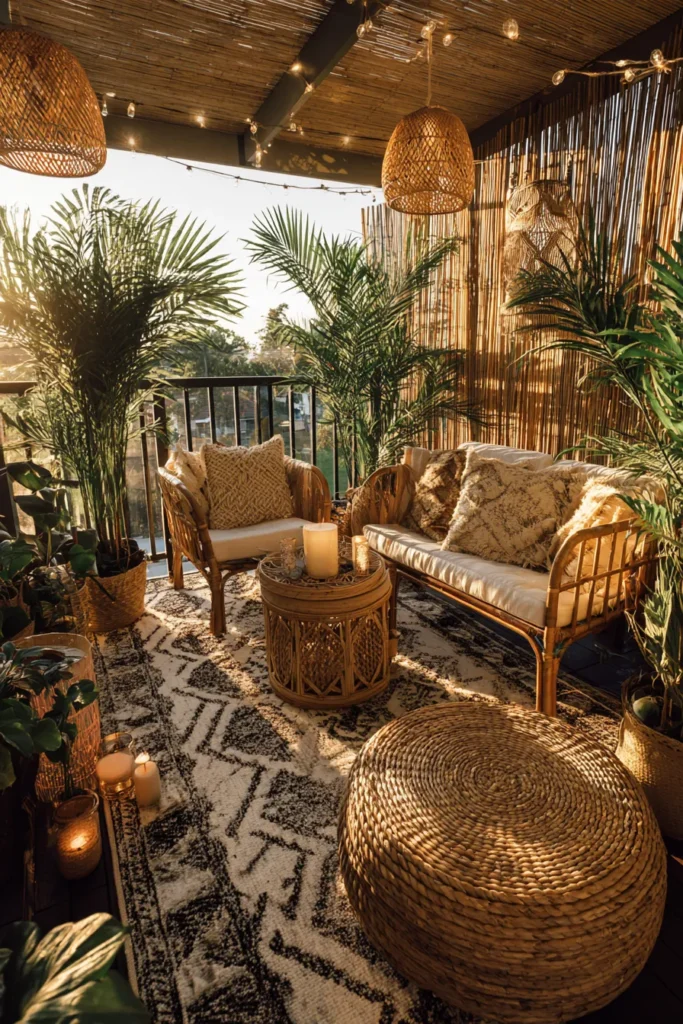
Renters often feel left out of design conversations, stuck with ugly metal bars or peeling paint. The “Bamboo Wrap” is the 2025 solution for non-destructive upgrades. By using rolls of natural bamboo, reed, or willow fencing and securing them to the existing railing with heavy-duty zip ties, you instantly add warmth, texture, and privacy. This creates a “tiki bar” or “boho sanctuary” vibe that completely hides the original structure.10
This look is tactile and organic. It creates a solid visual block that transforms a fishbowl balcony into a private nook. The natural color of the bamboo pairs perfectly with rattan furniture, outdoor rugs, and plenty of greenery. It’s an affordable, reversible hack that delivers high aesthetic impact, filtering wind and creating a cozy, enclosed atmosphere.
Design Breakdown:
- Buy rolls of bamboo or reed fencing slightly taller than your railing for full coverage.
- Secure with clear or black zip ties every 12 inches to prevent flapping in the wind.
- Layer string lights or fairy lights over the bamboo to create a warm, glowing backdrop at night.
- Style with “Boho” elements: macramé plant hangers, patterned Kilim rugs, and floor cushions.
- Add potted palms or ferns to blend the bamboo screen with live greenery.
- Check your lease or HOA rules, but generally, this is considered temporary furniture/decor.
- Best For: Renters, budget makeovers, and creating instant privacy.
13. PVD Coated Champagne & Bronze
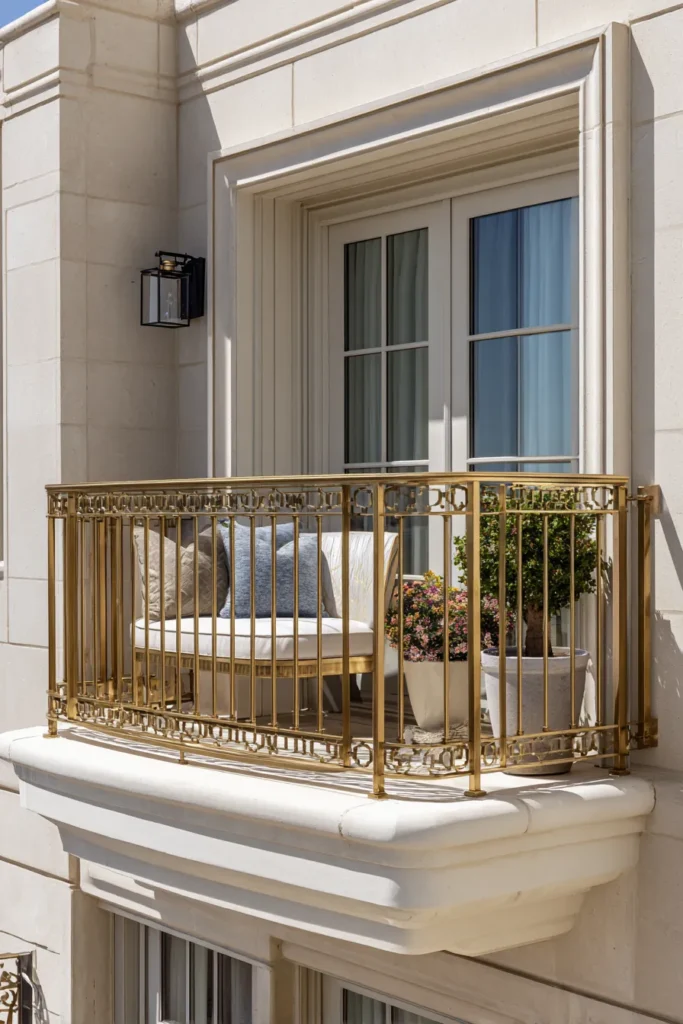
Stainless steel is durable but can feel cold and clinical. The solution for 2025 is PVD (Physical Vapor Deposition) coating. This technology allows stainless steel to take on rich, warm tones like Champagne Gold, Rose Gold, antique Bronze, or Gunmetal, without losing its durability. It brings a “jewelry-like” quality to the railing, adding a touch of glamour and warmth that standard silver steel lacks.2
This trend aligns with the resurgence of brass and gold in interior fixtures. A Champagne Gold railing glimmers in the sunlight, adding a luxurious warmth to the façade. It works beautifully with warm stone, cream stucco, or timber cladding. It’s a subtle flex—a way to have the performance of steel with the aesthetic of a precious metal.2
Design Breakdown:
- Choose a satin or brushed finish rather than high-gloss to keep it looking sophisticated, not gaudy.
- Pair Champagne or Bronze rails with warm-toned glass (bronze tint) for a cohesive, sepia-toned look.
- Match the railing finish to your door handles, light fixtures, or outdoor furniture legs.
- Use warm white lighting (2700K) to enhance the gold/bronze tones at night.
- Style with velvet cushions or rich textures that complement the metallic luxury.
- Keep the design lines simple; let the color and finish be the main attraction.
- Best For: Luxury homes, warm-palette exteriors, and those bored with “standard silver.”
14. Solar Post-Cap Architecture
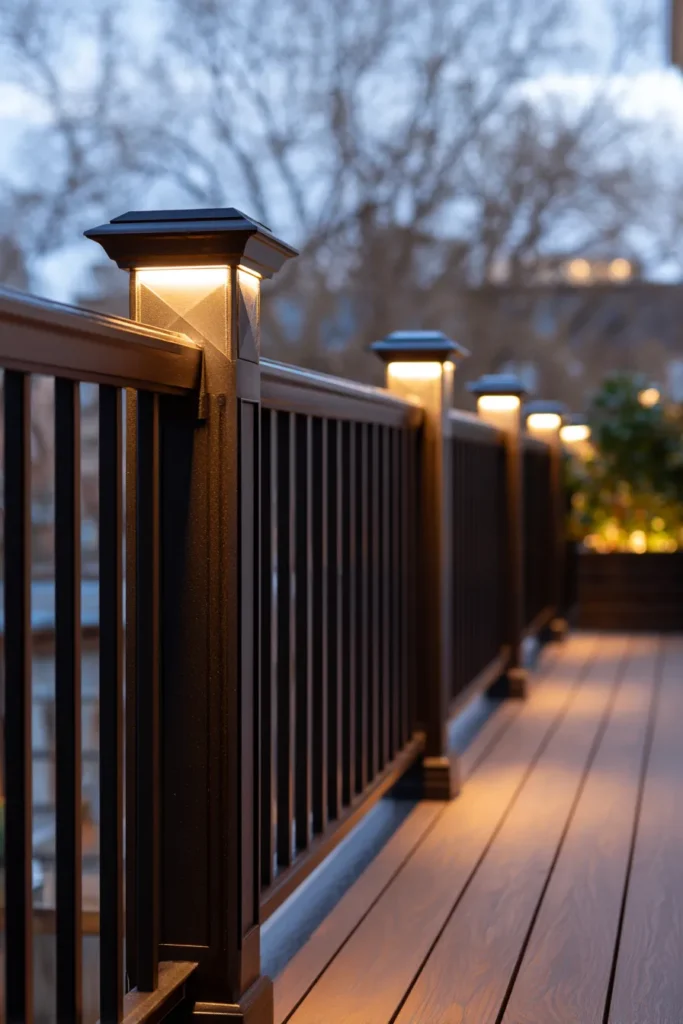
For an easy retrofit that adds instant curb appeal, solar post caps are the answer. These aren’t the dim, blueish garden lights of the past. The new generation of solar caps features high-lumen, warm-white LEDs housed in sleek, architectural casings (matte black, copper, or glass). They sit atop your existing posts, creating a rhythmic “colonnade” of light that highlights the vertical structure of your balcony.13
This design emphasizes the perimeter of your space, making the balcony feel larger and more defined at night. It adds a layer of safety without any wiring or electricity costs. The caps act as architectural finials during the day—adding a finished look to the top of posts—and transform into functional downlights at night. It’s a “set it and forget it” upgrade that delivers high visual ROI.13
Design Breakdown:
- Choose a cap style that matches your railing’s profile (square for modern, tiered for traditional).
- Ensure the solar panel is integrated discreetly into the top surface.
- Look for caps that cast light downward onto the deck floor, not outward into your eyes.
- Create a rhythm; you don’t need a light on every post—every second post often looks more elegant.
- Style the corners of the balcony with extra lighting or planters to anchor the illuminated perimeter.
- Clean the solar panels seasonally to ensure maximum brightness.
- Best For: Retrofitting existing railings, budget lighting upgrades, and adding night-time definition.
Frequently Asked Questions
What is the best railing for a small balcony to make it look bigger?
The “Invisible” Frameless Glass (#1) or Cable Railing (#3) are your best options. Both minimize visual obstruction, allowing the eye to travel past the boundary. This tricks the brain into perceiving the view beyond as part of your available space, eliminating the “caged” feeling of heavy pickets.
How can I update my rental balcony railing without drilling?
The Bamboo Wrap (#12) is the gold standard for renters. It attaches with zip ties and leaves no marks. Alternatively, you can use “straddle” planters (#6) that hook over the rail, or hang outdoor curtains on a tension rod (if you have a ceiling above) to create a soft, retractable screen.
Are glass railings hard to keep clean in the city?
They can be, but technology helps. Applying a hydrophobic coating (like Rain-X or specialized glass ceramic coatings) causes water and dust to bead up and roll off. For the design, choosing a “gradient frost” (#9) on the lower half can hide splash marks where they occur most, reducing the frequency of cleaning needed.
Conclusion
Your balcony railing is the threshold between your sanctuary and the world. Whether you choose the invisible luxury of frameless glass, the grounding warmth of a wood-cap hybrid, or the renter-friendly charm of a bamboo screen, the goal is the same: to create a space that feels safe, stylish, and intentionally designed. In 2025, look for designs that multitask—providing privacy, light, and greenery—turning the edge of your home into its most beautiful feature.