Three months after spending $8,000 on what Instagram promised would be the “perfect farmhouse living room,” I sat surrounded by pristine white furniture that my kids couldn’t touch and décor so sterile it felt like a museum. That expensive lesson taught me everything wrong with mainstream farmhouse advice—and led me to discover what actually creates a livable, authentic farmhouse living room.
Here’s what 12 years of designing real farmhouse spaces (including my own spectacular failures) taught me about creating rooms that look stunning AND survive daily life.
1. Start with Worn Leather, Not White Linen
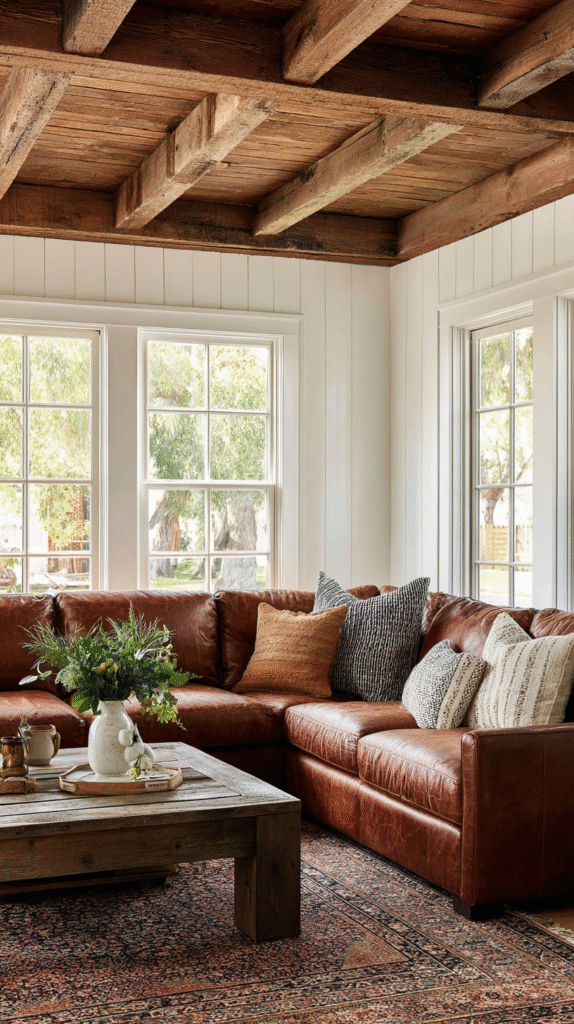
Every farmhouse living room photo shows pristine white sofas. Here’s reality: white furniture in a farmhouse setting looks try-hard and impractical. I learned this after watching my $2,400 linen sectional turn gray within two months.
Instead, invest in a quality leather sofa that improves with age. My current Restoration Hardware Lancaster sectional ($3,200, purchased used for $1,600) has survived five years of kids, dogs, and red wine. The scratches and patina make it more beautiful, not less. That’s authentic farmhouse—furniture that tells stories.
2. Layer Mismatched Rugs (The $200 Game-Changer)
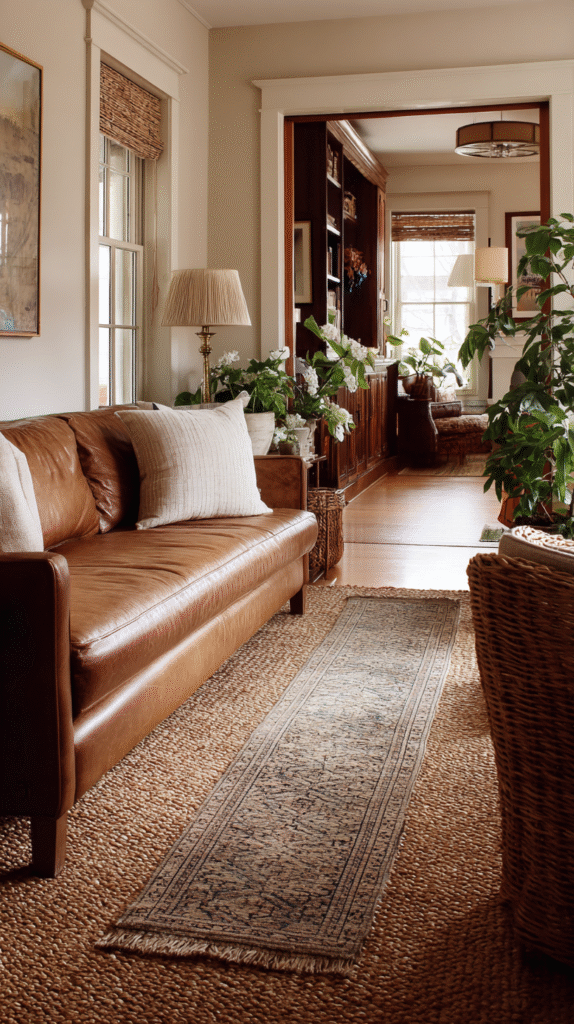
Pinterest shows perfectly matched jute rugs. Professional designers layer contrasting textures instead. I place a vintage Persian runner ($150 on Facebook Marketplace) over a larger sisal base ($80 from HomeGoods). The contrast between ornate and simple creates visual depth impossible with single rugs.
This technique costs 60% less than buying one large designer rug and looks infinitely more collected and interesting.
3. Salvaged Wood Beams Beat Faux Every Time
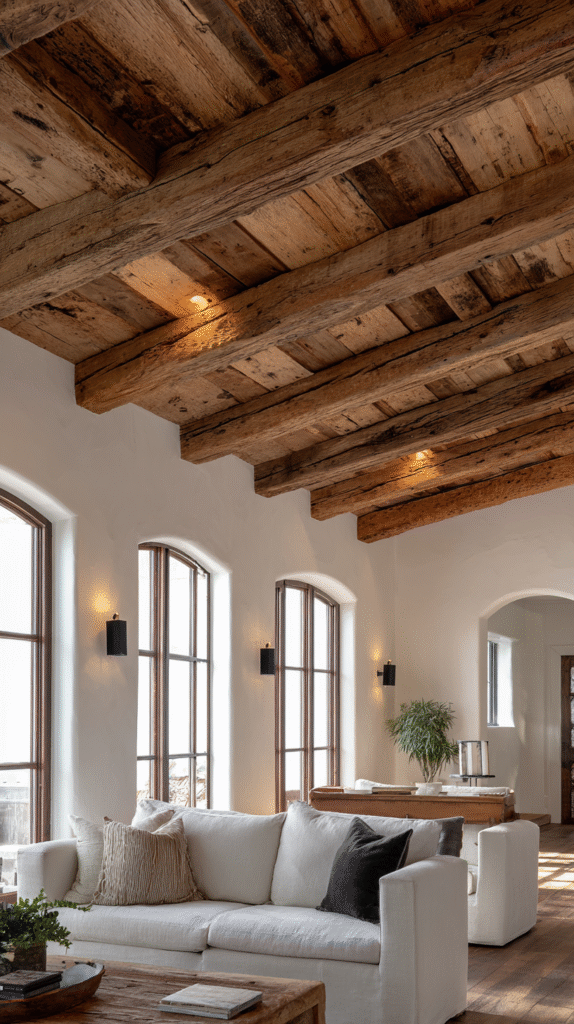
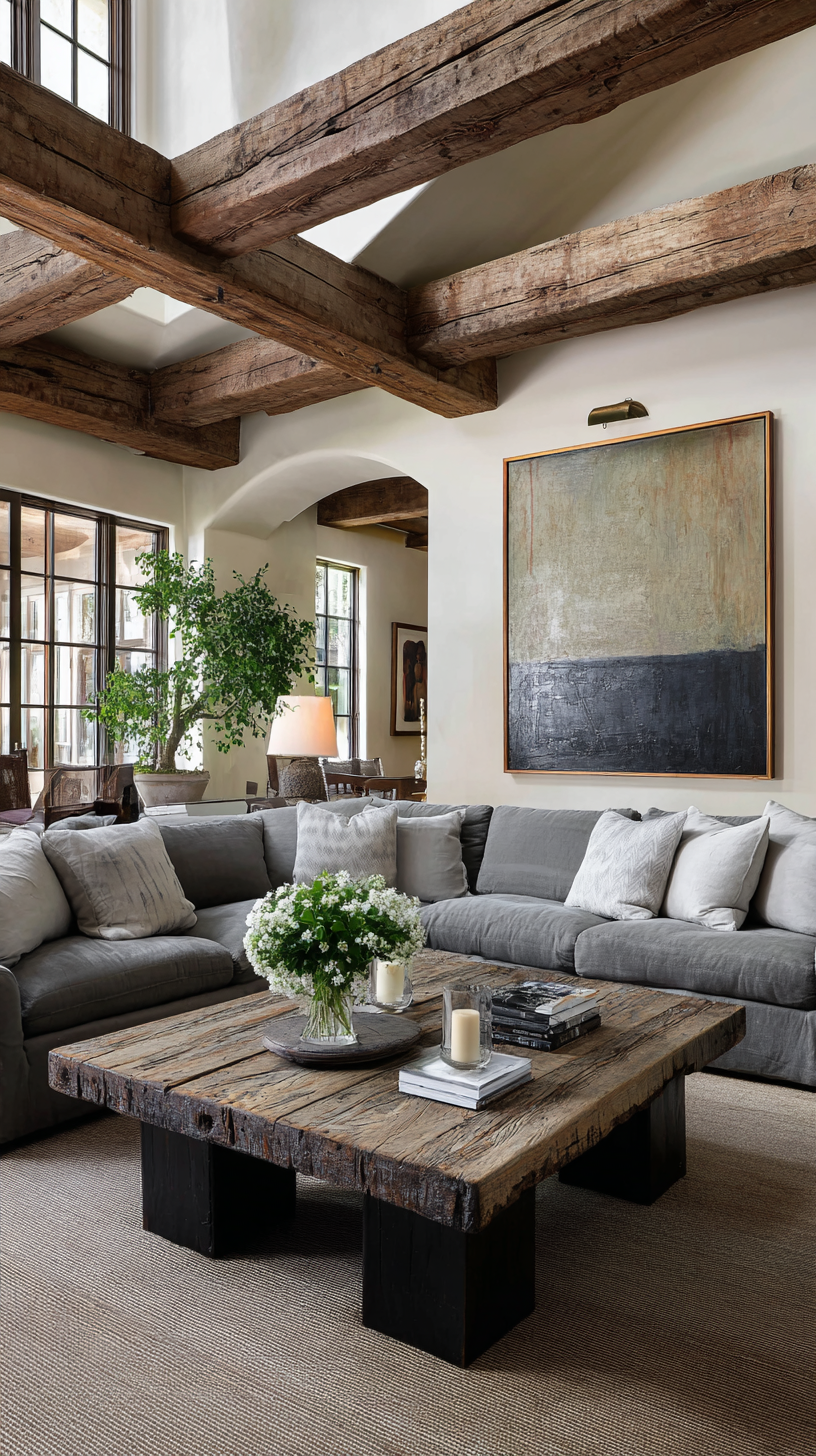
After installing $800 worth of polyurethane “barn beams” that screamed fake, I ripped them down and drove to a demolition site. Real 200-year-old chestnut beams cost me $300 plus weekend labor, but the authenticity is unmistakable.
Real wood has irregular grain patterns, nail holes, and subtle size variations that manufactured beams can’t replicate. The smell alone—slightly musty with hints of old tobacco barns—adds sensory depth no fake beam provides.
4. Mix High and Low Art Ruthlessly
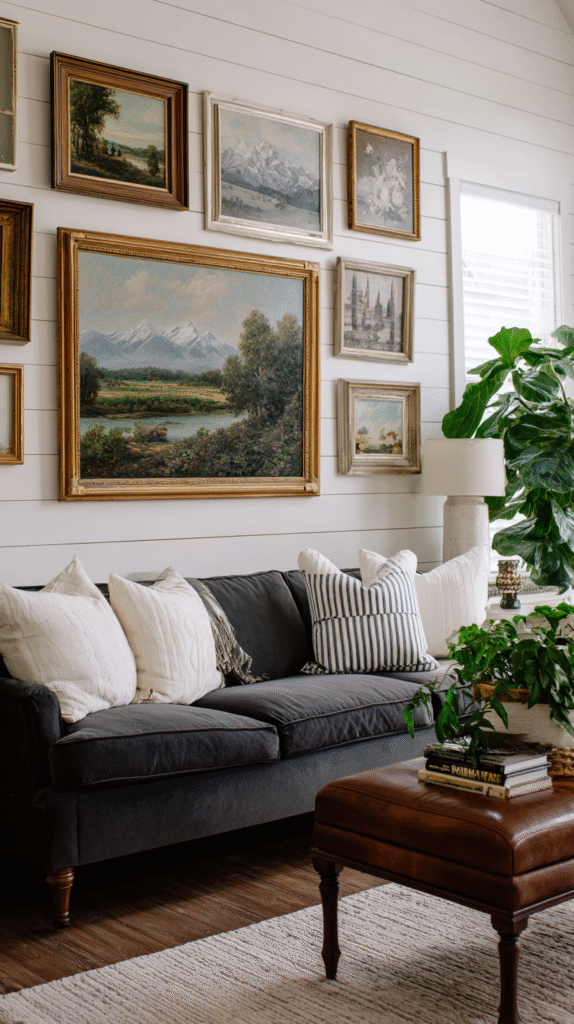
The most character-rich farmhouse living rooms combine $50 flea market paintings with $300 original works. My living room features a $25 vintage landscape from an estate sale beside a $400 contemporary piece by a local artist.
This creates conversation and prevents the “decorated in one shopping trip” look that plagues cookie-cutter farmhouse rooms. Curated over time beats coordinated every time.
5. Choose Function-First Lighting
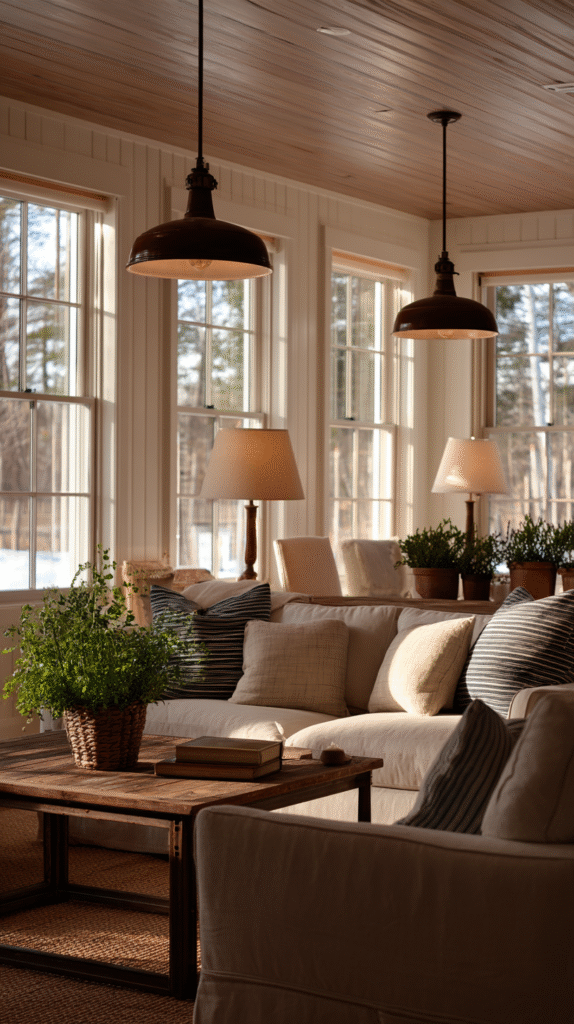
Farmhouse living rooms need three lighting layers, but most people obsess over Instagram-worthy chandeliers that provide terrible task lighting. My formula: one statement piece (vintage schoolhouse pendant, $180), multiple table lamps for reading (thrift store finds, $15-40 each), and hidden LED strips for ambient lighting.
The key insight: farmhouse style celebrates practical beauty, not just beauty.
6. Embrace Imperfect Paint Jobs
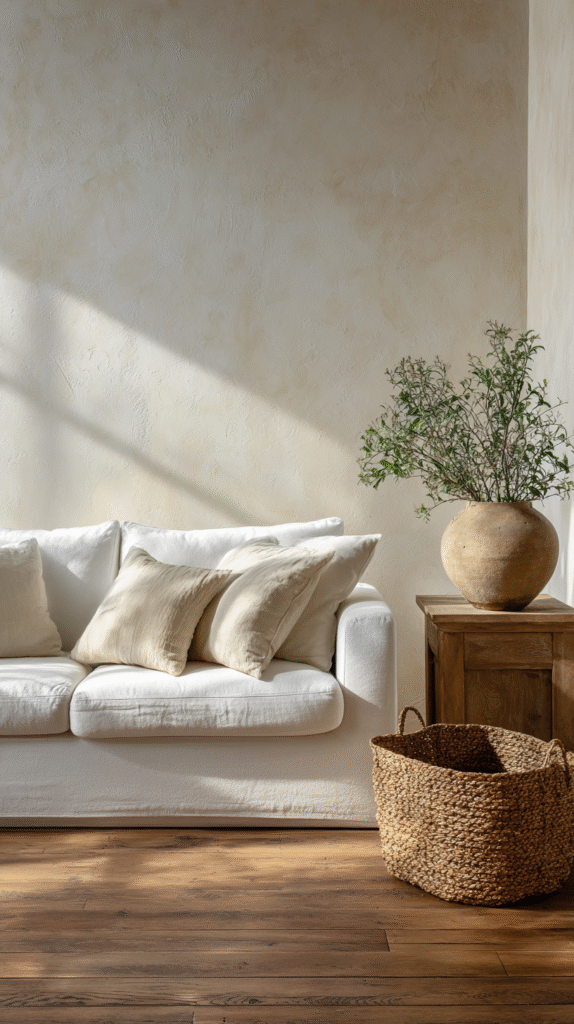
I spent $600 having walls professionally painted in “perfect” farmhouse white, then felt compelled to add character with $200 worth of distressing techniques. Now I paint walls myself in slightly uneven strokes, creating organic texture that feels authentic rather than applied.
True farmhouse style comes from generations of imperfect maintenance, not museum-quality finishing.
7. Display Collections, Not Vignettes
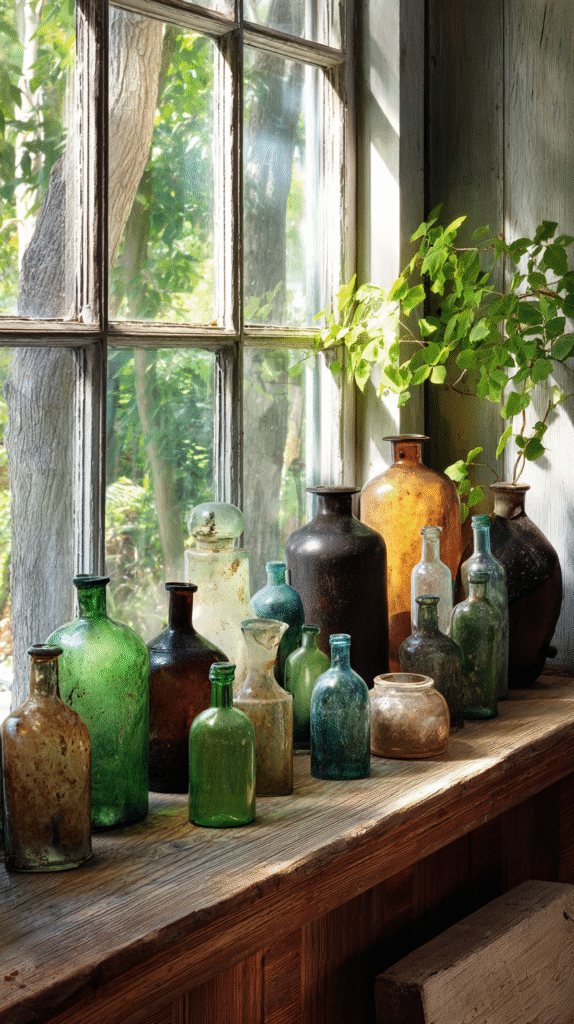
Styled vignettes look fake. Real collections tell stories. My windowsill displays 23 vintage milk bottles collected over eight years, each with memory attached. They cost $2-15 each and create more visual interest than any $200 “farmhouse décor set.”
Collections grow organically and reflect personality—two things staged vignettes can’t achieve.
8. Install Practical Built-ins
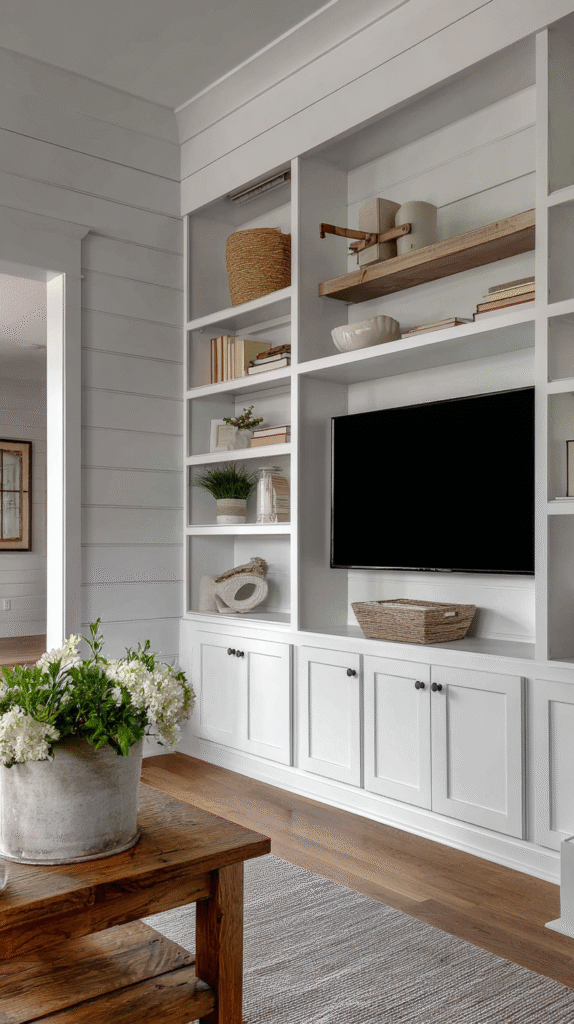
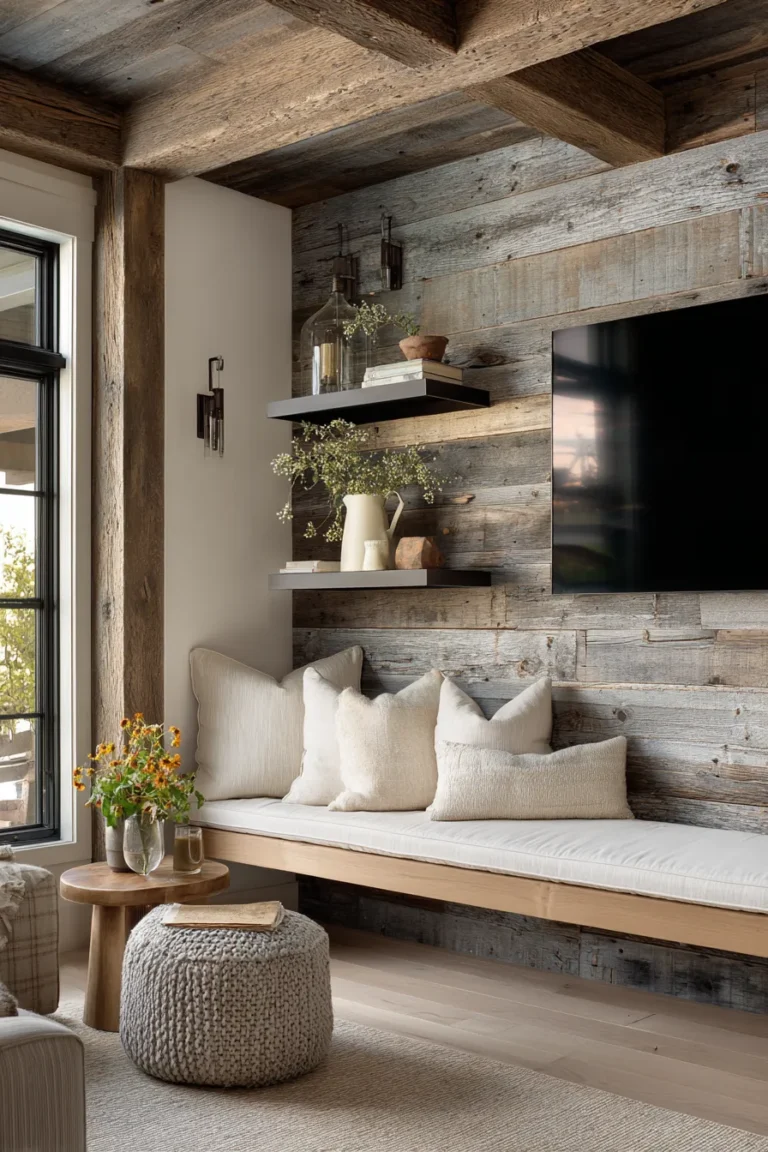
Custom built-ins seem expensive ($2,000-5,000) until you price quality standalone furniture. My carpenter built floor-to-ceiling storage around our TV for $2,800. Equivalent freestanding pieces would cost $4,500 and look less integrated.
Built-ins also solve farmhouse living room’s biggest challenge: balancing rustic charm with modern storage needs.
9. Choose Furniture That Ages Gracefully
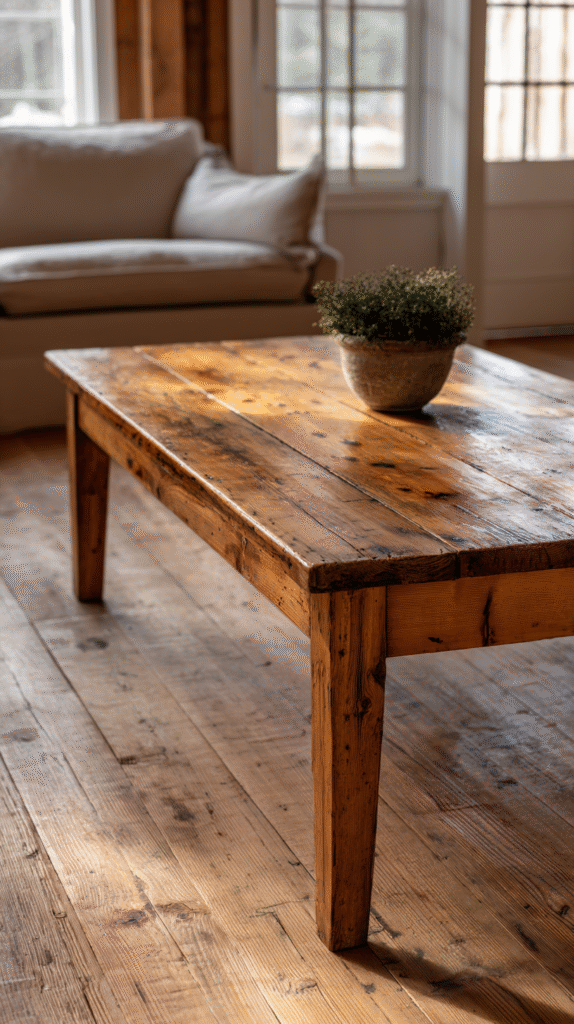
My biggest mistake was buying distressed furniture trying to look old. Now I buy quality pieces designed to develop patina naturally. My solid pine coffee table cost $400 new and looks better after four years of dings, water rings, and daily use.
Real age beats fake distressing every time—and costs less long-term.
10. Layer Textures, Not Colors
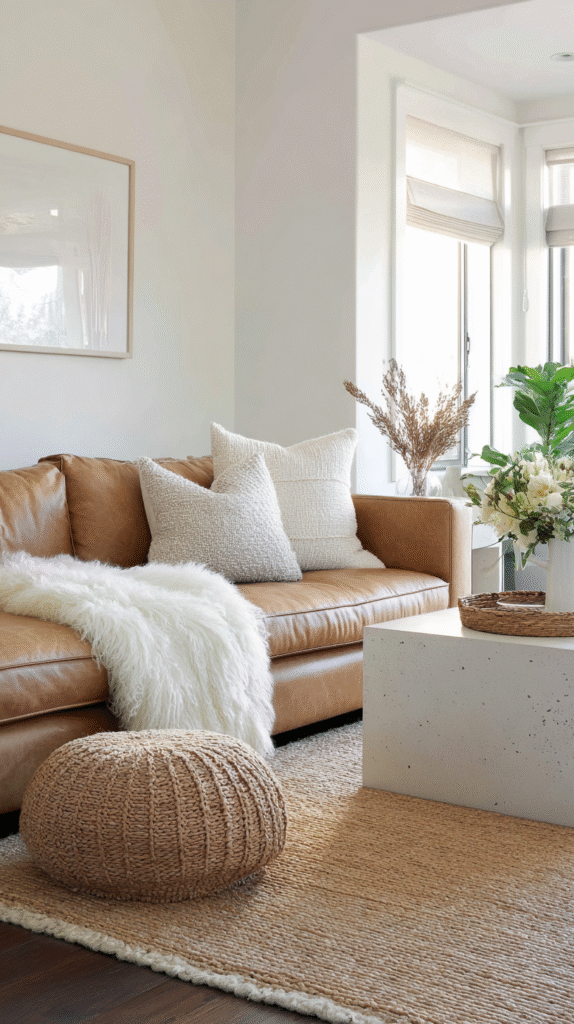
Farmhouse living rooms succeed through texture contrast, not color schemes. I combine smooth leather, nubby linen, rough jute, and soft wool within a neutral palette. This creates visual richness without the busy feeling that multiple colors produce.
Each texture reflects light differently, adding depth that flat color schemes can’t achieve.
11. Incorporate Working Elements
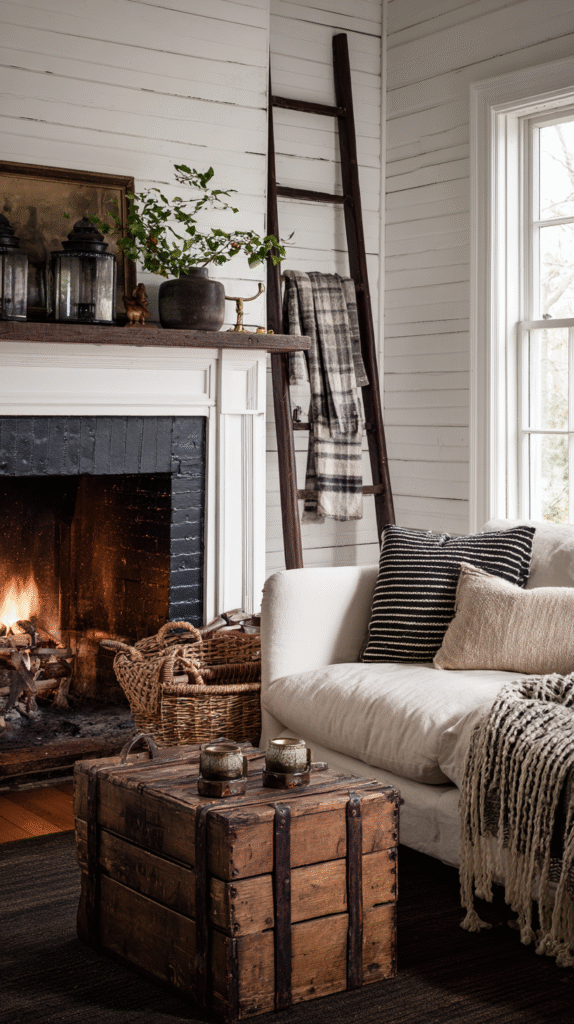
My farmhouse living room includes functional elements: an antique ladder holding extra throws, vintage crates for storage, a working fireplace with cast iron tools. These aren’t decorative—they serve purposes while adding authentic character.
Working elements distinguish real farmhouse style from the sanitized version sold in showrooms.
12. Scale Everything Larger
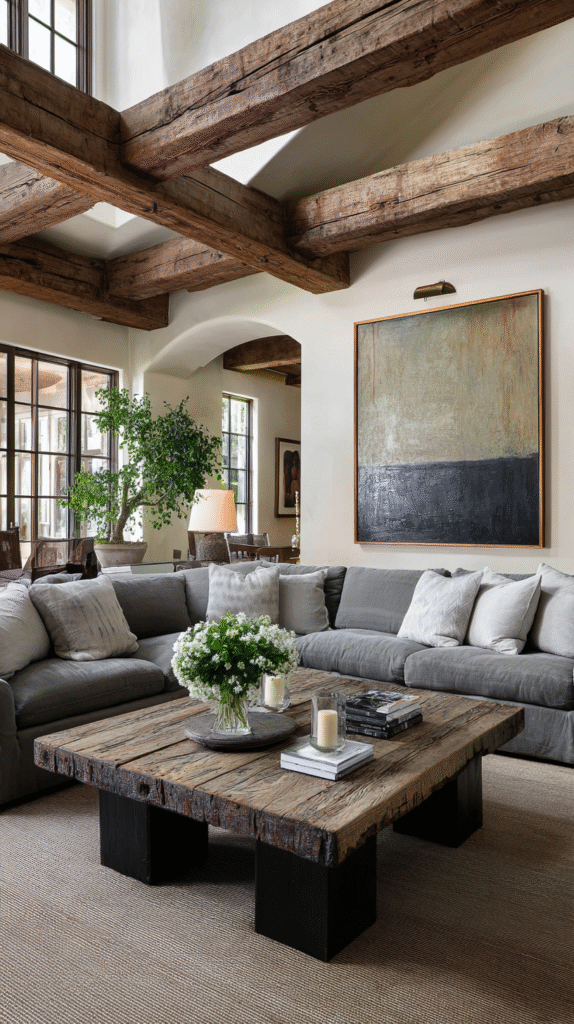
Most people choose furniture too small for farmhouse style’s generous proportions. My living room features an oversized sectional, a massive coffee table, and statement artwork sized for the space’s scale.
Farmhouse architecture demands furniture with presence—delicate pieces disappear in these rooms.
13. Create Cozy Sub-Zones
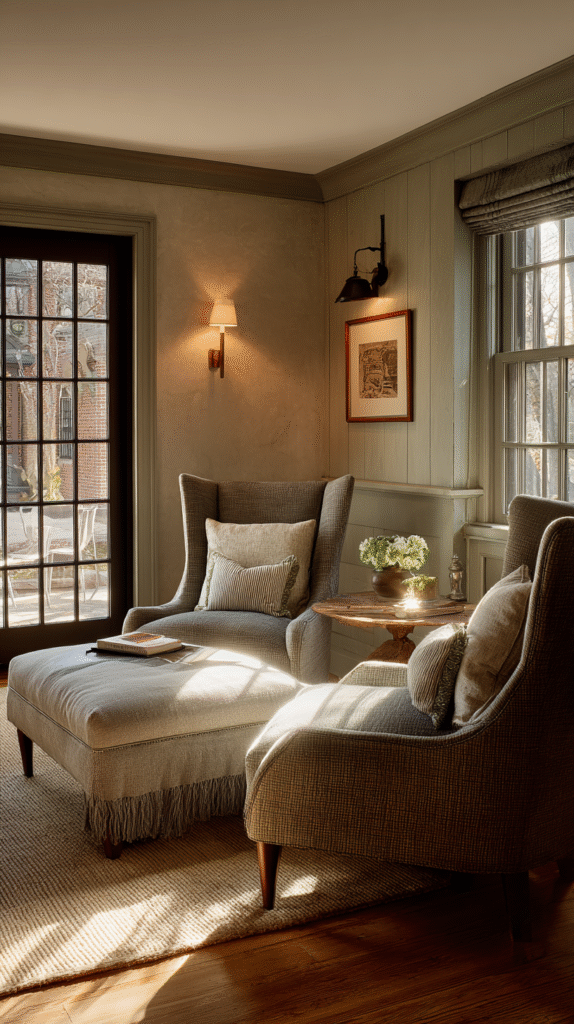
Large farmhouse living rooms need intimate areas within the larger space. I created a reading nook with two chairs angled toward each other, a shared ottoman, and dedicated task lighting. This $800 investment (using vintage chairs) makes our 450-square-foot living room feel both spacious and intimate.
Sub-zones prevent farmhouse living rooms from feeling like empty barns.
14. Invest in Quality Basics, Accessorize Cheaply
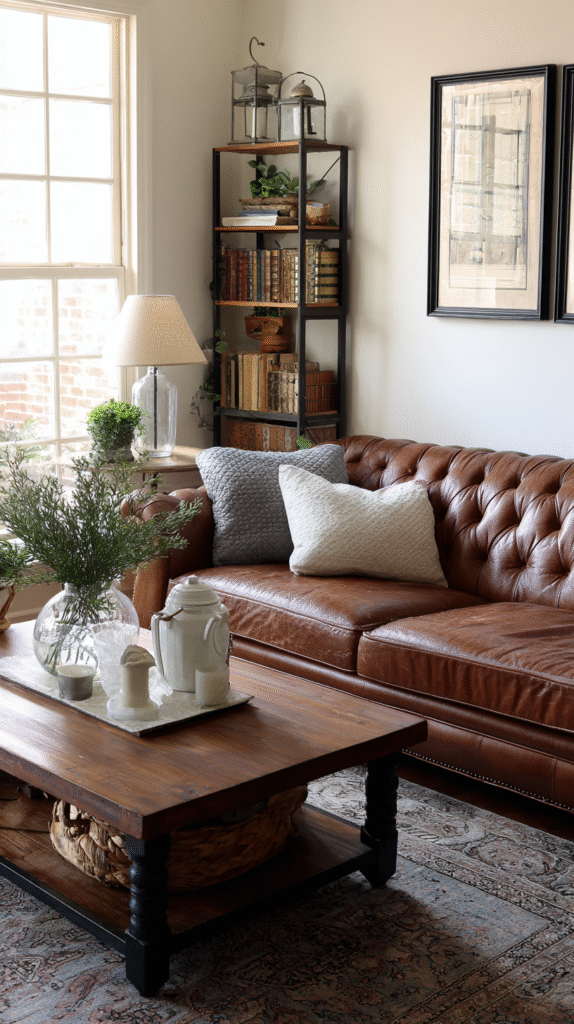
I spent money on core pieces—sofa, coffee table, area rug—then accessorized with thrift store finds and DIY projects. My $15 vintage ironstone collection creates more character than $200 worth of new “farmhouse” accessories.
This approach creates authentic personality while keeping budgets reasonable.
The Truth About Farmhouse Living Rooms
Real farmhouse style isn’t about buying the right products—it’s about understanding how rural families actually lived. They valued durability, functionality, and gradual accumulation of meaningful objects.
The best farmhouse living rooms feel collected over generations, not purchased in afternoon shopping sprees. They show wear, tell stories, and improve with age.
Start with one authentic piece and build slowly. Your living room will develop the genuine character that no amount of perfectly coordinated décor can replicate.