

Your bedroom should be more than just a place to crash at night. I learned this lesson the hard way when I spent three years sleeping in what felt like a cold, sterile hotel room. The modern cozy style isn’t about following every trend – it’s about creating a space that actually makes you want to spend time there. Traditional elements mixed with contemporary touches can feel both timeless and fresh, but only when you get the balance right.
Most people think cozy means cluttered, but that’s not true. Real comfort comes from thoughtful choices that make your bedroom a retreat where you can actually appreciate quiet moments. Whether you’re dealing with a tiny apartment bedroom or a sprawling master suite, these ideas will help you create something that feels genuinely welcoming.
1. Start with Natural Materials That Actually Matter
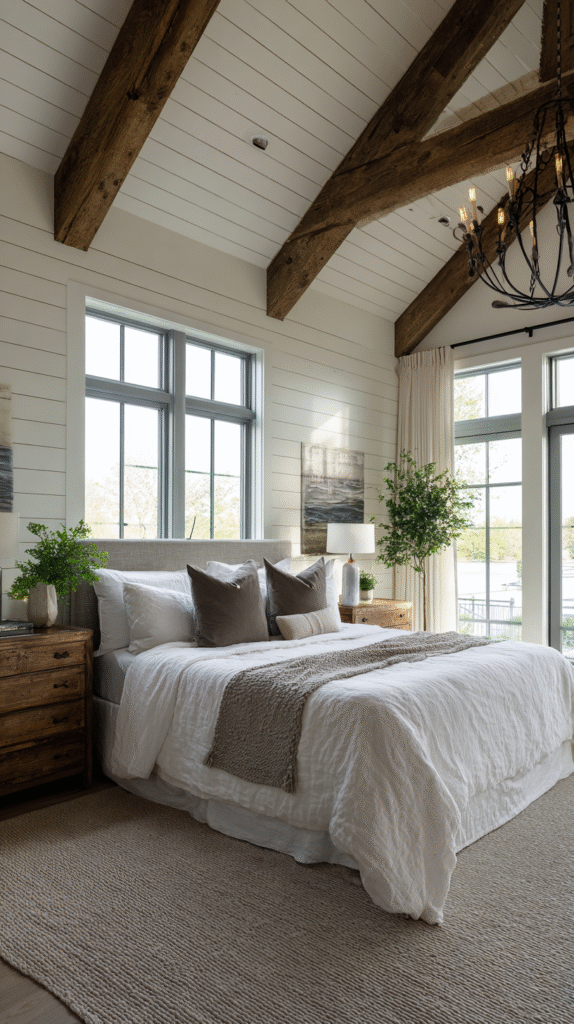
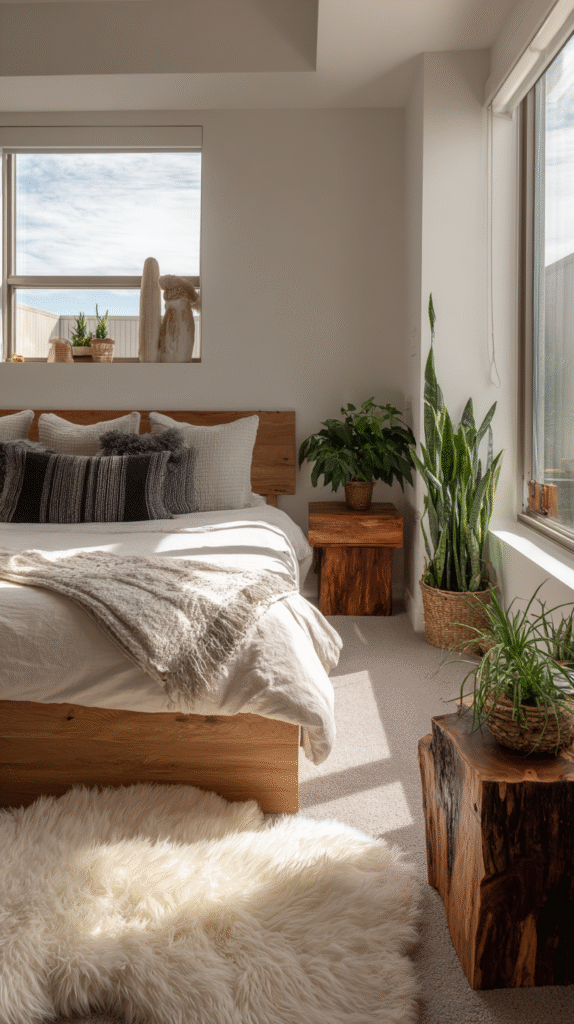
Wood and stone aren’t just trendy – they’re foundational to any cozy bedroom that doesn’t feel fake. But here’s what most design blogs won’t tell you: not all wood works the same way. Maple gives you clean lines without the hefty price tag of walnut, and if you’re on a budget, even painted wood furniture in muted tones can look expensive when done right.
I’ve seen too many people go overboard with the rustic thing. One client wanted exposed beams everywhere until we realized it made her 9-foot ceilings feel like a cave. Sometimes faux beams work better than real ones, especially if you’re dealing with modern construction that wasn’t built for architectural drama.
Linen bedding is worth the investment – it gets softer with every wash and naturally regulates temperature. Stone accents don’t have to mean a full accent wall; even a small stone planter or lamp base adds that natural texture without breaking the bank.
2. Layer Your Textiles Like You Mean It
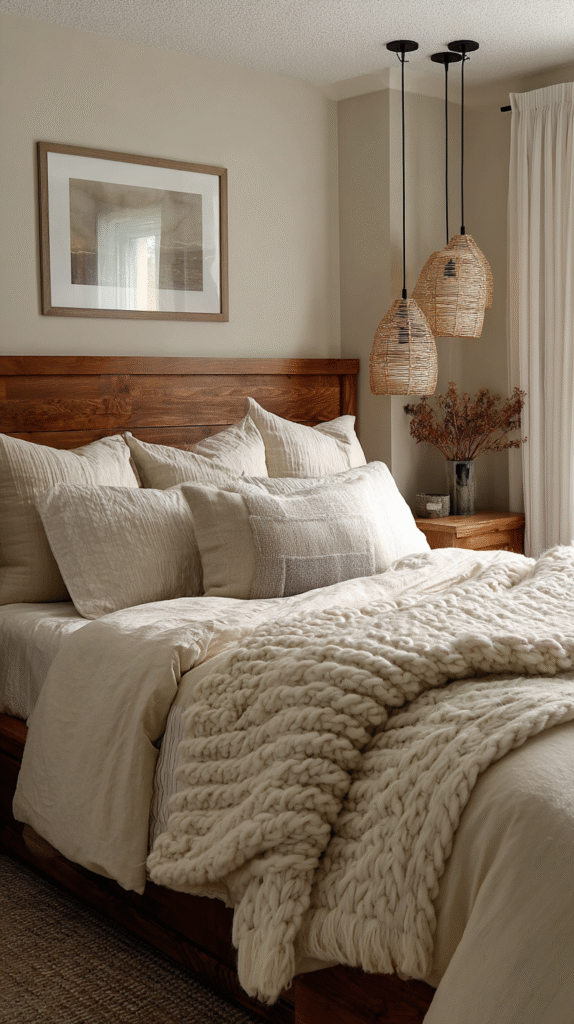
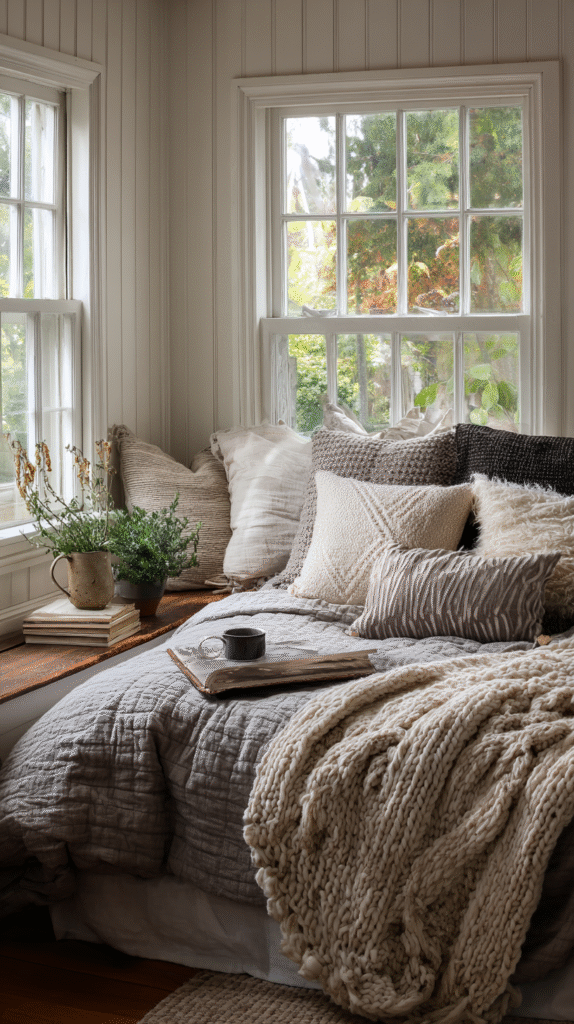
Layered bedding is where cozy bedrooms really shine, but there’s a right way and a wrong way to do it. Start with quality sheets – thread count isn’t everything, but weave matters more than most people realize. Then add your quilts and comforters, but don’t match everything perfectly. That catalog-perfect look screams “trying too hard.”
Throw pillows can make or break the whole thing. I tell my clients to stick to odd numbers and mix different textures – maybe one chunky knit, one smooth linen, one with gentle pattern. Botanical prints work well if they’re not too literal. Nobody wants to sleep in a greenhouse.
The trick with layered textiles is knowing when to stop. Your bed should look inviting, not like a department store display. You should be able to pull back the covers without rearranging twelve pillows.
3. Get Your Colors Right for Better Sleep
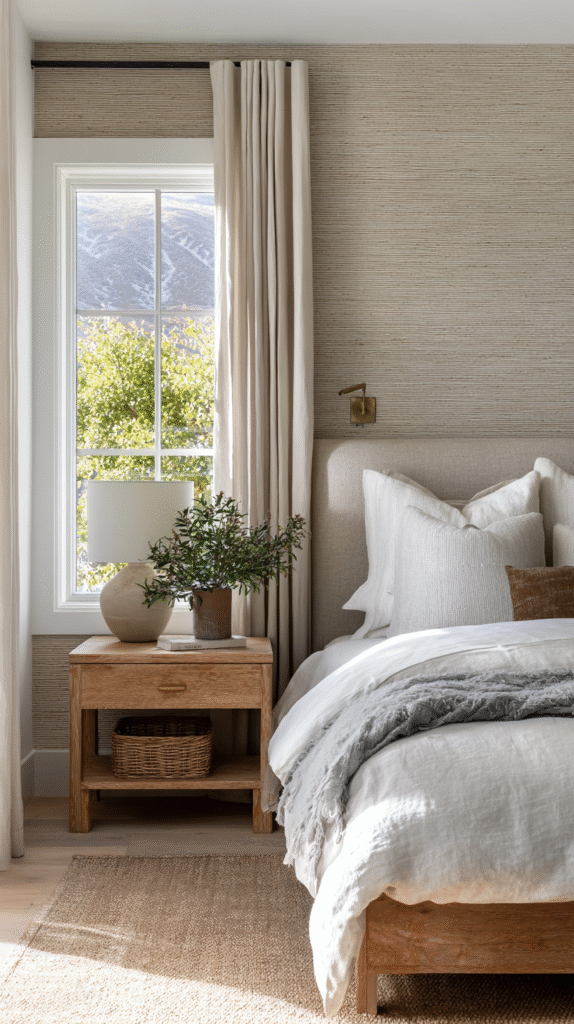
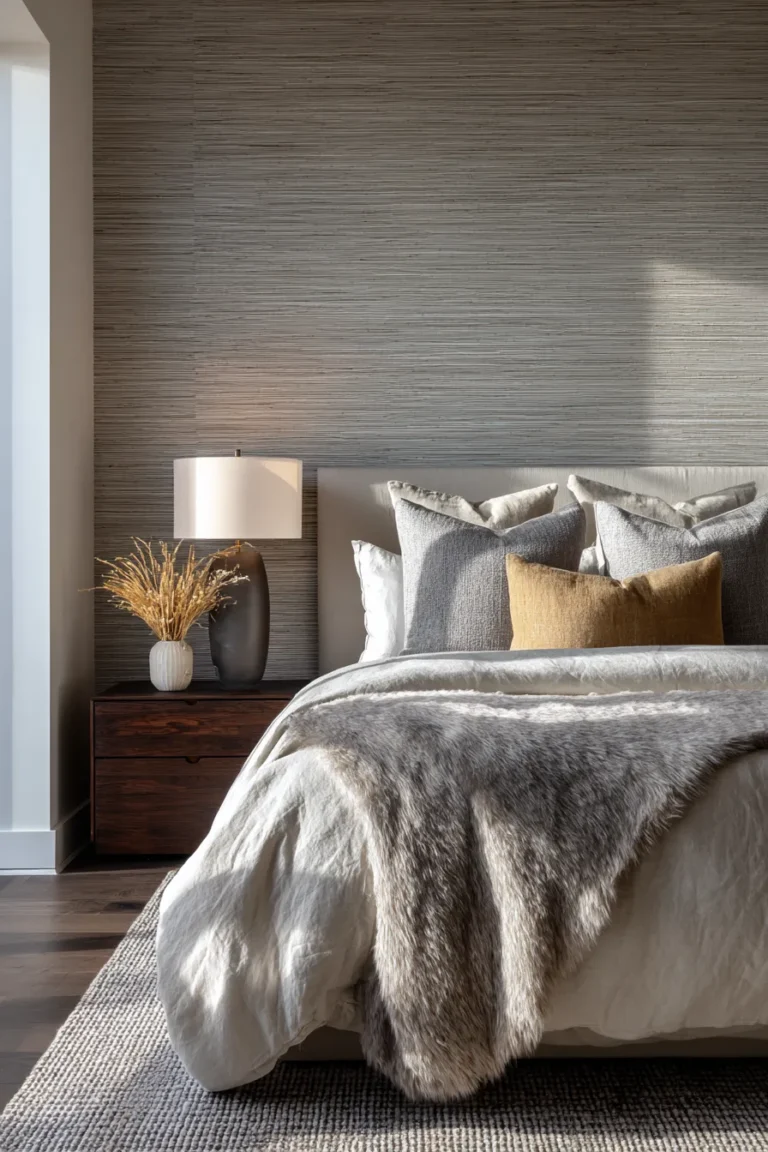
Neutral colors dominate cozy bedrooms for good reason – they don’t get tired as quickly as bold statement walls. But beiges and grays can feel boring if you don’t add some personality. Soft whites work well with natural wood, but pure white can feel cold in rooms that don’t get enough natural light.
Deep red can actually work in bedrooms, despite what you might think. I had one client who insisted on burgundy accent walls, and it created this warm, cocoon-like atmosphere that was perfect for restful sleep. The key is balancing it with enough lighter elements so the room doesn’t feel dark.
Green is having a moment, and for good reason. Olive green wallpaper or paint can make a room feel grounded without being overwhelming. I’ve noticed that clients with green accents in their bedrooms tend to feel more relaxed, though I can’t prove that scientifically.
4. Add Architectural Interest Without Breaking the Bank
Sliding barn doors are still popular, but they’re not right for every space. They work best when you actually need to save space or when they serve a real purpose. Don’t install them just because you saw them on Pinterest.
Shiplap walls can look great, but consider going vertical instead of horizontal for something that feels more updated. It’s a small change that makes a big difference. Real shiplap is expensive, but there are good alternatives that give you the same look without the cost.
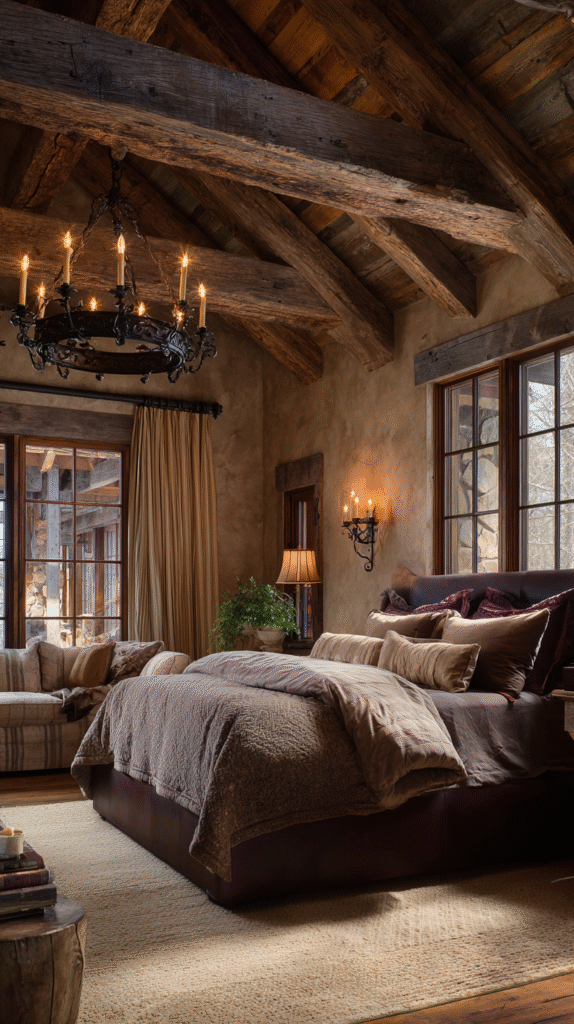
Exposed beams are tricky. If you don’t have them naturally, faux beams can work, but they need to look intentional. I’ve seen too many DIY disasters where fake beams just look like fake beams. Sometimes it’s better to create architectural interest through other means – maybe interesting lighting or a statement headboard.
5. Lighting That Actually Works
Wrought iron chandeliers can overwhelm smaller bedrooms. Scale matters more than style. If you love the look but your room is under 200 square feet, consider pendant lights or wall sconces instead. Lantern-style fixtures work well over nightstands and don’t take up floor space.
Layered lighting is crucial – you need ambient, task, and accent lighting to make a bedroom feel complete. Table lamps on nightstands are obvious, but don’t forget about closet lighting and maybe a reading light if you actually read in bed.
Dimmer switches are non-negotiable. Even the most beautiful light fixture becomes harsh without the ability to control brightness. They’re not expensive to install and make a huge difference in creating mood.
6. Choose Furniture That Makes Sense

Wooden furniture with natural finish ages better than painted pieces, but it’s also more expensive. If budget is a concern, focus on getting one or two quality wood pieces – maybe the bed frame and one nightstand – then mix in some painted furniture in muted tones.
Metal accents through hardware or bed frames can add industrial touches without going full loft apartment. Iron bed frames are having a moment, but make sure they fit your room’s proportions. A king-size iron bed can dominate a small room.
Comfortable seating is often overlooked in bedroom design, but a good armchair or bench at the foot of the bed adds both functionality and style. Just make sure you’ll actually use it – don’t add furniture just to fill space.
7. Vintage Touches That Tell Your Story
Vintage pieces work best when they mean something to you. That antique dresser you inherited is more interesting than something you bought because it looked old. Heirloom textiles like your grandmother’s quilt bring authenticity that you can’t fake.
Antique mirrors are great for adding character without taking up floor space. They also reflect light, which can make small bedrooms feel larger. Vintage artwork works well too, but avoid the temptation to create a gallery wall unless you have enough wall space to do it right.
The key with vintage decor is restraint. One or two meaningful pieces feel authentic. Ten pieces from different eras just look cluttered. Choose items that fit your space and your lifestyle, not just your Instagram feed.
8. Pattern Mixing Without the Mess

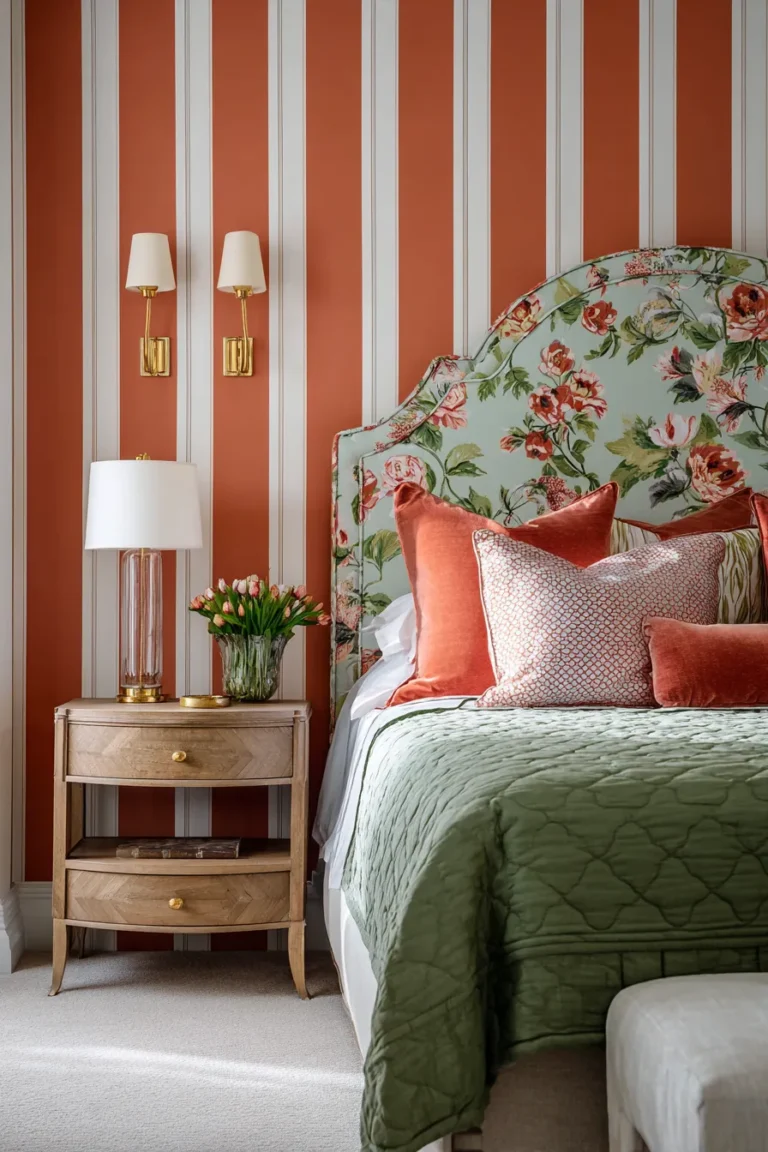
Gentle patterned wallpaper can transform a room, but it’s not reversible like paint. Start with removable wallpaper if you’re renting or unsure about commitment. Striped wallpaper can make low ceilings feel higher if you run the stripes vertically.
Mix patterns by sticking to a consistent color palette. Striped bedding with floral throw pillows can work if they share similar colors. Geometric patterns pair well with organic shapes – think hexagonal tiles with botanical prints.
Contrasting patterns create visual interest, but they need something to ground them. Maybe that’s a solid-colored rug or neutral walls. The goal is balance, not chaos.
9. Minimalist Approach That Still Feels Warm

Minimalist doesn’t mean cold. Clean lines and simple furniture can feel cozy when you choose warm materials and soft textures. A four-poster bed in natural wood makes a statement without clutter.
Pared-down bedrooms work best with quality over quantity. Invest in fewer, better pieces rather than filling every corner. White walls and minimal artwork can feel serene rather than sterile when you add warm lighting and soft textiles.
Storage becomes more important in minimalist bedrooms. Everything needs a place, and that place should be hidden. Built-in closets or under-bed storage help maintain clean lines.
10. Bring Life Into Your Space

Plants in bedrooms are controversial – some people swear by them, others worry about air quality at night. If you want to try plants, start with low-maintenance options like snake plants or pothos. They’re hard to kill and don’t need bright light.
Living elements don’t have to mean plants. Natural fiber rugs, wood furniture, and stone accents all bring organic texture to your space. The goal is creating connections to nature without turning your bedroom into a jungle.
Fresh flowers work if you remember to change them regularly. Nothing kills the vibe like dead roses on your nightstand. Dried flowers or branches can look good and require less maintenance.


[…] This creates visual interest without overwhelming the space. Want more cozy inspiration? These master bedroom ideas are perfect for creating that warm, inviting […]