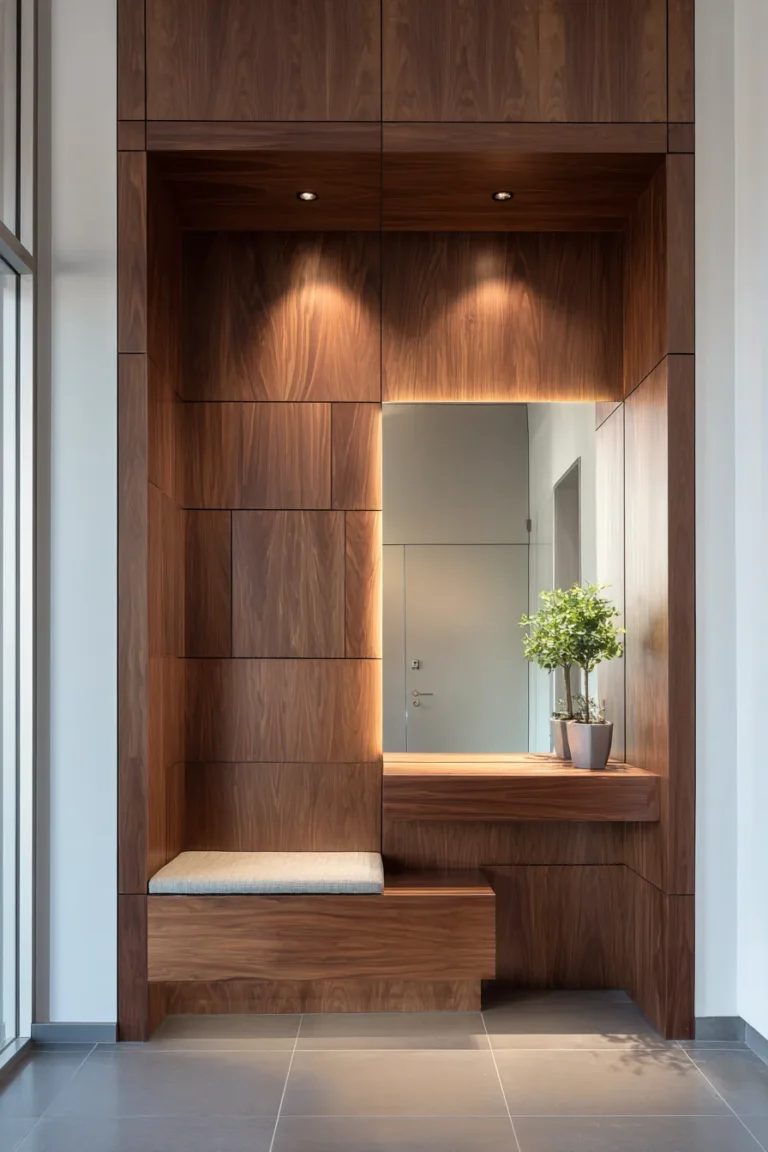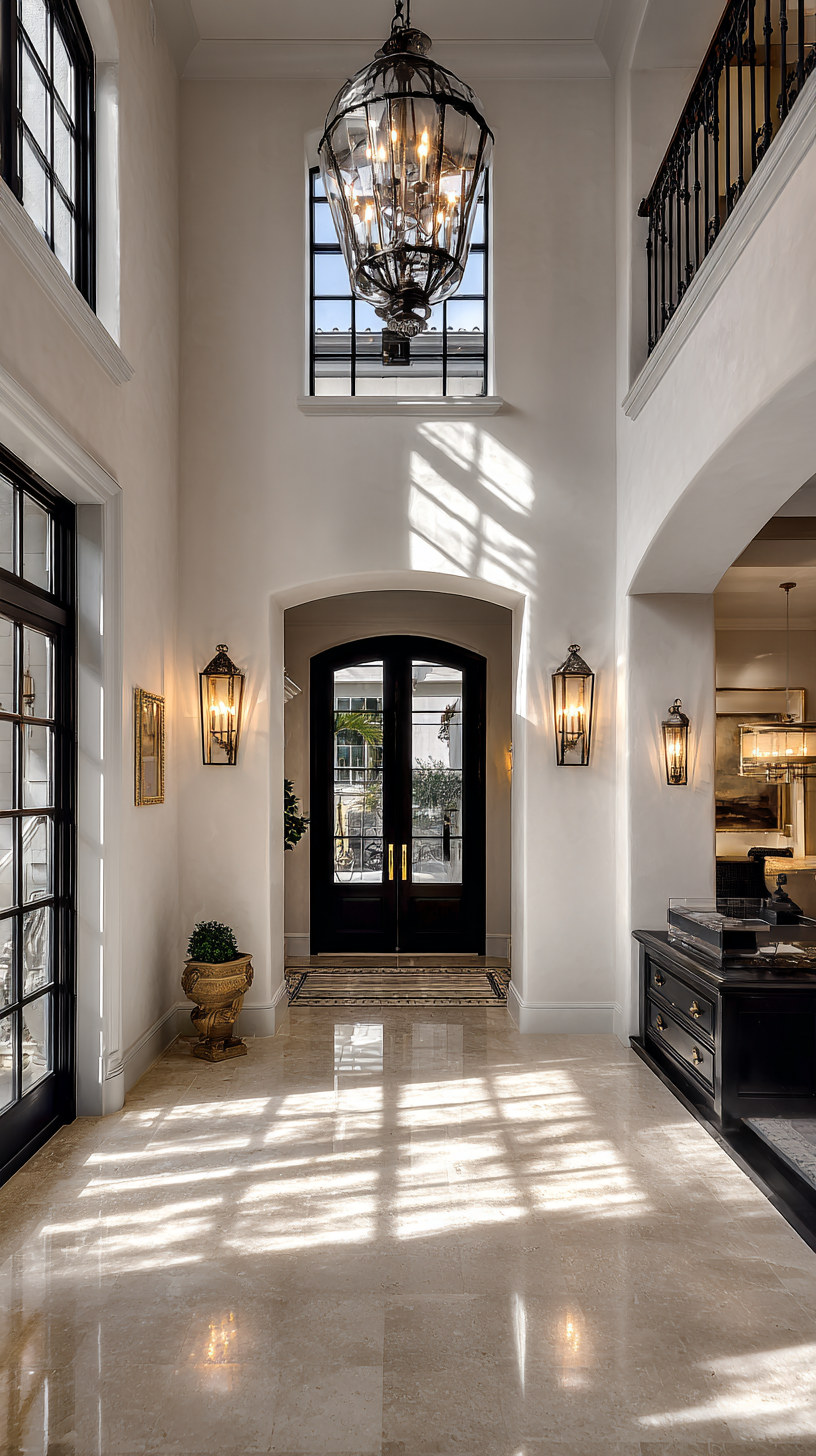
Entryways serve as the critical transition between the outside world and your personal sanctuary, setting expectations for your home’s style and hospitality while addressing the practical needs of daily arrivals and departures. I’ve discovered that exceptional entryway design possesses the remarkable ability to make both guests and family members feel genuinely welcomed while establishing the sophisticated atmosphere that elevates your entire home’s aesthetic appeal.
These thoughtfully curated entryway ideas showcase how strategic furniture placement and purposeful decoration create functional spaces that manage daily chaos while delivering the visual impact that makes lasting impressions. From elegant console tables that provide essential storage to lighting solutions that enhance architectural features, each inspiring design offers practical wisdom for creating entryways that enhance your daily routines while impressing every visitor.
1. Statement Console Tables That Anchor Your Design
The most impactful entryway ideas feature substantial console tables that provide essential storage while serving as sophisticated focal points for decorative displays. These functional furniture pieces establish your entryway’s character while offering surfaces for keys, mail, and the personal items that accumulate during busy daily routines.
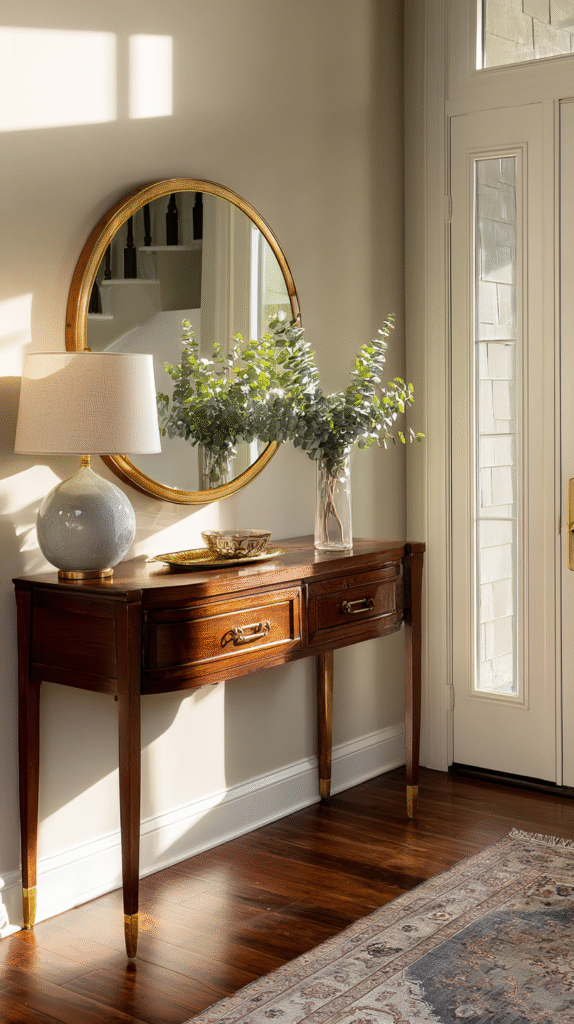
Choose console tables with proportions appropriate for your entryway’s dimensions – typically 30-36 inches high and deep enough to accommodate decorative objects without overwhelming narrow spaces. The length should relate to adjacent walls or architectural features for balanced visual integration.
Select materials that coordinate with your home’s overall aesthetic while withstanding the wear that entryway furniture experiences. Solid wood provides warmth and durability, while metal and glass combinations offer contemporary appeal that’s easy to maintain with frequent cleaning.
Include both open and closed storage elements that hide everyday clutter while providing display space for objects that enhance your entryway’s visual appeal. This combination ensures your console table remains both beautiful and functionally valuable for daily use.
2. Dramatic Lighting That Creates Welcoming Atmosphere
Strategic lighting installations transform ordinary entryway spaces into dramatic welcomes that make both arriving and departing feel special. These illumination solutions address practical needs while creating the ambiance that establishes your home’s sophisticated character from the moment doors open.

Install statement chandeliers or pendant lights that provide adequate illumination for safety while creating visual interest appropriate to your entryway’s scale. Large fixtures work in spacious foyers, while smaller pendants suit modest entry areas without overwhelming the space.
Add accent lighting through sconces, table lamps, or uplighting that creates layered illumination for different times of day and various activities. This flexibility ensures your entryway remains welcoming during early morning departures and late evening arrivals.
Consider lighting controls like dimmers or smart switches that allow you to adjust brightness based on natural light levels and desired atmosphere. These modern conveniences ensure your entryway lighting always feels appropriate and energy-efficient.
3. Built-In Storage Solutions That Hide Daily Chaos
Custom storage systems transform cluttered entryway areas into organized spaces where everything has designated homes, preventing the accumulation of coats, shoes, and personal items that can make entrances feel chaotic rather than welcoming.
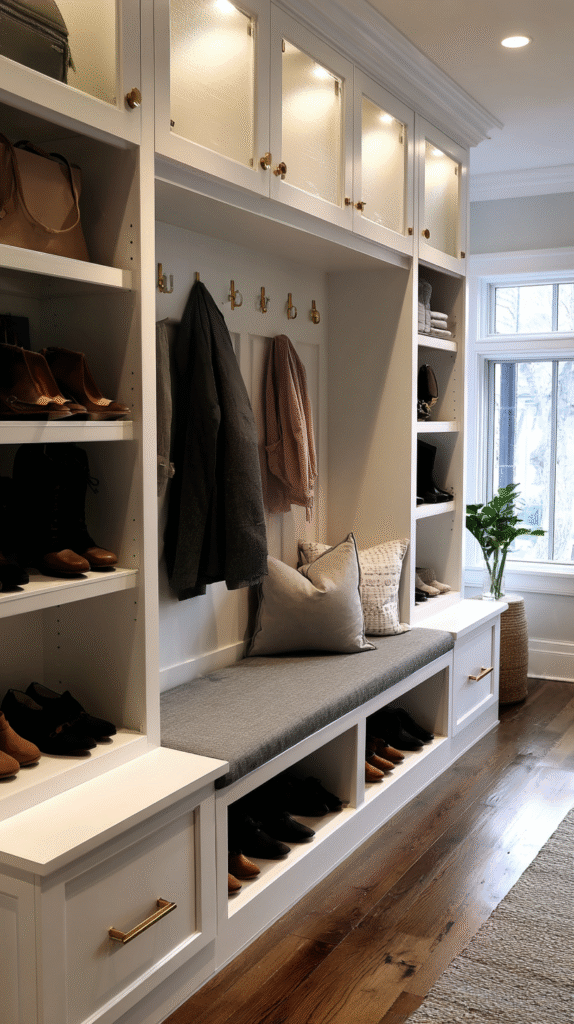
Design built-in storage with specific functions in mind – cubbies for shoes, hooks at appropriate heights for different family members, and closed cabinets for items like cleaning supplies or seasonal decorations that need concealment from guests.
Include seating elements like built-in benches with storage underneath that provide comfortable spots for putting on shoes while hiding items like umbrellas, dog leashes, or sports equipment that require convenient access but visual concealment.
Plan storage systems that can adapt to changing needs over time – perhaps adjustable shelving or modular components that accommodate growing families or evolving lifestyle requirements without requiring complete renovation.
4. Mirror Installations That Amplify Light and Space
Well-positioned mirrors multiply natural light while creating the illusion of expanded space in entryway areas that often lack windows or architectural openness. These reflective surfaces serve practical functions while contributing to sophisticated visual effects that make entries feel more spacious and bright.

Select mirrors with frames that complement your entryway’s style and color scheme – ornate gold frames for traditional spaces, simple black frames for contemporary aesthetics, or decorative shapes that add personality while serving practical functions.
Position mirrors to reflect the most attractive views while providing convenient spots for final appearance checks before departing or arriving. Strategic placement can reflect garden views, architectural details, or lighting that enhances the overall entryway experience.
Consider multiple mirror arrangements like gallery walls or symmetrical pairs that create more complex light patterns while adding visual interest to walls that might otherwise feel blank or underutilized.
5. Artwork Displays That Establish Personal Style
Curated artwork collections transform entryway walls into personal galleries that immediately communicate your aesthetic preferences while creating conversation starters that welcome guests into your home’s unique character and sophisticated atmosphere.

Choose artwork that reflects your personal taste while being appropriate for the transitional nature of entryway spaces – perhaps pieces that coordinate with your home’s overall color palette or themes that resonate throughout your interior design.
Create gallery walls using multiple pieces in coordinating frames, or select single statement pieces that command attention without overwhelming smaller entryway spaces. The scale should relate to your entryway’s proportions and viewing distances.
Include proper lighting that showcases your artwork effectively during different times of day, ensuring pieces remain visible and impactful during both natural daylight hours and evening artificial illumination.
6. Seating Areas That Provide Functional Comfort
Thoughtfully placed seating transforms entryway spaces into functional areas where family members can comfortably put on shoes, wait for others, or simply pause during busy daily transitions. These furniture pieces add both utility and visual weight that grounds entryway design schemes.
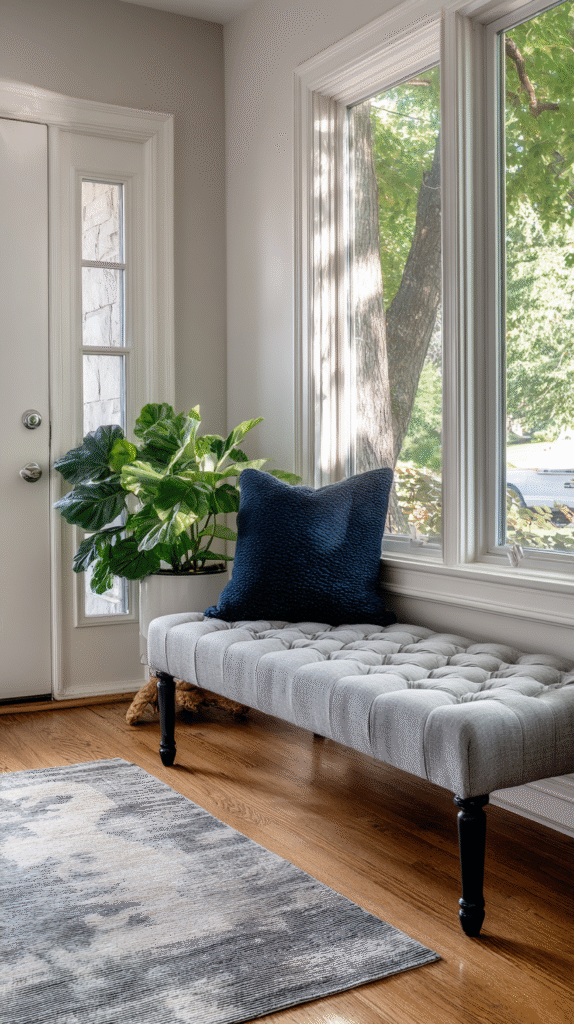
Choose seating appropriate to your entryway’s size and typical usage patterns – perhaps a narrow bench for tight spaces, an upholstered chair for larger areas, or storage ottomans that provide seating while hiding necessary items.
Position seating where it won’t obstruct traffic flow while remaining accessible for its intended functions. Consider sight lines and how seated individuals will relate to other entryway elements and arriving guests.
Add comfort elements like cushions or throws that make seating inviting while being practical for the heavy use that entryway furniture typically experiences. Choose fabrics that clean easily and maintain their appearance despite frequent use.
7. Seasonal Decorating Schemes That Keep Entries Fresh
Rotating entryway decorations seasonally prevents visual stagnation while celebrating natural rhythms and holidays that make daily arrivals and departures feel more connected to the changing year. These adaptable approaches maximize decoration investments while maintaining fresh appeal.

Develop seasonal themes that coordinate with your entryway’s permanent elements while introducing colors, textures, and accessories that reflect changing seasons – warm autumn colors, winter evergreens, spring flowers, or summer’s bright energy.
Store seasonal decorations in labeled, organized systems that make transitions easy and ensure you can replicate successful combinations in future years. Document favorite arrangements with photographs for reference.
Include seasonal plants or flowers that provide natural beauty while connecting your entryway to outdoor seasonal changes. Fresh elements prevent decorations from feeling artificially imposed while adding life and fragrance.
8. Plant Integration That Brings Life Indoors
Living plants introduce natural elements that soften architectural lines while improving air quality and creating the organic beauty that makes entryway spaces feel alive and welcoming rather than purely decorative or utilitarian.

Select plants appropriate for your entryway’s specific light conditions and traffic patterns – low-light tolerant varieties for spaces without windows, or sun-loving plants for entries with abundant natural illumination.
Choose containers that coordinate with your entryway’s design aesthetic while providing adequate drainage and room for plant growth. Consider how containers will age and weather with regular watering and daily use.
Group plants at varying heights using plant stands, floor placement, or hanging systems that create visual interest while ensuring all plants receive appropriate light for healthy growth and long-term beauty.
9. Color Schemes That Set Your Home’s Tone
Strategic color application establishes your entryway’s mood while previewing the aesthetic themes that continue throughout your home. These coordinated palettes create cohesive experiences that make transitions from public to private spaces feel intentional and sophisticated.
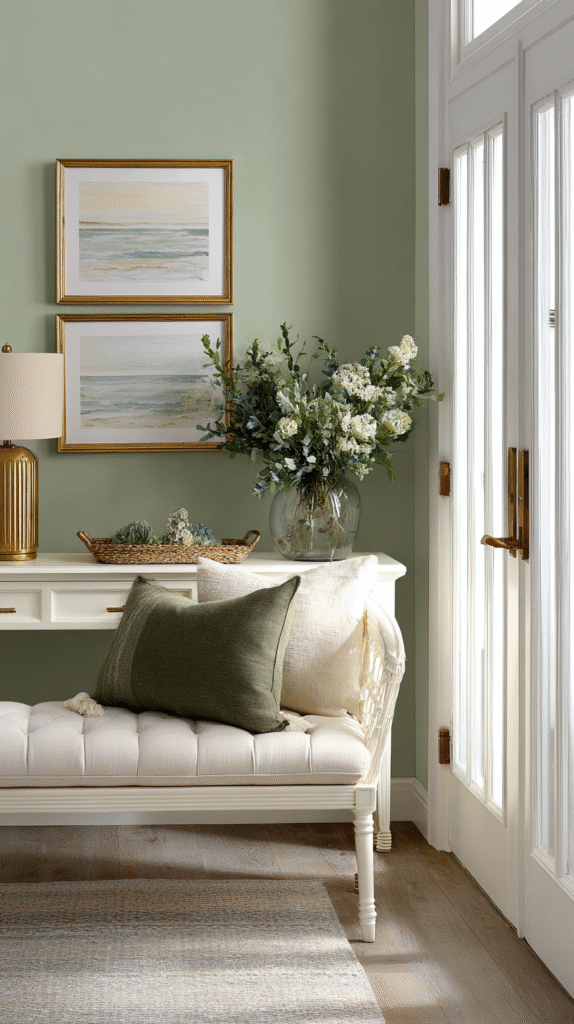
Choose color schemes that complement your home’s overall interior design while being appropriate for the transitional nature of entryway spaces – perhaps colors that appear in adjacent rooms or neutral palettes that coordinate with various seasonal decorations.
Apply color through paint, furniture, accessories, and textiles in proportions that create visual balance without overwhelming smaller entryway spaces. Consider how natural and artificial light affects color appearance throughout different times of day.
Include accent colors that can be easily changed or updated without major renovation, allowing your entryway color scheme to evolve with your preferences or broader home decoration changes.
10. Personal Touches That Make Spaces Feel Like Home
Meaningful personal elements transform generic entryway spaces into authentic reflections of your family’s personality and history, creating emotional connections that make both residents and guests feel the warmth and welcome that defines true hospitality.
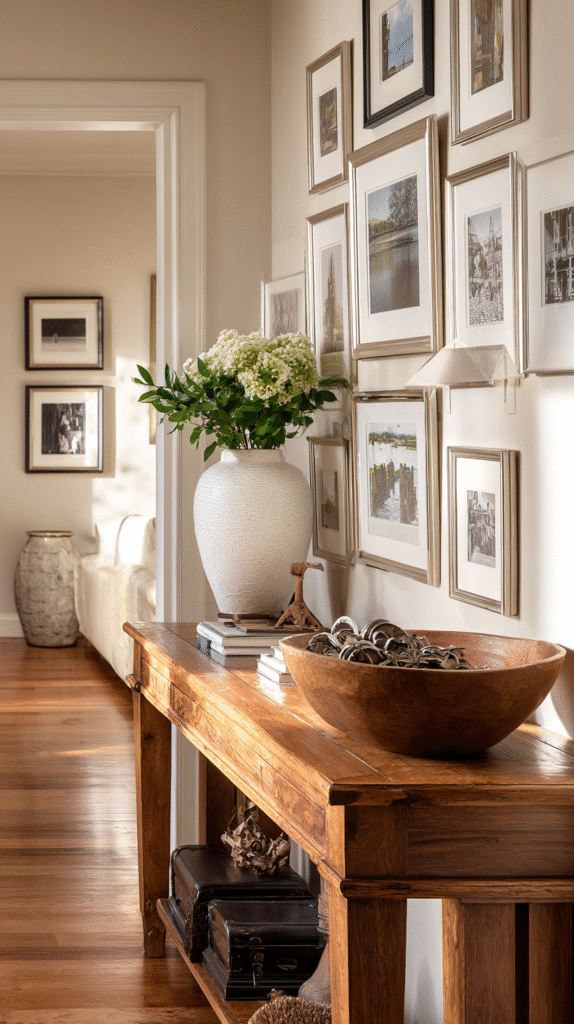
Display family photographs, meaningful artwork, or objects collected during travels that tell your story while being appropriate for the semi-public nature of entryway spaces where guests form first impressions.
Include functional personal elements like a special bowl for keys, a favorite piece of furniture with family history, or handmade items that reflect your interests and crafts while serving practical entryway functions.
Balance personal elements with sophisticated design principles, ensuring your entryway feels both authentically yours and professionally styled rather than cluttered with too many personal items that might overwhelm guests.
Conclusion
Creating exceptional entryway spaces requires balancing practical daily needs with the aesthetic impact necessary for memorable first impressions. These 10 ideas demonstrate that thoughtful design can transform even the most modest entry areas into welcoming spaces that organize your daily routines while establishing the sophisticated tone that defines your entire home.
The most successful entryway designs anticipate real-life usage patterns while incorporating the beauty and personality that make houses feel like cherished homes. Whether you’re working with a grand foyer or a simple front door area, focus on solutions that address your specific needs while creating the visual appeal that makes every arrival and departure feel special.
Remember that exceptional entryway design evolves through understanding how you and your family actually use these transitional spaces. Start with functional necessities like adequate lighting and storage, then layer in the decorative elements and personal touches that reflect your style while creating the warm welcome that makes everyone feel genuinely glad to be home.