Three Decembers ago, I walked into my bedroom after spending an entire Saturday decorating the living room and felt… nothing. Zero Christmas magic. I was sleeping in the only undecorated room in my house, and honestly, it felt depressing.
Here’s what nobody tells you about Christmas decorating: we spend 8 hours in our bedrooms every night, but somehow this space gets zero holiday attention. We obsess over the living room that guests see for 20 minutes, then retreat to a stark, un-festive bedroom that feels disconnected from the season’s warmth.
That realization changed how I approach holiday decorating completely. Over twelve years of transforming spaces on realistic budgets, I’ve decorated probably a dozen different bedrooms for the holidays—my own, family members’, friends who needed help. I’ve tested countless Christmas decor pieces specifically for sleeping spaces, made some regrettable purchases (that heavily scented candle still haunts me), and discovered simple tricks that transformed spaces in under an hour.
This guide shares what actually works for creating a Christmas bedroom that feels magical without disrupting your sleep or requiring a massive budget. You’ll get specific design recommendations with honest assessments, mistakes to avoid that I learned the hard way, and practical tips that work in real life—not just magazine spreads.
By the end, you’ll know exactly how to layer textures, manage lighting for both ambiance and sleep quality, and create a holiday retreat that makes December your favorite month. No complicated approaches, no unrealistic expectations—just thoughtful changes that make a real difference.
Why Your Bedroom Deserves Holiday Magic (Even If Nobody Sees It)
The bedroom-decorating resistance is real. I’ve heard every objection: “Nobody sees it,” “It’s too much work,” “I don’t have the budget for that.” But here’s the truth that changed my mind: your bedroom is where you start and end every single day in December.
When I finally decorated my bedroom properly in 2021, something unexpected happened. My morning routine became something I looked forward to. Waking up surrounded by soft lights and seasonal textures made those dark 6 AM December mornings feel cozy instead of dreary. I started going to bed earlier just to enjoy the space.
The psychological shift surprised me more than the visual transformation. Creating a space that celebrated the season made me actually want to be in my bedroom beyond just sleeping. I started reading there more, having morning coffee on weekends, and it became my favorite retreat during the holidays instead of just the place I collapsed at night.
1. Luxurious Christmas Bedding: The Foundation That Changes Everything
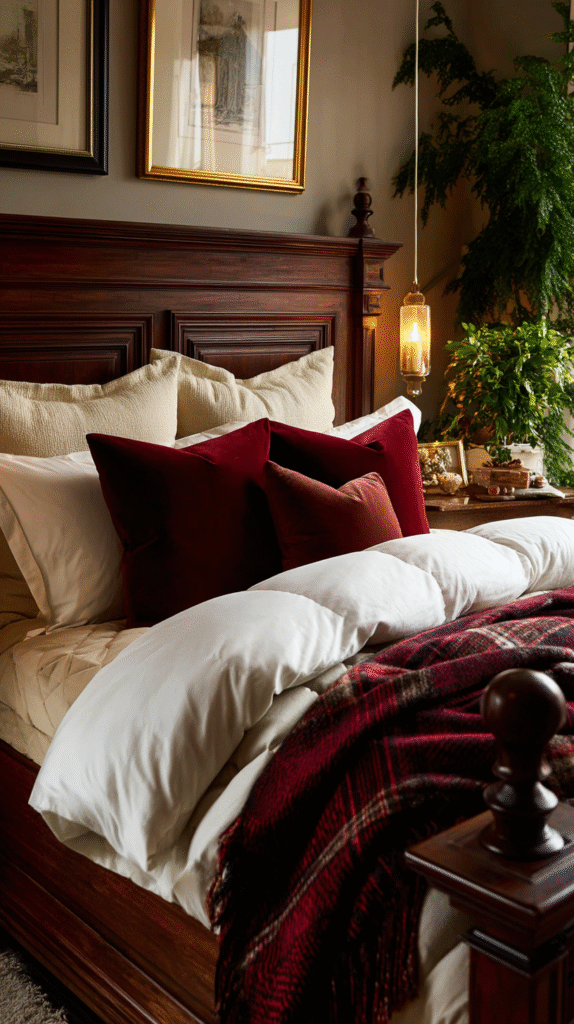
Here’s my controversial take: holiday bedding isn’t frivolous—it’s actually the single most impactful change you can make to your Christmas bedroom. I resisted this for years because it seemed excessive, but I was completely wrong.
The transformation happens the moment you walk into your bedroom. Instead of your usual neutral bedding, you’re greeted by rich burgundies, deep forest greens, or elegant winter whites that immediately signal “this space is special right now.” It’s like wrapping your bed in the season itself.
The Layering Strategy That Actually Works
I’ve tested different bedding approaches over the years, and here’s what I’ve learned: start with your existing white or cream sheets as the base layer. Don’t replace everything—that’s wasteful and unnecessary. The magic happens in the layers on top.
Add a duvet cover or comforter in a rich jewel tone. I prefer burgundy velvet or deep forest green because they create immediate visual impact while still feeling sophisticated. The texture is critical here—smooth cotton doesn’t create the same cozy effect as velvet, linen, or even quality textured materials.
The contrast between pristine white base layers and rich colored toppers creates that expensive, designer look without requiring you to replace your entire bedding collection. You’re essentially creating a seasonal capsule that sits on top of what you already own.
Throw Pillows: The Detail That Sells It
This is where I made my biggest early mistake. I bought six Christmas throw pillows thinking more was better. My bed looked like a holiday gift shop exploded. The lesson? Three to four pillows maximum.
Mix textures intentionally. Combine one large burgundy velvet square pillow with smaller cream pillows featuring subtle patterns—maybe embroidered snowflakes or delicate plaids. Add one lumbar pillow in forest green or classic red plaid for balance. The varied shapes and textures create visual interest without overwhelming your space.
Store your regular pillows during the holiday season in those vacuum storage bags. This simple swap lets you enjoy seasonal decor without permanent alterations to your bedroom setup. Come January, everything goes back to normal in about 10 minutes.
The Finishing Touch: Throw Blankets
Drape a quality throw blanket across the foot of your bed. This final layer adds both visual weight and practical comfort for those cold December nights when you’re reading before bed.
I prefer wool, cashmere blends, or chunky knit throws in complementary colors. The texture should contrast with your duvet—if you’ve got smooth velvet on top, go for a chunky knit throw. If your duvet is textured linen, choose a smooth cashmere blend.
The blanket serves double duty: it looks intentional and styled during the day, and you’ll actually use it every single night. That’s the kind of practical-meets-beautiful that makes sense for real life.
2. String Lights: Creating Magic Without Disrupting Sleep
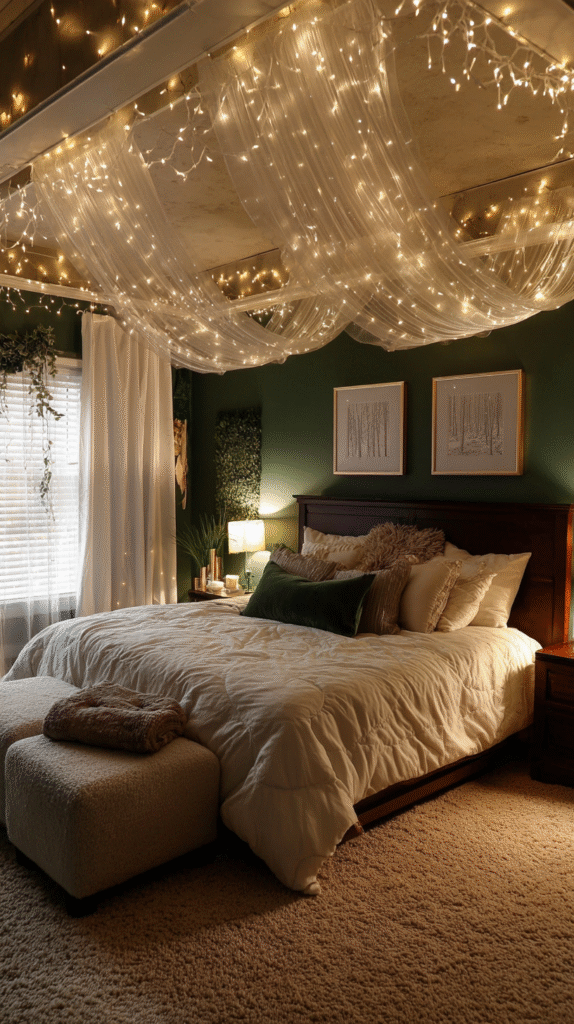
I’ll be honest—I was skeptical about string lights in bedrooms for years. They seemed juvenile, like something for college dorms. Then I stayed at a boutique hotel in Vermont that had warm string lights draped behind the headboard, and I completely changed my mind.
String lights create ambient lighting that’s genuinely magical when done right. The key word there is “when done right,” because I’ve seen plenty of bedrooms where they look cheap or overwhelming.
Choosing the Right Lights (This Matters More Than You Think)
Warm white LED lights are non-negotiable. Cool white or multicolored lights will make your bedroom feel like a retail display instead of a cozy retreat. The warm glow mimics candlelight and creates that hygge feeling everyone talks about but few actually achieve.
Battery-operated options give you placement flexibility without visible cords disrupting your carefully designed space. I’ve used both plug-in and battery styles, and while plug-in lights don’t require battery changes, the cord management became more trouble than it was worth in my experience.
Strategic Placement Techniques
The placement makes or breaks this whole concept. Here are the three approaches I’ve tested extensively:
Behind the Headboard: Drape lights along your headboard’s top edge in gentle swags. This creates a soft halo effect that highlights your headboard without shining directly in your eyes. Use small adhesive hooks on the back of your headboard to keep everything secure and intentional-looking.
Canopy Effect: If you have ceiling hooks or can install removable ones, create a subtle canopy by draping lights from the ceiling down toward the headboard corners. This works beautifully in rooms with higher ceilings and creates that luxury hotel feeling.
Curtain Rod Integration: Weave string lights through your curtains or wrap them around curtain rods for indirect illumination. This is my personal favorite for rental spaces because it requires zero wall damage and creates beautiful ambient lighting when the curtains are closed.
The Sleep Quality Consideration
Here’s what nobody mentions in those Instagram photos: you need dimmer control or multiple brightness settings. Bright twinkle lights look festive at 6 PM but will absolutely disrupt your sleep if they’re blazing at full brightness all night.
I use lights with remote controls that offer dimming options. Set them bright while you’re getting ready for bed, dim them significantly while you’re reading or relaxing, then turn them off completely when it’s sleep time. Some people leave them on the dimmest setting all night—I can’t do it, but my sister-in-law loves it.
Timer functions changed everything for me. Set them to turn on automatically at sunset (around 4:30 PM in December where I live) and turn off at 11 PM. You get the magical evening ambiance without remembering to manage them manually every single day.
3. Festive Throw Pillows: The Easiest Entry Point
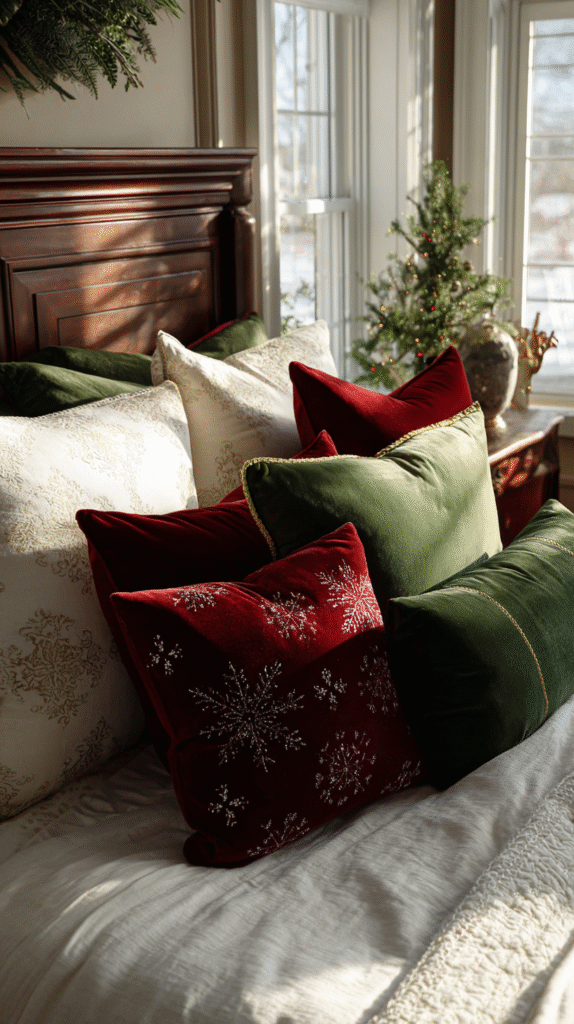
If you’re hesitant about holiday bedroom decorating, start here. Throw pillows offer the easiest, lowest-commitment way to introduce Christmas into your bedroom. You can add them in five minutes and remove them just as quickly after the holidays.
The beauty of this approach is its flexibility. You’re not committing to major changes—just adding a few seasonal touches that can be swapped out whenever you want.
The Design Formula I Use Every Year
Limit yourself to three or four Christmas pillows maximum. I learned this the hard way after creating what my husband called “the great pillow mountain of 2019.” Your bed should still be inviting and functional, not an obstacle course.
Here’s my formula: One large statement pillow (20×20 inches), two medium pillows in complementary patterns or textures (18×18 inches), and optionally one lumbar pillow (12×20 inches) for visual variety.
Mix different textures aggressively. This is where most people play it too safe. Combine smooth velvet with rough burlap, pair cable-knit patterns with silk, mix matte fabrics with subtle sheens. The texture variety creates depth and sophistication that monochromatic matching simply can’t achieve.
Pattern Mixing Without Chaos
Stick to a cohesive color story but vary the patterns. I typically go with one solid color pillow (maybe burgundy velvet), one subtle pattern (cream with embroidered snowflakes), one bolder pattern (classic plaid or tartan), and maybe one textural element (cable knit or faux fur).
The trick is keeping your color palette limited even as you vary patterns. Three colors maximum—perhaps burgundy, cream, and forest green. This creates visual interest through pattern and texture while maintaining cohesion through color consistency.
Avoid overly literal Christmas motifs unless that’s genuinely your style. I prefer sophisticated holiday colors and textures over pillows covered in Santa faces or Christmas trees. This approach ages better and works across different decorating aesthetics.
4. Evergreen Garland: The Headboard Transformation
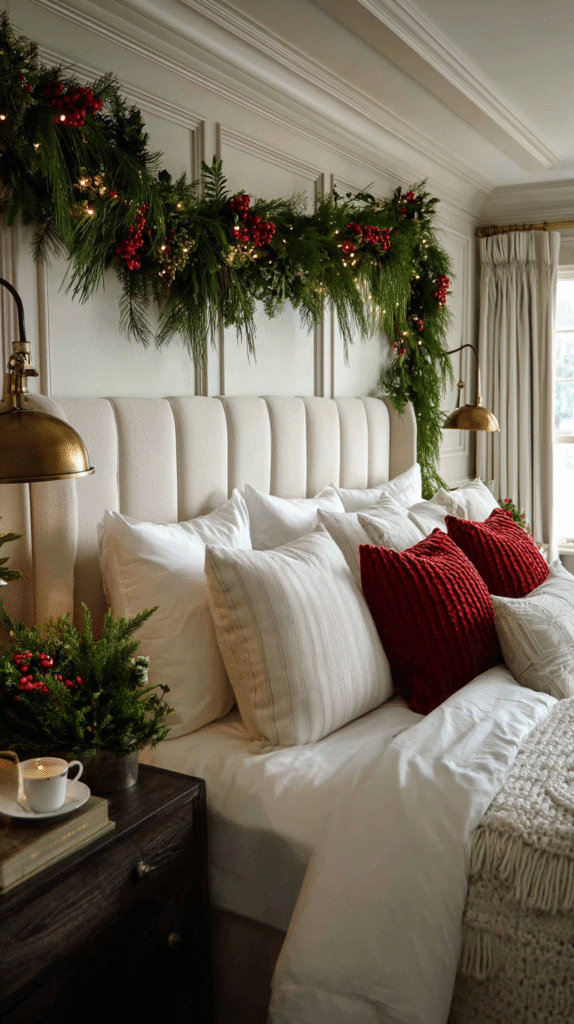
Fresh garland smells incredible, but I’m going to give you the honest truth: it’s a pain to maintain, drops needles everywhere, and needs replacement after about two weeks. I use high-quality artificial garland, and I’m not apologetic about it anymore.
The right artificial garland is indistinguishable from real at a distance and reusable for years. I’ve been using the same garland for four years now, and it still looks fresh. That’s not just economical—it’s practical for people with real lives who don’t want to vacuum pine needles daily.
Installation Without Damage
Secure garland along your headboard’s top edge using removable adhesive hooks. I space them about 18 inches apart for full, lush garland. The hooks disappear once the garland is in place, and they remove cleanly when you’re ready to take everything down.
For headboards where adhesive won’t stick well (like fabric or certain finishes), I use thin florist wire in a color that matches the headboard. Loop it through the garland and around the headboard frame in discrete spots. It’s invisible and causes zero damage.
Let the garland drape naturally rather than forcing it into rigid swags. The organic, slightly wild look feels more expensive and designer than perfectly symmetrical arrangements. I usually let it cascade down slightly on each side of the headboard for movement and visual interest.
Enhancing Without Overwhelming
Weave battery-operated warm white lights throughout the greenery. Don’t go overboard—you want subtle sparkle, not a light show. I use one strand for every three feet of garland as a general rule.
Add embellishments sparingly. I cluster a few elements at strategic points rather than spacing them evenly (which looks too uniform). Maybe a cluster of red berries on one side, some gold ornaments on the other, a burgundy ribbon bow slightly off-center. Asymmetry feels more organic and less staged.
The key is restraint. The garland itself is a strong statement. You’re enhancing the natural beauty, not competing with it or covering it up with decorations.
5. Seasonal Wall Art: Temporary Transformation
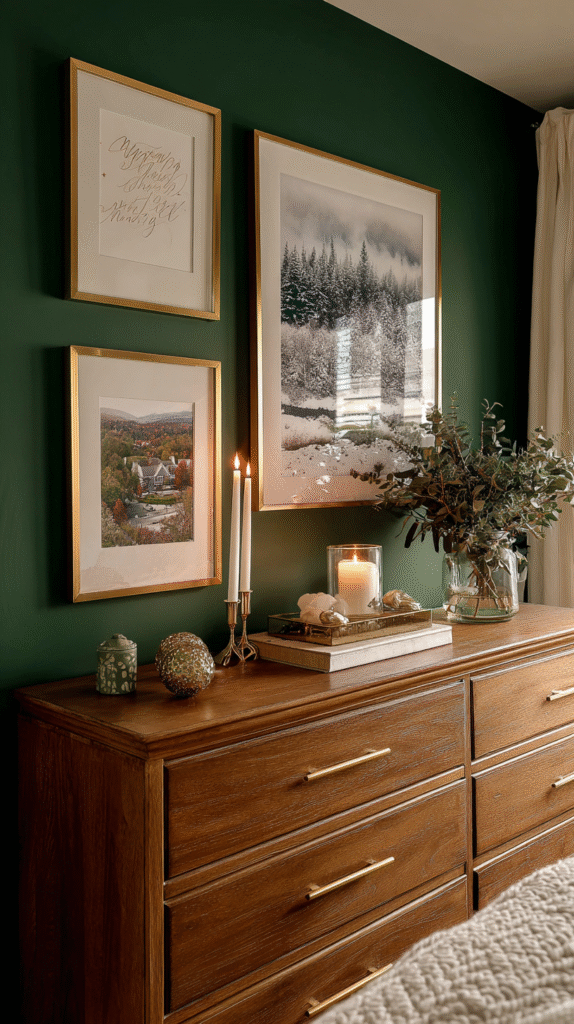
I love changing wall art seasonally, but it needs to be easy. I’m not patching nail holes every January—that’s not realistic for busy people. Here’s how to make seasonal art work practically.
The Removable Approach
Command strips changed my life for seasonal decorating. The large picture-hanging strips hold substantial frames without wall damage. I’ve used them for frames up to 16×20 inches with zero issues.
Choose artwork that complements your existing bedroom color palette rather than introducing completely new colors. Classic winter landscapes, elegant botanical prints with evergreen branches, or sophisticated typography in colors that already exist in your room creates cohesion rather than chaos.
Gallery Wall Strategy
Create a small seasonal gallery wall above your dresser or bedside table. I use three coordinating pieces in matching frames—usually one larger central piece (11×14 inches) flanked by smaller complementary prints (8×10 inches).
The frames matter more than you’d think. I invested in nice frames once and just swap the art inside seasonally. Black frames work with everything and create a cohesive look even when the art itself varies.
Mix styles within your color palette. Perhaps one vintage-style winter scene, one modern geometric pattern in Christmas colors, and one text-based print. The variety creates visual interest while the consistent frames and colors maintain cohesion.
The Storage Solution
Store your regular art carefully during the holidays. I keep the frames and just swap the prints, storing everything flat in a large portfolio case under the bed. This takes up minimal space and keeps everything protected for next year.
Label everything clearly. I use sticky notes on the back of each print indicating which room it belongs in and what season. Future you will be grateful when you’re rushing to redecorate next December.
6. Rich Holiday Curtains: The Overlooked Game-Changer
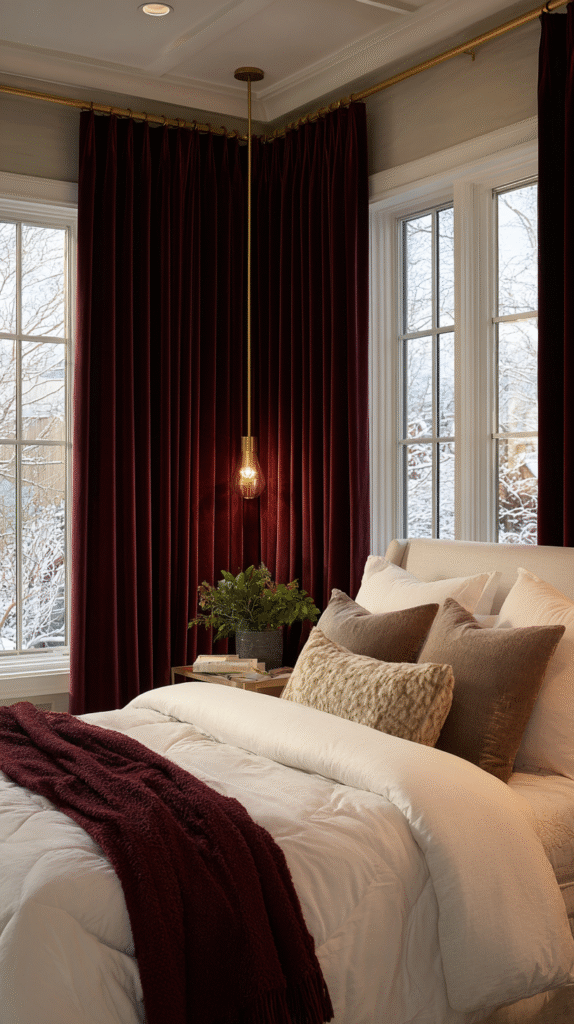
Switching curtains for the holidays sounds extreme, but hear me out. If you’re in a rental or don’t want permanent changes, this is actually easier than you think and creates massive impact.
Heavy curtains in deep Christmas colors transform your entire room’s atmosphere instantly. Rich burgundy, forest green, or navy blue curtains add drama and warmth while providing practical benefits like improved insulation and better light control during those short December days.
The Practical Benefits Nobody Mentions
Heavier curtains genuinely help with heating costs in winter. The thick fabric creates a barrier against drafty windows, keeping cold air out and warm air in. I noticed a real difference in how comfortable my bedroom felt after switching to velvet curtains one December.
Blackout lining is essential if you want quality sleep. December darkness messes with everyone’s sleep schedule, but blackout curtains help maintain your body’s natural rhythm by controlling when light enters your space.
Longer curtains make windows appear larger and rooms feel more spacious. Hang your curtain rod close to the ceiling and let the panels puddle slightly on the floor. This vertical emphasis draws the eye upward and creates a sense of height that regular curtains don’t achieve.
Installation for Renters
Use tension rods if you can’t install hardware. Modern tension rods support surprising amounts of weight and leave zero marks on walls or window frames. I’ve used them for years in rentals with heavy velvet curtains without any issues.
If you already have curtain rods installed, simply swap the panels. This takes maybe 15 minutes total and instantly transforms your room’s entire color scheme and atmosphere.
The After-Holiday Plan
Store your regular curtains folded with tissue paper to prevent creasing. I keep mine in a large storage bag in the top of my closet—they take up surprisingly little space when folded properly.
Some people love their holiday curtains so much they keep them up year-round. That’s totally valid if the colors work with your non-holiday decor. I have friends who use burgundy curtains all year because they create such a cozy atmosphere regardless of season.
7. Christmas Scented Candles: The Sensory Element (With Critical Caveats)
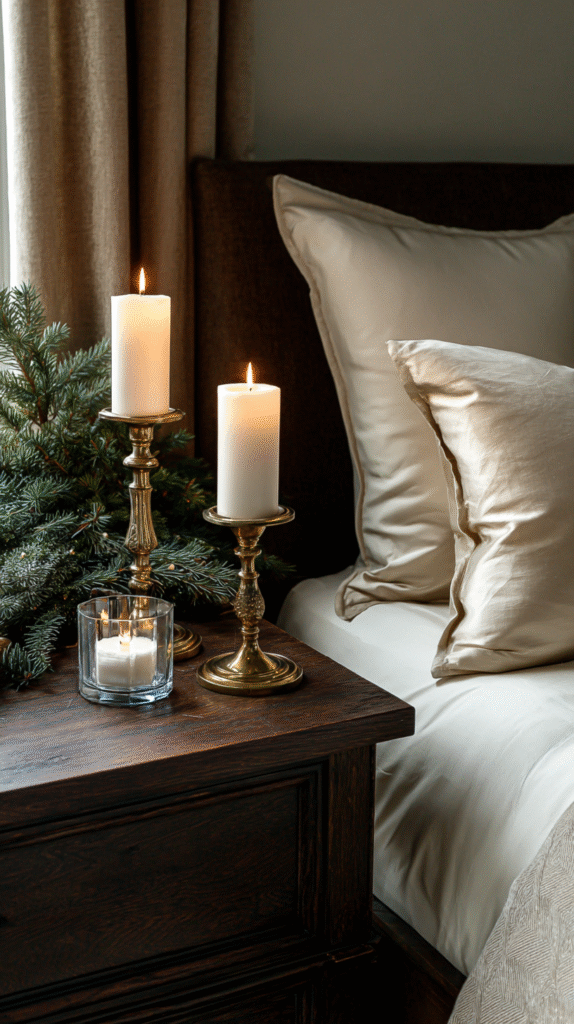
Scented candles can enhance your Christmas bedroom—or they can give you headaches and disrupt sleep. I learned this through painful trial and error, including that infamous heavily scented candle incident I mentioned earlier.
The goal is subtle, pleasant aroma that enhances ambiance without overwhelming your senses or affecting sleep quality. This is harder to achieve than it sounds.
Choosing Scents That Won’t Backfire
Skip the heavily scented options. I don’t care how amazing that candle smells in the store—in your bedroom at night, it will be too much. Look for candles described as “subtle,” “gentle,” or with lower fragrance concentrations.
Choose classic Christmas scents that evoke the season without being cloying: pine, cedar, vanilla, subtle cinnamon, or winter berry. Avoid anything with strong spice notes (I’m looking at you, clove and nutmeg) which can be overwhelming in a sleeping space.
Test sensitivity first. Light the candle in your bedroom during the day for a few hours before committing to evening use. Some fragrances seem fine initially but become headache-inducing after prolonged exposure in a closed room.
Strategic Placement and Safety
Display candles in elegant holders on bedside tables, dressers, or window sills. Group candles in odd numbers (three or five) and vary heights for professional styling. This creates beautiful focal points throughout your room.
Never leave candles burning when you sleep. This should be obvious, but it’s worth stating clearly. Enjoy them during your evening routine, then blow them out before getting into bed.
Battery-operated flameless candles have come incredibly far. Many now feature realistic flickering flames and timer functions. I use flameless candles with timers set to turn on at sunset and off at 11 PM. They provide ambiance without any safety concerns or scent issues.
The Realistic Approach
I keep one real candle on my dresser that I light during my evening routine—maybe 30-45 minutes while I’m getting ready for bed. The rest are flameless versions that provide the warm, flickering light without the monitoring and safety concerns.
This hybrid approach gives me the cozy atmosphere I want while being practical for real life. I’m not going to lie awake wondering if I actually blew out that candle, and that peace of mind is worth using flameless versions in most locations.
8. Decorative Storage Baskets: Beautiful Organization
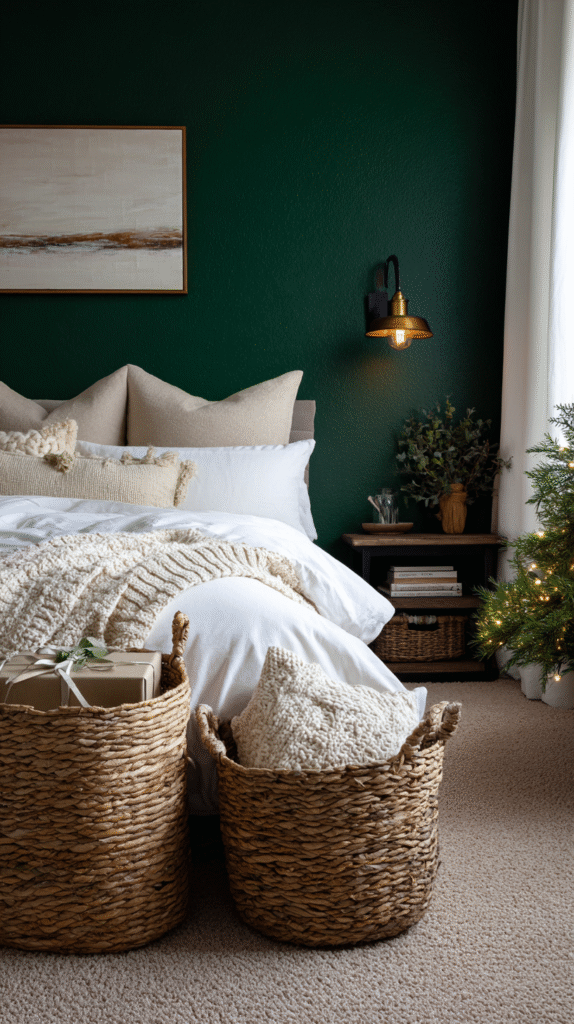
I’m big on practical decorating—things that look good and serve a purpose. Storage baskets embody this philosophy perfectly, especially during the holidays when you’re accumulating gift wrap, extra blankets, and seasonal items.
Beautiful baskets seamlessly integrate organization into your Christmas bedroom design. They keep holiday clutter contained while adding texture and warmth to your space.
Choosing the Right Baskets
Natural fiber baskets in warm tones complement holiday decor beautifully. Woven materials like rattan, jute, or seagrass add organic texture that softens more formal bedroom furniture and creates visual interest without competing with other decorative elements.
Size appropriately for your needs. I keep one large basket near the bed for throw blankets, a medium basket on my dresser for gift bags and wrapping supplies, and a smaller basket on my nightstand for seasonal reading materials.
The style should complement your overall aesthetic. Tightly woven baskets suit modern spaces, while looser weaves work better in bohemian or farmhouse-style rooms. Handle style matters too—leather handles add sophistication, rope handles feel more casual.
Strategic Placement
Position baskets where they’re functionally useful, not just decorative. Near your bed for blankets you’ll actually use, in your closet for organizing seasonal accessories, under console tables where they’re accessible but not obtrusive.
Use vertical space when possible. Tall baskets in room corners provide storage without consuming valuable floor space. I stack two or three graduated sizes in unused corners—it looks intentional and provides surprising storage capacity.
Making Them Seasonal
Add small holiday touches to transform storage containers into charming accessories. Tuck a sprig of artificial greenery into one side, tie a burgundy ribbon around the handle, or place a few ornaments on top.
The key is keeping it subtle. You want the baskets to look thoughtfully decorated, not like you stuffed Christmas items into every available container. One small touch per basket is plenty.
9. Plaid Throws: Classic Pattern Done Right

Plaid is synonymous with Christmas for good reason—it’s traditional, cozy, and instantly recognizable. But plaid can also go very wrong very quickly if you’re not careful about implementation.
A quality plaid throw blanket introduces classic Christmas pattern without overwhelming your existing decor. The key is treating plaid as an accent, not the dominant pattern in your room.
Choosing Your Plaid Wisely
Color combination matters enormously. Sophisticated color combinations like burgundy and cream, forest green and gold, or classic red and black work across various decorating styles. Avoid bright, primary color plaids that read as childish rather than cozy.
The scale of the plaid pattern should relate to your room size. Large-scale plaids work in bigger rooms and create bold statements. Smaller plaid patterns suit compact bedrooms and feel more subtle and refined.
Consider your existing patterns before adding plaid. If you already have floral bedding or patterned curtains, a plaid throw might create visual chaos. If your bedroom is relatively solid-colored, plaid adds welcome pattern and interest.
Styling Without Looking Staged
Drape your plaid throw casually across the foot of your bed or over a bedside chair. The relaxed placement adds visual interest while maintaining that comfortable, lived-in feeling essential for bedroom spaces.
Fold it imperfectly. Those magazine shots with perfectly draped blankets look beautiful but feel sterile. I literally just toss my throw across the bed and adjust it slightly—the natural folds and draping look more authentic than carefully styled arrangements.
Actually use it. The throw should be accessible and practical, not purely decorative. When you reach for it naturally during cold evenings, it maintains that organic, unstaged quality that makes a bedroom feel like a real home rather than a showroom.
Material Considerations
Invest in quality materials for throws that last multiple seasons. Wool, cotton-wool blends, or brushed cotton create that cozy texture without pilling or wearing out quickly. Acrylic throws are budget-friendly but don’t have the same longevity or luxurious feel.
Washing ease matters. I prefer machine-washable throws because I actually use mine regularly. Dry-clean-only items tend to get less use because the maintenance barrier is too high for everyday life.
10. Holiday Wreaths: Natural Beauty Beyond the Front Door
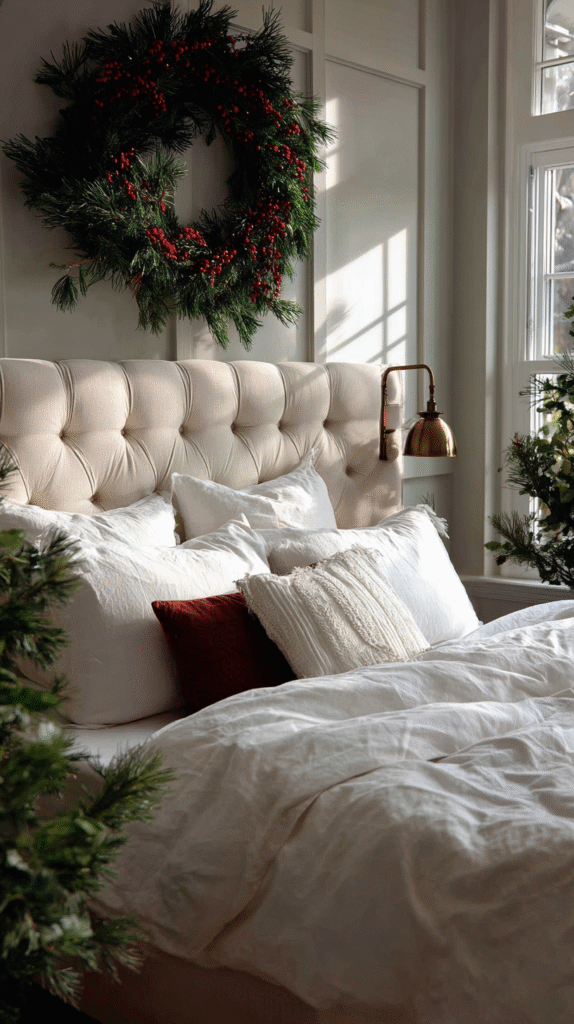
Wreaths belong in bedrooms just as much as they belong on front doors. They add natural beauty and traditional holiday charm while serving as elegant focal points that work across various design aesthetics.
The placement options are surprisingly versatile. I’ve tested wreaths in multiple bedroom locations over the years, and each creates a distinctly different effect.
Strategic Placement Options
Above the headboard as an alternative to traditional wall art creates an unexpected focal point. This works especially well if your headboard is simple or you don’t have a headboard at all—the wreath adds visual weight and anchors the bed.
On your bedroom door adds a welcoming holiday greeting every time you enter. This is my personal favorite placement because it creates that moment of arrival—you’re entering your special holiday retreat.
Above a dresser or console table creates a vertical element that balances horizontal furniture lines. Pair the wreath with some garland or a few candles below it for a cohesive vignette.
Against a large mirror creates beautiful depth and reflection. The wreath appears twice (once in reality, once in reflection) which adds visual interest and makes the room feel more decorated without additional items.
Choosing the Right Wreath
Proportions matter significantly. Larger rooms can handle dramatic 24-30 inch wreaths, while smaller bedrooms benefit from more modest 16-20 inch sizing. A wreath that’s too large overwhelms the space and looks awkward.
Style should complement your overall Christmas bedroom theme. Classic evergreen with red berries works with traditional decor. Eucalyptus, frosted branches, or silver-toned wreaths suit contemporary styling. Mixed greenery and pinecones work with rustic or farmhouse aesthetics.
Real versus artificial comes down to personal preference and practical considerations. I use artificial wreaths because they last for years and require no maintenance. If you prefer the authenticity of real greenery, commit to the upkeep or plan to replace it after a few weeks.
Adding Lighting for Extra Magic
Battery-operated lights transform wreaths from pretty to magical. Weave a strand of warm white lights through the wreath, concentrating them near the front for maximum impact. The soft glow creates beautiful shadows and highlights the natural textures.
Use small battery packs that tuck discreetly behind the wreath. Nothing ruins the aesthetic like visible battery packs or tangled cords. I tape mine to the back of the wreath using strong double-sided tape so they stay hidden and secure.
Timer functions are essential if you want consistent ambiance without daily management. Set your wreath lights to turn on at sunset and off at bedtime. This automation creates reliable magic without requiring you to remember to turn them on every evening.
Creating Your Personal Christmas Bedroom Sanctuary
Here’s what I’ve learned after twelve years of decorating spaces: your Christmas bedroom should reflect your personal style while embracing the season’s warmth. There’s no single “right” way to do this—only the approach that feels right for you.
Start with one or two ideas that genuinely appeal to you. Maybe that’s the bedding transformation, maybe it’s just string lights and a wreath. You don’t need to implement everything at once. I add one new element most years, building my collection gradually rather than buying everything in one overwhelming shopping trip.
Pay attention to how the changes make you feel. If the scented candle gives you headaches, get rid of it regardless of how much you spent. If the string lights disrupt your sleep, adjust the timing or brightness. Your bedroom’s primary purpose is rest, and holiday decor should enhance that rather than compromise it.
The magic isn’t in spending money or following every trend—it’s in creating a space that makes you genuinely happy to be there during December. When you look forward to going to your bedroom, when you feel that little lift of joy walking in, you’ve succeeded.
Your bedroom is your most personal space. Let it shine with Christmas magic that brings you comfort and joy throughout the entire holiday season—just for you, regardless of whether anyone else sees it.